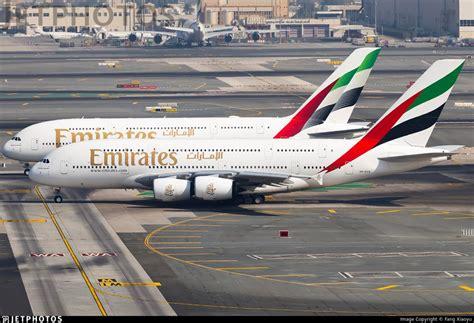
The global aviation landscape is once again shifting under pressure, and this time, the world’s largest passenger aircraft—the Airbus A380—is at the center of a dramatic recalibration. Emirates and Qatar Airways, two of the aircraft’s most prominent operators, have quietly but significantly reduced A380 services across seven key international destinations. These changes, driven largely by geopolitical instability and operational strategy, signal a deeper transformation in long-haul travel demand and fleet utilization.
In recent weeks, updated scheduling data has revealed a pattern of temporary withdrawals, aircraft swaps, and frequency adjustments that collectively reshape the superjumbo’s global footprint. While the Airbus A380 remains an icon of modern aviation, its deployment is increasingly selective, dictated by both economic realities and external disruptions.
Why Emirates Is Pulling the A380 From Key European and Asian Routes
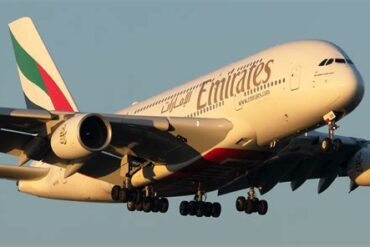
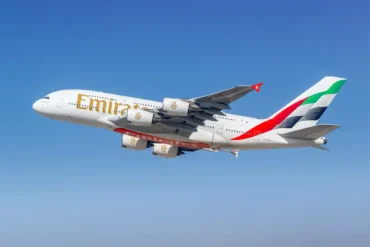
Emirates, the largest operator of the Airbus A380, has made the most visible adjustments. For May, the Dubai-based carrier has removed A380 service from four major destinations: Copenhagen, Glasgow, Osaka Kansai, and Prague. These cities, which previously enjoyed high-capacity double-decker service, will now see smaller aircraft stepping in.
This is not a minor tweak—it represents a substantial capacity reduction. On routes like Copenhagen and Prague, Emirates had planned to deploy its 615-seat two-class A380, a configuration designed to maximize passenger volume. Replacing such aircraft with significantly smaller jets fundamentally alters the economics of these routes.
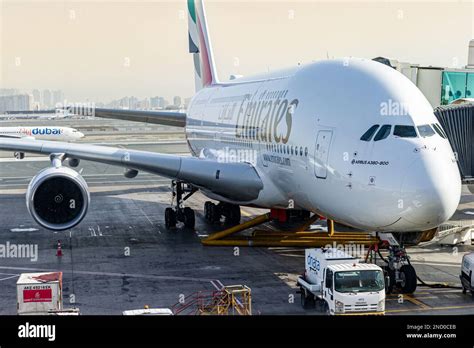
Instead, Emirates is introducing a mix of Boeing 777-300ERs and Airbus A350-900s. The shift is particularly striking on the Copenhagen route, where capacity drops from 615 seats to just 298 seats on the A350-900. This nearly 50% reduction in available seats underscores the airline’s cautious approach in uncertain conditions.
Osaka Kansai, Glasgow, and Prague will also transition to Boeing 777 variants, each configured with fewer seats but offering operational flexibility. These aircraft are better suited for fluctuating demand and allow Emirates to maintain route presence without overcommitting capacity.
Capacity Cuts and Strategic Swaps Signal Demand Volatility
Beyond outright suspensions, Emirates is also scaling back frequencies on several high-profile European routes. Services to Milan Malpensa, Munich, and Zurich will see A380 operations reduced to once daily, effectively halving previous capacity levels.
This move reflects a broader strategy: maintaining connectivity while minimizing risk. By reducing frequency rather than eliminating routes entirely, Emirates preserves market presence and passenger loyalty while adapting to softer demand.
At the same time, not all routes are experiencing cuts. In fact, some are seeing growth. London Gatwick will receive three daily A380 flights, the highest frequency since December, while Bali will enjoy a doubling of A380 service to twice daily. These increases highlight a key trend—demand is not disappearing, but shifting geographically.
Leisure-heavy destinations like Bali are rebounding strongly, while certain European markets face headwinds tied to geopolitical uncertainty and seasonal demand fluctuations.
Qatar Airways Grounds A380 Fleet and Reshapes Summer Network
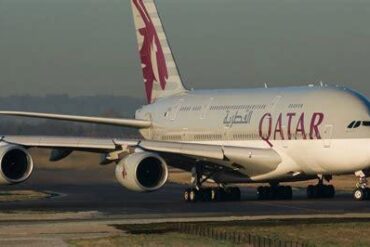
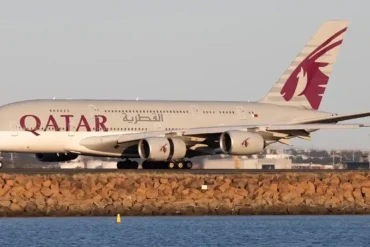
While Emirates is selectively trimming its network, Qatar Airways has taken a more drastic step. The airline has grounded its entire A380 fleet throughout April and May, effectively removing the aircraft from active service during this period.
This decision alone has had a profound impact on its network. For the peak summer months of June through August, Qatar Airways has suspended A380 operations on three major routes: Paris Charles de Gaulle, Singapore, and Sydney.
These routes are among the airline’s most important long-haul corridors, typically characterized by strong premium demand. Replacing the A380 with smaller aircraft such as the Boeing 777-300ER and Airbus A350 variants allows Qatar Airways to maintain frequency while reducing seat capacity.
The implications are significant. Passengers accustomed to the spacious cabins and onboard amenities of the A380—including lounges and premium suites—will instead experience more conventional widebody aircraft. For the airline, however, the trade-off is clear: greater efficiency and adaptability in uncertain market conditions.
Selective Returns and Frequency Boosts on High-Demand Routes
Despite these cuts, Qatar Airways is not abandoning the A380 entirely. The aircraft is scheduled to return to select routes starting mid-June, with notable increases in frequency.
London Heathrow, one of the world’s busiest international hubs, will see twice-daily A380 service, up from a previously planned single daily flight. Similarly, Bangkok Suvarnabhumi will also receive double-daily A380 operations, a significant upgrade from earlier plans of ten weekly flights.
These decisions reveal a focused strategy: deploy the A380 where demand is strongest and most predictable. Heathrow and Bangkok both serve as major global gateways with consistent passenger volumes, making them ideal candidates for high-capacity aircraft.
Meanwhile, the suspended routes—Paris, Singapore, and Sydney—are expected to see the A380 return in mid-September. Until then, the airline will rely on its versatile fleet of A350s and 777s to bridge the gap.
The Broader Impact: A380’s Role in a Changing Aviation Market
The combined actions of Emirates and Qatar Airways highlight a broader industry trend. The Airbus A380, once seen as the future of long-haul travel, is now being deployed with increasing precision. Airlines are no longer using it as a default option for major routes but as a strategic asset reserved for peak demand scenarios.
This shift is influenced by multiple factors, including fluctuating travel demand, operational costs, and external disruptions such as geopolitical tensions. The ongoing Iran-related instability has added another layer of complexity, affecting airspace availability and route planning.
Even Etihad Airways, the third Middle Eastern A380 operator, has adjusted its network, albeit more subtly. While it has not made recent changes to its A380 routes, earlier updates indicate a delay in deploying the aircraft to Singapore, further illustrating the cautious approach airlines are taking.
What These Changes Mean for Travelers and the Future of the A380
For passengers, these network adjustments translate into fewer opportunities to fly on the Airbus A380, at least in the short term. Routes that once guaranteed a superjumbo experience may now feature smaller aircraft, altering everything from seat availability to onboard amenities.
However, the aircraft is far from obsolete. Instead, it is entering a new phase—one defined by targeted deployment and optimized utilization. Airlines are learning to match capacity with demand more precisely, ensuring that the A380 remains viable in a rapidly evolving market.
Looking ahead, the future of the Airbus A380 will depend on how well airlines can balance its unmatched capacity with the need for flexibility. For now, the message is clear: the era of blanket A380 deployment is over, replaced by a more calculated and strategic approach.
As Emirates and Qatar Airways continue to refine their networks, the superjumbo’s role will likely become even more specialized—appearing where demand peaks and retreating where uncertainty prevails.