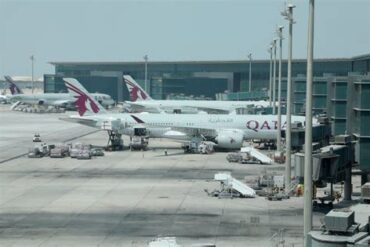
Global aviation rarely experiences disruptions on the scale now facing Qatar Airways, one of the world’s most influential long-haul carriers. The airline’s latest schedule revisions reveal an extraordinary operational contraction: nearly 18,000 flights removed and more than 70 destinations temporarily suspended across its network. The sudden reduction reflects the deep and immediate impact of the escalating Iran regional conflict, which has forced airlines across the Middle East to reassess routes, airspace access, and operational safety.
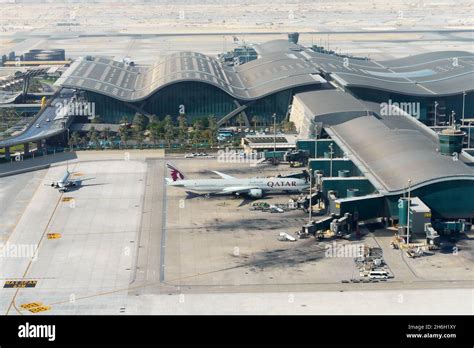
The scale of the cuts illustrates how fragile global aviation connectivity can become when geopolitical tensions disrupt strategic air corridors. For Qatar Airways, whose network revolves almost entirely around its Doha Hamad International Airport hub, even small disruptions can cascade across dozens of international routes.
Between April and June 2026, the airline has scheduled 29,035 two-way passenger flights departing and arriving at Doha. On its own, the number might appear substantial. However, when compared to the same period in 2025, the scale of the reduction becomes starkly clear. The airline has removed 17,985 flights, representing a 38% decline in scheduled operations.
Such a drop has immediate consequences for the airline’s global standing. Qatar Airways previously ranked as the 13th-largest international airline in the world, largely because it operates almost exclusively international routes without a domestic market. With the new schedule cuts, the airline temporarily falls to 26th place, reflecting one of the most dramatic short-term network contractions among global carriers.
A Rapid Collapse in April Flight Operations
The deepest impact is visible in April 2026, where the airline has implemented its most aggressive schedule reductions. Current data indicates that Qatar Airways scheduled 57% fewer flights in April compared with the same month last year.
This extraordinary reduction reflects the airline’s need to respond quickly to evolving geopolitical risks and operational restrictions affecting Middle Eastern airspace. Airlines must maintain flexible schedules in such conditions, prioritizing routes that remain viable while suspending others that depend on unstable corridors.
May shows slightly less severe reductions but still remains heavily affected. The airline has scheduled 41% fewer flights compared with May 2025. Meanwhile, June currently shows a 17% reduction, though aviation analysts expect further changes as the situation develops.
The reason for the smaller June cuts is strategic uncertainty. Airlines often delay large schedule changes until they have clearer intelligence on geopolitical developments, airspace restrictions, and passenger demand patterns.
Over 70 Global Destinations Temporarily Removed
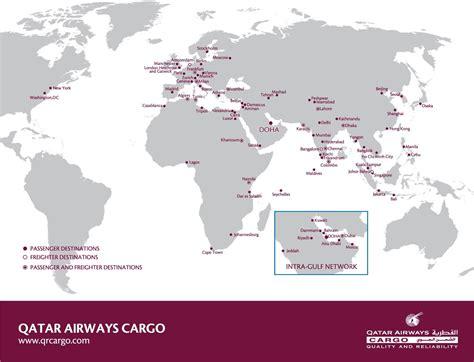
One of the most visible consequences of the crisis is the removal of 72 destinations from the airline’s April schedule. These suspended routes span five continents, dramatically shrinking what was once one of the most expansive long-haul networks in aviation.
Despite these suspensions, Qatar Airways still plans to serve 102 destinations in April, although several routes will restart later in the month as conditions allow.
Some routes are already returning. For example, flights to Birmingham in the United Kingdom resumed on April 9, marking one of the first reinstated connections. Other cities expected to regain service later in the month include Seattle, Vienna, Stockholm, Geneva, Accra, and Abidjan.
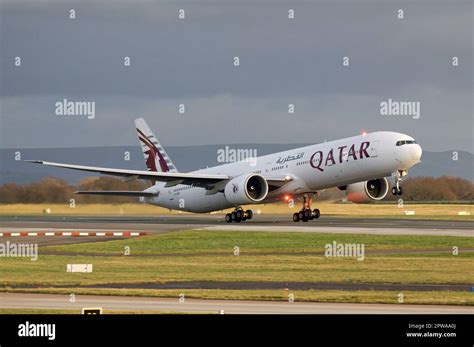
However, many major international cities remain absent from the airline’s April timetable. The list includes several prominent long-haul routes that normally form key parts of Qatar Airways’ global network.
In North America, suspended destinations include:
- Atlanta
- Boston
- Houston
- Los Angeles
- San Francisco
These routes typically generate strong premium demand and serve as critical links between North America and the Middle East, South Asia, and Africa via Doha.
The disruption extends even further into other regions. Across Europe, major cities such as Brussels, Budapest, Prague, Lisbon, Oslo, and Venice are temporarily without Qatar Airways service. In Asia, suspended routes include Osaka, Cebu, Chongqing, Tashkent, and Hangzhou, while several destinations across Africa and Australasia have also disappeared from the April schedule.
One particularly notable suspension is Auckland, which represents the airline’s longest nonstop route. Flights between Doha and New Zealand normally cover more than 14,500 kilometers, making it one of the longest commercial routes in the world.
Doha Hub Strategy Under Pressure
Qatar Airways has built its global business model around hub-and-spoke connectivity through Doha, where passengers transfer between continents with minimal layovers. The strategy relies heavily on maintaining frequent services across dozens of routes to feed connecting traffic.
When routes disappear, the entire system feels the impact.
Roughly 60% of the flight reductions in April come directly from destinations being removed entirely from the network, while the remaining 40% results from reduced flight frequencies on routes that continue operating.
This dual approach allows the airline to maintain limited connectivity while sharply reducing operational costs and exposure to uncertain demand.
Aircraft Fleet Utilization Dramatically Reduced
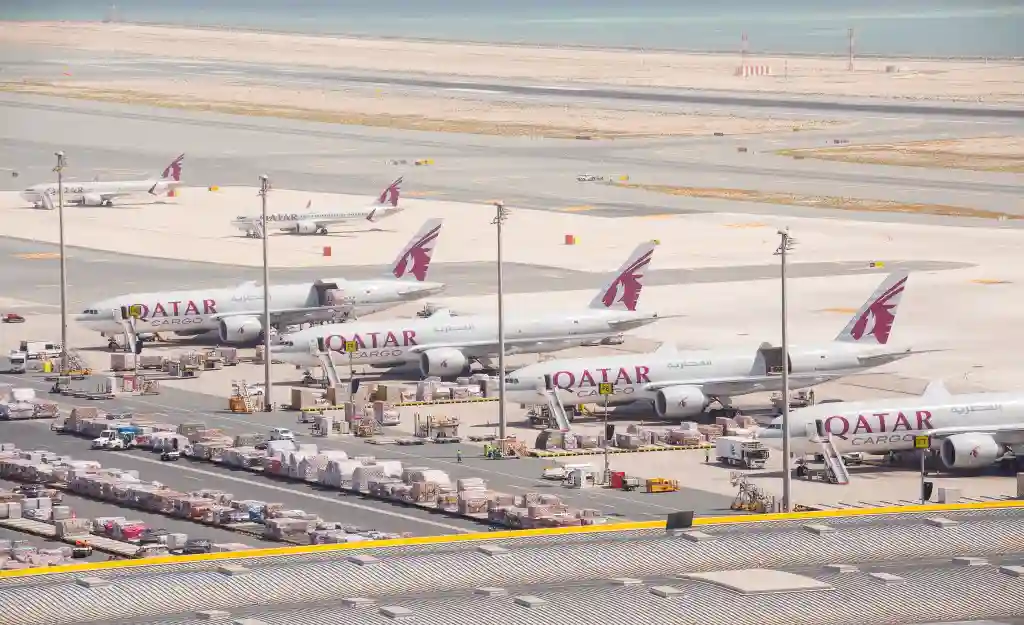
The network contraction has also reshaped how Qatar Airways deploys its 240-aircraft passenger fleet. The airline operates one of the world’s most modern widebody fleets, with 86% of its aircraft consisting of long-range twin-aisle jets.
However, the sudden drop in flight demand has forced major adjustments across multiple aircraft types.
The Airbus A380 fleet is experiencing the largest reduction in utilization. With an 83% decline in scheduled flights, the airline has effectively grounded its eight superjumbo aircraft through at least June 2026. These aircraft are expensive to operate and best suited to extremely high-demand routes, which have temporarily disappeared.
Several older aircraft models are also seeing sharp reductions:
- Airbus A330-300: 79% fewer flights
- Airbus A320ceo: 77% fewer flights
- Airbus A330-200: 63% fewer flights
- Boeing 777-200LR: 57% fewer flights
These aircraft consume more fuel and typically carry higher operating costs compared with newer models.
By contrast, the airline is prioritizing its newer and more efficient aircraft, which offer improved fuel efficiency and modern passenger cabins.
Reductions among newer aircraft are significantly smaller:
- Boeing 787-8: 38% reduction
- Boeing 777-300ER: 31% reduction
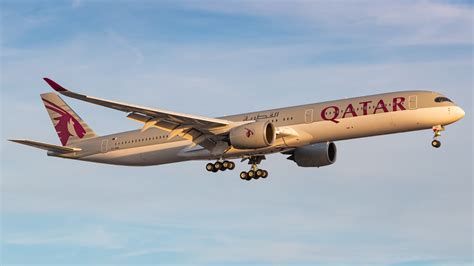
- Airbus A350-900: 13% reduction
- Boeing 787-9: 12% reduction
- Airbus A350-1000: 6% reduction
These aircraft remain essential for maintaining long-haul routes that continue operating despite the network contraction.
The Airbus A321neo, which only entered Qatar Airways service in October 2025, currently has all flights removed for April and May. This temporary pause reflects ongoing schedule adjustments rather than long-term fleet strategy.
What Happens Next for Qatar Airways
The airline’s current schedule beyond June 2026 still resembles its original pre-conflict plans. However, aviation analysts widely expect further adjustments as the geopolitical situation evolves.
Airlines typically submit weekly schedule updates to aviation data providers such as Cirium Diio and OAG, meaning additional route suspensions or capacity reductions could appear at any time.
For passengers, Qatar Airways has implemented flexible policies allowing travelers to rebook later in the year or request refunds if their flights are affected.
Despite the dramatic cuts, industry experts view the changes as temporary crisis management rather than structural decline. Qatar Airways has built a reputation for resilience, operational efficiency, and rapid recovery following disruptions.
Once regional stability returns and airspace restrictions ease, the airline’s powerful Doha hub model will likely enable it to restore routes quickly and reclaim its position among the world’s leading international carriers.
For now, however, the removal of nearly 18,000 flights and the suspension of more than 70 destinations represents one of the most significant short-term contractions in modern aviation history—highlighting just how closely global air travel remains tied to geopolitical stability.