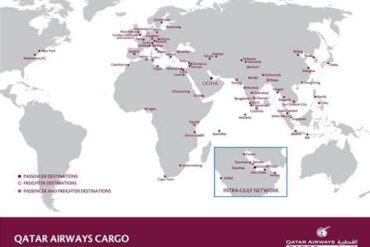
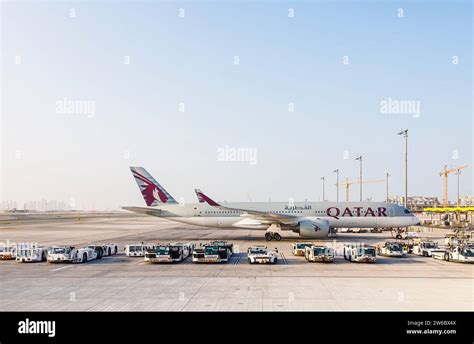
Qatar Airways has temporarily suspended flights to 22 cities across Europe, Asia-Pacific, Africa, and the Middle East as the airline continues adjusting its global network in response to geopolitical instability, rising fuel costs, and shifting passenger demand. The Doha-based carrier, widely regarded as one of the world’s largest long-haul airlines, has been reshaping parts of its route map following the regional disruptions linked to the conflict involving Iran and broader operational pressures affecting international aviation.
While several suspended routes are expected to return in September, others have disappeared entirely from future schedules, raising questions about whether some markets will permanently lose Qatar Airways service. The latest schedule data filed with aviation analytics platform Cirium Diio shows a network strategy focused on protecting high-yield routes while scaling back operations in smaller or less profitable destinations.
The airline’s adjustments mirror similar actions taken by other major carriers across the region. Lufthansa recently paused 25 routes, while Turkish Airlines suspended services to 23 destinations worldwide. Despite the cuts, Qatar Airways continues expanding selectively, confirming new flights to Bogotá and Caracas while also restoring routes to Helsinki and Tokyo Haneda.
Qatar Airways Suspends Four European Routes
Qatar Airways currently does not operate flights from Doha Hamad International Airport to Malta, Sarajevo, Sofia, or Venice. These routes represent relatively smaller European markets within the airline’s vast international network, making them more vulnerable during periods of operational uncertainty.
Unlike flagship long-haul services to cities such as London, Paris, or New York, secondary European routes often rely heavily on connecting traffic and seasonal tourism demand. As fuel prices rise and airspace complications increase operational costs, airlines typically prioritize routes with stronger revenue performance and greater strategic importance.
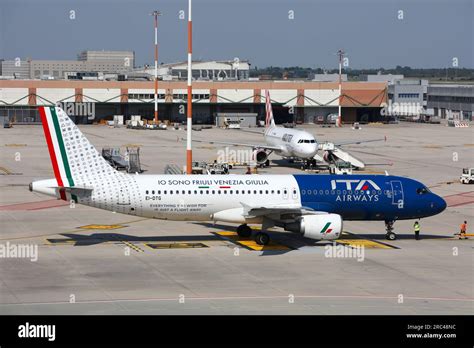
According to current schedule filings, flights to Malta, Sofia, and Venice are expected to resume in mid-September using Airbus A320ceo aircraft operating four times weekly. Venice, one of Italy’s busiest tourism destinations, is scheduled to receive flights on Mondays, Wednesdays, Fridays, and Sundays.
Sarajevo, however, appears to face a more uncertain future. All planned future flights to the Bosnian capital have reportedly been removed from the reservation system entirely. Qatar Airways has not officially clarified whether the suspension is temporary or permanent, but the route’s removal suggests weaker commercial viability compared with other European destinations.
Asia-Pacific and African Services Remain Suspended
Eight destinations across Asia-Pacific and Africa also remain without Qatar Airways service. The suspended cities include Canberra, Cebu, Djibouti, Kano, Kigali, Mogadishu, Nagpur, and Zanzibar.
Several of these routes are scheduled to resume in September, primarily operated by the airline’s narrowbody Airbus A320ceo fleet. Djibouti is expected to receive three weekly flights, Kigali two weekly services, Mogadishu three weekly flights, and Nagpur four weekly departures.
Canberra remains one of the most strategically interesting routes within Qatar Airways’ network. The Australian capital is served via Melbourne using the Boeing 777-300ER, not because of strong local demand, but largely due to Australian traffic rights regulations. By extending Melbourne flights onward to Canberra, Qatar Airways gains additional access to the lucrative Melbourne market while satisfying bilateral aviation agreements.
The Canberra route was originally linked through Sydney before operational adjustments changed the routing structure. Despite relatively modest passenger numbers in Australia’s capital city, the route serves a broader regulatory and commercial purpose within the airline’s Oceania strategy.

Zanzibar is expected to regain daily Boeing 787-8 service when operations restart. Meanwhile, Kano and Cebu will also return using Boeing 787-8 aircraft, though both routes involve additional operational complexities.
Kano flights are planned as twice-weekly services via Abuja, while Cebu will once again operate in a triangular routing pattern linking Doha, Cebu, and Davao. Currently, Davao flights operate through Clark in the Philippines, but Qatar Airways intends to revert to the Cebu routing arrangement later this year.
These route structures highlight how airlines increasingly optimize aircraft utilization and traffic rights by combining multiple destinations within a single operational pattern.
Middle East Network Faces Significant Reductions
The largest concentration of suspended routes involves the Middle East, where Qatar Airways has halted flights to ten destinations: Aleppo, Gassim, Istanbul Sabiha Gökçen, Mashhad, Neom Bay, Shiraz, Tabuk, Taif, Tehran, and Yanbu.
Although geographically part of Asia, the Middle East functions as a separate aviation region due to its unique geopolitical and operational dynamics. The ongoing closure of Iranian airspace has directly affected routes to Tehran, Mashhad, and Shiraz, making operations impossible regardless of passenger demand.
Flights to Aleppo in Syria appear especially uncertain. All future services have reportedly been removed from schedules, signaling a potentially indefinite suspension. Political instability and infrastructure concerns continue limiting airline operations in Syria despite gradual improvements in regional connectivity.
The remaining Middle Eastern routes are tentatively scheduled to return in September using Airbus A320ceo aircraft. Tehran is expected to receive the largest allocation with 12 weekly flights, while Istanbul Sabiha Gökçen is scheduled for daily service. Gassim, Tabuk, Taif, and Yanbu are each planned for multiple weekly operations.
However, aviation analysts remain skeptical about whether flights to Iran can realistically resume within the proposed timeframe given ongoing regional tensions and persistent airspace restrictions.
Qatar Airways Balances Expansion and Retrenchment
Despite suspending 22 routes, Qatar Airways is far from entering a period of contraction alone. The airline continues selectively expanding in markets where demand remains resilient and strategically valuable. New long-haul services to Bogotá and Caracas demonstrate continued confidence in underserved international markets, particularly across Latin America.
At the same time, the airline is preparing to return its Airbus A380 fleet to service after extended groundings, although the timeline has shifted slightly later than previously expected. The restoration of routes to Tokyo Haneda and Helsinki further illustrates that Qatar Airways is concentrating resources on destinations with stronger premium demand and long-term profitability.
The current network restructuring reflects a broader reality across global aviation. Airlines are increasingly forced to make rapid operational decisions as geopolitical instability, fluctuating fuel prices, airspace closures, and changing travel patterns continue reshaping international connectivity. For Qatar Airways, suspending service to smaller or lower-performing markets may ultimately protect the financial strength needed to maintain its position as one of the world’s leading long-haul carriers.