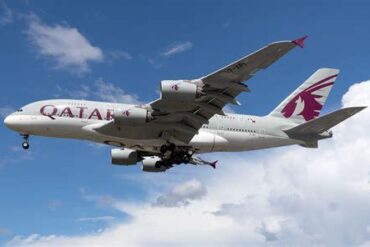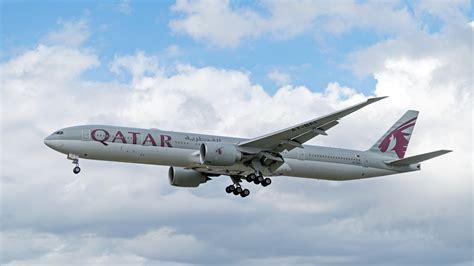
Qatar Airways is making a bold strategic move by slashing 30% of its flights to San Francisco International Airport (SFO) during the upcoming summer schedule, a decision that reflects shifting market dynamics and competitive pressures in the ultra-long-haul aviation sector. The airline, known for its premium service and extensive global reach, will operate just five flights weekly instead of the previously scheduled daily operations from Doha’s Hamad International Airport (DOH).
This decision positions San Francisco as Qatar Airways’ least-served U.S. destination, signaling a recalibration of its transpacific priorities. This reduction coincides with Air India’s recent withdrawal of two ultra-long-haul routes to San Francisco, further spotlighting the Bay Area’s challenges as a premium international hub.
A Shift in Frequency: From Daily to Five Times a Week
Starting March 2026, aligned with the IATA Northern Hemisphere summer schedule, Qatar Airways will limit its Doha-San Francisco route to five days a week: Monday, Tuesday, Thursday, Saturday, and Sunday. Flights QR737 and QR738 will maintain their standard timing of 8:05 AM departure from Doha, arriving in San Francisco at 1:35 PM local time, and returning at 5:55 PM, landing back in Doha at 7:25 PM the following day. Each flight spans approximately 15 hours and 30 minutes, highlighting the ultra-long-haul nature of this transcontinental route.
What remains consistent is the airline’s choice of aircraft: the Airbus A350-1000, fitted with 327 seats, including 46 award-winning QSuites in business class and 281 economy seats. This layout emphasizes a high-premium, low-density strategy, appealing to both business travelers and discerning leisure passengers.
Pandemic-Era Launch and the Evolution of a Route
San Francisco is a relatively new addition to Qatar Airways’ U.S. network, first introduced in December 2020, amidst the COVID-19 pandemic. This unconventional launch came during a period of uncertainty in global travel. Despite these conditions, the airline maintained a daily service through peak summers, even in 2021, demonstrating initial confidence in the market’s potential.
However, three years later, demand signals are shifting. According to data from the U.S. Department of Transportation, July 2025 saw 18,791 round-trip passengers between Doha and San Francisco—a 3% year-over-year decline from 2024. This contrasts with an overall 5% dip across Qatar Airways’ entire U.S. market, suggesting San Francisco’s underperformance relative to the network average.

Seat Load Factor and Revenue Optimization
Despite the seat load factor at San Francisco dropping only slightly—from 96% in 2024 to 93% in 2025—it is clear that Qatar Airways is seeking to optimize its load yields rather than simply fill seats. High load factors don’t always equate to high revenue if achieved through discounted fares or aggressive pricing.
In contrast, Qatar Airways’ overall U.S. load factor increased marginally to just over 92%, indicating that other U.S. destinations are performing more consistently. This nuanced evaluation likely influenced the airline’s decision to scale back on San Francisco and focus resources on more profitable or strategically important U.S. gateways.
Competitive Pressures in the San Francisco Market
San Francisco is served daily by several high-profile international carriers, most notably Emirates, which maintains daily flights and a strong premium offering. European giants like Lufthansa, British Airways, and Air France also operate frequent services to the Bay Area, saturating the premium international market.
This level of competition, combined with declining traffic trends, may have prompted Qatar Airways to reevaluate its market position. By reducing frequency, the airline can better match demand, increase its per-seat revenue, and free up aircraft for more strategic deployment.
The Bigger Picture: Shrinking U.S. Footprint in Summer 2026
The decision to reduce San Francisco flights is part of a broader shift. For July 2026, Qatar Airways will operate just 103 weekly one-way flights to the U.S., its lowest summer total ever. This marks a gradual decline from 118 flights in July 2024, dropping through 112 in 2023, 106 in 2022, and 107 in 2021.
Here’s a breakdown of Qatar Airways’ scheduled weekly departures from Doha to major U.S. cities in July 2026:
- New York (JFK): 18 weekly (up to 3 daily)
- Dallas/Fort Worth: 14 weekly (2 daily)
- Washington Dulles: 14 weekly
- Miami: 10 weekly
- Atlanta: 7 weekly (daily)
- Boston: 7 weekly (daily)
- Chicago O’Hare: 7 weekly (daily)
- Houston Intercontinental: 7 weekly (daily)
- Los Angeles: 7 weekly (daily)
- Seattle: 7 weekly (daily)
- San Francisco: 5 weekly
This network recalibration emphasizes the airline’s pivot toward markets with higher yield potential, operational efficiency, and optimized aircraft utilization.
Aircraft Deployment Strategy: Prioritizing Premium Efficiency
The use of the A350-1000 with QSuites reflects Qatar Airways’ commitment to offering superior premium experiences while optimizing aircraft economics. This aircraft is part of the airline’s high-premium, lower-capacity fleet strategy, which suits long-haul markets with intense business travel competition.
The decision to maintain this aircraft type on the San Francisco route—even with fewer frequencies—signals that the product experience remains a priority, even amid capacity cuts. This could be a hedging tactic, preserving market presence while exploring whether less capacity can boost profitability through better load yields and higher ticket prices.
Connectivity to India Remains Critical
Flight timings for QR737 and QR738 are deliberately optimized for connections to and from India, which remains one of Qatar Airways’ most strategically important markets. The reduced San Francisco schedule still maintains the critical connectivity window, underlining that the India-to-West Coast travel corridor retains strategic value.
This aligns with the broader Gulf carrier strategy of leveraging geographic positioning to capture South Asia–North America flows, especially in the premium and VFR (Visiting Friends and Relatives) segments.
What Comes Next: Monitoring the Summer Experiment
While the cut to five weekly flights is confirmed for summer 2026, Qatar Airways still plans to resume daily service for winter 2026/2027, indicating this move may be temporary or experimental. However, should the trimmed schedule demonstrate improved financial performance, the reduced frequency could extend further.
A continuation of reduced service would redefine Qatar Airways’ West Coast strategy, especially if it leads to more aircraft being redeployed to higher-yielding markets, either within the U.S. or elsewhere in its global network.
Conclusion: Strategic Retrenchment or Market Test?
Qatar Airways’ 30% cut to its San Francisco service is more than a response to falling load factors—it is a tactical shift designed to boost route profitability, refocus operational assets, and maintain competitive pressure without oversupplying a saturated market. With the entire U.S. summer schedule seeing a slight contraction, the move signals a broader reassessment of network efficiency.
Whether this frequency cut becomes a blueprint for other secondary markets or proves to be a temporary adjustment, it underscores the carrier’s willingness to adapt rapidly to market trends, competition, and route performance.