
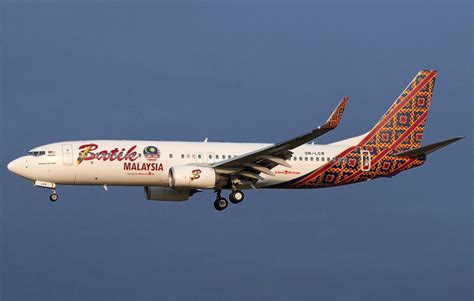
Batik Air Malaysia has officially terminated its Kuala Lumpur–Amritsar service, a decision that reflects a broader trend of safety-driven route restructuring within the airline industry. This unexpected announcement has significant implications not only for passengers traveling directly between these two destinations but also for the entire Southeast Asian travel ecosystem, particularly impacting those who rely on Kuala Lumpur as a transit hub.
As of July 27, 2025, travelers who previously enjoyed the convenience of flying from Kuala Lumpur to Amritsar will now need to seek alternative routes. This change has raised concerns for many, as passengers traveling via Kuala Lumpur to Thailand may find fewer connections available. The ripple effects of this decision could extend beyond direct flight cancellations, creating uncertainty even for travelers not headed to India. Batik Air’s move comes amidst ongoing adjustments in flight operations, which may also affect tourism flows into Thailand due to disrupted transit options.
Network Reconfiguration: What Changed and Why
In a statement issued by Batik Air, the airline clarified that the decision to cancel the Kuala Lumpur–Amritsar route was made in coordination with government aviation oversight, emphasizing that safety remains the top priority. The airline is closely monitoring regional developments, which have led to an overall reshaping of its schedule. Passengers affected by the cancellation of the route are being offered refunds or travel rebooking options, ensuring that they are not left stranded.
The impact of this route cancellation is not isolated to just one flight path. In fact, other long-haul flights operated by Malaysia Airlines, such as those to London and Paris, have also seen changes, with some being diverted via Doha for fuel and clearance purposes. This shift illustrates a broader strategy among regional airlines to adapt to changing geopolitical landscapes and airspace restrictions, which can significantly impact travel plans.
Travel Habits and Transit Confidence Affected
Kuala Lumpur International Airport (KLIA) is a pivotal hub within the region, facilitating a significant volume of international traffic, especially for tourists heading to popular destinations like Bangkok, Phuket, and Chiang Mai. With the reduction of Indian transit passengers passing through KLIA, tourism operators in Thailand have begun to notice subtle yet important shifts in booking behavior. Thai travel agents have reported an uptick in cancellations or adjustments to multi-leg itineraries that include stops in Kuala Lumpur, which could lead to a disruption in package tours that typically rely on these KL stopovers.
Thailand’s Tourism Authority and Ministry of Tourism & Sports have acknowledged that disruptions in regional connectivity can indirectly reduce tourist arrivals. While tourism to Thailand may not be directly affected, the indirect consequences of decreased transit traffic could create challenges for operators who depend on seamless connections between these vibrant markets.
Thailand Tourism: Indirect But Noticeable Effects
Though Thailand is not directly impacted by the termination of the Kuala Lumpur–Amritsar service, the tourism sector may still feel the ripple effects. Malaysia serves as a significant link for travelers from South Asia entering Southeast Asia. With fewer transit passengers arriving in Kuala Lumpur to connect onward flights to Bangkok, tour operators in Thailand’s key cities, such as Bangkok and Phuket, are closely monitoring these connectivity trends.
Travel planners and multi-destination package providers are now faced with the necessity to pivot their offerings. They must either shift to direct flights between India and Thailand or explore using alternative hubs for routing. This logistical rebooking process could result in a slight decline in passenger numbers or lead to increased travel costs for consumers. Such adjustments can have a cascading effect on the overall travel experience, potentially discouraging travelers from pursuing multi-stop itineraries.
Future Outlook: Regional Flexibility and Planning
The evolving geopolitical landscape necessitates that airlines like Batik Air maintain agility in their operations. The recent changes underscore how dependent regional travel ecosystems are on well-functioning transit hubs. With increased tensions prompting route disruptions, it is imperative for tourism bodies in Thailand to prioritize diversifying their source markets while also strengthening direct connectivity with Indian and South Asian carriers. This strategic shift could help offset reliance on transits through Malaysia.
As Batik Air phases out its Kuala Lumpur–Amritsar leg, the airline appears to be focusing on stabilizing its network in other areas. Reports indicate that while certain routes are being pruned in light of operational and geopolitical shifts, services to Thailand remain active, indicating a desire to maintain connectivity in a crucial travel corridor.
Conclusion
Batik Air’s decision to end its Kuala Lumpur–Amritsar service is a response to regional security issues and a necessary step toward restructuring its flight network. The airline is taking proactive measures to assist affected passengers through rerouting and refunds, ensuring that those impacted are given appropriate options. Although Thailand is not the primary focus of these flight changes, the potential decline in travel flows through Kuala Lumpur may indirectly influence inbound tourism to Thailand. Regional aviation authorities and tourism agencies are vigilantly monitoring these developments, striving to maintain seamless travel across Southeast Asia amid evolving geopolitical realities.