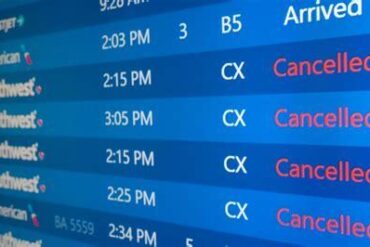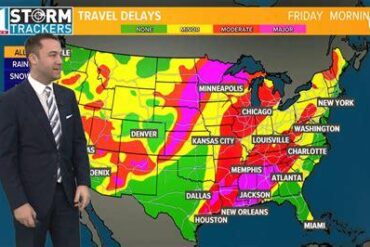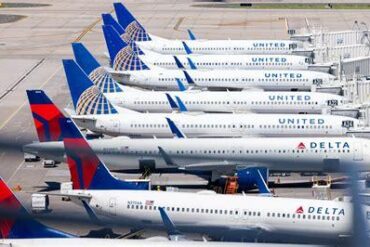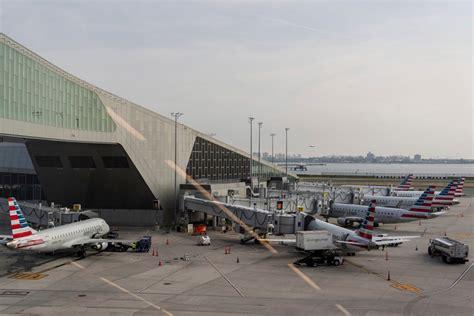
Severe thunderstorms sweeping across the United States have thrown the nation’s air travel network into chaos, grounding over 1,610 flights and disrupting operations at some of the country’s busiest airports. With major carriers like Air Canada, United Airlines, American Airlines, Delta Air Lines, Southwest, and others affected, the ripple effect has left thousands of passengers stranded at key hubs including LaGuardia (LGA), Reagan National (DCA), John F. Kennedy (JFK), Newark Liberty (EWR), Chicago O’Hare (ORD), Charlotte/Douglas (CLT), Philadelphia (PHL), and San Francisco (SFO).
Severe Thunderstorms Unleash Widespread Disruption
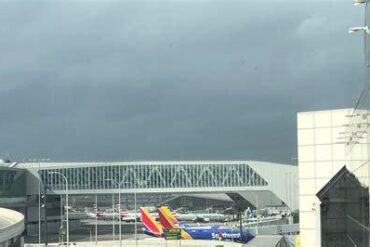
The root of the crisis lies in a volatile weather system that brought relentless lightning, torrential rain, and powerful wind gusts to key air corridors. These storms have not only hampered flight visibility and safe takeoffs or landings, but also overloaded ground operations with rebooking, de-icing, refueling delays, and crew reassignments. The impact has been especially acute during the busy Fourth of July holiday travel period, a peak season that sees millions of Americans take to the skies.
LaGuardia Airport (LGA): Critical Northeast Hub Takes Heavy Hit
LaGuardia Airport in New York reported a staggering 190 delayed flights and 51 cancellations. Republic Airlines, which operates regional flights for several legacy carriers, was the hardest hit with 68 delays and 30 cancellations. Delta and American Airlines also suffered significant slowdowns, with Delta logging 34 delays and 4 cancellations, and American counting 17 delays and 8 cancelled flights.
Passengers at LGA faced hours-long delays in overcrowded terminals with little communication from airline staff. Many inbound and outbound connections were rerouted or abandoned altogether, creating a cascade of scheduling breakdowns.
Reagan National Airport (DCA): Storms Cripple Operations in Washington D.C.
In the nation’s capital, Reagan National Airport recorded 115 delays and 67 cancellations, affecting both domestic and international travel. PSA Airlines, operating under American Eagle, was especially overwhelmed, with 20 delays and 38 cancelled flights. This was followed closely by American Airlines’ mainline operations with 20 delays and 15 cancellations.
The intensity of the storm’s impact on DCA forced reroutes through nearby Baltimore/Washington International (BWI) and Dulles (IAD), further straining the region’s airspace and complicating already stressed traffic control systems.
JFK International: JetBlue and Delta Struggle Amid Operational Gridlock
John F. Kennedy International Airport, one of the busiest transatlantic gateways in the world, suffered 199 delayed and 33 cancelled flights. JetBlue Airways, which uses JFK as a primary hub, had a brutal day with 83 delays and 21 cancellations. Delta, too, reported 41 delayed departures, underscoring the challenges at this sprawling and weather-sensitive airport.
International carriers such as KLM and Emirates were not spared, leading to knock-on effects for Europe-bound passengers and connecting travelers from the Middle East and Asia.
Newark Liberty (EWR): United Airlines’ Backbone Faces Massive Interruptions
Newark Liberty International Airport emerged as one of the most heavily disrupted hubs, with 231 delayed and 26 cancelled flights. United Airlines, which operates a massive schedule out of EWR, experienced 101 delays and 17 cancellations, bringing operations at its northeast stronghold to a virtual halt.
Travelers faced security bottlenecks, baggage backlog, and extensive customer service lines. The lack of contingency gate availability compounded turnaround inefficiencies, forcing aircraft to remain on the tarmac.
Chicago O’Hare (ORD): Midwest Hub Buckles Under Pressure
At Chicago O’Hare International, over 211 flights were delayed and 24 cancelled, many due to weather pushing in from the Great Lakes region. United, again, was the largest airline affected with 63 delays and 12 cancellations. American Airlines and Republic Airlines both recorded over 30 affected flights, while Lufthansa reported 16 delayed flights, showcasing the far-reaching global impacts.
This disruption at O’Hare reverberated across the Midwest, affecting feeder routes to Minneapolis, St. Louis, Kansas City, and other secondary markets.
Charlotte/Douglas (CLT): American Airlines’ Southern Stronghold in Turmoil
Charlotte/Douglas International Airport witnessed 164 delayed and 33 cancelled flights. American Airlines bore the brunt with a staggering 90 delayed and 11 cancelled flights, severely interrupting their southern network. PSA Airlines, a regional affiliate, added to the chaos with 32 delays and 18 cancellations, indicating a bottleneck at the regional feeder level.
Thunderstorms in the Carolinas caused significant ground holds, impacting turnaround efficiency and causing overflow in gate assignments.
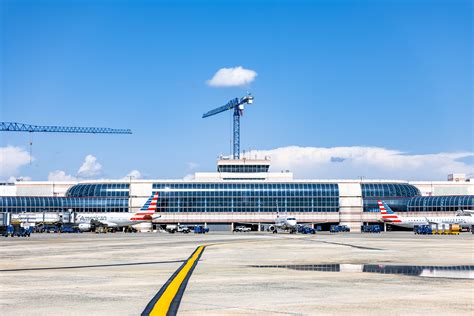
Philadelphia (PHL): Northeast Chokepoint Adds to the Backlog
Philadelphia International Airport experienced 129 delayed and 23 cancelled flights. American Airlines again suffered the most with 58 delayed and 14 cancelled flights, underscoring how deeply its northeastern network was impacted. Secondary airlines such as PSA, Republic, and JetBlue faced dozens of interruptions, with even Spirit Airlines logging multiple disruptions.
PHL’s already congested airspace added to the difficulty in implementing recovery flights, leading to cascading delays into the late hours.
San Francisco (SFO): Western Gateway Feels Eastern Shockwaves
Even on the West Coast, San Francisco International Airport was not immune, reporting 107 delays and 9 cancelled flights. United Airlines, which uses SFO as a key Pacific hub, saw 43 delays and 5 cancellations. Alaska Airlines, American, and JetBlue also posted significant disruption figures.
The operational headaches here stemmed from delayed inbound aircraft from the east, which threw off SFO’s tightly choreographed international departure slots.
Airlines Scramble for Recovery Amid Mounting Passenger Frustration
Major U.S. and Canadian airlines affected by the disruption include:
- Delta Air Lines: Over 300 delays and 60 cancellations, especially at Atlanta and Detroit.
- Southwest Airlines: Nearly 400 delays, notably in LaGuardia, Fort Lauderdale, and DCA.
- JetBlue Airways: Over 150 delays at JFK, Boston, and Fort Lauderdale.
- United Airlines: 250+ delays across Chicago O’Hare, Denver, and Newark.
- American Airlines: Close to 300 disruptions with significant issues in Dallas and Charlotte.
- Air Canada, AeroMéxico, Alaska Airlines, Frontier, and WestJet also reported scattered but persistent network delays.
Passengers flooded social media with reports of poor communication, lack of accommodation, and lengthy wait times at customer service counters. Airline apps and websites often failed to display real-time updates, compounding the confusion and leading to frustration at nearly every major airport terminal.
Meteorological Outlook: More Trouble Ahead
Meteorologists warn that unstable weather systems are likely to linger over parts of the Northeast, Mid-Atlantic, and Midwest through the weekend. This spells further travel uncertainty for millions of Americans attempting to celebrate the Independence Day holiday.
Airlines have activated irregular operations protocols, deploying additional customer service agents, extending flight crew duty rosters, and launching waived rebooking policies. However, experts caution that true schedule normalization may take several days, especially as airports attempt to clear runway congestion and reposition aircraft.
Final Thoughts: Travel Nightmare with Lingering Consequences
The unprecedented suspension and delay of over 1,610 flights during peak summer travel underscores the fragility of the U.S. aviation system under climate pressure. From LaGuardia to SFO, passengers are learning that even the best-laid travel plans can be obliterated by nature’s fury.
As weather patterns continue to grow more extreme, infrastructure resilience, proactive airline communications, and scalable contingency strategies will become not just conveniences, but necessities for the future of safe, reliable air travel.