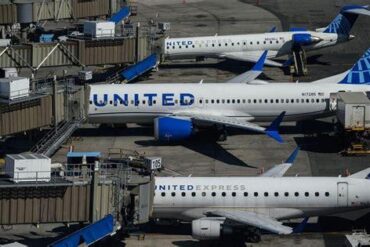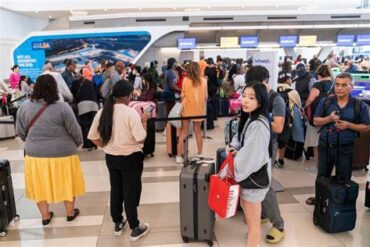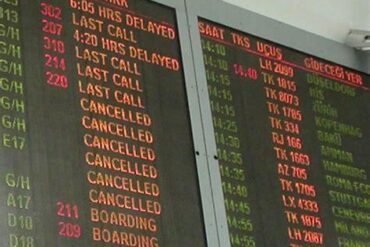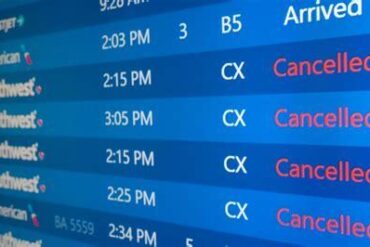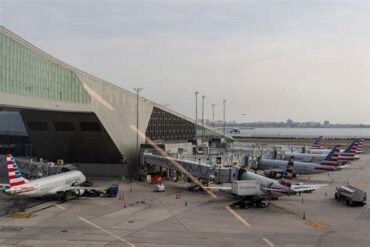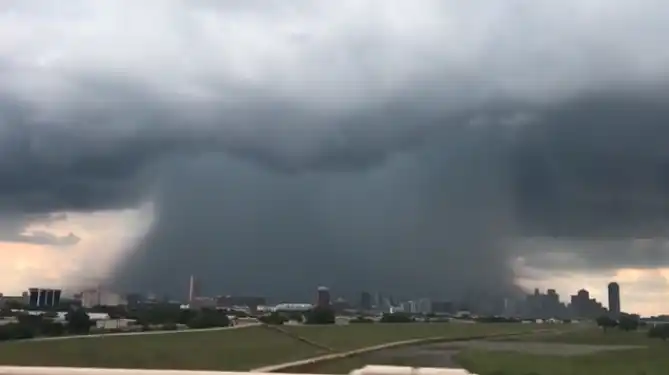
Over the past 72 hours, the U.S. air travel network has plunged into a full-scale crisis, as violent summer thunderstorms swept across central and eastern states, grounding more than 10,000 flights and severely disrupting air traffic across four of the country’s busiest aviation hubs. The cascading delays and cancellations have battered both domestic and international operations for major carriers including American Airlines, United Airlines, Delta Air Lines, and Air Canada.
The disruption, which began Sunday and lasted through Tuesday night, has created one of the most chaotic travel events in recent U.S. aviation history. Dallas–Fort Worth International (DFW), Chicago O’Hare (ORD), Atlanta Hartsfield-Jackson (ATL), and Denver International (DEN) bore the brunt of the storm’s impact, with ripple effects extending to airports across the nation.
FAA Ground Stops as Thunderstorms Engulf Critical U.S. Air Corridors
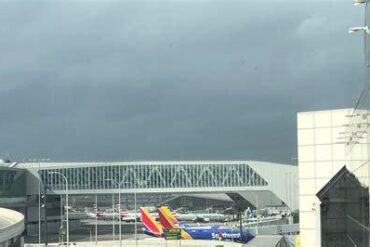
The crisis was sparked by a complex system of fast-moving thunderstorms carrying intense lightning, heavy rain, and turbulent wind. These conditions forced the Federal Aviation Administration (FAA) to issue ground stops and restrict takeoffs and landings at multiple high-traffic airports. Visibility fell below safe minimums while lightning proximity forced ramp closures at Denver and DFW, freezing both arriving and departing aircraft on the ground.
At peak impact, departure delays surged beyond 90 minutes, while incoming flights were diverted, held in airspace, or outright cancelled. The FAA’s air traffic control response, while necessary for safety, created a domino effect that disabled the tightly wound U.S. flight schedule.
Total Disruption Numbers at a Glance
The combined delays and cancellations, according to flight tracking databases and airport operational logs, paint a stark picture:
- Dallas–Fort Worth (DFW): 2,917 delays and 293 cancellations
- Chicago O’Hare (ORD): 2,951 delays and 155 cancellations
- Atlanta Hartsfield-Jackson (ATL): 1,440 delays and 36 cancellations
- Denver International (DEN): 2,667 delays and 146 cancellations
Together, these four hubs alone accounted for 9,975 disrupted flights, and thousands more connections were thrown into chaos.
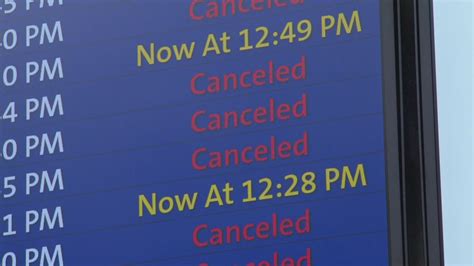
Airline Operations Snarled: From Fortress Hubs to Regional Branches
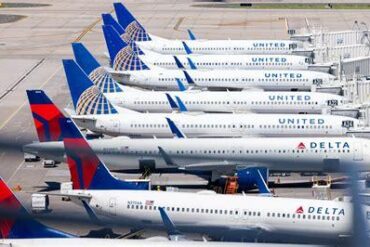
Among the hardest-hit carriers, American Airlines suffered the most severe operational breakdown, particularly at its fortress hub in Dallas. Over three days, American experienced more than 2,400 delayed or cancelled flights, with Envoy Air and PSA Airlines, its regional feeders, compounding the disruption.
United Airlines faced major turbulence out of ORD and DEN, where more than 1,800 flights were affected. Delta Air Lines, typically resilient due to operational redundancy at ATL, was not spared either — with hundreds of delays cascading through its southeastern network.
Air Canada, although based outside the U.S., found itself caught in the crossfire. Its increasing reliance on U.S. gateways, especially ORD and DEN, left it vulnerable to terminal gridlock and tarmac saturation.
Airport-Specific Impact Highlights
Dallas–Fort Worth (DFW)
By Tuesday, American Airlines alone had cancelled 122 flights, while Envoy Air grounded 72 more. Ramp closures and saturated runways led to overflow gate issues, stranding passengers onboard aircraft for extended periods.
Chicago O’Hare (ORD)
ORD reported the highest single airport delay count of the four, with 2,951 flights affected. United Airlines and SkyWest were responsible for most of these disruptions, struggling with aircraft repositioning and crew timing restrictions.
Atlanta Hartsfield-Jackson (ATL)
Delta’s central hub saw lightning-induced ramp holds and gate assignment problems. Hundreds of flights were delayed across three days, and ATL’s pivotal role as a transfer center meant that nationwide itineraries were destabilized.
Denver International (DEN)
DEN faced the second-highest number of delays and was particularly vulnerable due to afternoon lightning storms that led to apron shutdowns. United and Southwest both experienced systemic delays, with flight waves backed up until late evening.

Airlines Respond with Waivers and Emergency Protocols
To mitigate fallout and ease the burden on travelers, airlines quickly issued weather waivers allowing passengers to rebook without fees.
- American Airlines: Waivers active through July 9 for impacted airports.
- Delta Air Lines: Flexible rebooking also available until July 9.
- United Airlines: Implemented travel waivers through July 9 for customers affected by DEN, ORD, and connecting hubs.
- Air Canada: Posted regional travel waiver policies on its U.S. customer portal.
Carriers also activated irregular operations teams, utilizing automated mobile notifications, crew reallocation protocols, and aircraft reshuffling to return to normal flow as quickly as weather permitted.
What Travelers Need to Know About Their Rights
While airlines are not legally required to compensate passengers for weather-related delays, the U.S. Department of Transportation (DOT) requires that travelers be refunded in full if their flight is cancelled — regardless of fare class.
DOT clarifies that:
- For domestic flights, delays exceeding 3 hours (for controllable causes) may trigger compensation or refund.
- For international flights, the delay threshold is 6 hours.
- Airlines must offer transparent communication during operational disruptions, though enforcement varies.
Travelers are urged to remain proactive — using official airline apps to track changes, confirming waiver eligibility, and checking the DOT’s Airline Cancellation and Delay Dashboard for real-time updates.
More Storms Loom as Meteorologists Warn of Continued Instability
The immediate crisis may be subsiding, but meteorological models indicate that unstable air masses will linger throughout the week, with additional severe thunderstorm threats expected to impact airports along the East Coast and Midwest. As of Tuesday night, flash flood watches and weather alerts remain in place for:
- New York City airports (JFK, LGA)
- Philadelphia (PHL)
- Charlotte Douglas (CLT)
- Washington D.C. (DCA, IAD)
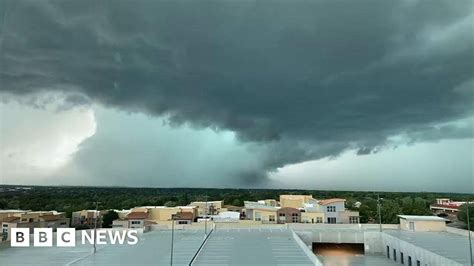
This has raised concern that further ground stops or rebooking waves may be necessary, especially as peak summer travel coincides with a volatile weather pattern.
America’s Sky Grid Strains Under Summer Storms
The sheer scale of this week’s aviation disruption lays bare the fragility of America’s high-volume hub-and-spoke system, where storms in a single region can derail flights in every time zone. The FAA and airlines have made strides in automation and crew planning, but when weather knocks out multiple key nodes like DFW, ORD, ATL, and DEN simultaneously, the national air traffic ecosystem can collapse into cascading delays.
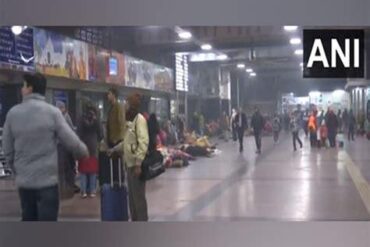
Passengers in this week’s crisis reported sleeping in terminals, waiting hours for luggage, and spending days navigating rebookings for itineraries shattered by grounded aircraft. Social media platforms were flooded with real-time stories of stranded travelers, overbooked customer service desks, and airport concourses turned into temporary shelters.
What Travelers Should Do Now
If you’re planning to fly this week or were already impacted, consider the following immediate actions:
- Monitor your flight status obsessively, even minutes before boarding.
- Check for weather waiver eligibility and reschedule as early as possible.
- Arrive at the airport earlier than usual to account for long rebooking lines.
- Prepare for overnight stays, especially at hub airports.
- Use DOT resources to understand your refund and delay rights.
One of the Summer’s Most Disruptive Weeks for U.S. Aviation
The 10,000+ flights delayed or cancelled in just three days mark one of the most severe operational disruptions of the summer 2025 travel season. With more storms on the radar and a relentless demand for air travel in peak summer months, both airlines and passengers must brace for a continued cycle of unpredictability.
For now, travelers must remain alert, flexible, and informed, recognizing that while the skies may clear briefly, the storm season has only just begun.