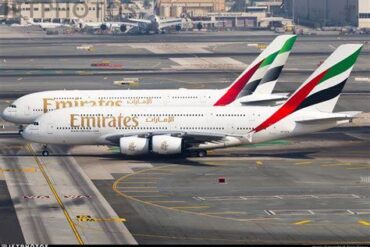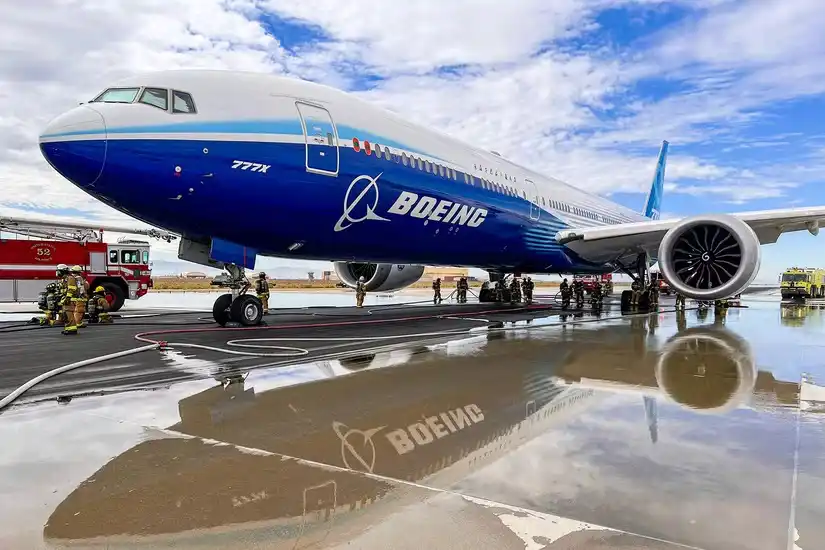
The aviation world is approaching a pivotal transition as Emirates prepares to introduce the Boeing 777X, a next-generation widebody aircraft expected to become the airline’s future flagship. For decades, Emirates built its global reputation around the Airbus A380, a double-deck aircraft that transformed long-haul travel into something closer to a flying hotel than a traditional airliner. Spacious cabins, an iconic onboard bar, and an unmatched sense of scale defined the A380 experience.
However, with the A380 program officially discontinued, Emirates must chart a new course. The Boeing 777X — larger, more efficient, and technologically advanced than previous 777 variants — is positioned as the airline’s long-term replacement. The transition raises an unavoidable question for frequent flyers and aviation enthusiasts alike: can the Boeing 777X deliver the same premium experience once associated with the A380?
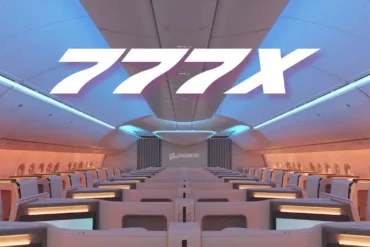
Early renderings of the Emirates 777X cabin, recently revealed through promotional footage, provide valuable insight. They reveal a carefully engineered compromise — one that introduces modern seating, advanced connectivity, and refined cabin design while inevitably sacrificing some of the physical grandeur that only a double-deck aircraft can provide.
The result is a reimagined premium experience, where efficiency, privacy, and connectivity take priority over sheer space.
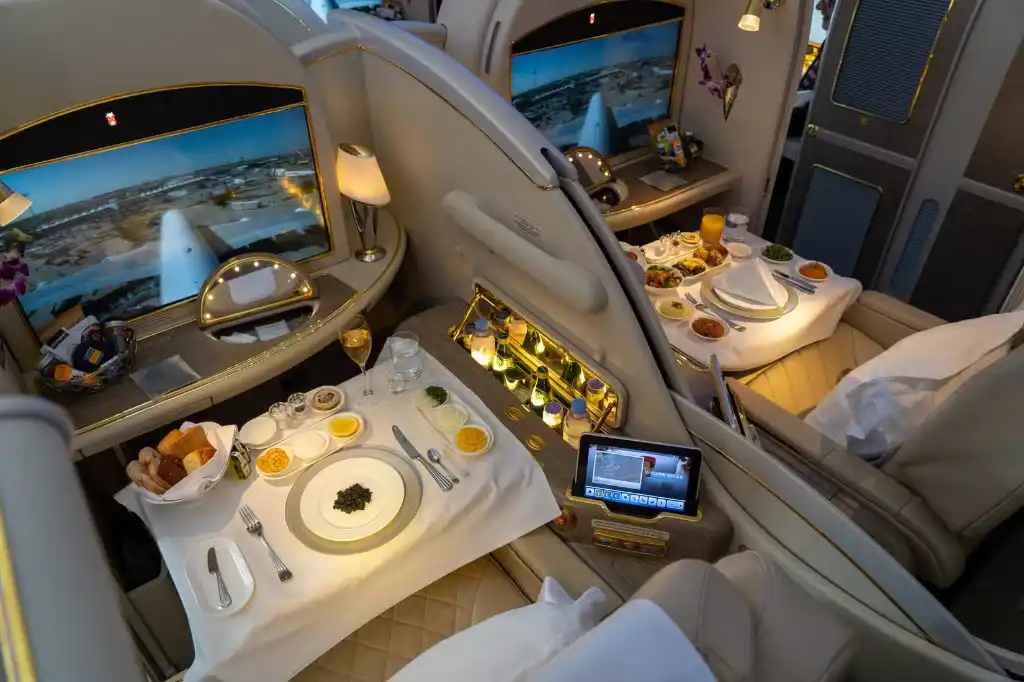
The Boeing 777X: Emirates’ Future Flagship Aircraft
The Boeing 777X program, first launched in 2013, represents the next evolutionary step in Boeing’s highly successful 777 family. Designed to compete against aircraft such as the Airbus A350-1000, the 777X promises greater passenger capacity, improved fuel efficiency, and cutting-edge aerodynamics including its distinctive folding wingtips.
Despite its ambitious design, the program has faced years of delays, turning it into one of the most postponed aircraft launches in modern aviation. Entry into service, originally expected earlier in the decade, is now projected around 2027.
For Emirates, these delays have been particularly significant. The Dubai-based carrier is not just another customer — it is the largest buyer of the 777X worldwide. At the 2025 Dubai Airshow, Emirates expanded its commitment with an order for 65 additional Boeing 777-9 aircraft, bringing its total to a remarkable 270 jets.
This massive order confirms the airline’s long-term strategy. While the Airbus A380 once symbolized Emirates’ global dominance, the 777X will become the backbone of the airline’s future fleet through the 2030s.
Yet replacing the A380 involves more than simply swapping aircraft types. It requires reinventing the onboard experience that helped define Emirates’ brand.
Why Emirates Redesigned the 777X Cabin
As delays pushed the 777X launch further into the future, the airline realized that its original cabin design had become outdated. Passenger expectations had evolved rapidly, especially in premium cabins where privacy, digital connectivity, and personal space have become essential.
Rather than launching with an aging concept, Emirates made a costly but strategic decision: abandon the original seat design entirely.
This redesign reportedly cost between €20 million and €30 million, but it allowed Emirates to introduce a more competitive product aligned with modern premium travel standards.
The updated cabin concept prioritizes:
- Direct aisle access for every business class seat
- Greater privacy through sliding doors
- Modern entertainment technology
- Improved cabin openness through design choices
These changes reveal a broader shift in airline strategy. While the A380 emphasized spectacle and social experiences, the 777X focuses on privacy, efficiency, and personal comfort.
A New Business Class: From 2-3-2 to 1-2-1
One of the most significant improvements in the 777X cabin is the complete transformation of Emirates’ business class layout.
Historically, many Emirates Boeing 777 aircraft used a 2-3-2 seating configuration, meaning some passengers lacked direct aisle access — a layout increasingly considered outdated in the competitive premium market.
The 777X corrects this limitation with a 1-2-1 staggered configuration, ensuring that every passenger has direct access to the aisle.
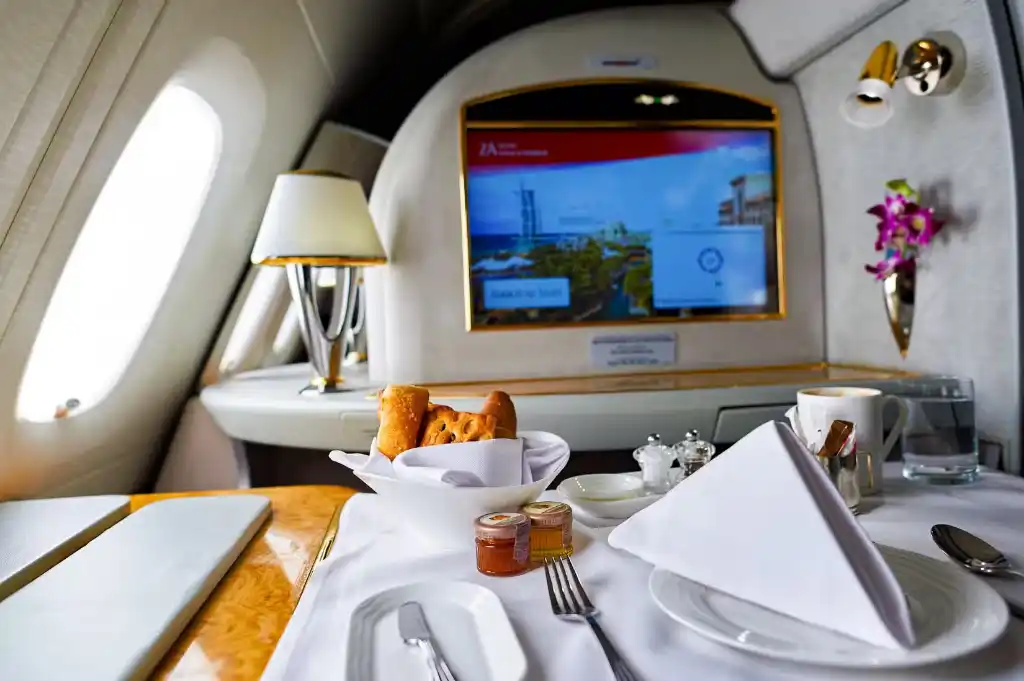
The new seats are expected to be based on Safran’s Unity platform, a design already selected by airlines such as Japan Airlines, Qantas, and Riyadh Air. This platform balances comfort, privacy, and reliability — essential qualities for long-haul travel.
Key features of the new business class suite include:
- Sliding privacy doors for enhanced personal space
- Fully flat beds extending close to two meters
- Large 4K entertainment displays
- Wireless charging stations
- Customizable mood lighting
The removal of certain overhead bins also contributes to a more open atmosphere, an intentional design decision aimed at reducing the feeling of confinement inside a twin-engine fuselage narrower than the A380’s upper deck.
Passengers ultimately gain greater privacy and modern technology, though the physical spaciousness of the A380 remains difficult to replicate.
The Mid-Cabin Social Lounge: A Smaller Evolution
Another distinctive feature revealed in the 777X renderings is the introduction of a mid-cabin social lounge, a space inspired by the famous onboard bar found on Emirates’ A380.
Located between two business-class sections, this lounge can accommodate up to eight passengers. The design includes sofas, individual seats, and a self-serve refreshment area, decorated with subtle design elements including the Ghaf tree motif, a cultural symbol of the United Arab Emirates.
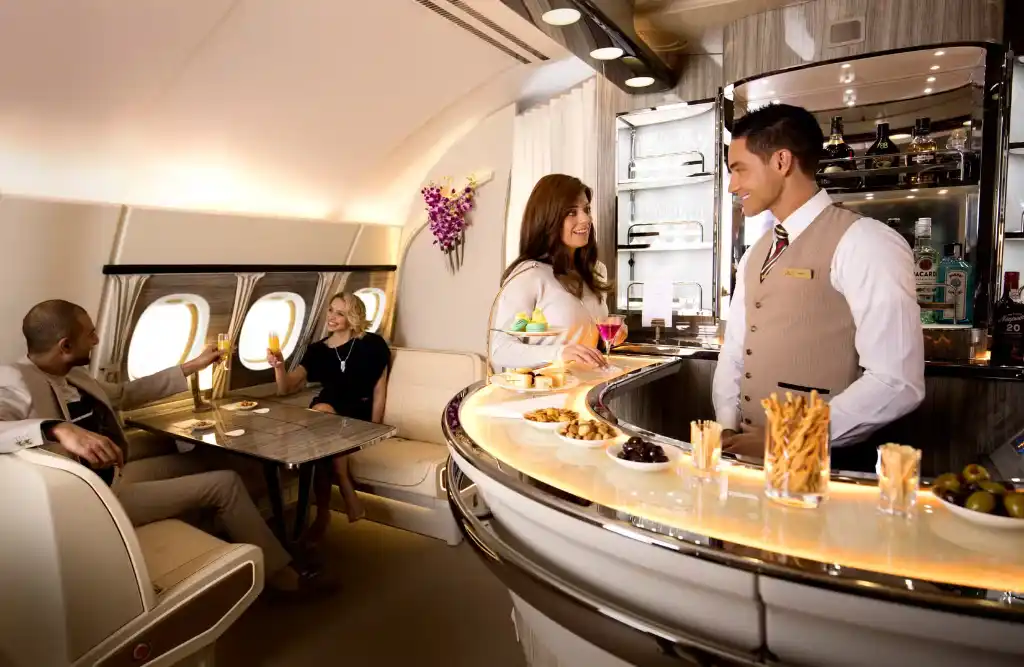
The lounge appears carefully designed to encourage casual interaction while remaining compact enough to preserve seating capacity.
Passengers will find:
- Two-seat sofas paired with individual armchairs
- A small snack and beverage station
- Decorative lamps and magazine displays
- Integrated entertainment screens
Compared with typical airline cabins, the concept still offers a rare communal space, something few airlines attempt on twin-engine aircraft.
Yet when compared directly with the A380 lounge, the difference is unmistakable.
What the A380 Bar Did Better
The A380’s upper-deck lounge became one of the most iconic features in modern aviation. Located at the rear of the aircraft, it was not merely a seating area but a fully staffed cocktail bar.
Passengers could stand, walk around, and socialize freely while a bartender prepared drinks. The space included:
- Large leather sofas
- Standing cocktail tables
- Curved bar counters
- Large video displays
- Panoramic cabin lighting
After its 2017 redesign, the lounge adopted a yacht-inspired aesthetic featuring ivory tones, champagne accents, and woodgrain finishes. The result was a space that felt closer to a luxury hotel bar than a traditional aircraft cabin.
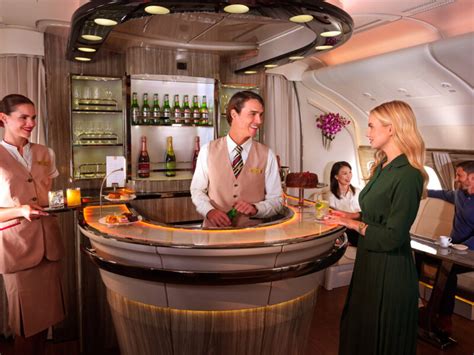
This environment created a unique social dynamic during long flights, particularly on routes connecting Europe, Asia, and North America to Dubai.
The 777X lounge preserves the concept but inevitably sacrifices several elements:
- Less physical space
- No full bartender service
- Reduced standing areas
- Smaller passenger capacity
Passengers gain a quieter and more controlled environment, but the lively social atmosphere of the A380 bar becomes harder to replicate.
Starlink WiFi: A Major Leap in Connectivity
Where the 777X clearly surpasses the A380 is in digital connectivity.
Emirates has committed to installing SpaceX’s Starlink satellite internet across its entire widebody fleet. This massive initiative represents an investment of roughly $5 billion and will cover more than 230 aircraft, including both Airbus and Boeing models.
The rollout began with existing Boeing 777 aircraft and is expected to be completed by mid-2027.
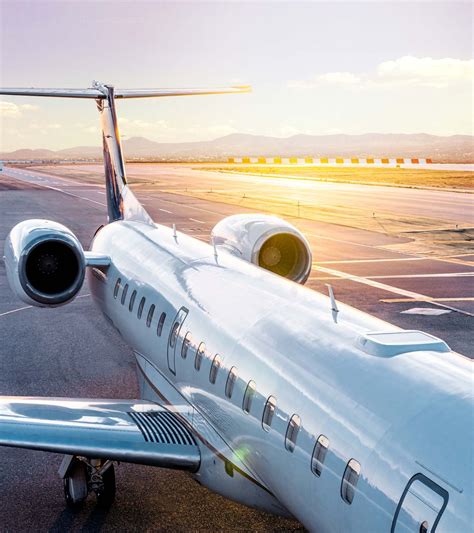
Starlink dramatically changes the inflight connectivity experience. Traditional aircraft WiFi systems often suffer from limited bandwidth and slow speeds. Starlink, by contrast, uses low-Earth-orbit satellites, delivering speeds comparable to home broadband connections.
Passengers will benefit from:
- Free high-speed internet access
- Video streaming capability
- Real-time messaging and video calls
- Online gaming and cloud applications
- Simultaneous use across personal devices
This improvement reflects a broader shift in passenger expectations. Modern travelers increasingly view internet connectivity as essential rather than optional, particularly in premium cabins where business productivity during flights is critical.
In this area, the 777X clearly represents a technological upgrade over the A380.
How Emirates’ New Business Class Compares Globally
While the 777X brings Emirates back to the forefront of premium cabin design, the competitive landscape has evolved dramatically during the aircraft’s delayed development.
Airlines such as Qatar Airways, Singapore Airlines, and ANA have introduced innovative products that redefine business-class travel.
The most notable benchmark remains Qatar Airways’ QSuite, which offers features such as:
- Convertible double beds
- Adjustable privacy panels
- Four-seat “quad” configurations for groups
Meanwhile, Singapore Airlines’ A380 Suites represent an even more extravagant approach, with separate beds and armchairs arranged in room-like cabins.
Against this backdrop, the Emirates 777X business class positions itself as refined, modern, and competitive, though not necessarily revolutionary.
Its emphasis lies in balanced luxury — combining privacy, technology, and comfort without drastically altering the traditional business-class concept.
A Strategic Trade-Off Between Experience and Efficiency
The transition from the Airbus A380 to the Boeing 777X ultimately reflects broader trends shaping modern aviation.
Four-engine giants like the A380 were designed during an era when airlines believed passenger growth would concentrate at massive hub airports. Today, however, airlines increasingly favor efficient twin-engine aircraft capable of serving more flexible routes.
The 777X embodies this shift. It offers:
- Lower operating costs
- Improved fuel efficiency
- Longer range capabilities
- Greater route flexibility
These advantages allow airlines to maintain profitability while still offering premium services.
However, efficiency inevitably requires compromises. The physical scale and grandeur of the A380 cannot be fully recreated inside a smaller twin-engine aircraft.
The Future of the Emirates Passenger Experience
When the Boeing 777X finally enters Emirates service around 2027, it will mark the beginning of a new chapter for one of the world’s most recognizable airlines.
Passengers will encounter a modernized cabin experience defined by private suites, advanced entertainment systems, and ultra-fast internet connectivity. The aircraft will reflect the evolving priorities of modern travelers — productivity, privacy, and digital convenience.
Yet something intangible will also change. The spectacle of the A380, with its vast upper deck and lively onboard bar, represented a unique moment in aviation history that may never fully return.
The Boeing 777X does not attempt to replicate that experience exactly. Instead, it introduces a more refined, technologically advanced version of long-haul travel, one that prioritizes personal comfort over theatrical luxury.
For passengers, the transition means gaining privacy, connectivity, and modern design, while leaving behind the spacious grandeur that once made the Airbus A380 the undisputed king of the skies.