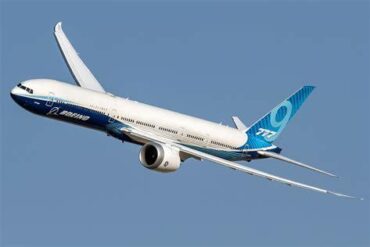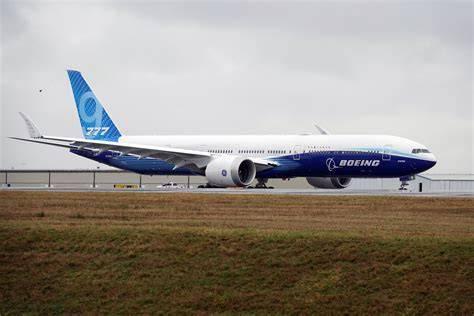
The Boeing 777X has quietly received one of the most significant performance upgrades of its entire development program. Without a new fuel tank, without a heavier airframe, and without any dramatic engineering announcement, Boeing has increased the advertised range of the 777-8, 777-9, and 777-8F variants. The change appears small on paper, but it could reshape the aircraft’s position in the ultra-long-haul market.
Between June and July 2026, Boeing updated the specifications on its official website, increasing the 777-8’s range to 9,500 nautical miles, the 777-9’s range to 8,000 nautical miles, and the 777-8F freighter’s range to 5,000 nautical miles. The unusual part was not the range improvement itself. The surprising detail was that Boeing achieved these gains while leaving the aircraft’s maximum takeoff weight (MTOW) almost unchanged.
Normally, extending the range of a large commercial aircraft requires one of three things: carrying more fuel, reducing structural weight, or increasing the maximum takeoff weight limit. Boeing appears to have done none of these. Instead, the company seems to have discovered that the 777X family was capable of better performance than originally predicted.
The reason behind this quiet update likely comes from a combination of flight test validation, improved performance calculations, GE9X engine efficiency, and aerodynamic refinement. Rather than creating a new version of the aircraft, Boeing appears to have adjusted its published numbers to match what the aircraft has demonstrated during certification testing.
Boeing 777X Range Increase: What Actually Changed
The magnitude of the update is significant. The original Boeing specifications listed the 777-8 with a range of approximately 8,745 nautical miles, while the updated figure now reaches 9,500 nautical miles. This represents an improvement of more than 750 nautical miles, or roughly an 8.6% increase.
The 777-9 experienced an even more interesting adjustment. Its previous advertised range was around 7,285 nautical miles, but Boeing now lists the aircraft at 8,000 nautical miles. That is an increase of approximately 715 nautical miles, close to a 10% improvement.
For the cargo market, the 777-8F also gained additional capability. Boeing increased the freighter’s range from 4,400 nautical miles to 5,000 nautical miles while maintaining the same structural payload capability and takeoff weight.

The updated figures are especially interesting because the aircraft weights barely changed. The 777-9 remains around 775,000 pounds MTOW, while the 777-8 remains near 805,000 pounds MTOW. These differences are measured in only a few dozen pounds, which is effectively meaningless from an engineering perspective.
This means Boeing did not unlock extra range by simply allowing the aircraft to carry more fuel or more weight. Instead, the manufacturer likely refined its understanding of how efficiently the aircraft actually performs.
Another important change involves passenger capacity figures. Boeing moved away from fixed cabin numbers and began showing a range of possible configurations. The 777-8 shifted from a listed two-class capacity of 395 seats to a range of 350 to 425 passengers, while the 777-9 moved from 426 seats to between 375 and 450.
This change reveals a more realistic approach. Commercial aircraft range is directly connected to payload. A lighter passenger configuration with fewer seats and less cargo can fly farther, while a densely packed aircraft will sacrifice range. Boeing is now showing customers a broader picture of the aircraft’s capabilities.
Flight Testing Likely Revealed Better Real-World Performance
The most likely explanation for the Boeing 777X range increase is not a hidden modification but improved confidence in the aircraft’s actual performance.
During the early stages of aircraft development, manufacturers typically publish conservative numbers. Engineers rely heavily on computer models, wind tunnel testing, simulations, and estimated engine performance. These calculations are extremely advanced, but they cannot perfectly predict every detail of an aircraft’s behavior.
Once an aircraft enters flight testing, engineers collect real-world data. They measure fuel burn, aerodynamic efficiency, engine performance, climb capability, cruise behavior, and operational limitations. That information often allows manufacturers to refine specifications upward.
The timing of Boeing’s update strongly suggests this is what happened with the 777X. The aircraft program has progressed through extensive certification testing, giving Boeing access to thousands of hours of flight data.
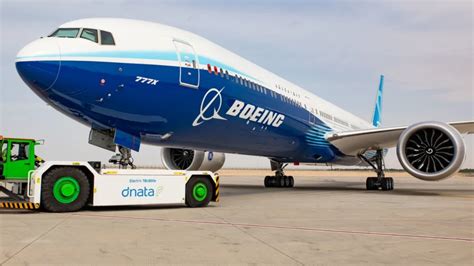
A similar situation occurred with previous aircraft programs. The original specifications are often intentionally conservative because manufacturers want to avoid promising performance that cannot be guaranteed. Once testing proves that the aircraft performs better, the company can safely revise the official numbers.
For Boeing, quietly updating the website instead of announcing a major improvement suggests that the company was not introducing a new capability. Instead, it was likely correcting the public specifications based on verified test results.
A major structural change would have required extensive publicity. A larger fuel tank, stronger wing structure, or increased MTOW would be a significant engineering achievement worth announcing. The absence of such an announcement points toward better-than-expected efficiency rather than physical changes.
The GE9X Engine Is A Major Reason Behind The Extra Range
The heart of the 777X’s efficiency advantage is the GE Aerospace GE9X engine. Designed specifically for Boeing’s newest widebody aircraft, the engine represents one of the largest technological improvements ever introduced for a commercial jet.
The GE9X provides approximately a 10% improvement in specific fuel consumption compared with the GE90-115B, the engine used on the previous-generation 777-300ER. It also benefits from a massive 10:1 bypass ratio and a 60:1 overall pressure ratio, allowing it to generate enormous thrust while burning fuel more efficiently.
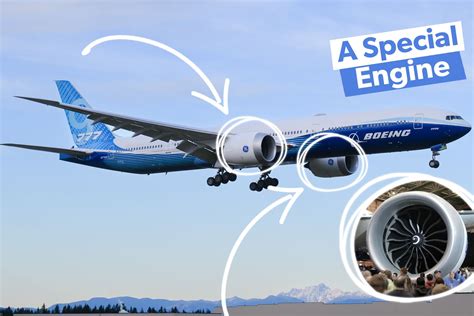
Even a small improvement in fuel consumption calculations can create a major range increase. A large aircraft like the 777X burns thousands of pounds of fuel during long-haul flights. If real-world testing shows the engine performs slightly better than early assumptions, those savings accumulate over a 15-hour mission.
The GE9X has now completed extensive flight testing and accumulated significant operational data. Boeing and GE Aerospace likely have a much clearer understanding of its cruise efficiency than they did when the original range figures were published.
The engine’s performance improvement does not increase MTOW. Instead, it allows the aircraft to travel farther while carrying the same amount of fuel and payload.
Boeing’s Folding Wingtip Design May Have Delivered More Efficiency
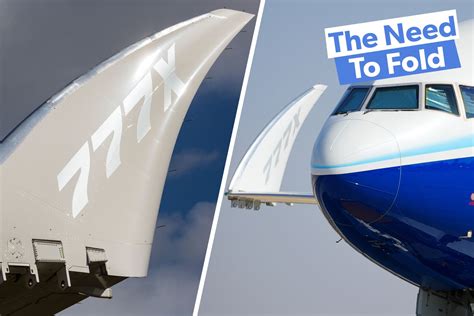
The 777X’s unique folding wingtip system is another possible contributor to the improved range figures.
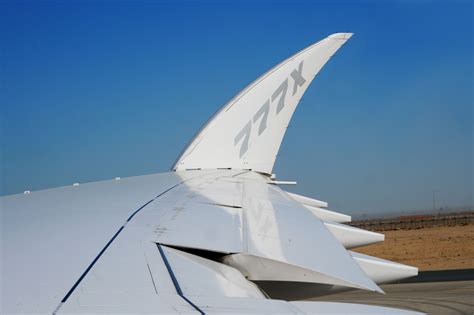
The aircraft uses a much larger wing than previous 777 models. When extended during flight, the wingspan reaches approximately 235 feet 5 inches, compared with about 212 feet 9 inches when folded on the ground.
This design gives Boeing the aerodynamic benefits of a larger wing while allowing the aircraft to operate at airports built for existing 777 models. The larger wing improves lift efficiency, reduces drag, and provides better aerodynamic performance during cruise.
During development, engineers must make conservative predictions about how efficiently a new wing will perform. Computer models provide excellent estimates, but actual flight testing can reveal improvements that were difficult to fully predict.
If the 777X wing is producing better lift distribution or lower induced drag than originally modeled, the aircraft would require less fuel to maintain cruise speed. Over thousands of miles, even a small aerodynamic improvement can translate into hundreds of additional nautical miles.
The folding wingtip was one of Boeing’s biggest technological bets with the 777X. The updated range numbers suggest that this design may be delivering exactly the type of efficiency improvement Boeing expected.
The New Range Numbers Change The Boeing 777X Versus Airbus A350 Battle
The updated performance figures significantly improve Boeing’s competitive position against Airbus in the long-range widebody market.
For years, Airbus has held a strong position in ultra-long-haul operations with the A350 family. The A350-1000 offers impressive range capability, while the specialized A350-1000ULR variant targets some of the longest nonstop routes in the world.
Before the Boeing update, the 777-8 appeared to have a larger disadvantage against Airbus’ longest-range aircraft. With a new published range of 9,500 nautical miles, the gap becomes much smaller.
The improvement is particularly important because airlines are increasingly interested in ultra-long-haul routes. Carriers want aircraft capable of connecting distant cities without intermediate stops, reducing travel time and improving network flexibility.
The 777-8 is designed as the successor to the legendary 777-200LR, an aircraft famous for its long-range capability. The new range figures strengthen Boeing’s argument that the 777-8 can continue that legacy while offering better efficiency.
Meanwhile, the 777-9 remains focused on high-capacity long-haul missions. Its increased range gives airlines more flexibility when operating routes between major international hubs.
Boeing’s Silence Reveals The Real Story Behind The Upgrade
The most interesting part of the 777X range increase is not the number itself. It is how Boeing introduced it.
There was no major press release, no product announcement, and no marketing campaign. The updated specifications simply appeared on Boeing’s website, where aviation observers discovered the changes by comparing current information with archived versions.
That approach suggests Boeing is not presenting the update as a new aircraft capability. Instead, the company appears to be acknowledging that certification testing has confirmed stronger performance than originally expected.
For airlines preparing to receive the 777X, this is a valuable improvement. More range without higher takeoff weight means greater operational flexibility, better route planning, and potentially improved economics.
As the 777X moves closer to certification and entry into service, these revised numbers could become one of the most important developments in the program’s history. Boeing did not redesign the aircraft. It simply discovered that the aircraft it built was already capable of more than initially promised.
The real reason behind the Boeing 777X range boost is therefore not a secret modification or a heavier airplane. It is the combination of proven flight performance, efficient propulsion, advanced aerodynamics, and better engineering data finally catching up with reality.