Global aviation is entering a new phase of strategic fleet deployment, and the Boeing 787-10 Dreamliner has rapidly become one of the most important aircraft shaping airline network decisions. Over the past decade, airlines have faced a complex balancing act: increasing passenger demand, rising fuel costs, and severe congestion at the world’s busiest airports. Within this environment, the largest variant of the Boeing 787 family has emerged as a highly effective solution for airlines seeking to transport more passengers while maintaining strong operational efficiency.
The Boeing 787-10 offers a rare combination in modern aviation economics: high passenger capacity paired with impressive fuel efficiency. While smaller than mega-widebodies such as the Boeing 777-300ER or Airbus A350-1000, it carries significantly more passengers than the Boeing 787-9, allowing airlines to boost seat capacity without dramatically increasing operating costs. This strategic middle ground has made the aircraft particularly attractive for high-demand regional routes, major intercontinental corridors, and slot-constrained hub airports.
Airlines across Asia, Europe, and North America are increasingly deploying the aircraft on routes where demand consistently exceeds supply. From busy domestic trunk routes in Japan to transatlantic connections between London and New York, the Boeing 787-10 is steadily becoming a core component of airline fleet strategies designed to maximize both revenue and efficiency.
The Boeing 787-10: The Largest Dreamliner Variant
The Boeing 787 program was originally conceived as a revolutionary step forward in long-haul aviation. Built primarily using carbon fiber composite materials, the aircraft family introduced dramatic improvements in fuel efficiency, cabin comfort, and operational flexibility compared with earlier widebody aircraft.
Within this family, the Boeing 787-10 represents the largest and highest-capacity version. The aircraft features a fuselage stretch of approximately 18 feet (5.5 meters) compared with the 787-9, enabling airlines to install significantly more seating while maintaining the same advanced wing design and cockpit systems used across the Dreamliner lineup.
This shared architecture provides a major advantage for airlines operating multiple Dreamliner variants. Pilot certification, maintenance procedures, and training requirements remain largely standardized, allowing carriers to operate mixed fleets efficiently without introducing major operational complexity.
In typical configurations, the 787-10 accommodates around 330 passengers in a two-class layout, though some airlines opt for denser seating arrangements depending on their network strategies. This capacity positions the aircraft between mid-sized and large widebodies, making it ideal for routes where demand is strong but not large enough to justify aircraft such as the Boeing 777 or Airbus A350-1000.
The aircraft’s range of roughly 6,330 nautical miles (11,730 kilometers) is slightly shorter than the 787-9, but it still enables airlines to operate transatlantic flights, long regional services across Asia, and routes linking Europe with the Middle East. This combination of reach and capacity explains why the aircraft is increasingly deployed on routes with consistently high passenger loads.
Fuel Efficiency That Strengthens Airline Economics
Fuel costs remain one of the largest expenses for airlines, and modern aircraft economics are largely shaped by fuel efficiency per seat. The Boeing 787-10 benefits from the same technological foundation that defines the entire Dreamliner program.
Key innovations include:
- Lightweight composite airframe construction
- Advanced aerodynamics and high-efficiency wing design
- Next-generation turbofan engines
Airlines can select between two advanced engine options: the General Electric GEnx and the Rolls-Royce Trent 1000. Both engines deliver significant improvements in fuel burn compared with older widebody engines used on aircraft like the Boeing 767 or early Airbus A330 models.
The result is a dramatic reduction in fuel consumption per passenger seat, especially when the aircraft operates near full capacity. On high-demand routes where passenger loads are consistently strong, the economics become particularly attractive. Airlines can transport hundreds of passengers in a single flight while maintaining relatively low operating costs per seat.
This efficiency has made the aircraft especially valuable for airlines replacing aging widebody fleets. Many carriers that previously relied on Boeing 767s or older A330 aircraft are transitioning toward the 787 family to achieve substantial long-term cost savings.
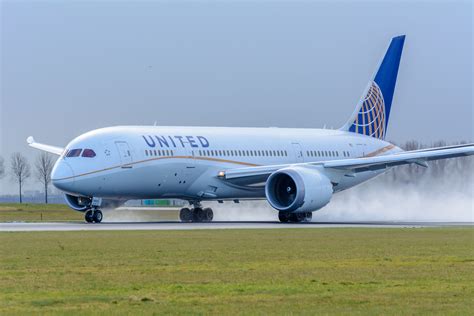
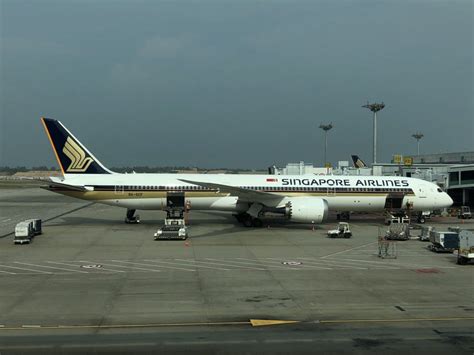
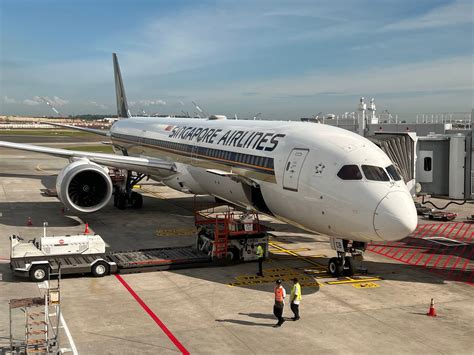
Among global operators, Singapore Airlines currently leads the world in Boeing 787-10 fleet size, followed by United Airlines, British Airways, EVA Air, and KLM. These carriers have recognized the aircraft’s ability to support dense route networks while maintaining modern passenger comfort standards.
A Powerful Tool for Slot-Constrained Airports
One of the most significant forces shaping modern airline strategies is the growing number of slot-constrained airports. Major global hubs such as London Heathrow Airport, Tokyo Haneda Airport, and Singapore Changi Airport operate close to their maximum capacity for much of the day.
At these airports, airlines cannot easily add additional flights because takeoff and landing slots are extremely limited. When demand grows, carriers must look for alternative ways to increase capacity.
Deploying larger aircraft on existing routes has become one of the most effective solutions.
By replacing smaller aircraft with the Boeing 787-10, airlines can add dozens of additional seats per flight without increasing the number of departures. Over an entire year, this strategy can translate into hundreds of thousands of additional passengers carried using the same slot allocation.
This approach improves both revenue potential and operational efficiency. Airlines can capture more passenger demand while avoiding the logistical and regulatory challenges associated with securing new slots at congested airports.
For example, London Heathrow Airport, one of the most heavily constrained airports in the world, frequently encourages airlines to deploy higher-capacity aircraft on popular routes. The Boeing 787-10 fits perfectly within this strategy, offering strong capacity without the operational complexity of larger widebodies.
The World’s Busiest Boeing 787-10 Routes
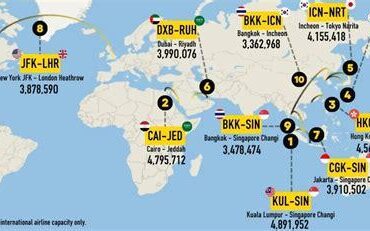
Operational data from aviation analytics company Cirium highlights just how heavily the aircraft is being utilized on certain routes. Many of the busiest deployments occur within Japan and the wider East Asian aviation market, where passenger volumes are extremely high and airport capacity is limited.
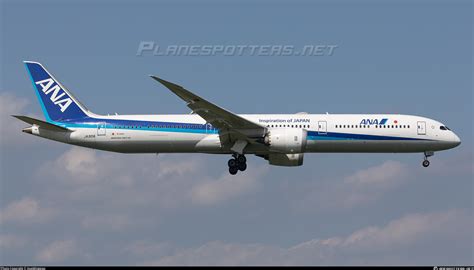
The single busiest Boeing 787-10 route in the world is currently operated by All Nippon Airways (ANA) between Tokyo Haneda Airport (HND) and Sapporo New Chitose Airport (CTS). In March 2026, ANA operates 169 flights in each direction on this route, demonstrating the enormous passenger demand between Japan’s capital and the northern island of Hokkaido.
Other high-frequency routes highlight the aircraft’s role in dense regional networks:
- Tokyo Haneda – Okinawa Naha (ANA)
- Tokyo Haneda – Fukuoka (ANA)
- Tokyo Narita – Taipei (EVA Air)
- Osaka Kansai – Taipei (EVA Air)
- London Heathrow – New York JFK (British Airways)
These routes illustrate the aircraft’s flexibility. It operates equally well on short high-density regional flights and long-haul intercontinental services.
Some routes last only a few hours but carry extremely high passenger volumes, while others stretch across oceans linking major global hubs. The Boeing 787-10’s versatility allows airlines to deploy it across both categories without sacrificing efficiency.
Why Asian Airlines Are Leading Adoption
Airlines based in Asia-Pacific have embraced the Boeing 787-10 more enthusiastically than any other region. This trend reflects the unique structure of aviation markets across Asia.
The region contains numerous megacities connected by relatively short to medium-haul flight distances. Routes linking cities such as Singapore, Tokyo, Seoul, Taipei, Bangkok, and Hong Kong often carry enormous passenger volumes while lasting only a few hours.
These dense routes benefit greatly from aircraft that can carry large numbers of passengers without requiring ultra-long-range capabilities.
Carriers like Singapore Airlines, All Nippon Airways, and EVA Air have built major portions of their fleet strategies around the aircraft. The 787-10 enables them to serve busy regional markets while maintaining premium cabins, modern in-flight entertainment systems, and improved passenger comfort.
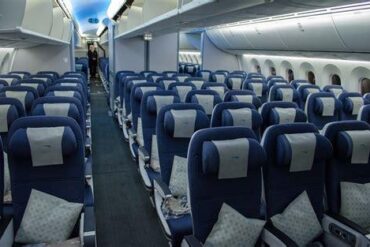
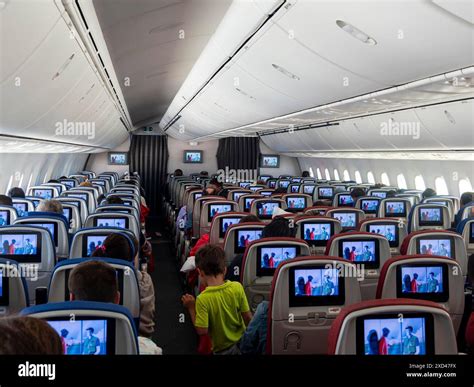
The Dreamliner cabin environment itself also contributes to its popularity. The aircraft features:
- Higher cabin humidity
- Lower cabin altitude
- Larger windows
- Improved air filtration systems
These features enhance passenger comfort, particularly on longer flights, making the aircraft appealing for both airlines and travelers.
Growing Use on Transcontinental and Long-Haul Routes
While Asia remains the strongest market for the Boeing 787-10, airlines in North America and Europe are increasingly deploying the aircraft on long-haul and transcontinental routes as well.
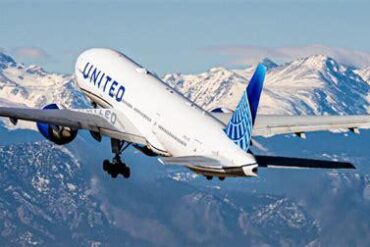
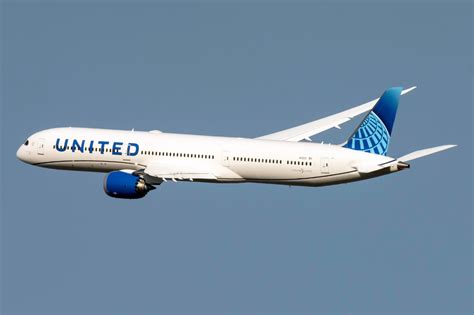
In the United States, United Airlines is currently the only American carrier operating the Boeing 787-10, and the airline has integrated the aircraft into both its domestic and international network. The aircraft frequently appears on high-demand routes connecting major hubs such as Newark, San Francisco, and Los Angeles.
Internationally, the aircraft also serves routes such as Newark to Tel Aviv, where demand remains strong but may not justify significantly larger aircraft.
European airlines are adopting similar strategies. British Airways, for instance, deploys the 787-10 on premium transatlantic routes including London Heathrow to New York JFK, one of the most competitive long-haul corridors in global aviation.
These deployments highlight an important trend: airlines are increasingly focusing on precisely matching aircraft capacity with route demand. Instead of defaulting to the largest aircraft available, carriers are selecting models that deliver the best combination of efficiency, range, and seat capacity.
The Boeing 787-10 fits neatly into this strategy, offering more seats than earlier Dreamliner variants without the operational cost profile of larger widebodies.
Why the Boeing 787-10 Will Remain Central to Airline Strategies
The global aviation industry continues to evolve as airlines respond to shifting passenger demand, environmental pressures, and operational constraints. Within this landscape, the Boeing 787-10 has established itself as a highly strategic aircraft.
Its design reflects a broader industry trend toward efficient, flexible widebody aircraft that can operate across a wide variety of routes. Rather than relying solely on massive aircraft designed for maximum capacity, airlines are increasingly prioritizing balanced aircraft that maximize seat economics without sacrificing flexibility.
As air travel demand continues to grow worldwide, particularly across Asia-Pacific and major transatlantic markets, the Boeing 787-10 will likely play an even greater role in shaping airline networks. Its combination of high seating capacity, advanced efficiency, and compatibility with slot-constrained airports ensures that it will remain a key asset for airlines seeking to maximize both revenue and operational performance.
For passengers, this trend also means more opportunities to experience the modern Dreamliner cabin environment on busy routes around the world. For airlines, it represents a carefully engineered solution to one of aviation’s oldest challenges: moving more people efficiently through a crowded global air transport system.