The sight of a sprawling international airport rising from open water feels almost mythic, as if modern aviation has borrowed a page from science fiction. Yet some of the world’s busiest and most strategically important airports are not anchored to continents at all. They sit offshore, engineered onto artificial islands where waves once ruled uninterrupted. This is not architectural vanity or novelty. It is a pragmatic response to pressure—geographic, political, economic, and environmental—that has reshaped how global cities connect to the sky.
Air travel has grown faster than almost any other form of transportation, and the world’s major coastal cities are feeling that squeeze most intensely. Dense urban cores, protected natural terrain, and skyrocketing land values leave little room for runways measured in kilometers. When expansion inland becomes impossible, the sea offers a controversial but compelling alternative: a blank slate where engineers can design airports at the scale modern aviation demands.
What looks like extravagance from the air is, up close, a carefully calculated solution. Offshore airports are quieter for residents, freer to operate around the clock, and capable of expanding without demolishing neighborhoods. The cost is enormous, the engineering unforgiving, and the environmental stakes high—but for certain cities, there is simply nowhere else left to build.
Why Landlocked Cities Turn to the Sea
For global hubs like Hong Kong, Osaka, and Seoul, geography is destiny. Mountain ranges hem cities in from one side, while dense urban development fills every flat hectare on the other. Airports require vast, contiguous land parcels with strict safety buffers, approach paths, and future expansion zones. In cities where real estate is already among the most expensive on Earth, acquiring that land onshore can be politically explosive and economically irrational.
Building offshore sidesteps these constraints in one decisive move. Artificial islands allow planners to design long parallel runways, expansive taxiway systems, and terminals sized not just for today’s traffic, but for decades of growth. Flight paths over water drastically reduce noise pollution, freeing airports from nighttime curfews that cripple capacity at landlocked hubs like London Heathrow or Paris Charles de Gaulle.
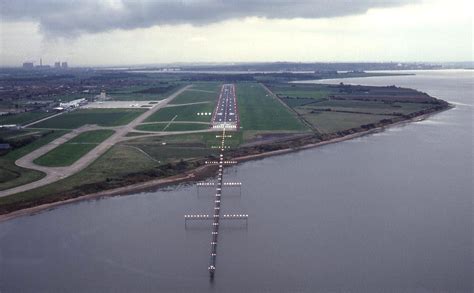
There is also a safety dimension that rarely gets public attention. Over-water approaches and departures reduce the risk of catastrophic ground impact during emergencies. The surrounding sea functions as a natural safety buffer, offering margin where dense cityscapes would allow none.
The Strategic Logic Behind Artificial Island Airports
The short answer to why these airports exist is space—but the long answer involves national ambition, logistics dominance, and economic leverage. Airports are not just transportation nodes; they are trade engines. Cargo hubs determine how quickly high-value goods move across continents, and passenger hubs shape tourism flows and business connectivity.
Artificial islands offer something increasingly rare: control. Engineers can dictate soil composition, elevation, drainage, and layout from the seabed up. There are no awkward legacy terminals, no roads cutting through runway safety zones, no residential blocks pressing against perimeter fences. Everything is purpose-built.
This freedom comes at staggering cost. Dredging millions of cubic meters of seabed, constructing reinforced seawalls, and stabilizing soft marine soils demand decades of planning and continuous monitoring. Yet for economies that depend on uninterrupted global access, the investment pays dividends measured not just in revenue, but in strategic resilience.
Asia’s Dominance in Ocean-Built Airports
No region has embraced offshore airports as decisively as Asia. Japan, China, and South Korea combine three critical factors: mountainous terrain, coastal megacities, and export-driven economies that rely on air connectivity. In Japan alone, a majority of suitable flat land is already developed or protected, leaving few inland options for large-scale aviation infrastructure.
Political history also plays a role. Japan’s painful land acquisition battles during the construction of Narita Airport in the 1970s reshaped public policy. Offshore construction, while expensive, avoids the social unrest of displacing communities and fighting decades-long legal battles.
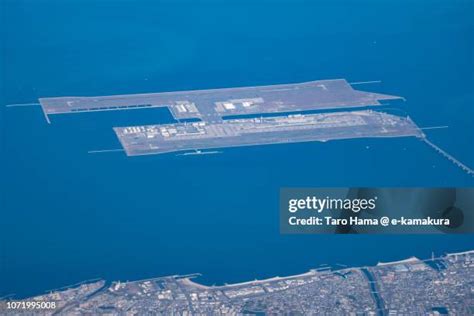
The result is a cluster of major island airports that now rank among the busiest on the planet, including Kansai International Airport (KIX), Hong Kong International Airport (HKG), Incheon International Airport (ICN), and Chubu Centrair International Airport (NGO). These airports operate with fewer curfews, higher cargo throughput, and greater long-term flexibility than most of their landlocked counterparts.
Kansai International Airport: The Original Engineering Gamble
When Kansai International Airport opened in 1994, it rewrote the rules of airport construction. Built entirely on a man-made island in Osaka Bay, KIX was the first major international airport of its kind. The price tag—approximately $20 billion—made it one of the most expensive infrastructure projects of the 20th century.
The engineering challenge was immense. The seabed beneath Osaka Bay is soft and compressible, and almost immediately after opening, the island began to sink. Engineers responded with adjustable terminal pillars, continuous seawall reinforcement, and relentless monitoring. Subsidence has never been eliminated, only managed.
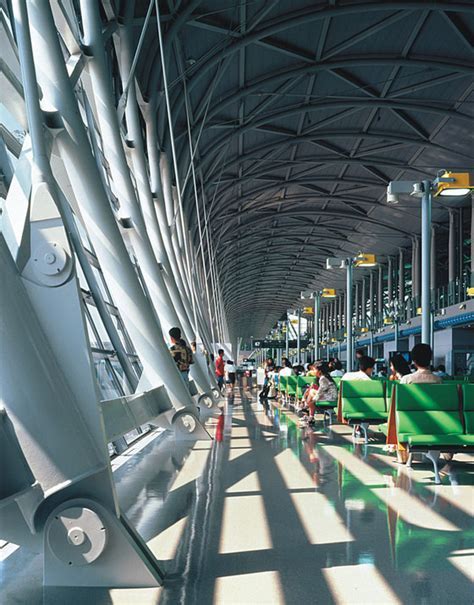
Despite these challenges, KIX is widely considered a triumph. It operates 24 hours a day, handles massive cargo volumes—including FedEx’s North Pacific hub—and serves as the primary international gateway for the Kansai region, which generates nearly one-fifth of Japan’s GDP. The lessons learned at Kansai have influenced geotechnical engineering worldwide, earning the project recognition as one of the greatest civil engineering achievements in history.
Hong Kong International Airport: From Constraint to Global Powerhouse
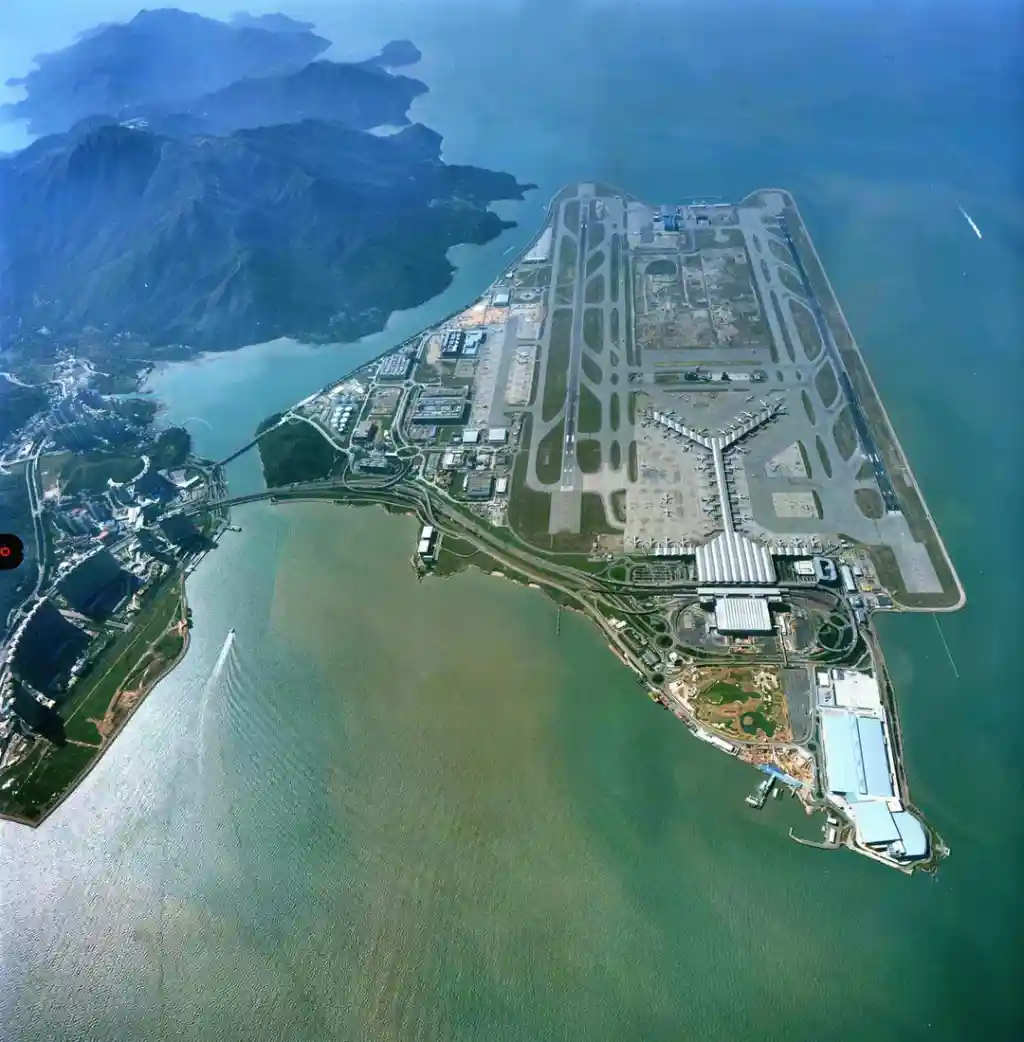
If Kansai proved offshore airports were possible, Hong Kong International Airport proved they could dominate. Built by flattening two natural islands and reclaiming over nine square kilometers of seabed, HKG replaced the notoriously constrained Kai Tak Airport and instantly transformed Hong Kong’s aviation capacity.
The project effectively expanded Hong Kong’s land area by nearly 1%, an extraordinary figure for a territory where space defines economic survival. The airport’s location enables long-haul, high-capacity operations with minimal noise impact on the city, while its logistics integration turned HKG into the world’s busiest cargo airport for years running.
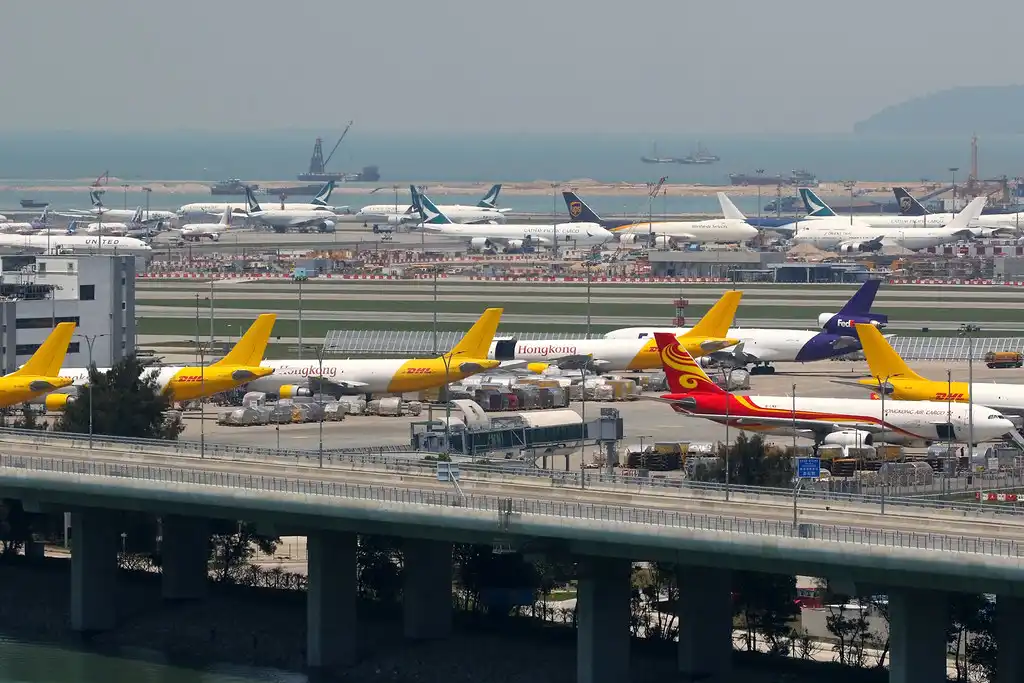
The ongoing Three-Runway System (3RS) expansion adds hundreds of hectares of reclaimed land and significantly boosts capacity. When fully operational, it cements Hong Kong’s role as a critical node in global trade, where air cargo accounts for roughly 42% of the territory’s total external trade value.
The Environmental and Structural Trade-Offs
Building in the ocean is never consequence-free. Marine ecosystems bear the brunt of reclamation, with coral reefs destroyed, fish habitats disrupted, and tidal patterns altered. Even after construction ends, reclaimed land continues to settle, requiring constant maintenance and adaptation.
Structural vulnerability is another reality. Offshore airports face heightened exposure to typhoons, storm surges, and tsunamis. Their reliance on a limited number of bridges or tunnels creates potential single points of failure. Kansai itself was temporarily isolated in 2018 when a storm surge damaged its access bridge, a stark reminder of the risks involved.
These challenges do not negate the value of island airports, but they demand relentless investment. Offshore aviation infrastructure is not something you build and forget. It is something you manage, adjust, and defend for its entire lifespan.
The Next Giant: Dalian Jinzhouwan International Airport
China is now pushing the concept to unprecedented scale with Dalian Jinzhouwan International Airport. Spanning 21 square kilometers of reclaimed land, it is set to become the largest artificial island airport ever constructed. Designed for 80 million passengers and one million tons of cargo annually, the airport will replace the over-capacity Dalian Zhoushuizi Airport and serve as a major Northeast Asian hub.
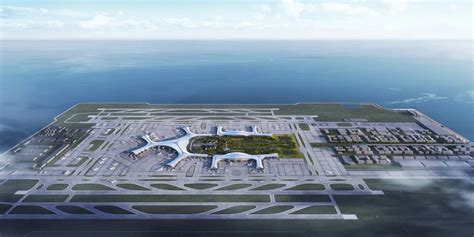
Although timelines have shifted, with full operations now projected well into the 2030s, the ambition is unmistakable. Four runways, a terminal capable of handling the Airbus A380, and deep integration with regional trade routes position Dalian as a strategic counterweight to other Northeast Asian hubs.
Why the Ocean Keeps Winning
The rise of ocean-built airports is not a trend driven by aesthetics or novelty. It is the logical endpoint of urban density colliding with global mobility. As cities grow, land becomes political, emotional, and astronomically expensive. The sea, for all its engineering hostility, offers neutrality—a space where scale is limited only by technology and funding.
Artificial island airports represent a willingness to confront complexity head-on. They trade short-term simplicity for long-term capacity, betting that global connectivity is worth the cost, the risk, and the constant vigilance. For the cities that depend on them, these airports are not just infrastructure. They are lifelines, floating between land and sky, quietly carrying the weight of globalization on reclaimed ground.