Air travel depends on information. Gates change without warning, boarding groups shift, delays appear suddenly, and cancellations ripple through entire terminals. Most passengers experience these disruptions as an inconvenience. For blind and visually impaired travelers, they can become barriers that leave people isolated, confused, and dependent on strangers for help. Despite decades of disability protections and promises from airlines, a growing number of incidents reveal a troubling reality: modern airports increasingly rely on visual communication systems that unintentionally exclude those who cannot see them.
Passengers who request assistance often assume that support will remain available throughout their journey. Yet when operations break down, handoffs fail, and employees become overwhelmed, blind travelers can suddenly find themselves navigating one of the world’s most complex environments alone.
The issue is not simply about technology or regulations. It is about dignity, independence, and whether airlines are truly delivering the accessibility they promise.
The experience of blind traveler Anthony Maglione illustrates how quickly assistance can disappear during disruptions. While traveling from Pittsburgh International Airport to Sarasota Bradenton International Airport through Philadelphia International Airport, Maglione expected the support he had requested to follow him throughout his journey. Instead, after his connecting flight was canceled, he discovered that the airport assistant who had been helping him was no longer available.
The cancellation itself was not communicated directly to him. Rather than receiving verbal assistance, he learned of the disruption through the American Airlines mobile app. Information that other passengers absorbed from screens and terminal activity had to be discovered independently.
Faced with uncertainty, Maglione made a heartbreaking appeal to fellow travelers.
“I will pay somebody to take me to the American Airlines desk.”
Fortunately, another passenger volunteered to help him free of charge, allowing him to reach customer service and eventually secure a rebooked itinerary through Charlotte Douglas International Airport. The incident ended without tragedy, but the experience exposed a larger problem affecting blind passengers throughout the aviation system.
Three things become painfully clear from moments like these. First, requesting assistance does not guarantee continuous support. Second, communication systems still prioritize sight. Third, the kindness of strangers has become an unofficial backup plan when airlines fail.
After the incident, American Airlines stated that it was reviewing the matter with the contractor responsible for special services in Philadelphia and reiterated its commitment to passengers requiring assistance. The airline also apologized directly to Maglione and offered goodwill compensation.
Yet passengers judge accessibility by experience rather than policy statements. Procedures written in manuals matter little when support vanishes during a disruption.
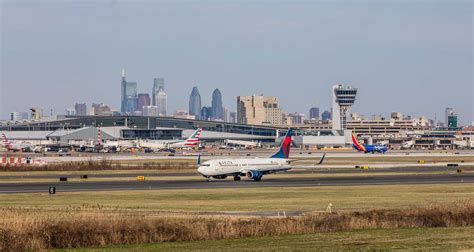
Why Airport Operations Depend Too Heavily on Visual Information
Modern airports are designed around screens. Departure boards display delays. Apps deliver updates. Gate signs change constantly. Customer service queues shift locations without notice. Visual information dominates nearly every stage of travel.
For passengers with vision impairments, that creates a dangerous imbalance.
Under U.S. Department of Transportation regulations and the Airline Passengers with Disabilities Bill of Rights, airlines must ensure that travelers with disabilities receive timely access to critical information. Delays, cancellations, gate changes, boarding announcements, connections, baggage updates, and emergency information are all supposed to be communicated in accessible ways.
On paper, those protections appear comprehensive.
Reality is far more complicated.
Airport journeys involve multiple handoffs between airline employees, contract workers, Transportation Security Administration officers, gate agents, and customer service representatives. During routine operations, those transitions may function adequately. During irregular operations, however, communication chains frequently collapse.
Ironically, moments of disruption are exactly when blind travelers need the most assistance. Unfortunately, they are also when employees face the highest stress levels and operational pressures.
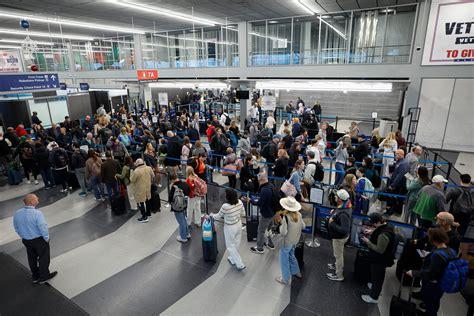
As flights are delayed and gates become crowded, information spreads visually and informally through the terminal. Sighted passengers notice lines moving or see messages on monitors. Blind travelers may remain unaware that anything has changed until long after everyone else has adjusted.
Accessibility gaps become particularly dangerous because airports themselves are massive, constantly changing environments where independence depends on reliable information.
Previous Incidents Reveal a Pattern Rather Than Isolated Mistakes
Anthony Maglione’s experience is not unique.
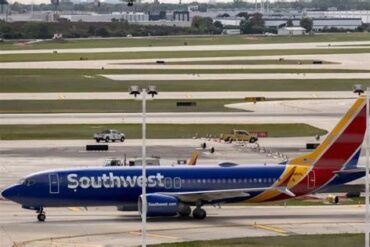
Another incident involving Southwest Airlines demonstrated how vulnerable blind passengers can become during disruptions. Two visually impaired travelers flying from Louis Armstrong New Orleans International Airport to Orlando International Airport were reportedly left waiting at their original gate after a lengthy delay.
As other passengers were rebooked onto a different flight, the pair remained unaware of the changes unfolding around them. Five hours later, they boarded the delayed aircraft as its only passengers.
Southwest later apologized and explained that the travelers had not been forgotten intentionally and could not be located in time for rebooking.
Whether caused by oversight or communication failures, the result was the same.
Passengers who depended on accessible information were excluded from operational decisions affecting everyone around them.
These incidents reveal a recurring weakness. Information often spreads visually through gate areas, smartphone notifications, or conversations among staff and passengers. If blind travelers are not included in those information channels, they risk being left behind.
Accessibility should never depend on luck.
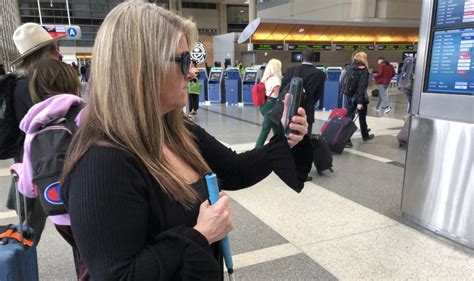
Technology Is Offering New Solutions Beyond Traditional Assistance
Recognizing the limitations of human support alone, several airports across the United States have introduced specialized navigation tools aimed at promoting independence.
Aira Explorer represents one of the most promising developments. Through a smartphone camera and microphone, users connect with trained visual interpreters who provide real-time descriptions of surroundings, read signs, and help locate destinations.
Kansas City International Airport, Austin-Bergstrom International Airport, and Chicago Midway International Airport have adopted the technology to offer free support for blind and low-vision passengers.
Another innovation, GoodMaps Explore, functions like indoor GPS. Traditional satellite navigation struggles inside terminals, but GoodMaps uses highly detailed 3D mapping to provide step-by-step directions.
Louisville Muhammad Ali International Airport and Bradley International Airport have implemented GoodMaps technology, allowing passengers to independently navigate complex indoor spaces.
These technologies address different aspects of accessibility.
Aira acts as a remote set of eyes.
GoodMaps acts as a navigation system.
Neither replaces airline responsibilities, but they demonstrate that accessibility can extend beyond assigning a single employee to escort passengers. Independence, redundancy, and real-time information offer more reliable solutions.
Technology alone cannot solve every problem, but it can reduce dependence on inconsistent human handoffs.
Human Assistance Still Matters More Than Ever
Even the best software cannot replace thoughtful communication.
Mark Riccobono, president of the National Federation of the Blind, emphasizes that helping blind travelers begins with something remarkably simple: asking whether help is needed.
Too often, well-meaning individuals jump into what he describes as “superhero mode.” Instead of responding to the specific request being made, people assume greater levels of assistance are required.
In reality, many blind travelers simply need information.
Direct statements are far more useful than vague gestures.
Saying, “Your gate changed to B17,” provides actionable information.
Saying, “Customer service moved about thirty feet to your left,” offers orientation.
If guidance is requested, allowing the traveler to hold your arm is generally preferable to pulling or pushing them.
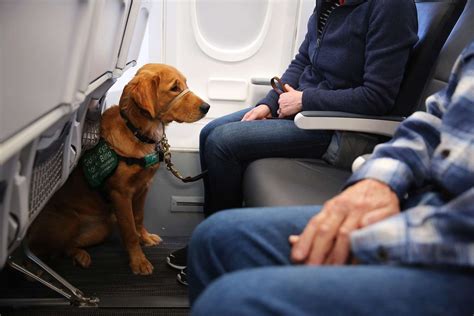
Guide dogs also require respect. Distracting them through petting, feeding, or calling their names interferes with their work and potentially compromises their handler’s safety.
Helping effectively means preserving independence rather than replacing it.
The Real Problem Is Not Kindness but Dependence on Kindness
Stories like Anthony Maglione’s highlight something deeply uncomfortable.
Strangers often step forward with compassion. Fellow passengers provide directions, walk people to customer service desks, and explain announcements. Their kindness deserves recognition.
But kindness should never become infrastructure.
No traveler should have to offer money simply to reach an airline counter.
No passenger should wonder whether assistance workers will return.
No one should be forced to depend on chance encounters to receive information that everyone else receives automatically.
Airports function best when communication is redundant. Information should appear visually, verbally, digitally, and personally. Accessibility succeeds when multiple systems overlap rather than relying on a single employee or one smartphone notification.
As airports become increasingly digital, accessibility cannot remain an afterthought. The same innovation transforming check-in, security, and navigation must also ensure that blind travelers receive equal access to information and assistance.
Until that happens consistently, many visually impaired passengers will continue to face an uncomfortable truth.
When airline systems fail, strangers often become the last line of support.
And that is a responsibility the aviation industry should never have handed to them.