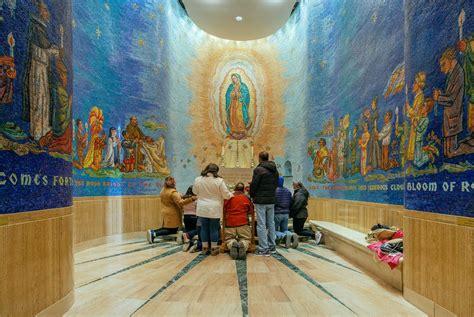
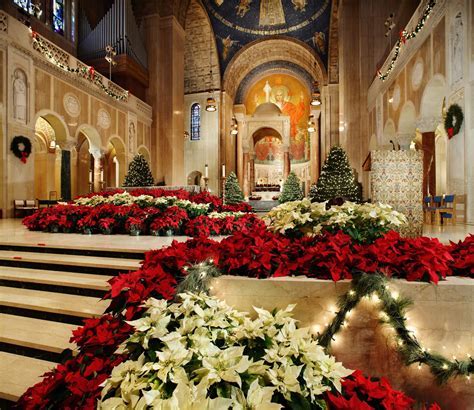
The Basilica of the National Shrine of the Immaculate Conception in Washington, D.C., has taken a monumental step towards inclusivity by launching specialized guided tours tailored specifically for deaf and blind visitors. This innovative initiative, which began in April 2025, is the first of its kind in the United States, allowing individuals with sensory impairments to engage more profoundly with the history, art, and spirituality of this sacred space. The shrine’s Deaf and Blind Tour Initiative aims to provide an immersive experience that fosters a deeper connection to the basilica’s rich heritage, making it accessible to all.
The tours feature distinct elements designed for both deaf and blind participants. For the deaf, the shrine employs American Sign Language (ASL) interpreters who collaborate with trained docents to guide visitors through the various sections of the basilica. These interpreters are not only proficient in ASL but have also adapted the docent scripts to align with the grammatical structure and expressive nuances of sign language. This thoughtful adjustment ensures that deaf visitors can fully appreciate the significance of each artwork and architectural detail without feeling lost in translation.
For blind visitors, the basilica offers a series of tactile stations that allow them to interact with sacred art and architectural features in a meaningful way. This unique aspect of the tours was developed with the invaluable insights of Father Mike Joly, a blind priest who helped shape the tactile experiences. These hands-on stations include detailed representations of sculptures and architectural elements, enabling blind visitors to understand and appreciate the basilica’s beauty through touch.
The inception of the Deaf and Blind Tour Initiative can be traced back to the passionate efforts of volunteer docent Marilyn Lasecki. Her journey began in 2021 when she sought to research how to make the basilica more welcoming to those with sensory impairments. Inspired by similar programs at the Vatican Museums, Lasecki reached out to Monsignor Walter Rossi, the rector of the shrine, and ASL interpreter Katy Betker to bring this vision to life. Lasecki’s personal motivation stemmed from her desire to honor her late father, Leonard, who had dedicated his life to working with the deaf community.
The program emphasizes inclusivity and respect, as expressed by Monsignor Vito Buonanno, the director of pilgrimages for the shrine. He stated, “The Deaf and Blind communities are often underserved in museums and church settings. These tours are our way of welcoming them in a meaningful and respectful way.” This commitment to accessibility reflects a broader trend within cultural institutions aiming to ensure that all individuals can participate in shared experiences, regardless of their abilities.
Among the standout features of the tour for deaf visitors is the personalized approach taken by the ASL interpreters. Betker explained that translating the docent scripts into ASL requires careful consideration of the language’s unique structure. The guides make it a priority to allow deaf participants to observe and engage with the exhibits fully before continuing their commentary. This attention to communication dynamics creates an atmosphere where deaf visitors can immerse themselves in the liturgy and the overall experience, a sentiment echoed by Father Michael Depcik, a deaf priest from the Archdiocese of Baltimore, who participated in one of the initial tours.
For blind visitors, the tactile experiences have been meticulously crafted to enhance their engagement with the basilica. One of the first tactile stations features a scale model of the basilica, constructed from over 10,000 Lego bricks. This interactive model is located on the crypt level and serves as a vital tool for blind visitors to visualize the basilica’s layout and architectural grandeur. Other tactile stations include sculptures representing the Blessed Mother and Christ, as well as tactile images of the four Evangelists, allowing blind visitors to explore the intricate details of these artworks by touch.
Father Joly’s contributions to the development of the tactile stations have been instrumental. During one of his visits to the Founder’s Chapel, he was given the opportunity to explore a marble sarcophagus by touch, revealing intricate details that he had never fully appreciated before. His insights into the artwork within the Our Mother of Africa chapel led to a reinterpretation of the figures, emphasizing the expressive gestures of Jesus in a way that added depth to the visitors’ understanding. “It’s amazing what you can learn by feeling,” remarked Dee Steel, the director of the basilica’s Office of Visitor Services. “Father Mike taught us to see more with our hands than we had ever seen with our eyes.”
As the tours gain traction, the National Shrine is committed to raising awareness and expanding participation in this groundbreaking initiative. Monsignor Buonanno expressed the desire to reach as many individuals as possible within the deaf and blind communities. “We want people to know that these tours exist and that everyone is welcome. It’s important that we continue to open our doors and provide meaningful experiences for all people, regardless of their abilities.”
With the launch of the Deaf and Blind Tour Initiative, the Basilica of the National Shrine of the Immaculate Conception is setting a new standard for accessibility in religious and cultural spaces. By offering these specialized experiences, the basilica ensures that everyone can partake in the beauty, spirituality, and historical significance of one of the nation’s most iconic religious landmarks. This initiative not only enriches the experience for participants but also serves as a beacon of hope and inclusivity for other institutions seeking to follow suit in creating accessible environments for all.