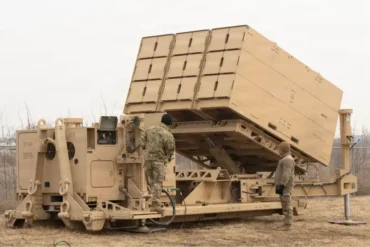
The U.S. Army has taken a decisive step to eliminate long-standing coverage gaps in the Patriot air defense system, awarding a major contract modification that pushes its next-generation radar from promise into sustained production. The move reflects a sober assessment of today’s threat environment, where faster, more agile missiles and coordinated attack profiles have turned sensor performance into a strategic vulnerability rather than a technical footnote.
On January 29, 2026, the Pentagon confirmed a $1.03 billion contract modification with RTX to continue Year Two production of the Lower Tier Air and Missile Defense Sensor (LTAMDS). An initial obligation of $254.6 million funds near-term manufacturing while locking in a production trajectory that runs through March 2030. The investment underscores Washington’s view that radar modernization is as critical as interceptor stockpiles, because detection quality and tracking fidelity dictate whether engagements succeed at all.
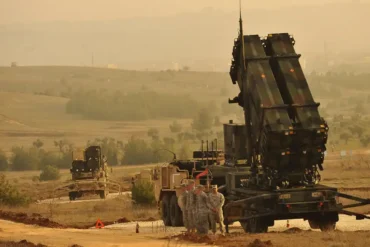
For Patriot operators, the issue is not theoretical. Legacy radars such as the AN/MPQ-53 and AN/MPQ-65 have delivered reliable service for decades, but their sector-limited field of view has created exploitable seams. Adversaries have learned to plan approach vectors, launch geometries, and timing to slip through blind zones, compressing decision windows and stressing fire units. LTAMDS is designed to end that geometry problem outright.
A Contract That Signals Long-Term Commitment
The size and structure of the award matter. By funding LTAMDS as a multi-year production line rather than a one-off upgrade, the Army is signaling that Patriot’s sensor layer is being fundamentally re-architected for the coming decade. Workshare remains centered in RTX’s U.S. radar manufacturing base, sustaining an industrial ecosystem that supports both domestic fielding and allied demand.
This approach also reflects a pragmatic budgeting strategy. Incremental obligations maintain momentum while preserving flexibility, ensuring the program adapts to evolving requirements without losing schedule discipline. In air and missile defense, where technology cycles collide with urgent operational needs, that balance is increasingly rare—and valuable.
From Sector Coverage to Full Azimuth Awareness
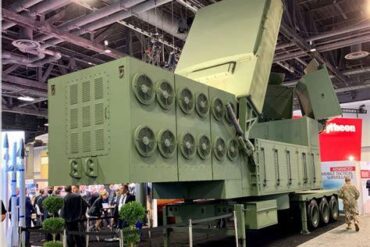
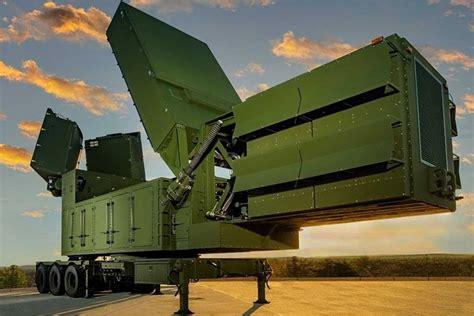
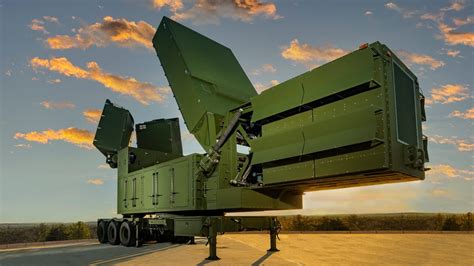
At the heart of LTAMDS is a 360-degree radar architecture that replaces the narrow sector view of earlier Patriot sensors. The system combines a main array with two auxiliary side arrays, delivering continuous azimuthal coverage without the need to physically reposition the radar to protect against threats from unexpected directions.
Operationally, this change is transformative. Fire units no longer have to orient sensors based on anticipated threat axes, a practice that consumed time and introduced risk in dynamic environments. Full coverage improves survivability against saturation tactics, where attackers probe one direction while striking from another, and it simplifies deployment planning in complex terrain or coalition settings.
Multi-Band Design Built for Modern Threats
LTAMDS is not just wider in view; it is deeper in capability. The radar operates primarily in the C-band for its main mission while incorporating dual-frequency functionality in X-band and S-band. This matters because different bands excel at different tasks. S-band supports long-range surveillance and acquisition, while X-band provides high-resolution tracking and discrimination—essential when dealing with decoys, clutter, and maneuvering targets.
With a stated detection range exceeding 100 kilometers, LTAMDS strengthens early warning and engagement preparation. In contested environments, those extra seconds can determine whether an interceptor launches inside its effective envelope or arrives too late to matter.
Gallium Nitride and the Physics of Reliability
A defining technical feature of LTAMDS is its use of Gallium Nitride (GaN) transmit/receive modules. Compared to older Gallium Arsenide designs, GaN delivers higher power efficiency, greater output, and reduced thermal stress. The result is not just better performance on paper, but more stable tracks under demanding conditions.
High-speed ballistic and hypersonic-adjacent threats can present abrupt changes in radar cross section and trajectory, particularly in terminal phases. GaN-enabled sensitivity reduces the risk of track loss at precisely the moment when continuity matters most. In air defense, reliability is physics made operational.
Mobility as a Survival Trait
Despite its sophistication, LTAMDS remains an expeditionary, road-mobile radar. The system is designed for towing and rapid emplacement, with transportability compatible with C-17 Globemaster III airlift. This mobility is not a convenience; it is a survival trait.
Modern conflicts have demonstrated that fixed or slow-moving sensors quickly become targets for precision strikes and loitering munitions. A radar that can displace rapidly complicates adversary targeting cycles and supports distributed operations. In European theaters, where reinforcement timelines and cross-border mobility are central planning assumptions, this flexibility is especially valuable.
Closing the Gap in Integrated Air and Missile Defense
LTAMDS is built from the outset to plug into the Army’s Integrated Air and Missile Defense (IAMD) architecture. Rather than serving a single launcher set, the radar contributes to a networked battlespace, sharing high-quality tracks across multiple shooters. This breaks the traditional one-radar, one-battery paradigm that constrained earlier Patriot operations.
In practical terms, networked sensing means a radar positioned for optimal survivability or coverage can still support interceptors located elsewhere. The value of LTAMDS therefore scales with the network, amplifying its impact beyond the immediate footprint of a single fire unit.
Addressing the Full Spectrum of Aerial Threats
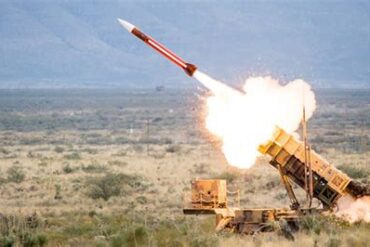
The mission set for LTAMDS spans tactical ballistic missiles, cruise missiles, and fixed-wing aircraft, aligning with the evolving mix of threats faced by U.S. and allied forces. Patriot remains the primary interceptor system in this tier, but its effectiveness is now anchored to a sensor that can see first, see everywhere, and see clearly.
This alignment is deliberate. Interceptor performance has steadily improved, but without commensurate sensor upgrades, those gains risk diminishing returns. LTAMDS restores balance by ensuring the sensor layer keeps pace with the speed, maneuverability, and complexity of modern attack profiles.
Strategic Implications Beyond U.S. Borders
By committing to LTAMDS production through 2030, the United States is also shaping allied defense planning. European demand for Patriot upgrades has surged as frontline states reassess vulnerability to missile strikes. A proven, production-backed radar strengthens confidence in Patriot as a long-term solution rather than a stopgap.
More broadly, the program reflects a strategic shift in deterrence thinking. Sensors are becoming as decisive as shooters. An adversary that cannot exploit radar blind spots faces higher uncertainty, higher costs, and lower confidence in strike outcomes. In that sense, LTAMDS is not just a technical upgrade—it is a recalibration of the risk equation.
A Cornerstone for the Next Decade of Air Defense
The LTAMDS contract modification marks a quiet but consequential milestone. It acknowledges past limitations without nostalgia and invests decisively in a sensor architecture built for the realities of contemporary warfare. By closing coverage gaps, enhancing discrimination, and embedding mobility and networking at its core, LTAMDS reshapes how Patriot fits into a layered, resilient air and missile defense posture.
As missile threats continue to diversify and accelerate, the success of air defense will hinge less on any single interceptor and more on the quality of the first look. With LTAMDS moving firmly into production, the U.S. Army is betting—wisely—that seeing everything, from every direction, is the foundation on which credible defense is built.