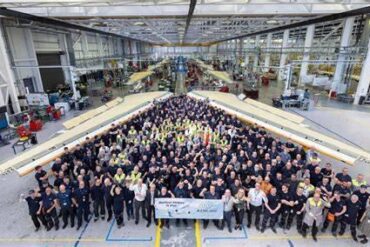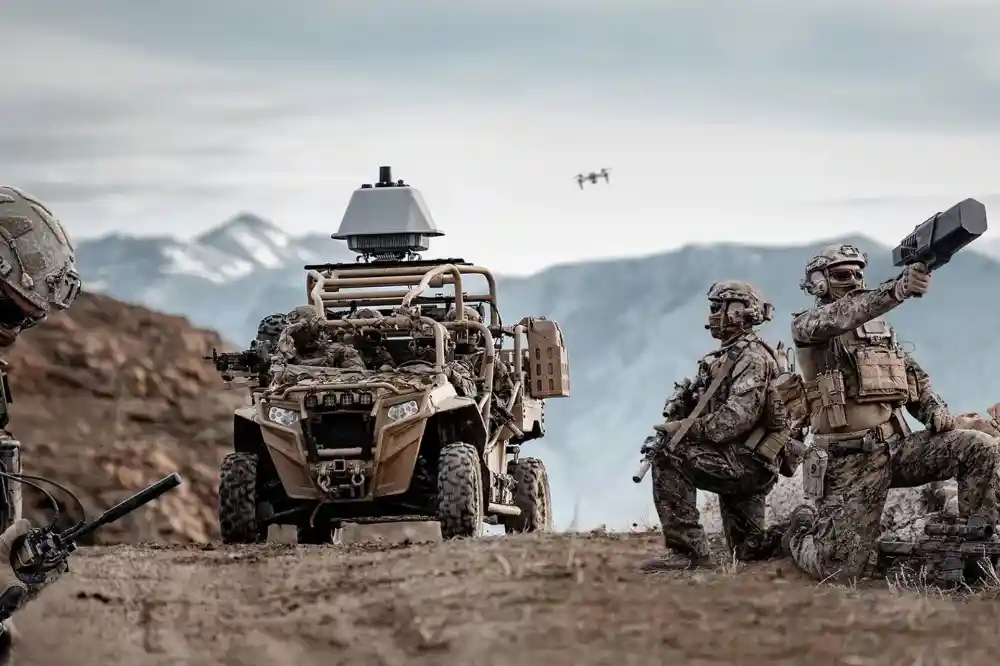
The rapid rise of unmanned aerial systems has transformed modern security planning. Small drones—once considered recreational gadgets—have evolved into powerful reconnaissance and attack platforms capable of threatening military bases, airports, and critical infrastructure. In response to this changing threat environment, Australian defense technology company DroneShield has announced the establishment of a new production facility in Belgium, dedicated to manufacturing advanced counter-unmanned aerial systems (C-UAS) for the European market.
This move reflects a broader shift across Europe as governments and defense organizations intensify efforts to protect sensitive locations from increasingly accessible drone technology. By locating manufacturing inside the European Union, DroneShield aims to accelerate deliveries, reduce logistical constraints, and strengthen partnerships with regional security agencies and military customers.
The Belgian facility represents more than a manufacturing site—it is part of a growing international effort to build layered defenses against small aerial threats that have proven disruptive on modern battlefields and in civilian environments alike.
The Growing European Demand for Counter-Drone Technology
Across Europe, authorities are confronting a reality that security planners did not fully anticipate a decade ago: small drones can create outsized strategic problems. Their affordability, portability, and ease of operation allow hostile actors—whether state-backed forces, criminal organizations, or individuals—to conduct surveillance or carry small payloads with alarming simplicity.
Airports, power plants, military installations, and public events have all experienced incidents involving unauthorized drone activity. Even a brief intrusion into restricted airspace can disrupt operations or force costly shutdowns. These incidents have accelerated investment in technologies capable of detecting and neutralizing unmanned aerial vehicles before they reach sensitive areas.
DroneShield’s decision to manufacture within Europe comes at a moment when counter-drone capabilities are transitioning from niche defense tools into standard security infrastructure. Governments increasingly require systems that can monitor airspace, identify drone signals, and intervene electronically without causing collateral damage.
By positioning production in Belgium, the company places itself closer to both its customers and the operational environments where these technologies are most urgently needed.
Why Belgium Became the Strategic Location
Belgium’s selection as the site for the new manufacturing facility reflects both geographic and political considerations. Situated at the heart of Western Europe and home to major NATO and European Union institutions, the country already plays a central role in regional defense coordination.
Belgian authorities have also taken concrete steps to strengthen their own counter-drone architecture. The government recently approved a €50 million national anti-drone program focused on safeguarding airports, nuclear installations, and military bases from aerial intrusions.
In late 2025, Belgium further demonstrated its commitment by signing a €2.8 million contract with DroneShield for portable counter-drone equipment capable of detecting and electronically disrupting hostile unmanned aircraft.
Establishing production within Belgium therefore provides mutual advantages. The country gains local industrial capability tied to an emerging security sector, while DroneShield benefits from proximity to European defense clients and streamlined supply chains across the continent.
DroneShield’s Expanding Global Footprint
Headquartered in Sydney, Australia, DroneShield has evolved rapidly as the demand for counter-drone systems expands worldwide. The company employs roughly 400 specialists, including engineers, software developers, and defense technology experts focused on electronic warfare and drone detection.
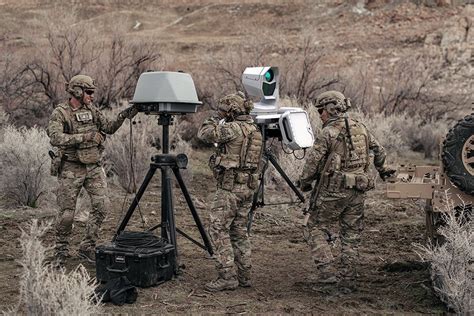
Its portfolio covers multiple layers of defense against unmanned aerial threats. Instead of relying on a single tool, DroneShield’s approach combines sensor detection, tracking technologies, and electronic countermeasures to form an integrated defensive architecture.
Among its flagship systems are:
- RfPatrol Mk2, a portable radio-frequency detection device capable of identifying drone controller signals.
- DroneSentry-X Mk2, a fixed-site monitoring platform designed to provide continuous surveillance and tracking of aerial threats.
- DroneGun Mk4, a handheld electronic countermeasure system that disrupts communication links between drones and their operators.
Together, these technologies form a layered network capable of identifying a drone, verifying its presence visually or electronically, and neutralizing it before it can complete a mission.
The Belgian production facility will manufacture components and complete systems intended primarily for European military, government, and infrastructure protection customers.
How Portable Drone Guns Neutralize UAV Threats
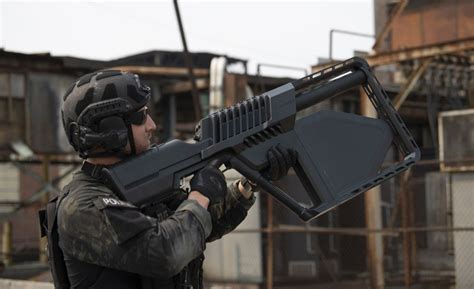
Among the most recognizable elements of modern counter-drone arsenals are the so-called “drone guns.” Despite their rifle-like appearance, these devices do not fire projectiles. Instead, they emit targeted radio frequency interference designed to sever the connection between a drone and its operator.
DroneShield’s DroneGun Tactical system is a prominent example. The device transmits directed signals across communication frequencies commonly used by commercial drones, particularly the 2.4 GHz and 5.8 GHz bands. These frequencies support the control links and video transmission systems that allow operators to guide drones remotely.
When the signal is interrupted, the drone’s onboard software typically activates safety mechanisms. Depending on the manufacturer and configuration, the aircraft may:
- Land immediately at its current position
- Return automatically to its take-off location
- Hover until control is re-established
Because these responses rely on built-in safety protocols, the drone is neutralized without the need for destructive force, reducing the risk of debris falling in populated areas.
The Detection Layer: Sensors That Spot Drones Early
Neutralization alone is not enough. Effective counter-drone defense begins with early detection, allowing security teams to assess potential threats before they approach protected zones.
DroneShield integrates several complementary sensor technologies into its systems. Each plays a distinct role in identifying drones that might otherwise evade traditional radar systems.
Radio-frequency sensors scan the airwaves for signals emitted by drone controllers and onboard transmitters. Because many commercial drones rely on standardized communication protocols, these signals can often be recognized and categorized.
Electro-optical cameras provide visual confirmation, enabling operators to verify whether a detected object is truly a drone rather than a bird or other airborne object.
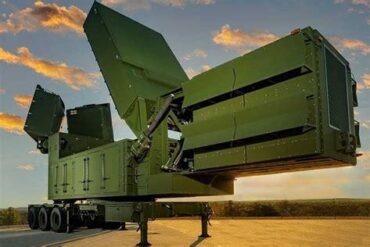
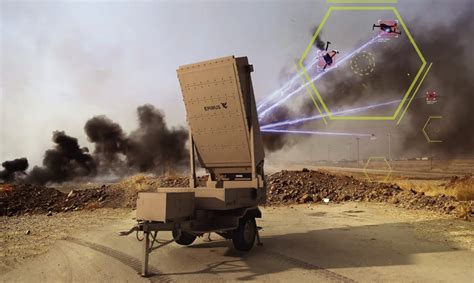
In certain deployments, compact radar systems are also integrated into the defensive network. These radars are optimized to detect low-altitude targets with very small radar cross sections, allowing them to track drones that might be invisible to conventional air defense sensors.
Depending on terrain and atmospheric conditions, such systems can detect small drones several kilometers away, giving security teams valuable time to decide how to respond.
Lessons from Modern Battlefields
The rapid evolution of counter-drone technology has been shaped heavily by operational experience. Conflicts in recent years—most notably the war in Ukraine—have demonstrated how inexpensive drones can disrupt traditional military structures.
Commercial quadcopters modified for reconnaissance or attack roles have appeared in large numbers on the battlefield. Their ability to hover quietly, transmit real-time video, and deliver small payloads has forced militaries to rethink air defense strategies.
DroneShield incorporates lessons from these operational environments into its software architecture. Signal libraries used by its detection systems are updated continuously, allowing them to recognize new drone communication protocols observed in real-world deployments.
Because the company’s systems rely on software-defined architecture, updates can be distributed quickly without requiring hardware replacement. This adaptability is essential in a field where new drone models and control systems appear at a rapid pace.
Protecting Infrastructure in the Age of Ubiquitous Drones
Beyond military applications, counter-drone technologies increasingly play a role in protecting civilian infrastructure. Airports, power stations, government facilities, and public events all face the potential risk of aerial intrusion.
A single drone entering restricted airspace can force the temporary shutdown of an airport runway. In densely populated urban areas, the potential for surveillance, smuggling, or sabotage has become a growing concern for law enforcement agencies.
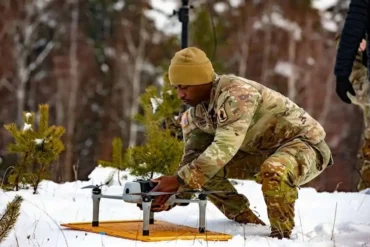
Portable counter-drone systems provide a flexible solution for such scenarios. Security teams can deploy them rapidly during high-profile events, border patrol missions, or temporary military exercises.
Because the systems are lightweight and often operable by a single individual, they allow authorities to establish protective coverage without installing permanent infrastructure.
A Broader Transformation in Europe’s Defense Landscape
DroneShield’s decision to establish manufacturing in Belgium highlights a wider shift in the European defense industry. Since the early 2020s, the proliferation of drones has triggered an urgent reassessment of how airspace is protected at low altitudes.
Traditional air defense systems—designed to intercept aircraft, cruise missiles, or ballistic threats—are not optimized for small, slow, and inexpensive drones. As a result, governments have begun investing heavily in specialized counter-drone technologies.
These investments also reflect a strategic push toward greater industrial autonomy within Europe. Producing critical defense equipment locally reduces reliance on overseas supply chains and strengthens regional technological capabilities.
By integrating production within the European Union, DroneShield becomes part of a growing ecosystem of companies developing sensors, electronic warfare tools, and software platforms designed to defend against unmanned threats.
The Belgian facility therefore represents more than a commercial expansion. It marks another step in the emergence of counter-drone defense as a core component of modern security strategy—a field that will likely expand as drones continue to reshape both warfare and civilian infrastructure protection.