On December 29, 2025, the geopolitical balance in the Caribbean took a volatile turn as U.S. President Donald Trump disclosed that the United States had conducted a drone airstrike on Venezuelan territory, targeting what was described as a narcotics-linked dock used by the Tren de Aragua criminal gang. This marks the first known instance of an American precision strike inside Venezuela, signaling a potentially new era of unilateral U.S. action in South America under the banner of counter-narcotics enforcement.
Escalation of U.S. Counter-Narcotics Tactics
The United States has maintained a heavy presence in the Caribbean Sea through maritime interdiction campaigns against transnational drug trafficking. However, this operation reflects a qualitative escalation: rather than intercepting drug shipments at sea, the U.S. appears to have taken direct action on foreign soil—without acknowledgment or coordination from the host nation.
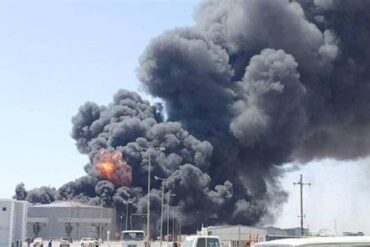
President Trump’s brief statement claimed the U.S. “hit” and destroyed a coastal loading area used by traffickers, noting a “major explosion.” Yet, critical operational details remain opaque: he did not identify the platform used, the munitions deployed, or even confirm whether the strike came from the military or another federal agency.
CNN later reported that the targeted dock was located on a remote stretch of Venezuela’s coast, utilized by Tren de Aragua to load narcotics onto boats for maritime transit. The strike allegedly occurred earlier in December and resulted in no casualties, suggesting the timing was deliberate—designed to disable infrastructure without loss of life.
The Tren de Aragua Nexus
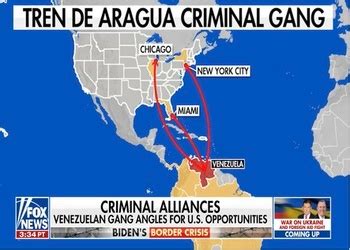
The Tren de Aragua is Venezuela’s most powerful and dangerous gang, with international reach stretching into Colombia, Peru, and even southern U.S. cities. Known for its deep entrenchment in drug and human trafficking networks, its use of maritime infrastructure as part of logistical chains is well-documented by regional analysts.
That the U.S. chose to target a narcotics dock tied to this syndicate—rather than a moving vessel—may indicate an operational shift, prioritizing strategic disruption of fixed nodes within trafficking logistics rather than merely seizing drugs mid-transit.
Diverging Accounts on Intelligence Support
Adding to the confusion are conflicting accounts about how the strike was supported. CNN reported that U.S. Special Operations Forces provided intelligence to identify and validate the target. However, a spokesperson from U.S. Special Operations Command strongly denied this, stating no intelligence support was given to this operation.
The ambiguity matters greatly. If elite units such as Joint Special Operations Command (JSOC) or CIA paramilitary teams were involved, the mission may represent a broader interagency campaign involving covert authorities beyond the Navy and Coast Guard’s maritime interdiction. The denial, whether accurate or strategic, also hints at how compartmentalized and opaque U.S. operations in Latin America have become.
Tactical Analysis: Platform and Payload Speculation
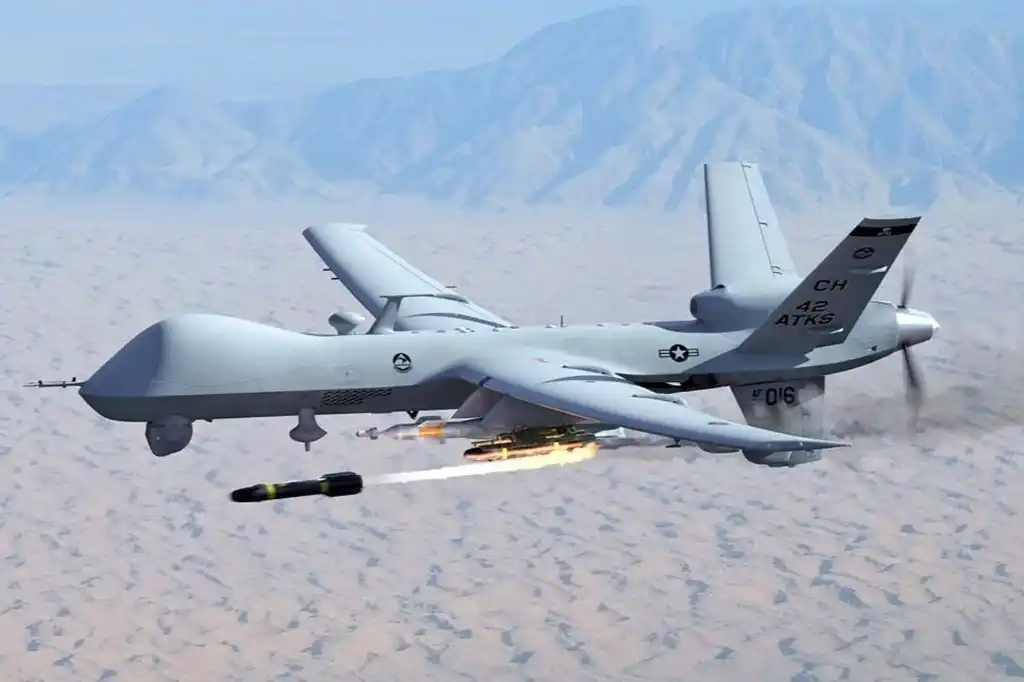
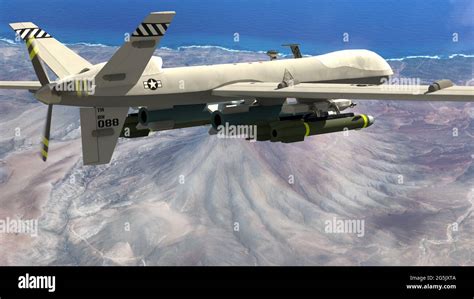
While the exact method of the attack is not confirmed, military analysts note that a drone strike using an MQ-9 Reaper and a Hellfire missile is tactically plausible. The Reaper offers long-loiter surveillance, target verification, and precision engagement—all crucial for isolated maritime infrastructure strikes.
An AGM-114 Hellfire would be suitable for targeting a small dock, especially if secondary fires or stored fuel ignited upon impact, producing the large explosion reported by the president. However, analysts have also floated the use of a small-diameter glide bomb, especially if the intention was to structurally degrade the entire dock.
Such an operation may have unfolded in stages:
- Remote surveillance to establish pattern-of-life intelligence.
- Real-time ISR (Intelligence, Surveillance, Reconnaissance) feed to a command center.
- Precision engagement during a window of confirmed absence of personnel.
Yet in the absence of visual evidence—no satellite imagery, no local witness reports, no confirmation from Venezuelan authorities—the mechanics of the strike remain speculative.
Legal and Diplomatic Fallout
The implications of an unauthorized military action on Venezuelan soil are considerable. International law generally prohibits the use of force within sovereign borders without UN authorization or host nation consent—neither of which appear to have been present.
This makes the strike, if confirmed, potentially illegal under international law and a clear breach of Venezuelan sovereignty. Yet given the dysfunctional relationship between Caracas and Washington, it’s unlikely President Nicolás Maduro’s government will risk escalation—at least in public.
The Maduro regime has so far not acknowledged the strike. This silence may be strategic: admitting that a U.S. drone violated Venezuelan airspace and destroyed infrastructure without detection would be a humiliating blow to national pride and a testament to internal weakness. It also suggests the site might have been truly remote, unmonitored, and expendable to both the gang and the state.

Strategic Signaling or Covert Campaign?
Observers are split on what the strike means. Was it a one-off deterrent signal, or the start of a covert campaign against regional trafficking infrastructure?
Several signals suggest a shift in U.S. doctrine:
- The strike’s timing near the end of the year could suggest a test case for 2026 operational playbooks.
- The use of drones implies an intent to minimize footprint and attribution risk.
- The presidential framing of a “major explosion” may be aimed as much at sending a message to other traffickers as it is to inform the American public.
This also mirrors past U.S. tactics in Yemen, Pakistan, and Somalia, where precision strikes were used not only to neutralize individuals but to shape the operating environment through shock and disruption.
Information Vacuum and Lack of Verifiable Evidence
At present, the entire narrative is suspended between a presidential remark, anonymous leaks, and strategic ambiguity. There is no geolocated site, no after-action footage, no independent media confirmation, and no Venezuelan acknowledgment.
This information vacuum is deeply problematic for democratic oversight and regional stability. It also raises pressing questions:
- Who authorized the strike? Was it a military chain of command or a covert interagency process?
- What intelligence threshold was met to approve lethal force?
- Was Congress briefed, or was this an operation under Title 50 covert action authorities?
Until these questions are answered, accountability remains elusive.
Conclusion: A Precedent-Setting Strike with Unknown Ripples
The alleged drone strike on a Venezuelan drug-linked dock is, if confirmed, a precedent-setting moment in U.S. foreign policy. It reflects an evolution from maritime enforcement to territorial intervention, blurring the lines between law enforcement, military action, and covert operations.
In the absence of transparency, the action may serve its immediate objective—disrupting a drug corridor—but at the cost of long-term clarity, credibility, and legality. Whether this was a surgical deterrent or the first step in a broader campaign, its consequences will echo across Latin America and the global debate on sovereignty and the use of drones in modern warfare.