Operation Background and Mission Code
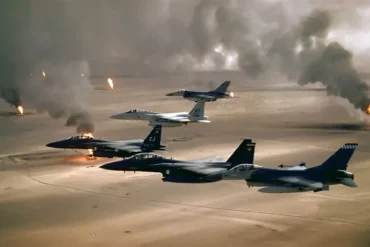
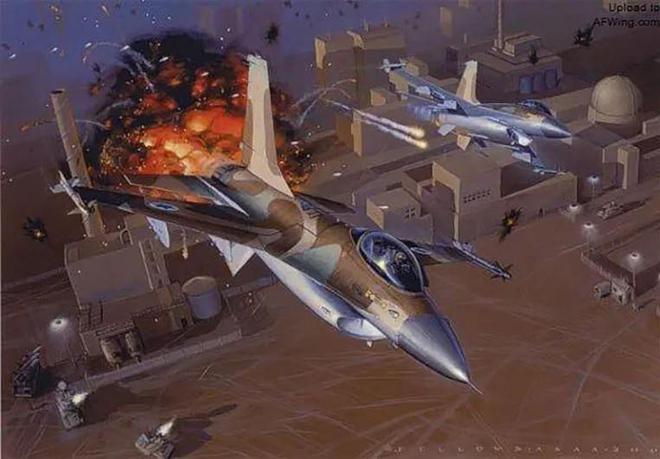
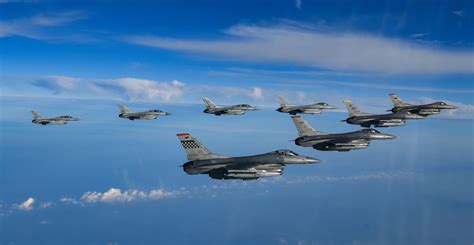
On January 19, 1991, the United States Air Force (USAF) launched Operation “Package Q”, a high-risk airstrike targeting military infrastructure in Baghdad, Iraq. This mission was part of Operation Desert Storm, aimed at crippling Iraqi air defenses and command centers. The operation involved 56 F-16 Fighting Falcons, escorted by various support aircraft, in one of the largest single-package strikes of the Gulf War. However, this mission faced intense opposition from Iraqi surface-to-air missile (SAM) sites, leading to multiple aircraft losses and harrowing encounters, including the near loss of F-16 “Stroke 3”.
Performance of “Stroke 3” in Combat
Evasive Maneuvers Under Fire
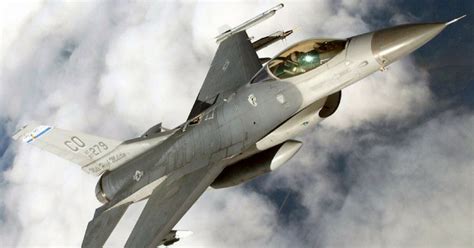
The F-16 designated “Stroke 3” played a pivotal role in demonstrating the fighter’s survivability. During the mission, it encountered extreme danger when it was targeted by six Soviet-designed SAM-2 (SA-2 Guideline) missiles. These missiles, with a range of approximately 48 km, relied on radar guidance, making them formidable threats against any aircraft operating in Iraqi airspace.
Through high-G maneuvers, rapid altitude changes, and electronic countermeasures, the pilot of “Stroke 3” successfully evaded all six missiles, underscoring the F-16’s agility and survivability in high-threat environments. The encounter highlighted the aircraft’s superior maneuverability enabled by its relaxed static stability design, which allowed for tighter turns and quicker response times compared to older aircraft models.
Losses in the Formation
Despite the heroic survival of “Stroke 3”, the mission proved costly. Within the same formation:
- “Stroke 4” and “Stroke 1” were shot down by Iraqi air defenses.
- Other aircraft sustained heavy damage from anti-aircraft artillery (AAA) and missile fire.
- The failure to neutralize Iraqi SAM sites led to major losses, prompting strategic revisions in subsequent air operations.
These events highlighted the intensity of Iraqi air defenses, which utilized an integrated network of radar-guided missiles, AAA, and early warning systems.
Mission Outcome and Tactical Adjustments
Despite the overwhelming show of force by coalition aircraft, Operation “Package Q” did not fully achieve its objectives. The mission’s high casualty rate forced the USAF to rethink its tactics for future operations, leading to key adjustments:
- Increased reliance on stealth aircraft such as the F-117 Nighthawk, which had higher survivability in high-threat environments.
- Enhanced electronic warfare (EW) integration, ensuring better suppression of enemy air defenses (SEAD).
- More coordinated strike formations, utilizing stand-off munitions to reduce aircraft exposure to direct enemy fire.
These lessons proved invaluable in shaping modern air warfare tactics.
F-16’s Role in High-Intensity Combat
Since its introduction in 1979, the F-16 Fighting Falcon has played a vital role in global conflicts. It has been a workhorse for the US Air Force and allied nations, participating in numerous military engagements, including:
1981 Israeli Strike on Iraqi Nuclear Reactor
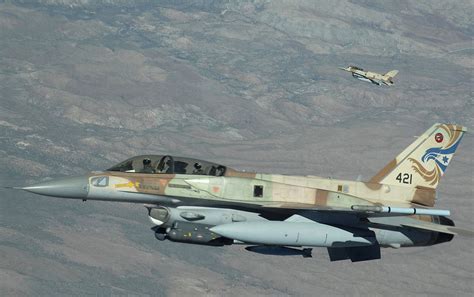
In Operation Opera, Israeli Air Force F-16s conducted a preemptive strike on Iraq’s Osirak nuclear reactor, eliminating a potential nuclear threat. Escorted by F-15 Eagles, the F-16s completed the mission with zero losses, showcasing their precision strike capabilities.
1991 Operation Desert Storm
During the Gulf War, F-16s were extensively used for:
- Ground attack missions, targeting Iraqi military infrastructure.
- SEAD operations, neutralizing SAM threats.
- Close air support (CAS) for coalition ground forces.
Despite suffering several losses, the F-16’s multi-role effectiveness was proven, reinforcing its status as a combat-proven fighter.
Modern Deployments and Upgrades
The F-16 has continued to evolve, with later models incorporating:
- Improved avionics (AN/APG-83 AESA radar for better target tracking).
- Advanced electronic warfare (EW) capabilities.
- Conformal fuel tanks (CFTs) for extended mission endurance.
- Integration with precision-guided munitions (e.g., JDAM, AGM-88 HARM).
These upgrades ensure the F-16 remains a formidable combat platform well into the 21st century.
Technological Superiority and Survivability
Aerodynamic Advantages
The F-16’s design incorporates several features that enhance its maneuverability and survivability:
- Relaxed static stability (RSS): Allows for quick and agile maneuvering.
- Fly-by-wire (FBW) control system: Provides precision handling.
- High thrust-to-weight ratio: Enabled by engines like the F110-GE-100, giving it superior acceleration and climb rates (305 m/s at sea level).
Electronic Warfare Capabilities
Modern F-16 variants are equipped with sophisticated electronic warfare (EW) systems, such as:
- AN/ALQ-131 ECM pod: Disrupts enemy radar and missile guidance.
- AN/ALE-50 towed decoys: Deceives incoming radar-guided threats.
- Integrated radar warning receivers (RWRs): Alerts pilots to potential SAM threats.
These systems greatly enhance survivability, allowing F-16 pilots to evade enemy air defenses more effectively.
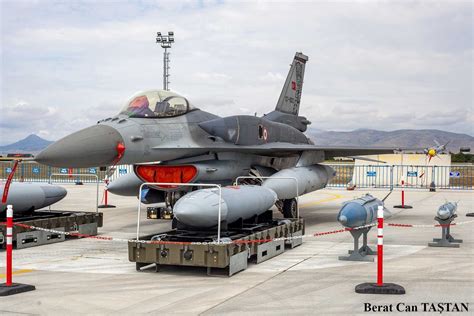
Conclusion
The events surrounding F-16 “Stroke 3” in Operation “Package Q” serve as a testament to the resilience, agility, and survivability of the F-16 Fighting Falcon in combat. Although the mission suffered losses, it reinforced the need for advanced EW capabilities, improved SEAD tactics, and better strategic coordination. The F-16’s adaptability has allowed it to remain one of the most widely used multi-role fighters across the globe, ensuring its relevance in modern and future air combat operations.
Frequently Asked Questions (FAQ)
1. What was the significance of F-16 “Stroke 3” in the Gulf War?
F-16 “Stroke 3” demonstrated the aircraft’s ability to survive in highly contested airspace, evading six SAM-2 missiles through advanced maneuvering and electronic warfare techniques.
2. Why did Operation “Package Q” fail to achieve its objectives?
The operation faced heavy Iraqi air defenses, including SAMs and AAA, which resulted in multiple aircraft losses. This forced the USAF to re-evaluate tactics, leading to greater emphasis on stealth and electronic warfare in future operations.
3. How has the F-16 evolved since the Gulf War?
Modern F-16s have received upgraded avionics, AESA radar, enhanced EW suites, and integration with advanced munitions, ensuring their continued effectiveness in modern warfare.