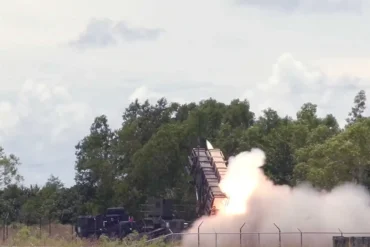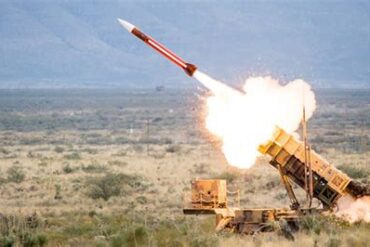
In a decisive move to bolster national and regional security, the U.S. Army announced on July 18, 2025, the formation of up to four additional Patriot missile battalions, marking a significant expansion in integrated air and missile defense (IAMD) capabilities. This expansion is strategically designed to counter escalating aerial and ballistic threats across multiple global theaters, with one battalion specifically assigned to defend Guam, a linchpin in the Indo-Pacific missile defense framework.
This initiative is not merely an increase in numbers; it represents a fundamental doctrinal shift in how the Army envisions and executes air defense operations. As threats from hypersonic weapons, low-flying cruise missiles, and short-range ballistic missiles evolve in sophistication and frequency, the U.S. is responding with technological innovation and organizational flexibility.
Patriot System Expansion: Backbone of Strategic Missile Defense
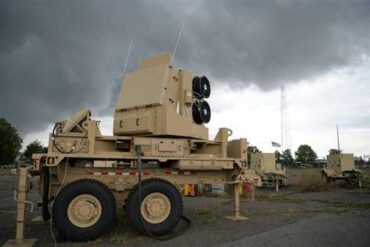
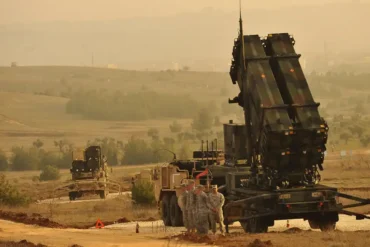
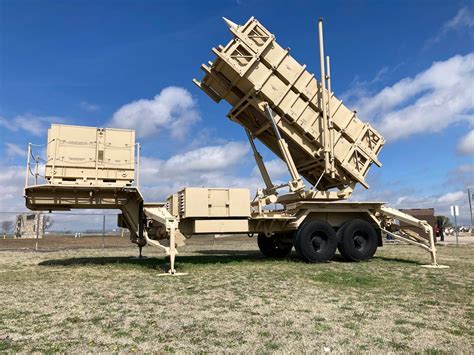
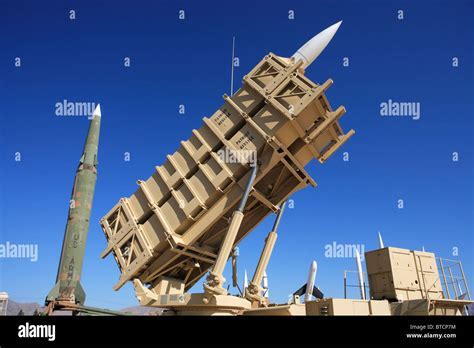
At the core of this renewed focus is the Patriot air and missile defense system, an enduring yet constantly evolving platform that has protected U.S. and allied forces since its introduction in the 1980s. Developed by Raytheon, the MIM-104 Patriot remains a premier long-range, surface-to-air defense system, capable of neutralizing a wide array of airborne threats. The system includes high-precision radars, a centralized fire control system, and truck-mounted launchers carrying advanced interceptors.
Each Patriot battery comprises several vital components:
- Radar: AN/MPQ-53 or AN/MPQ-65 phased-array radar with advanced ECCM and IFF.
- Command Center: AN/MSQ-104 fire control station managing threat assessment and interception.
- Launchers: M901 units mounted on M860 trailers, towed by M983 HEMTT 8×8 trucks.
- Interceptors: PAC-2 and PAC-3 missiles — the former with a 90 kg fragmentation warhead, the latter designed for hit-to-kill precision.
The PAC-2 variant, measuring 5.8 meters and weighing 900 kg, offers a range of 70 km and an altitude ceiling exceeding 24 km. Meanwhile, the PAC-3 sacrifices explosive payload for agility and precision, employing active radar homing for direct impact.
This blend of modularity, mobility, and firepower makes the Patriot system a crucial element of both strategic deterrence and battlefield protection, validated most recently in Qatar, where it intercepted incoming missiles targeting Al Udeid Air Base.
LTAMDS: Next-Generation Radar for a New Threat Environment
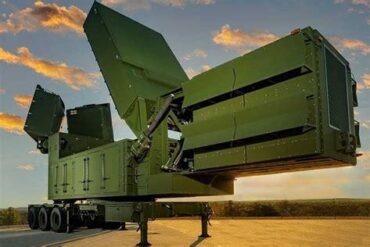
The most transformative upgrade accompanying the expansion is the deployment of the LTAMDS (Lower Tier Air and Missile Defense Sensor), which will eventually replace the AN/MPQ-65 radar. Designed by Raytheon, LTAMDS delivers unprecedented 360-degree coverage, an essential enhancement over the 270-degree view provided by earlier radar systems.
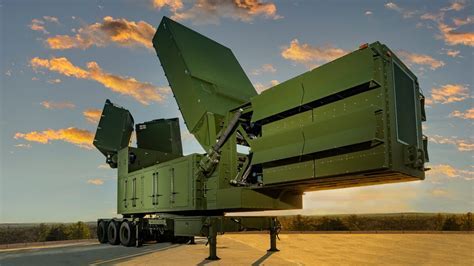
This all-around coverage is crucial against modern threats like maneuverable cruise missiles, hypersonic gliders, and multi-vector ballistic attacks, which can now strike from unexpected angles and altitudes. LTAMDS boasts enhanced vertical and horizontal detection ranges, reportedly exceeding 85 kilometers in every direction.
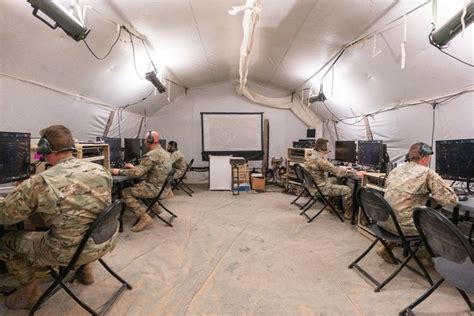
Crucially, LTAMDS is built from the ground up to integrate seamlessly with the Army’s Integrated Battle Command System (IBCS). This modular command-and-control network links radar, launchers, and command posts into a dynamic, interoperable defense grid capable of adapting to complex, multi-domain operations.
Modular Force Design: Distributed Yet Unified Defense
The implications of LTAMDS and IBCS integration go far beyond radar range. They represent a paradigm shift in how air defense forces are structured and deployed. No longer tethered to centralized configurations, Patriot batteries can now operate dispersed across vast areas, all while maintaining synchronized command and targeting data through IBCS.
This distributed lethality approach multiplies combat effectiveness without requiring a proportional increase in personnel or hardware. In essence, the existing 15 Patriot battalions could achieve near double the operational coverage through modularity alone.
During recent tests at White Sands Missile Range in New Mexico, LTAMDS demonstrated its combat-readiness in two successful live-fire evaluations, affirming the radar’s real-world effectiveness under combat-simulated conditions. These tests serve as a critical validation before full-scale deployment across the growing number of Patriot battalions.
Guam’s Strategic Role in Indo-Pacific Deterrence
One of the four new battalions will be deployed to Guam, underscoring the island’s pivotal role in the broader Indo-Pacific missile defense strategy. Often referred to as the “tip of the spear,” Guam hosts key naval and air bases that would be among the first targets in a regional conflict.
Guam’s geography makes it a natural sentinel for early warning and interception of threats launched from East Asia. The presence of a Patriot battalion, bolstered by LTAMDS and IBCS, reinforces the island’s layered defense, integrating with Aegis Ashore, THAAD batteries, and long-range radar sites to establish a multi-tiered shield against incoming threats.
This deployment is both symbolic and practical — a message of deterrence and a concrete improvement in capability. By extending coverage deep into the Pacific, it creates operational depth and buys valuable decision-making time in a crisis.
Strategic Modernization within Multi-Domain Operations Doctrine
This evolution of air defense fits within a broader strategic shift by the U.S. Army toward multi-domain operations (MDO) — a concept that merges land, sea, air, cyber, and space into a unified operational environment. The traditional view of air defense as static, point-based protection is being replaced with a mobile, synchronized, and layered approach designed to protect maneuvering forces and deny adversaries freedom of movement.
Air defense units are no longer positioned merely to guard static assets; they are expected to move with the fight, protecting command nodes, forward bases, and logistics hubs deep in contested zones. The Patriot-LTAMDS-IBCS triad enables such maneuverability by reducing system interdependencies and increasing operational autonomy.
In this light, the Army’s expansion of Patriot capabilities is not just a reaction to more advanced threats — it is a deliberate transformation of how the U.S. projects power, defends its assets, and integrates across service branches and allied forces.
Future-Proofing U.S. Missile Defense Architecture
The U.S. Army’s current trajectory is aimed at future-proofing its missile defense infrastructure against next-generation threats. This includes investments in artificial intelligence-driven threat detection, hypersonic interceptors, and space-based surveillance assets, all designed to operate cohesively within IBCS.
The Patriot system, enhanced by LTAMDS and linked via IBCS, will continue to serve as the cornerstone of this layered defense ecosystem, capable of interfacing with Navy Aegis systems, Air Force missile warning satellites, and even allied defense platforms in joint coalition environments.
By embracing a modular, dispersed, and digitally integrated approach, the U.S. Army is laying the groundwork for resilient and responsive air defense formations, ready for 21st-century warfare.
Conclusion: A New Era in Air Defense
The U.S. Army’s decision to expand its Patriot battalions and field the LTAMDS radar system marks a historic transformation in the nation’s air and missile defense strategy. Beyond increasing capacity, these advancements signal a shift toward networked warfare, where information, agility, and real-time integration determine victory.
Through strategic deployment, next-generation radar technology, and integration with IBCS, the U.S. is reshaping the battlefield geometry of air defense. This ensures not just protection of critical assets, but also freedom of maneuver and initiative in high-threat environments. As adversaries grow more capable, the U.S. Army is moving faster, becoming smarter, and positioning itself to dominate in the multidomain battlespaces of tomorrow.