The rapid expansion of low-cost combat drones has forced militaries to rethink how battlefield defense works at short range. Traditional air-defense systems were designed to intercept aircraft, missiles, or helicopters, but swarms of compact drones have exposed major gaps in those defenses. Picket Defense Systems now claims to have an answer with the new Inferno Rotating Turret Close-In system, a compact anti-drone platform that uses sound-based targeting and full 360-degree firing coverage to neutralize threats at extremely close distances.
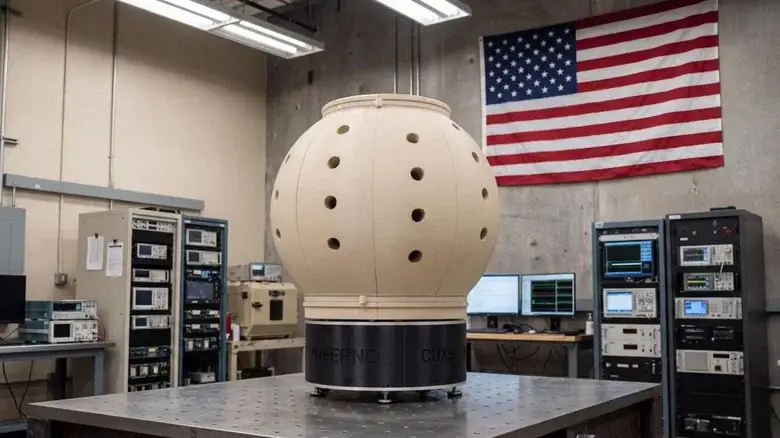
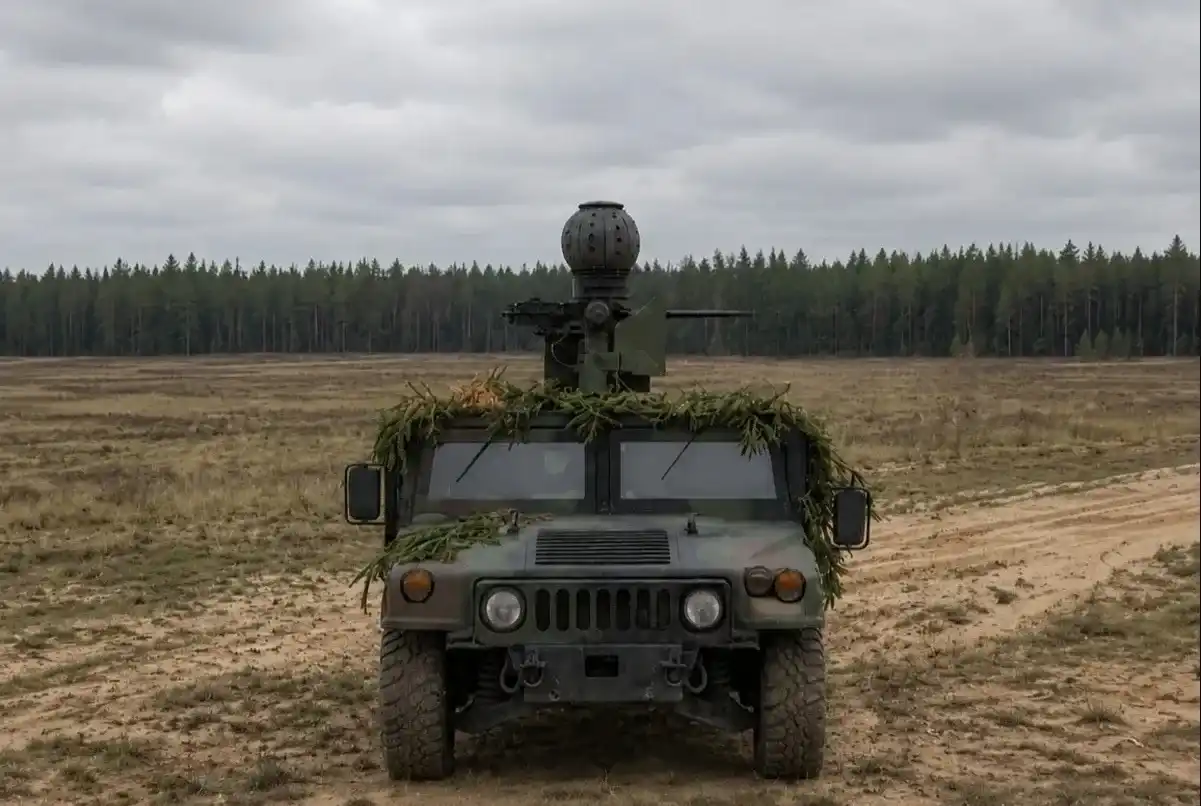
Unlike conventional turrets that rotate toward a target before engaging, the Inferno RTC features a distinctive spherical weapons layout with barrels positioned across multiple angles. The system is designed to fire almost instantly at threats approaching from any direction, dramatically reducing reaction time during coordinated swarm attacks. In modern drone warfare, where seconds often determine survival, eliminating turret rotation delay could become a significant tactical advantage.
The Inferno RTC also abandons one of the most recognizable signatures on the battlefield: radar emissions. Instead of broadcasting detectable signals that reveal a defensive position, the platform relies on a network of microphones and optical sensors to identify incoming drones. The result is an electronically silent defense system capable of operating without advertising its location to enemy forces.
How Acoustic Drone Tracking Changes Battlefield Defense
One of the most intriguing aspects of the Inferno RTC is its use of acoustic targeting technology. The turret employs a three-dimensional microphone array capable of detecting the sound signatures generated by approaching drones. Combined with onboard optical cameras and artificial intelligence processing, the system continuously analyzes the surrounding environment to identify, classify, and prioritize threats in real time.
This passive detection method offers several battlefield advantages. Electronic warfare systems commonly depend on radar or radio-frequency emissions that can be jammed, spoofed, or detected. By using sound instead, the Inferno RTC avoids many of those vulnerabilities. Drone operators attempting to evade radar may still expose themselves through engine noise, rotor harmonics, or propulsion signatures.
Picket Defense Systems also emphasizes the platform’s independence from external networks. The turret processes sensor data internally through onboard AI, reducing dependence on cloud connectivity or remote targeting systems. In contested combat zones where communications are frequently disrupted, autonomous functionality becomes increasingly valuable.
Inferno RTC Weapon Configurations and Combat Capabilities
The lighter Inferno RTC variant reportedly weighs around 45 pounds and contains 36 barrels capable of firing 5.56mm ammunition, .410 shells, and 20-gauge rounds. A heavier version nearly doubles the weight while expanding the barrel count to 54 and adding support for 12-gauge and 40mm low-velocity munitions.
Both variants are engineered for deployment on fixed defensive positions as well as moving vehicles. According to published specifications, the system can detect and engage targets at distances up to approximately 120 meters. That range places the Inferno RTC firmly within the close-in defense category, functioning as a final protective layer against drones that have already bypassed longer-range systems.
Critical Questions Surround Real Combat Performance
Despite its innovative design, the Inferno RTC faces serious scrutiny regarding operational effectiveness. A 120-meter engagement range leaves defenders with little reaction time against high-speed drones or coordinated swarm attacks. On an active battlefield, hostile drones reaching such proximity may already threaten personnel, vehicles, or infrastructure.
Questions also remain about the reliability of acoustic targeting under real combat conditions. Explosions, gunfire, armored vehicles, and electronic interference create chaotic sound environments that could complicate accurate drone identification. Adverse weather conditions, including wind and heavy rain, may further affect acoustic performance.
For now, much of the system’s reputation rests on manufacturer claims rather than independently verified combat data. Until large-scale military evaluations, Pentagon procurement announcements, or battlefield deployments become public, the Inferno RTC remains one of the defense industry’s most closely watched experimental anti-drone technologies.