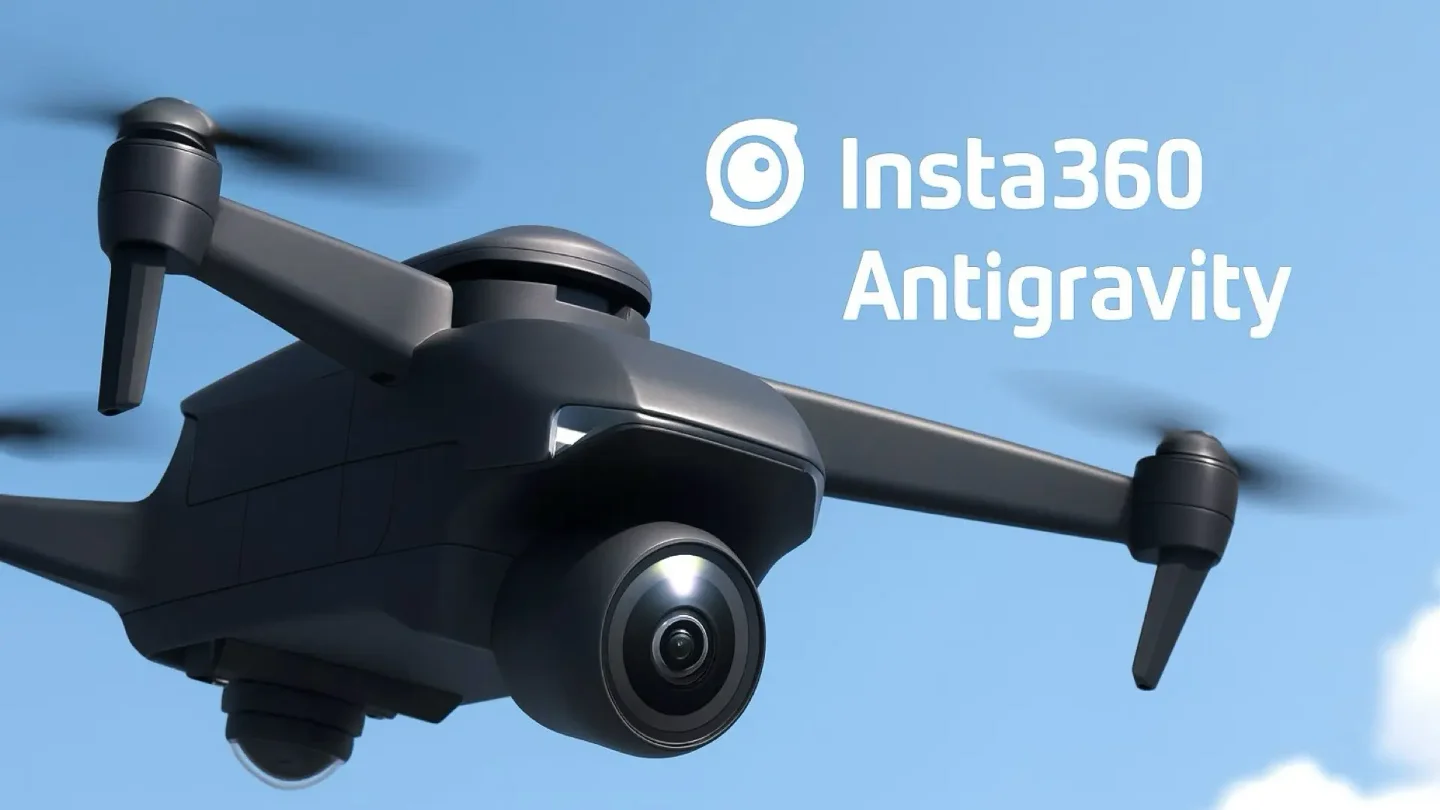
Insta360, the Shenzhen-based pioneer in immersive media technology, has officially entered the consumer drone market with the announcement of Antigravity, a new brand dedicated to 360-degree aerial capture. Designed with accessibility and creative freedom in mind, Antigravity aims to reshape the drone industry by focusing not on raw technical prowess, but on the human experience of flight and storytelling.
With its debut product set for release in August 2025, Antigravity marks a strategic pivot for Insta360—away from traditional camera hardware and toward a fully integrated ecosystem of aerial content creation. In an increasingly saturated drone market dominated by spec wars and complexity, Antigravity introduces a user-centric alternative: a lightweight, 8K-capable drone that emphasizes ease of use, immersive footage, and intuitive design.
A Lightweight Drone Designed for Visionaries
At the heart of the Antigravity brand is its first drone, a sub-249g aircraft engineered to fly under many global drone registration thresholds while delivering 8K 360-degree video. Weighing in below the critical 250g mark means that users in numerous countries—such as the U.S., Japan, and EU member states—can legally operate it without formal certification or extensive paperwork.
What sets this drone apart is not only its portability but its immersive capture capabilities. Leveraging Insta360’s heritage in 360-degree content, the Antigravity drone promises a seamless blend of aerial freedom and cinematic storytelling, allowing creators to relive and reframe moments from every angle.
This design philosophy opens up new opportunities for:
- Travelers who want dynamic, multi-perspective vlogs
- Content creators producing immersive storytelling
- Families and hobbyists capturing shared moments without drone-flying expertise
Breaking Away from the Spec Race
While the broader drone industry remains obsessed with frame rates, gimbal stabilization, and obstacle avoidance sensors, Insta360’s Antigravity brand intentionally sidesteps the spec sheet obsession. Instead, it asks a radical question: What if drones were tools of personal expression, not just flying cameras?
“Today, most drones are tools. With Antigravity, we’re aiming higher,” said BC Nie, Head of Marketing at Antigravity. “While others compete on specs, we’ve flipped the script. The result empowers emotion, freedom, and creativity.”
That shift in tone is more than just marketing. It’s evident in how the drone operates. Users won’t need checklists, detailed tutorials, or lengthy calibration routines. With intuitive controls, Antigravity drones are expected to behave more like natural extensions of a creator’s hand than a robotic gadget that needs constant tuning.
The onboarding experience is designed to be frictionless, making the drone ideal for spontaneous storytelling in unfamiliar environments. This approach aims to lower the learning curve, removing one of the biggest psychological barriers that prevent people from entering the drone world.
360 Immersion: A New Visual Language
Where Antigravity truly sets itself apart is in its promise of “360 immersive flight.” This concept expands the storytelling canvas far beyond what traditional drones can offer. Instead of pointing a camera in one direction, creators capture everything—above, below, and all around—and decide the final shot during post-production.
This allows for:
- Reframing after the flight to highlight the most compelling angles
- Immersive playback on VR headsets or smartphones
- Dynamic social media content where viewers can pan freely across scenes
With 8K video resolution as the baseline, Antigravity delivers not only wide-angle freedom but crisp detail that holds up under close inspection. The quality standard is high enough for professional production, but the usability is streamlined for amateurs.
Collaborative Design: Built With the Community
Insta360 has embedded a community-first ethos into Antigravity’s DNA through the Antigravity Hub, an online portal where users can submit feedback, product ideas, and suggestions. This participatory model means that future software updates, feature enhancements, and product variants could be directly shaped by the user base.
Submissions that influence product evolution may receive recognition or tangible rewards, fostering an ecosystem where creators are not only consumers but also co-developers. This method stands in sharp contrast to the more insular, top-down approach favored by legacy drone manufacturers.
Responsible Innovation and Built-In Safety
With growing regulatory scrutiny around drones—especially those equipped with high-resolution cameras—Antigravity integrates a suite of responsible flying technologies. One standout feature is payload detection, a mechanism that ensures no unauthorized modifications are made that could compromise flight safety or legal compliance.
Insta360’s emphasis on responsible use aligns with broader global trends toward ethical drone deployment, particularly in urban or sensitive environments. The company’s forward-thinking approach helps position Antigravity as a brand that understands not only its users but the world they operate in.
A Timely Debut for a Maturing Market
The consumer drone sector is evolving. No longer is it enough to sell tech to engineers and enthusiasts. Today’s buyers expect drones to be as elegant and easy to use as smartphones—and that’s the exact market Antigravity is targeting.
The timing is strategic. As smartphone cameras plateau in innovation and VR/AR technology begins a new surge, Antigravity steps in to bridge the gap between mobile simplicity and immersive content generation.
Its August 2025 release taps into a tech-savvy, creator-oriented culture that demands tools which are both powerful and playful. With global content creators looking for new visual angles, Antigravity provides an aerial platform that doesn’t require a pilot’s mindset to operate.
From Shenzhen to the Skies: The Rise of Insta360
Antigravity may be a new name, but its parent company Insta360 has long been a disruptor. Known for its action cameras like the Insta360 X3 and ONE RS, the company has consistently focused on user-friendly design combined with breakthrough imaging technology.
Headquartered in Shenzhen, Insta360’s footprint spans action sports, VR, virtual tourism, and creative production. Antigravity is a natural evolution, allowing the company to extend its dominance in 360 imaging into the skies.
Its philosophy has always centered around putting professional-grade tools into the hands of everyday users, and with Antigravity, it brings that vision to the aerial realm.
What Comes Next: A Platform, Not Just a Product
While Antigravity’s first drone is the headline act, it’s only the beginning. By positioning itself as a platform brand rather than a single-product offering, Antigravity sets the stage for an entire suite of aerial storytelling tools.
Potential expansions could include:
- AI-assisted flight editing software
- Modular accessories for enhanced sound or lighting
- AR overlays for real-time object recognition or guided tours
With the Antigravity Hub as the nerve center of innovation, users may eventually shape the roadmap for what aerial creativity looks like in the coming decade.
Final Thoughts: Emotion in Flight
Antigravity is not trying to be the next DJI. It’s not positioning itself as the ultra-technical, high-spec drone alternative. Instead, it’s carving out an entirely new space: one that blends intuitive design, emotional storytelling, immersive media, and user empowerment.
By lowering the barriers to entry and amplifying the creative possibilities, Antigravity redefines what drones can mean—not just for filmmakers and influencers, but for families, adventurers, and dreamers.
The age of intuitive aerial storytelling is about to take flight.