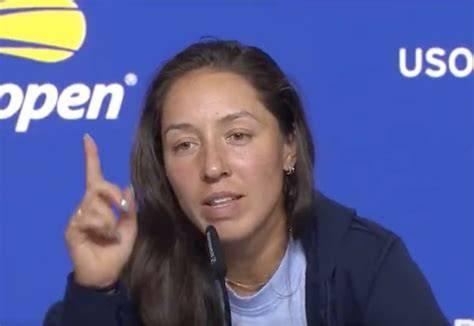
Late on Monday night, the world’s fourth-ranked female tennis player found herself stranded at a gate, posting directly to United Airlines on X, the platform still commonly known as Twitter. Her question was as blunt as it was bewildered: how does an airline cancel a flight, send every passenger down to baggage claim, then uncancel the very same flight and take off without them, carrying their luggage into the night sky? The message was short, wounded, and instantly shareable, and within hours it had traveled far beyond the tennis bubble and into the wider travel community, where frequent flyers recognized the particular flavor of helplessness she had just described.
The Uncanceled Flight and the Two Hours on the Tarmac
The story Jessica Pegula told unfolded in layers, each one adding a fresh bruise to an already difficult evening. Passengers boarded and sat on the aircraft for two full hours while a torrential downpour hammered the fuselage, watching other flights turn back toward the terminal while their own aircraft stayed put. When the crew finally gave the word, the flight was declared canceled, and everyone was instructed to return to baggage claim to reclaim their belongings. What followed, according to Pegula, was the “craziest thing I’ve ever seen.” Instead of staying grounded, the flight was quietly uncanceled, and it departed without the passengers who had been told to leave it, while their checked bags stayed stowed in the hold.
The implication of her post was unmistakable: she used “we” and “us” throughout, which strongly suggests that multiple passengers were affected by the same sequence of events, not just one high-profile traveler. Pegula and United will both be hoping for a swift and amicable resolution, particularly because she was likely heading west toward the WTA Finals, which run from November 8 to 15 in Indian Wells, California. Pegula is based in Florida, and the timing of the incident fits precisely with a cross-country journey to the season-ending tournament. The exact flight number has not been confirmed, and the carrier has been approached for further comment on how the evening’s operations were managed.
@united explain to me how you cancelled our flight, you tell us to go to baggage claim and then un cancel the flight and take off with our bags. We also sat on the plane for 2+ hours in a torrential downpour when everyone else went back to the gate. Then baggage services had 0 clue what was happening and kept saying they would pull our bags. Meanwhile the flight took off. Craziest thing I’ve ever seen.
— Jessie Pegula (@JPegula) November 3, 2026
Why US Airlines Can Fly Bags Without Their Owners
From the outside, the most startling detail is not the customer service failure but the security question it raises. Having checked bags travel without their owners is precisely the scenario behind several devastating aircraft bombing incidents in the twentieth century, and for decades aviation regulators treated the separation of passenger and bag as a red flag. On international flights, the system known as Positive Passenger Bag Matching remains firmly in place: if a passenger is offloaded for any reason, that passenger’s checked bag must come off the aircraft with them, no exceptions. The approach is considered a security benefit worth the operational pain, even when locating and removing a bag delays a departure by tens of minutes.
Domestically, however, the rules diverge in a way that surprises many travelers. Because checked bags are now subjected to more detailed screening before departure, they are permitted to remain on board without their owner present, provided they clear that screening. There are limited exceptions, most notably when electronic screening of a particular bag is not possible, but in general the practice is lawful, routine, and invisible to the people it inconveniences. That technical legality does nothing to soften the experience from a passenger’s perspective: a bag that flies away without you is still a bag you do not have, and Pegula’s frustration landed squarely on that gap between what is permitted and what feels right.
United’s Reply and the Reaction From Frequent Travelers
At the time of writing on Tuesday morning, Pegula’s post had been viewed more than 80,000 times, collecting messages of support from fans and weary flyers alike. United weighed in publicly with a carefully scripted response, asking Pegula to “DM us your confirmation number so we can assist” and offering a line that has become a fixture of airline customer service: “we understand that travel doesn’t always go as planned, and we’re sorry for the frustration.” The reply was polite, procedural, and entirely standard, which is arguably the least surprising part of the entire episode.
What genuinely surprised other users was not the airline’s conduct but the traveler’s. Many expressed disbelief that the world’s fourth-best female tennis player was flying commercial at all, given how routinely elite players charter private jets to protect their schedules and their bodies. Yet Pegula has built a reputation as a woman of the people on the tennis circuit, and her decision to take the train to the US Open is among the most-cited examples of that streak. Private air travel is indeed common in tennis, and the BBC has noted that Pegula herself once offered fellow players the use of her own aircraft. Even so, commercial flying sometimes remains the simplest option, and on Monday night it proved to be the most punishing one.
What the Pegula Episode Reveals About Modern Air Travel
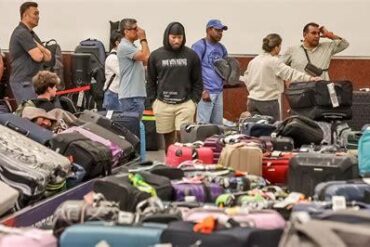
Beyond the novelty of a tennis star’s luggage disappearing into the clouds, the episode exposes a genuine operational oddity at the heart of American commercial aviation. Airlines are entitled to fly bags without their owners on domestic routes, and carriers routinely exercise that right when a flight needs to depart to keep a schedule, a crew, or an aircraft rotation intact. The results are not always dramatic, but they produce a distinctive kind of inconvenience: passengers who have been formally told a flight is dead, who have handed their belongings to the airline’s custody, and who then watch that flight leave anyway.
For Pegula, the practical consequences were immediate and concrete. She was traveling toward the WTA Finals in Indian Wells, and her racquets, gear, and personal belongings were airborne in the wrong direction, in the wrong configuration, in the hands of the airline that had just asked her for a confirmation number. Whether the bags were ultimately reunited with her, and whether United offered anything beyond an apology, remains to be seen. The wider lesson is harder to resolve. An airline can announce a cancellation, reverse it, and depart on entirely defensible operational grounds, and still leave a passenger standing at baggage claim with nothing but a phone and a viral complaint. That is precisely what happened on Monday night, and it made a routine cross-country journey into a story the tennis world spent Tuesday morning talking about.