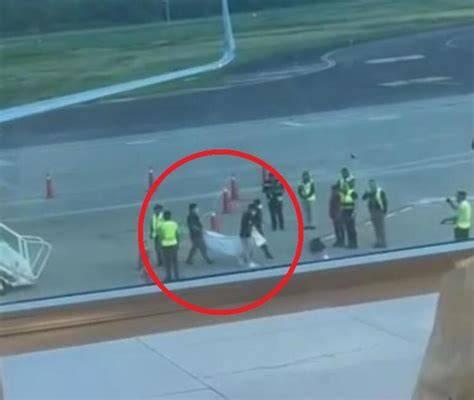
A 28-year-old woman was found dead in her seat aboard a Volaris passenger flight after the aircraft landed at Tapachula International Airport in Chiapas, southern Mexico. The woman, identified as Abidai López Solís, had been traveling from Tijuana to visit her family when the tragedy occurred. According to reports, the flight completed its journey without any reported medical emergency in the cabin, leaving questions about when she died and why her condition went unnoticed during the overnight journey.
Volaris Flight 3358 departed Tijuana International Airport (TIJ) shortly before midnight and arrived at Tapachula Airport (TAP) shortly after 5:00 a.m. on Wednesday. The aircraft reportedly landed approximately 20 minutes ahead of its expected arrival time. What should have been a routine domestic journey instead became a serious incident when the woman’s unresponsive body was discovered after landing.
The circumstances surrounding Solís’ death remain unclear. No official cause of death had been publicly established in the available reports, and there was no confirmed explanation for why no emergency was declared while the aircraft was airborne. Authorities arranged for emergency responders to examine her after landing, and her body was subsequently transported for a forensic examination.
How Volaris Flight 3358 Ended in a Tragic Discovery
The flight connected Tijuana, in northwestern Mexico near the United States border, with Tapachula, a city in Chiapas close to Guatemala. Covering approximately 1,970 miles (3,170 kilometers), the nonstop service crosses a substantial portion of Mexico and typically operates as an overnight flight.
According to the reports, the journey proceeded without any known medical emergency being communicated to the crew. Passengers were able to complete the flight, and the aircraft arrived at its destination without a reported operational disruption. The discovery of Solís’ death came after the plane reached Tapachula, prompting airport personnel and emergency services to respond.

The absence of a reported emergency does not establish exactly when Solís died or whether anyone had an opportunity to recognize that she was in distress. Those details remain unknown, and the available information does not support a definitive explanation of what happened inside the cabin.
The incident also highlights the difficulty of distinguishing a sleeping passenger from someone experiencing a medical crisis, particularly on a late-night flight. However, without further findings from investigators or medical examiners, it would be premature to conclude that her condition was necessarily mistaken for sleep or that any particular action by the crew could have changed the outcome.
Why the Overnight Flight May Have Complicated Detection
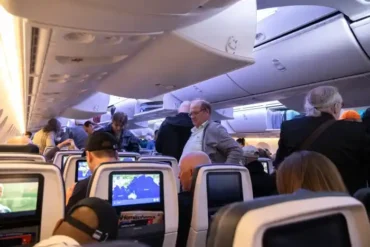
Red-eye flights are designed to allow passengers to travel overnight and arrive early in the morning. On these services, cabin lighting is commonly reduced to help travelers rest, and many passengers remain seated with their eyes closed for extended periods. Some wear eye masks or headphones, while others sleep with their heads leaning against the seat or window.
These ordinary cabin conditions can make it difficult for fellow passengers to recognize a problem unless someone displays obvious signs of distress. Flight attendants also perform service duties, safety checks and other responsibilities throughout the journey, while attempting to avoid unnecessarily disturbing resting travelers.
Nevertheless, the fact that the flight operated overnight does not establish why Solís’ death went unnoticed. The available reports do not explain whether she showed visible symptoms, whether another passenger raised concerns or whether crew members interacted with her during the journey.
A medical emergency aboard an aircraft can require rapid assessment and intervention. Flight attendants are trained to respond to onboard medical incidents within their training and available resources, including providing first aid, seeking assistance from medically qualified passengers and arranging emergency medical support on the ground. Depending on the circumstances, cardiopulmonary resuscitation may also be necessary.
In Solís’ case, the reports indicate that no such intervention was initiated during the flight. Without a verified timeline or medical findings, however, it remains uncertain whether her condition developed suddenly, progressed without recognizable symptoms or began before boarding.
Emergency Responders Examine the Passenger After Landing
Following the discovery, the disembarkation process was managed to allow emergency personnel to access the aircraft. Other passengers exited first while airport security and responders controlled access to the affected row.
Once the cabin had been cleared, personnel from Civil Protection and the Mexican Red Cross boarded the aircraft to examine Solís. Responders assessed her condition and formally confirmed her death, according to the published account.
Her body was then removed discreetly, wrapped in a sheet and transported to a local forensic medical service. An autopsy was expected to help establish the cause of death and determine whether additional investigation was necessary.
A forensic examination is particularly important when a death occurs unexpectedly and the circumstances are not immediately clear. Medical examiners can assess available evidence to determine whether the death resulted from a natural medical condition or another cause. The examination may also help establish a more precise timeline, although not every case produces a definitive answer.
At the time covered by the reports, the cause of Solís’ death had not been disclosed publicly. No conclusion about foul play, a pre-existing condition or an in-flight medical emergency can be drawn from the circumstances alone.
Volaris’ Tijuana–Tapachula Route Connects Northern and Southern Mexico
The incident occurred on a route that serves travelers crossing Mexico between two geographically distant regions. Volaris operates the nonstop Tijuana–Tapachula service, providing a direct alternative to itineraries requiring a connection through Mexico City.
The route spans approximately 1,970 miles and is among the longest nonstop domestic services in Mexico. According to the flight-tracking information cited in the original report, Flight 3358 was operated by an Airbus A320neo registered as XA-VSD.
The service does not necessarily operate every day. Its frequency varies with scheduling and seasonal demand, with reported operations ranging from three to five flights per week. The route is particularly useful for travelers who want to avoid a connecting flight and reach southern Mexico without an additional airport transfer.
December is a particularly busy period for many Mexican travel markets, as holiday visits and seasonal tourism increase demand. For people traveling between Tijuana and Tapachula, a nonstop overnight service can save considerable time compared with an itinerary involving a connection.
Investigation Into the Woman’s Death Remains Central
The death of Abidai López Solís has left important questions unanswered, particularly regarding the medical circumstances preceding the discovery. The reported absence of an onboard emergency, followed by confirmation of her death after landing, does not by itself establish negligence or identify a failure in the aircraft’s emergency procedures.
The findings of the forensic examination would be essential to understanding what happened. Until those findings or additional official information become available, the timeline and cause of death must remain matters of uncertainty.
For the other passengers aboard Volaris Flight 3358, the journey ended with an unexpected and distressing discovery. For Solís’ family, who she had been traveling to visit, the loss was a personal tragedy that unfolded far from the destination where she had expected to arrive.
The case underscores the importance of accurate reporting when a death occurs during air travel. What is known is that a 28-year-old passenger was found dead after the aircraft landed in Tapachula; what remains unknown is precisely when and why she died. Those questions can only be answered reliably through the relevant medical findings and any further information released by the authorities.