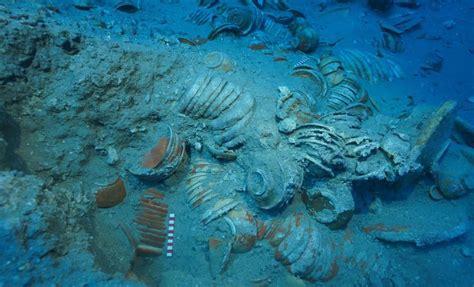
In a stunning revelation that merges maritime archaeology with ancient history, a team of naval divers and archaeologists has uncovered a remarkably well-preserved 2,000-year-old shipwreck off the coast of Adrasan, Turkey. What makes this discovery exceptional is not merely the ship’s age, but the fact that its ceramic tableware remains impeccably intact, lying on the seabed in stacked formation as if untouched by time.
A Submerged Time Capsule Beneath the Mediterranean
The discovery unfolded quietly in 2025, under the aegis of the Turkish Ministry of Culture and Tourism, during a planned underwater survey in the Mediterranean. The archaeological dive, backed by historical research and advanced imaging technology, took place approximately 150 feet below the sea surface. There, nestled into the sandy seabed, lay the ghostly remains of an ancient trade vessel — its cargo of ceramic bowls, plates, pots, and trays still neatly stacked.
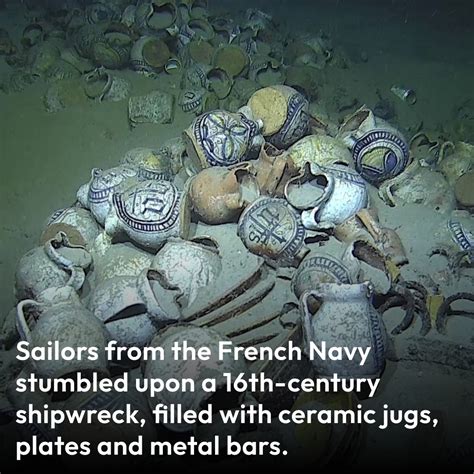
The surreal visuals immediately captivated researchers. These weren’t just broken shards or corroded remnants — many of the ceramics were whole, their original pigments and patterns still vividly visible despite centuries submerged. It’s a haunting, awe-inspiring tableau of ancient life frozen in time.
Why This Shipwreck Stands Out Among Millions
According to UNESCO, there may be as many as three million shipwrecks hidden beneath the oceans. But few discoveries offer the kind of immediate visual storytelling that this vessel does. Unlike many submerged ships discovered in fragmented or heavily deteriorated condition, this wreck speaks volumes about ancient logistics, trade, and preservation practices.
While not the oldest wreck ever found — that title belongs to a 10,000-year-old wooden canoe in the Netherlands — this Mediterranean find provides a new and rare glimpse into how goods were transported in bulk during antiquity. The methodical stacking of ceramics suggests that the crew employed a deliberate system for secure transit, much like the optimized shipping containers we use today.
The Art of Ancient Commerce, Revealed in Clay
What astonished experts was the method of preservation. Prior to loading, the ceramics had been coated in raw clay, a seemingly simple act that proved crucial. When the ship sank, this clay, along with surrounding seabed sand, acted as a natural buffer, cushioning the pottery and significantly reducing exposure to corrosive saltwater. This technique also minimized gaps between the stacked items — spaces that would typically invite marine life to colonize and hasten decay.
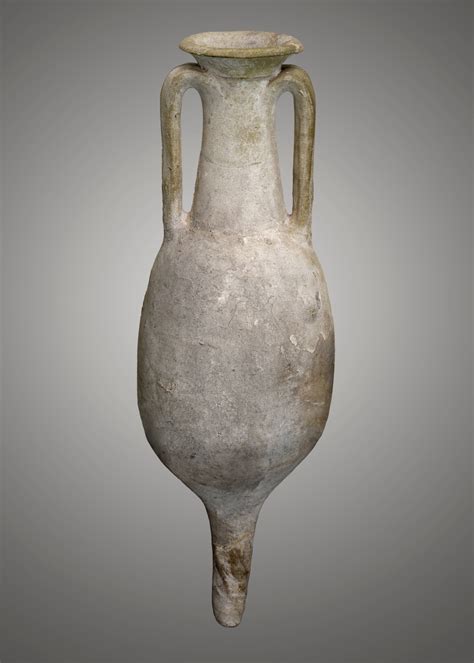
This is the first documented instance of a full cargo load demonstrating this specific method of preservation. It adds a revolutionary layer to what we know about ancient trade logistics. It implies that ancient traders, likely Greek or Roman based on the design elements of the ceramics, understood the rigors of long-distance sea transport and took preventive steps to protect their wares.
Tracing the Route: Where Was This Ship Headed?
While the precise origin and destination of the ship remain under analysis, initial assessments suggest that it was part of a larger Mediterranean trade network, potentially sailing from Aegean ports toward North Africa or the Levant. The design of the pottery, including some fragments bearing Hellenistic motifs, indicates that the ship may have operated during the late Hellenistic or early Roman period — possibly the 1st century BCE.
The ceramics, uniform in style and size, were likely meant for mass-market distribution, possibly to taverns, homes, or regional trading hubs. This hints at a robust commercial ecosystem that thrived centuries before the rise of modern capitalism, complete with bulk shipping, packaging strategies, and economic zones.
Advanced Technology Meets Ancient Mystery
The discovery owes much to modern technology. Using a combination of multibeam sonar, underwater LiDAR, and AI-enhanced imaging software, the dive team pinpointed the wreck after historical shipping routes were cross-referenced with digital seabed maps. The use of artificial intelligence in particular allowed researchers to identify irregular shapes in the seabed — shapes the human eye might overlook.
This convergence of old-world mystery and new-age tech reflects the growing power of interdisciplinary exploration in the field of underwater archaeology. AI continues to evolve into a vital tool for archaeologists in both locating and interpreting sunken relics.
Preserving and Showcasing a Hidden Civilization
Given the pristine condition of many of the ceramics, Turkish officials have announced that select pieces will be showcased at the upcoming Mediterranean Underwater Archaeology Museum, a state-of-the-art facility dedicated to submerged cultural heritage. This museum aims to become a global hub for underwater exploration and education, bringing maritime history to a broader audience.
The rest of the site, after careful documentation and preservation efforts, will be partially opened to licensed divers, joining other underwater cultural parks across the Mediterranean. This approach underscores a global trend toward “in situ” conservation — preserving sites where they are found, while allowing controlled access to scholars and enthusiasts.
Echoes of Humanity Beneath the Waves
Perhaps the most poignant element of this find is what it tells us about human continuity. Over 2,000 years ago, a crew prepared this vessel with care. They stacked the cargo with intention. They coated their wares in clay not just to protect them from the journey, but possibly even from the unknown. When the sea took them, what remained was not a treasure trove of gold or gems, but the simple, everyday items of life — dining bowls, water jars, storage pots.
In these artifacts we see not only the technical sophistication of ancient merchants but also a mirror of our own societies. The need to eat, trade, protect, and move goods securely is timeless. The ship’s sinking, likely due to a storm or navigational error, froze that moment in history, allowing us to learn from it today.
The Road Ahead for Maritime Archaeology
The Adrasan shipwreck is a turning point. It exemplifies the benefits of government support, technological innovation, and multidisciplinary research in uncovering the silent histories buried beneath our oceans. With an estimated 3 million more wrecks waiting to be discovered, this is just the beginning.
Further analysis of the site, including material composition testing, paleoceanographic data, and sediment analysis, may soon answer questions about climate patterns at the time, regional trade monopolies, and even socio-political influences that shaped ancient shipping lanes.
What we do know is that this ship, long lost to the sea, now speaks — and it tells a story of craftsmanship, resilience, and the ancient pulse of global trade. It is a story that reminds us of how much we still have to learn beneath the waves.