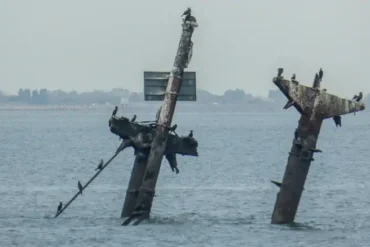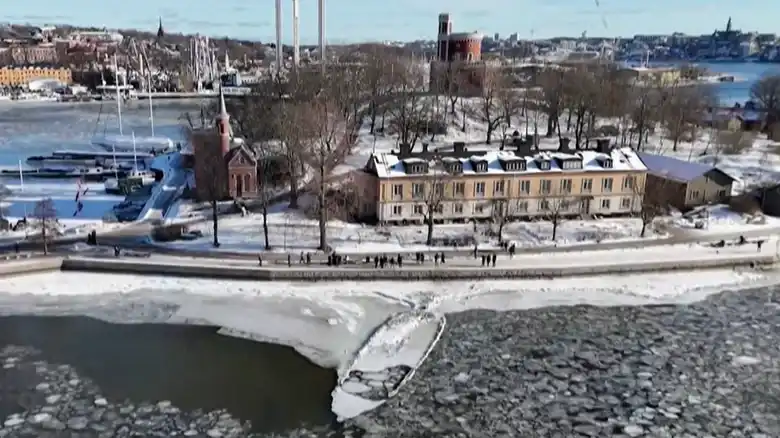
The sudden reappearance of a historic navy shipwreck in the Baltic Sea has captivated both scientists and historians, offering a rare glimpse into 17th-century naval engineering. After lying hidden beneath the waters for nearly four centuries, the vessel has resurfaced near Stockholm as water levels dropped to their lowest point in a century, revealing a remarkably preserved relic of maritime history.
This extraordinary event is not the result of chance alone. A prolonged period of high atmospheric pressure across the Nordic region has forced Baltic waters outward toward the North Sea and the Atlantic. As a result, submerged structures long buried beneath layers of cold, brackish water are now emerging, transforming the seafloor into a visible archive of forgotten naval strategy.
A Purposeful Sinking With Strategic Intent
Unlike many shipwrecks lost to storms or conflict, this Swedish Navy vessel was deliberately sunk around 1640. Its purpose was practical rather than tragic—it was used as a structural foundation for a bridge leading to Kastellholmen island, a location of military importance during Sweden’s rise as a regional power.
Archaeologists believe the wreck is one of five ships intentionally submerged in the same area, forming a hidden network of naval infrastructure. Today, researchers from the Vrak Museum of Wrecks in Stockholm, including marine archaeologist Jim Hansson, are working under a project known as “The Lost Navy” to identify and document these vessels.
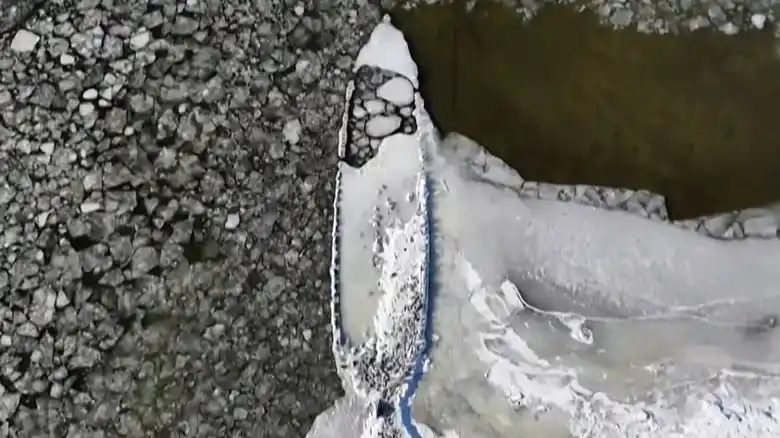
The possibility that these ships may still contain reusable oak hulls has sparked interest beyond archaeology. The Swedish Navy is reportedly exploring whether these centuries-old materials could be repurposed, blending historical preservation with modern sustainability.
Why This Wooden Ship Survived 400 Years Underwater
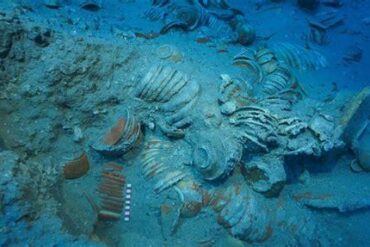
The survival of a wooden shipwreck for over four centuries may seem improbable, yet the Baltic Sea provides uniquely favorable conditions. Unlike saltier oceans, this region lacks shipworms, marine organisms notorious for consuming wooden vessels at astonishing speeds. Without these destructive creatures, the ship remained largely untouched.
Additionally, the cold, low-oxygen environment of deeper Baltic waters slows the natural decay process. Instead of rotting, the wood becomes saturated, effectively preserved in a suspended state. In many ways, such shipwrecks function as underwater time capsules, maintaining their structural integrity far longer than expected.
The Hidden Danger of Exposure to Air
Ironically, the very conditions that preserved the ship now threaten its survival. Once exposed to air, the wood begins to deteriorate rapidly. The internal structure, long supported by water within its cells, becomes unstable, leading to cracking and collapse.
This challenge is not theoretical. Sweden’s famous warship, the Vasa, which sank in 1628 and was later recovered, has faced ongoing preservation issues. The interaction between iron fastenings and oxygen has triggered acid formation, slowly degrading the ship’s wooden framework.
Scientists have attempted to counteract this process using alkaline chemical treatments, but long-term preservation remains complex and costly. The newly surfaced wreck may face similar risks, especially as climate patterns continue to influence sea levels.
A Race Against Time for Maritime Historians
The emergence of this historic Swedish Navy shipwreck is both a breakthrough and a warning. It offers an unprecedented opportunity to study naval construction, strategic engineering, and maritime life from the 1600s. At the same time, it underscores the fragile balance that has preserved these artifacts for centuries.
As researchers document and analyze the vessel, each exposed beam and joint becomes a piece of a larger narrative—one shaped by war, innovation, and the quiet power of the sea. The clock is now ticking, not just to uncover its identity, but to ensure that this remarkable survivor of the Baltic depths does not vanish once again, this time not beneath the waves, but into irreversible decay.