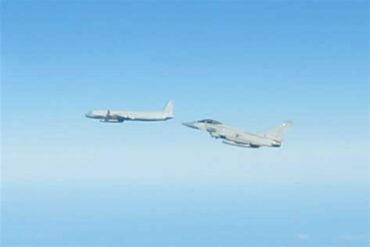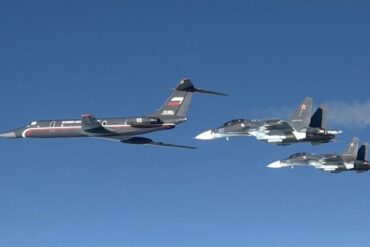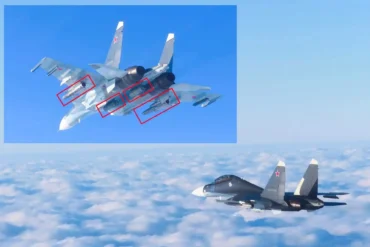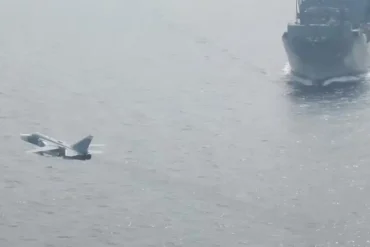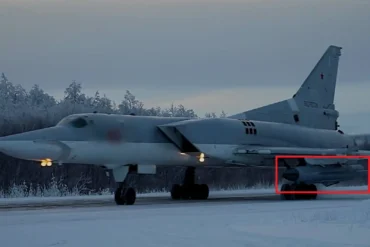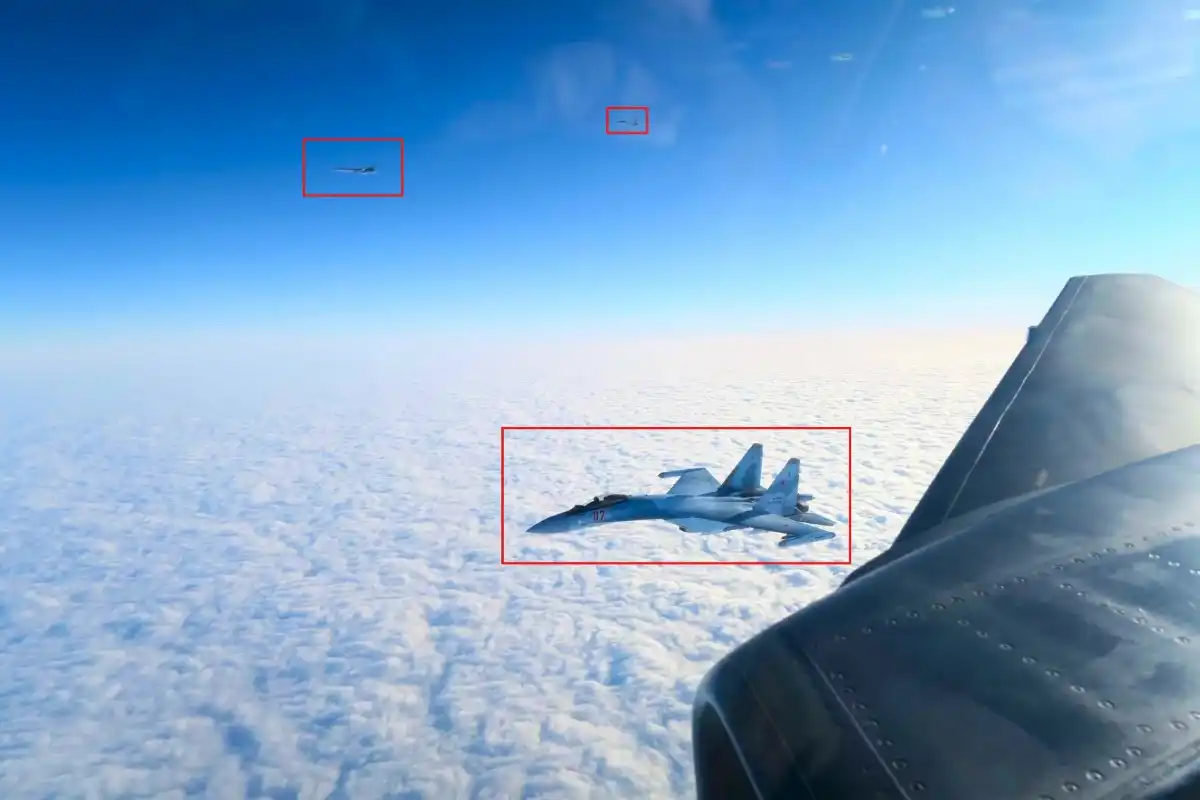
On 22 January 2026, Swedish Air Force quick reaction alert (QRA) fighters were scrambled over the Baltic Sea after air surveillance networks detected a formation of Russian military aircraft operating close to NATO-controlled airspace. The intercept involved a Tu-22M long-range bomber escorted by two Su-35S multirole fighters, flying in international airspace but along a route that predictably triggered an immediate response. Imagery and confirmation released by Försvarsmakten, Sweden’s armed forces, underscored both the routine nature and the strategic weight of such encounters in Northern Europe’s most contested aerial corridor.
The incident reflects a familiar pattern that has intensified since 2022: Russian long-range aviation missions probing the edges of NATO airspace, met by rapid and highly professional intercepts conducted under strict rules of engagement. While no violation of sovereign airspace was reported, the presence of a bomber platform designed for maritime strike missions inevitably draws attention. For Sweden, now fully embedded within NATO’s integrated air and missile defence architecture, the scramble was less about escalation and more about continuous vigilance, ensuring that no significant movement near its borders goes unobserved.
The Baltic Sea has become one of Europe’s most densely monitored military airspaces, where Russian aircraft frequently operate without transponders or prior flight plans. In such an environment, visual identification remains essential. Swedish QRA fighters were tasked to climb, intercept, and shadow the Russian formation at a safe distance, confirming aircraft types, escort composition, and flight behavior. Försvarsmakten later stated that the mission was conducted to “mark presence and maintain situational awareness,” language that signals resolve without theatrics.
Baltic Air Policing and Sweden’s NATO Integration
Sweden’s response sits squarely within NATO’s air policing doctrine, a defensive framework designed to maintain the integrity of Allied airspace during peacetime. Since formally joining NATO in 2024, Sweden has transitioned from close partner to full participant, integrating national sensors, command-and-control systems, and fighter units into the Alliance’s Integrated Air and Missile Defence System (IAMD). This means that a radar contact over the Baltic is no longer a purely national concern, but part of a shared operational picture stretching from Norway to Poland.
Swedish air surveillance assets, including ground-based radars and airborne sensors, detected the Russian formation early enough to allow a measured response rather than a rushed one. That timing matters. In air defence, minutes equal leverage: early detection allows intercepting fighters to position themselves advantageously, reducing the risk of miscalculation while maintaining clear control of the encounter.
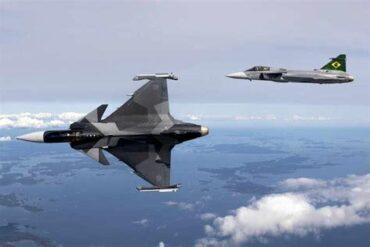
The Swedish Air Force did not publicly specify the aircraft type launched, but its QRA mission is built around the Saab JAS 39 Gripen, a multirole fighter optimised for the Nordic battlespace. Designed for dispersed operations and short turnaround times, the Gripen reflects Sweden’s long-standing assumption that any conflict in the region would demand flexibility, survivability, and speed rather than sheer numbers. These characteristics translate directly into air policing effectiveness, where the goal is rapid identification rather than coercive presence.
Russian Long-Range Aviation Sends a Familiar Signal
The Russian formation itself combined two distinct but complementary capabilities. The Su-35S, an advanced derivative of the Flanker family, provides high-end air superiority escort. Equipped with the N035 Irbis-E radar, the aircraft can detect and track multiple targets at extreme ranges, giving it strong situational awareness even in crowded airspace. Its role during bomber missions is clear: deter interception from becoming interference, while gathering intelligence on NATO response patterns.
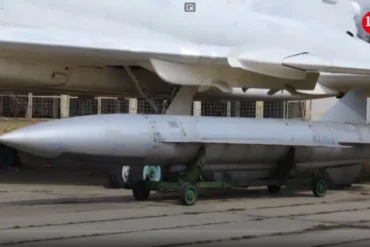
At the center of the formation, the Tu-22M bomber represents a different kind of message. Known in its Tu-22M3 configuration, the aircraft is designed for long-range maritime strike, capable of carrying heavy anti-ship missiles such as the Kh-22 or the modernised Kh-32. These weapons give the bomber a stand-off reach measured in hundreds of kilometres, theoretically allowing it to threaten naval task groups and coastal infrastructure without entering defended airspace.
When such a platform appears over the Baltic Sea, NATO analysts read it not as a spontaneous flight but as a strategic rehearsal. Even in international airspace, the combination of bomber and escort implicitly tests detection timelines, scramble speeds, and coordination between national and Allied air defence nodes. The fact that these flights now occur with near-weekly regularity speaks to how normalized this form of signalling has become.
Gripen, Sensors, and the Mechanics of Interception
Interceptions of this kind are deliberately procedural. Swedish fighters approach, establish visual contact, confirm aircraft identity, and remain in close proximity until the Russian formation alters course or exits the monitored area. Radio communication may or may not occur; often, the exchange is purely visual, governed by international norms developed during the Cold War to prevent accidents in close quarters.
The Gripen’s avionics suite is well suited to this role. Its AESA radar, electronic warfare systems, and data links allow it to operate as part of a wider sensor network rather than as an isolated interceptor. Information collected during the intercept feeds into NATO’s broader intelligence picture, contributing to trend analysis on Russian flight profiles, escort behavior, and timing patterns. Over time, this data becomes as valuable as the intercept itself.
Crucially, the professionalism displayed on both sides reduces the risk of escalation. Despite political tensions, aircrews adhere to established norms, maintaining predictable distances and avoiding aggressive manoeuvres. This predictability is not accidental; it is the product of decades of hard-earned lessons about how quickly misunderstandings in the air can spiral.
The Missile Layer Behind the Mission
Although air policing missions are defensive, they rely on combat-capable weapons to retain credibility. One of the most significant systems underpinning European air defence today is the MBDA Meteor, a beyond-visual-range air-to-air missile jointly developed by several European nations, including Sweden. Meteor’s ramjet propulsion allows it to sustain high energy throughout its flight, resulting in a large no-escape zone against manoeuvring targets.
Integrated on the Gripen and other NATO fighters such as the Eurofighter Typhoon, Meteor ensures that QRA aircraft are not merely observers. Germany’s recent decision to expand its Meteor inventory highlights how central the missile has become to European air combat doctrine. In the Baltic context, its presence reinforces deterrence by ensuring that any escalation would immediately confront a credible and technologically sophisticated response.
A Crowded Sky With Strategic Consequences
The Swedish intercept of the Tu-22M and its Su-35S escorts did not mark a crisis, but it did illustrate how crowded and consequential the Baltic airspace has become. Every flight adds another data point, another rehearsal of procedures that could one day matter under far more stressful conditions. For NATO, the challenge is maintaining readiness without drifting into routine complacency; for Russia, the flights serve as reminders that it retains long-range strike capabilities despite sanctions and operational losses elsewhere.
By responding swiftly and transparently, Sweden demonstrated that its accession to NATO has translated into operational reality, not just political alignment. The scramble was a visible assertion that the Alliance’s northern flank is monitored around the clock, and that even flights conducted legally in international airspace will be met with professional scrutiny.
In a region where geography compresses reaction times and magnifies intent, such encounters are likely to continue. What matters is not that they occur, but that they remain controlled, predictable, and firmly embedded within a framework of deterrence rather than provocation.