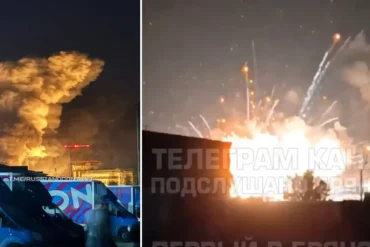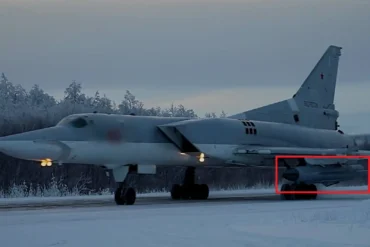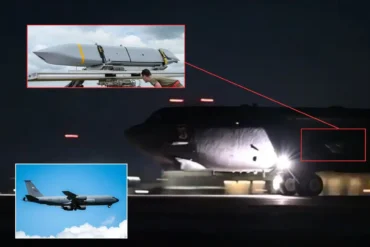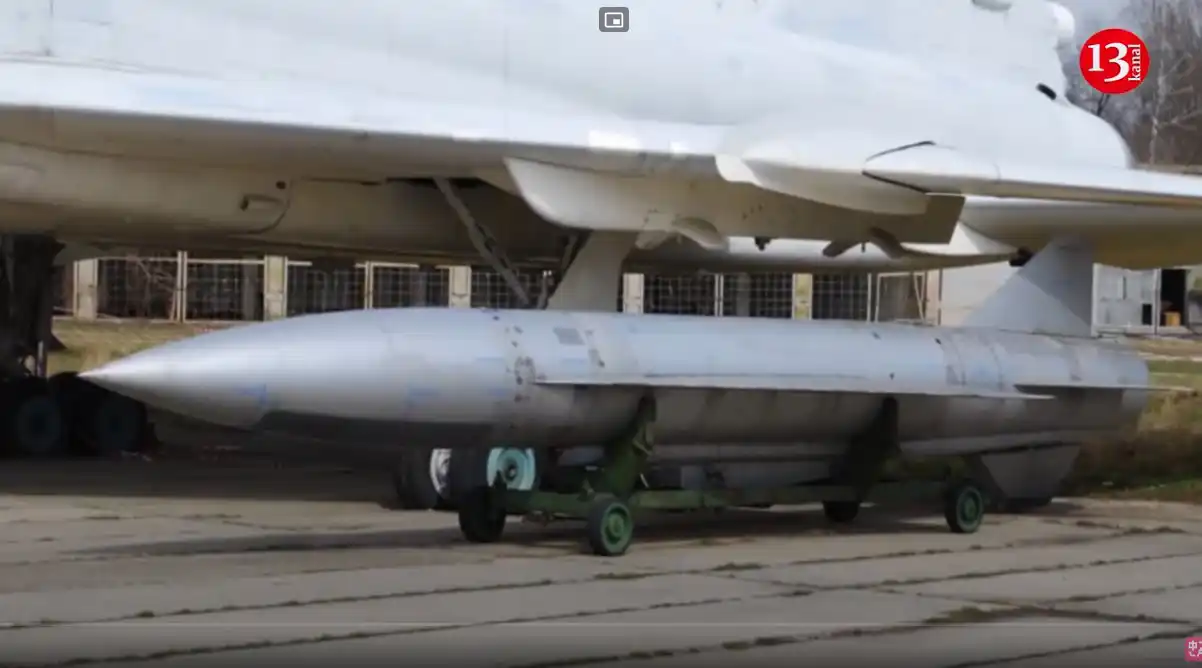
In an extraordinary escalation of asymmetric warfare tactics, Ukrainian forces have successfully struck deep into Russian territory, targeting critical weapons infrastructure at the Shikovka air base. The attack, launched by long-range drones, penetrated approximately 240 kilometers into western Russia, destroying equipment used to arm Tupolev Tu-22M bombers with the notorious Kh-22 cruise missiles—the very weapons frequently used to devastate Ukrainian cities.
Strategic Shift: Disabling the Missiles Before Launch
Faced with a chronic shortage of long-range air defense systems, Ukraine has shifted tactics from intercepting missiles in-flight to disabling them on the ground. Unable to fully shield its cities from the aerial barrages of Kh-22 cruise missiles, the Ukrainian military has adopted a strategy aimed at pre-emptive neutralization—targeting launch infrastructure and ammunition storage before the missiles ever reach Ukrainian airspace.
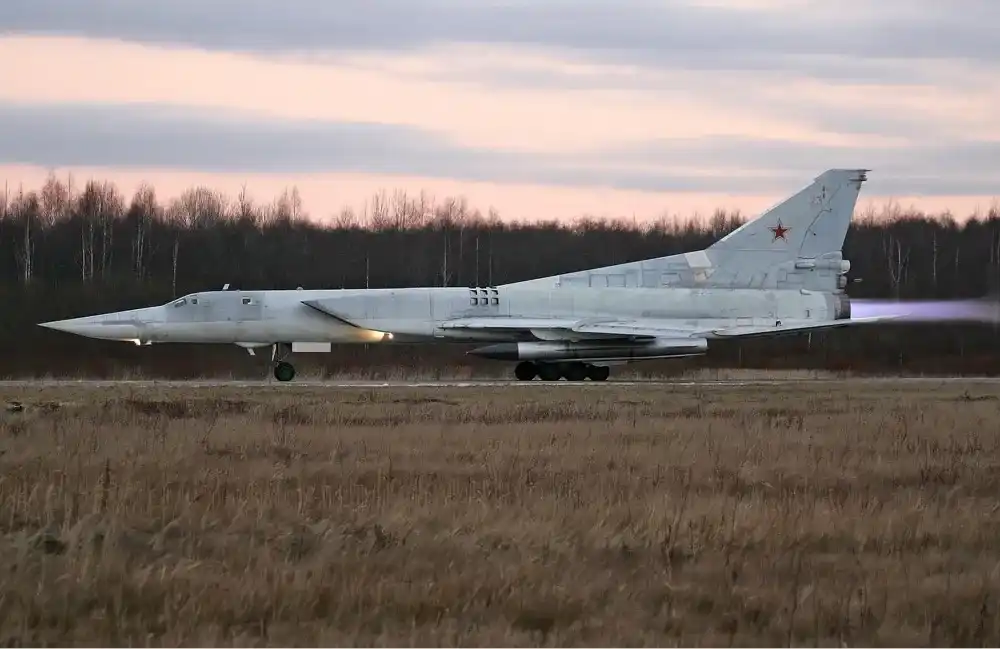
The Shikovka air base, a high-value target, has been used by Russia to house Tu-22M bombers, which serve as platforms for launching Kh-22s. According to satellite imagery confirmed by NASA’s FIRMS thermal detection systems, fires were visible in multiple zones of the base post-attack. Analysis by the open-source intelligence collective Cyber Boroshno indicates that Ukrainian drone operators specifically targeted the Kh-22 missile storage and preparation facilities, with one technical room completely destroyed and another damaged by shrapnel.
Vulnerable Soviet-Era Arsenal: Kh-22’s Dangerous Legacy
First developed in the late 1960s, the Kh-22 (AS-4 ‘Kitchen’) is a 60-ton air-to-surface missile initially designed to obliterate U.S. aircraft carriers. Today, it is repurposed as a terror weapon, striking static land targets in Ukraine with limited accuracy but devastating impact.
The Kh-22’s liquid propellant engine makes it extremely volatile. It must be fueled with 3,000 liters of toxic, hypergolic chemicals—specifically asymmetric dimethylhydrazine (heptil) and red fuming nitric acid—which ignite upon contact. U.S.-based analysts at Global Security note that these missiles are “dangerous even to the crews transporting and launching them.”
A single shrapnel-induced leak in its fuel tank can turn the missile into a massive bomb before launch. The Ukrainian drone assault on Shikovka appears to have been designed to exploit this vulnerability. Aviation analyst Bill Sweetman quipped, “Nothing says fun like flying around with an ancient missile containing 4 tons of hypergolic fuel.”
Confirmed Impact: Strategic Assets Destroyed
Military sources suggest the strike was not just symbolic—it achieved tangible tactical damage. Satellite reviews confirm a large maintenance structure was destroyed, and several refueling and arming stations were rendered inoperable. This disruption could delay or cancel multiple upcoming Russian bombing missions.
Since the escalation of the full-scale war in February 2022, Russia has already lost around five of its 42 Tu-22M bombers, according to independent defense monitors. Each loss further depletes the Kremlin’s limited stock of long-range strike platforms.
Deep Resistance: Sabotage From Within Occupied Territories
The drone strike is only one dimension of Ukraine’s evolving resistance strategy. While conventional defense lines grind on, Ukrainian partisans in occupied territories have become a shadow army, conducting sabotage operations against Russian logistics and infrastructure.
- On April 13, a Russian tank was set ablaze in the Donetsk region.
- On April 16, fire engulfed railway infrastructure in occupied Melitopol, a vital logistics hub.
- On April 26, partisans destroyed a railway transformer near Stanitsa Luhanska, paralyzing a segment of Russia’s military transport network.
These actions were claimed by the ATESH underground movement, which has been increasingly active across eastern and southern Ukraine. According to Foreign Policy, such acts now occur almost daily, illustrating a persistent and growing internal threat to Russia’s occupation.
A Parallel War: Ukraine’s Underground Military Theatre
Experts believe that Ukraine’s underground resistance—backed by coordination between the SBU (Security Service of Ukraine), GUR (Main Intelligence Directorate), and the Special Operations Forces Command—now constitutes a distinct theater of warfare.
Yuriy Matsievski, a political science professor at the National University of Ostroh Academy, argues that Ukraine’s resistance employs tactics such as murders, ambushes, arson, poisoning, kidnappings, and the sabotage of communications and energy infrastructure to erode Russian control.
This underground network includes:
- Donetsk Partisans
- Luhansk Partisans
- Combat Wing of the Crimean Seagulls
- Mariupol Resistance
- Yellow Ribbon Movement
- Evil Mavka
Collectively, they account for around 3,000 armed fighters and over 10,000 civilian operatives, many of whom are young, tech-savvy, and remarkably resilient under constant Russian surveillance.
These groups engage in psychological and informational warfare, such as spreading anti-Russian graffiti, burning propaganda materials, and hanging Ukrainian flags in occupied cities—symbols of enduring national defiance.
Psychological and Diplomatic Impact
By blowing up Kh-22s and striking within sovereign Russian territory, Ukraine is signaling that no area is beyond reach, not even the staging grounds for attacks on Kyiv, Kharkiv, or Odesa. This new doctrine of deep strikes into Russia carries major strategic and psychological consequences.
First, it undermines the illusion of Russian homeland security. Second, it places added strain on Russian military logistics, which must now disperse assets or risk annihilation. Finally, it emboldens Ukraine’s domestic and international supporters, demonstrating ingenuity despite material disadvantage.
For Russian President Vladimir Putin, such attacks are more than military setbacks—they are political embarrassments that question the efficacy of his sprawling security apparatus. The image of a Kh-22 erupting in flames on a Russian runway, before it even leaves the ground, is a devastating metaphor for Moscow’s strategic vulnerabilities.
The Future of the Underground War
Even if a negotiated ceasefire were reached, analysts such as Matsievski argue that resistance would not cease. Many of these operatives have endured too much, lost too many loved ones, and risked too much to accept Russian occupation as permanent.
Vladyslav Chuhov, a special operations agent and veteran of the Luhansk underground since 2014, recalls how the guerilla tradition among Ukrainians dates back to World War II. He notes that today’s resistance groups are homegrown, fiercely loyal, and strategically capable.
“Even if Russia retains territory in a peace deal,” he warns, “the war will continue underground. We will not stop.”
In this hybrid conflict of drones, sabotage, and insurgency, Ukraine has found a way to compensate for its air defense deficiencies by taking the battle deep into enemy territory, setting fires not only to Russia’s arsenals but to the very notion of its impunity.
As this new strategy continues to unfold, Ukraine’s war of survival evolves into a war of reach, disruption, and resilience—one that may ultimately reshape the military doctrine of modern warfare.