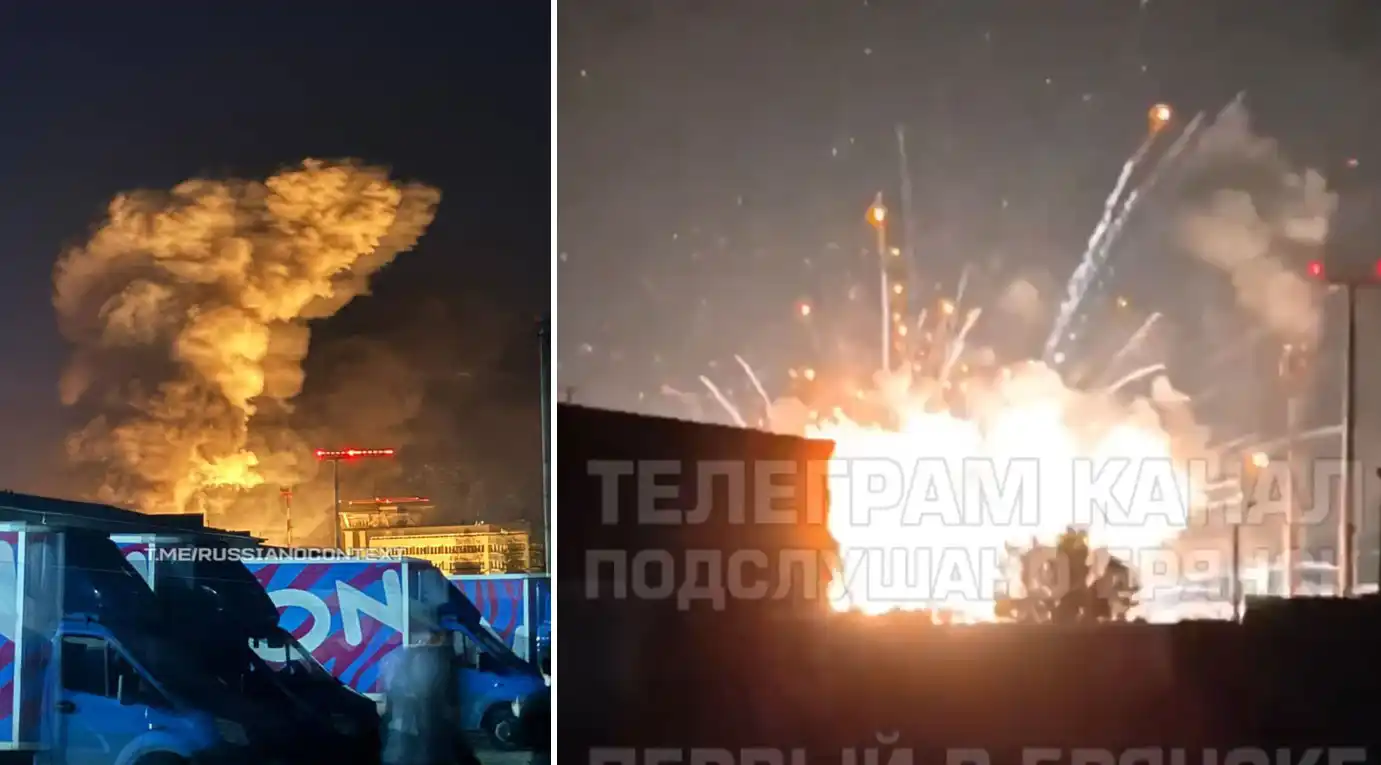
In the latest escalation of Ukraine’s long-range drone offensive, a precision strike on Russia’s Bryansk International Airport in the early hours of June 6 led to the complete destruction of a Mi-8 military helicopter and the partial wreckage of a Mi-35 attack helicopter, according to reports from Russian Telegram news outlet Astra. The facility, located in the village of Oktyabrskoye near Bryansk, has been under quiet observation for months, with satellite intelligence suggesting sustained military activity at what is officially a civilian airport.
Ukrainian UAVs Penetrate Deep into Russian Territory
The Ukrainian Armed Forces have intensified their drone campaigns targeting Russia’s strategic military infrastructure. The Bryansk airport strike is part of a broader pattern of high-risk incursions aiming to undermine Russian logistics, aviation capabilities, and ammunition stockpiles deep inside Russian territory. This operation comes in the wake of attacks on oil depots in Engels, the Dyagilevo airbase in Ryazan, and the Progress plant in Michurinsk, Tambov Oblast, which is involved in the production of rocket and aviation components.
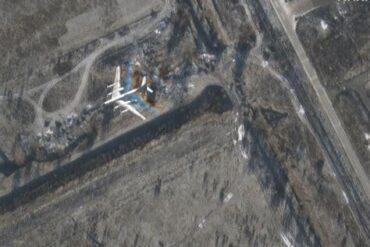
The strike at Bryansk was surgical. According to Astra’s sources within Russia’s Ministry of Emergency Situations, the Ukrainian UAVs hit a specific zone of the airport, causing a powerful detonation of the Mi-8’s onboard ammunition. The Mi-35, positioned nearby, sustained structural damage but was not obliterated. Damage extended beyond aircraft: the administrative building of the airport and the rescue services hub also suffered considerable impacts.
Footage Reveals Explosions and Chaos
Video footage published by multiple Telegram channels captured secondary explosions following the initial impact, consistent with the detonation of stored munitions. The airfield was quickly engulfed in smoke and shockwaves, prompting an emergency evacuation of nearby civilian workers, including staff from a local Ozon warehouse.
Although no casualties were officially reported, the intensity of the explosions left scorched earth and twisted wreckage in their wake. The fact that the Mi-8’s ammo cache detonated so violently raises important questions about what types of munitions were being stored, and why such ordnance was present at a civilian airport.
Mi-8 and Mi-35: Key Assets in Russia’s Helicopter Fleet
The loss of a Mi-8 helicopter is more than symbolic. As one of the most widely used multipurpose rotary-wing aircraft in Russia’s military inventory, the Mi-8 is pivotal for troop transport, logistics, electronic warfare, and medevac operations. Its destruction reflects not only a blow to Russia’s hardware but also to its air mobility operations across Western fronts.
The Mi-35, a modernized derivative of the Mi-24 ‘Hind’, serves as a gunship and transport hybrid, capable of close air support, troop insertion, and even limited cargo runs. Damage to this aircraft reduces Russia’s tactical edge in contested zones and potentially disrupts front-line reinforcement logistics.
Evidence of Military Use at Civilian Airfields
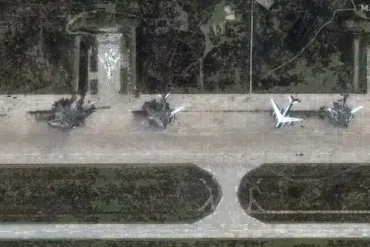
The dual-use nature of Bryansk International Airport has long been suspected. OSINT analysts from the Oko Hora group, as cited by Militarnyi, analyzed satellite imagery over recent months showing rotational movement of helicopters at the facility. These shifts in position, according to military pattern analysis, suggest routine refueling, loading, and maintenance operations—all indicative of a long-term military presence.
Militarnyi noted that while the specific contents of the airport’s storage units remain officially undisclosed, the intensity and sequence of explosions hint strongly at ammunition storage or arms caching. The visible fireball and repeated shockwaves seen in civilian footage corroborate this hypothesis.
Escalation and Strategic Messaging
Ukraine’s capability to reach deep into Russian border-adjacent regions like Bryansk, once considered relatively insulated, is a message of extended reach and technological maturation. It reflects both the improved endurance and guidance systems of Ukrainian UAV platforms and the country’s evolving doctrine of proactive disruption.
Russia, for its part, faces mounting pressure to enhance airfield defense systems even in rear zones. The inability to prevent UAVs from reaching a vital airfield exposes significant gaps in radar coverage, short-range air defense, and intelligence-sharing networks across its border oblasts. These vulnerabilities are now routinely exploited by Ukraine’s ISR and drone warfare cells.
Civilian Infrastructure Militarization in Question
The strike reignites debate over Russia’s use of civilian infrastructure for military ends. Bryansk International Airport, a hub nominally dedicated to regional passenger flights, has effectively operated as a logistics and support base for Russian helicopter units. This militarization of civilian zones risks broader implications under international law, especially in the context of civilian worker endangerment during armed conflict.
Notably, the evacuation of dozens of Ozon warehouse employees, although successful, underscores the civilian exposure inherent in Russia’s logistical strategies. As Ukraine expands its drone campaign deeper into Russia, the blurring of civilian-military boundaries becomes a critical focal point for both strategic operations and humanitarian risk assessments.
Drone Warfare Redefines Frontlines
The Bryansk attack also emphasizes how unmanned aerial systems (UAS) have redrawn the contours of what constitutes a ‘front line.’ Ukraine’s drone fleet has evolved from tactical quadcopters to strategic strike UAVs with sufficient range and precision to threaten assets hundreds of kilometers behind the conventional battlefield.
While the exact UAV models used in this strike remain undisclosed, the timing, coordination, and precision of the hit strongly suggest Ukraine is now fielding domestically modified long-range drone platforms, possibly augmented with AI-assisted target acquisition and satellite navigation systems.
Russian Response and Media Silence
The Kremlin has remained characteristically silent on the matter, neither confirming nor denying the scale of the damage. Russian state media have underreported or reframed the incident, focusing instead on domestic resilience and deflection narratives. Meanwhile, channels like Astra and various Telegram war monitors have emerged as critical sources for piecing together real-time assessments.
This information asymmetry presents challenges not only to external analysis but also to Russia’s internal logistics and command structure, which now operate under compromised operational secrecy.
Wider Implications for Russia’s Military Logistics
The loss of rotorcraft in Bryansk, combined with simultaneous strikes on fuel depots and military factories, suggests a deliberate strategy to cripple Russia’s war-making infrastructure in a systemic fashion. The impact of such strikes extends beyond material destruction:
- Slows helicopter resupply to frontlines in Kharkiv and Sumy sectors.
- Increases the logistical burden on remaining rotary-wing platforms.
- Forces reallocation of air defense assets, thinning protection around key hubs.
Ukraine’s coordination of multiple strikes in a single night highlights not only operational sophistication but also long-term planning driven by strategic military intelligence.
Conclusion: A Tactical Success with Strategic Ripples
The destruction of the Mi-8 and damage to the Mi-35 in Bryansk is far more than an isolated battlefield event. It is a vivid demonstration of Ukraine’s escalating reach, technological capability, and unrelenting focus on degrading Russia’s military logistics. As Ukraine targets airfields, oil facilities, and weapons factories far from the immediate battlefronts, the shape of the conflict continues to evolve into one defined by long-range precision, asymmetry, and strategic surprise.
If the militarization of civilian infrastructure continues unchecked within Russia, it will further justify Ukraine’s doctrinal emphasis on deep strike capabilities, placing even more pressure on the Russian military to adapt, respond, and defend the very infrastructure it once deemed beyond reach.