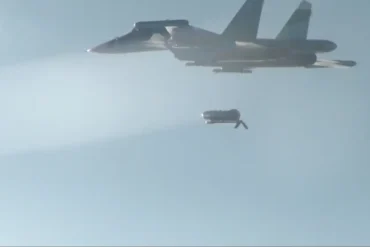
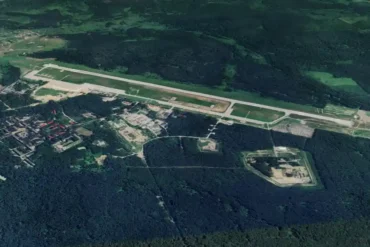
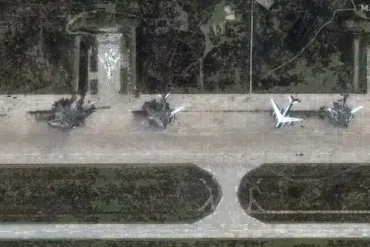
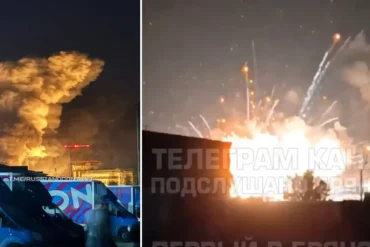
In a dramatic escalation of its long-range strike capabilities, Ukraine has launched an unprecedented drone assault deep within Russian territory, inflicting substantial damage on strategic airbases housing some of Russia’s most vital bomber fleets. According to Ukrainian officials and verified social media footage, this massive coordinated operation has marked one of the boldest actions by Kyiv since the full-scale invasion began.
The attack, which reportedly damaged dozens of Russian strategic bombers, was launched shortly before Ukrainian President Volodymyr Zelensky announced a delegation would travel to Istanbul for ceasefire negotiations with Russia. The timing of the strike has added both strategic weight and psychological pressure ahead of the planned diplomatic talks.
Operation “Spider Web”: A Year-and-a-Half in the Making
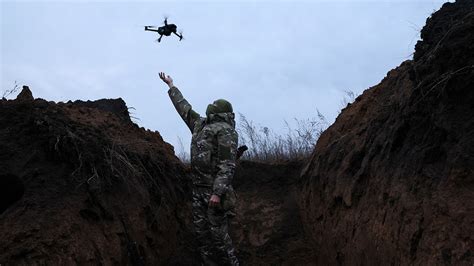
Ukrainian intelligence sources revealed that the drone assault—code-named “Spider Web”—was orchestrated by the Security Service of Ukraine (SBU) and involved meticulous planning over the course of 18 months. The head of the SBU, Vasyl Maliuk, personally directed the covert operation, which involved deploying 117 kamikaze drones from secret mobile launch platforms deep inside Russia.
These drones, launched from covert truck-mounted systems, were deployed from various concealed positions near airbases as far as Siberia, well beyond the typical range of Ukrainian drone capabilities. This achievement not only represents a logistical milestone but underscores a deep infiltration of Russian territory by Ukrainian operatives.
According to President Zelensky, Ukrainian intelligence agents operated “for months inside Russia under the nose of the Russian FSB domestic security agency.” In a shocking detail, he disclosed that one of the operational offices was located in Chelyabinsk Oblast, just kilometers from an FSB regional headquarters—more than 2,000 kilometers from Ukraine’s borders.
Strategic Bombers Under Fire: A Costly Blow to Russian Air Superiority
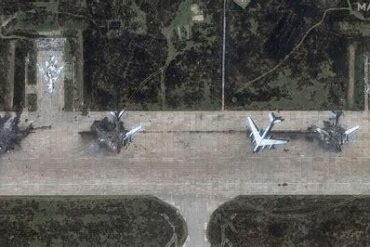
Ukraine claims that approximately 40 Russian military aircraft, including a significant number of strategic bombers, were impacted during the coordinated drone strikes. According to President Zelensky, this accounted for 34% of Russia’s strategic bomber fleet, a staggering figure if independently confirmed.
These aircraft, typically used in long-range cruise missile attacks on Ukrainian civilian centers, include the Tupolev Tu-95 and Tu-160 Blackjack—central pillars of Russia’s aerial strike capability. While Russia’s Ministry of Defense acknowledged the attacks on airbases in five separate regions, it claimed most were repelled and that only a few aircraft had caught fire before being extinguished.
Still, the symbolic and operational ramifications of this strike are profound. Not only does it demonstrate Ukraine’s ability to project power deep into Russian territory, but it also challenges the narrative of Russia’s domestic security invulnerability.
Intelligence and Withdrawal: Ukraine’s Operatives Safely Extracted
One of the most impressive elements of the operation was the successful exfiltration of Ukrainian operatives and collaborators involved in staging the drone launches. President Zelensky confirmed that “the people who assisted us were withdrawn from Russian territory before the operation. They are now safe.” This underscores not only the tactical precision of the mission but also Ukraine’s ability to execute complex maneuvers involving human intelligence assets on foreign soil.
Such a feat suggests that Ukraine has cultivated deep-rooted espionage networks within Russia, capable of staging operations on a scale once thought unthinkable. The risk tolerance and coordination required to infiltrate, launch, and exit without detection further underline how Kyiv has evolved its asymmetric warfare tactics since the initial invasion.
Drone Warfare Reaches a New Epoch
The operation represents a milestone in modern drone warfare. Launching nearly 120 drones from within the enemy’s own territory speaks to a paradigm shift in Ukraine’s tactical doctrine. Rather than relying solely on long-range drone flights from Ukrainian soil—often limited by distance and jamming—this mission shows the effectiveness of pre-positioned mobile launch units.
This approach also neutralizes many of Russia’s early-warning radar systems, as internal drone launches bypass traditional airspace detection frameworks. It raises the bar for both sides and sets a new benchmark for future high-impact, low-cost warfare in modern military conflicts.
The Russian Response and Domestic Reaction
Russia’s Ministry of Defense tried to contain the narrative, asserting that “the attacks in three of the five regions were repelled” and claiming that no casualties occurred. Yet verified satellite imagery and leaked images from locals near affected airbases in Murmansk and Irkutsk contradict this account, showing charred runways, smoldering hangars, and fire-damaged aircraft.
Internally, Russian citizens have taken to social media with panic, confusion, and disbelief. The failure of Russia’s vast air defense network to detect and intercept drones launched from within its own territory is causing serious reputational damage to the FSB and Russian military intelligence. Questions are being raised about how such an operation could unfold under the watch of a state that claims near-total domestic control.
Timing and Diplomacy: Pressure Ahead of Ceasefire Talks
The assault comes on the eve of ceasefire talks scheduled to be held in Istanbul, where a Ukrainian delegation led by Defense Minister Rustem Umerov is expected to negotiate terms with Russian counterparts. President Zelensky described the operation as “brilliant” and called it “our most long-range action yet.”
The objectives in Istanbul, according to Zelensky, will center on a “full and unconditional ceasefire, release of prisoners, and the return of abducted Ukrainian children.” However, the underlying message of the drone strikes is unambiguous: Ukraine is not entering negotiations from a position of weakness.
International Reactions and Trump Administration Silence
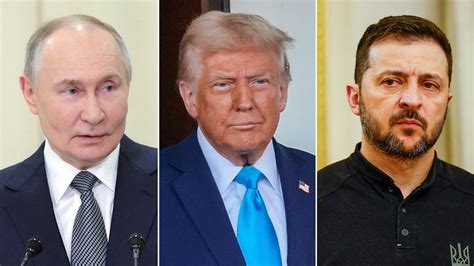
A Ukrainian official told reporters that no prior notification was given to the Trump administration before the operation. A U.S. official also confirmed that the administration was unaware of the impending strikes. This has raised diplomatic eyebrows, especially as Secretary of State Marco Rubio held a conversation with Russian Foreign Minister Sergey Lavrov on Sunday, encouraging direct talks aimed at establishing a long-term peace deal.
Despite the lack of U.S. involvement in the planning, Washington has expressed interest in monitoring the fallout and supporting diplomatic channels. Analysts suggest that Ukraine’s decision not to involve its allies may reflect a desire to assert military autonomy, reinforcing that Kyiv is capable of influencing the battlefield on its own terms.
A Strategic and Symbolic Victory
This long-range drone strike will likely be remembered as one of Ukraine’s most daring and successful covert operations of the war. With potentially dozens of strategic bombers disabled and international observers stunned by the operation’s scale and precision, Ukraine has fundamentally altered the perception of the war’s geographic limits.
For Russia, the attacks represent a devastating blow to military prestige, technological confidence, and homeland security. For Ukraine, they are a masterstroke in psychological warfare, signaling to Moscow that no location is safe—and that the cost of prolonging the conflict is only increasing.
As the Istanbul talks approach, Kyiv enters the negotiating room with a powerful story to tell—not just of resilience, but of strategic ingenuity, deep-state infiltration, and evolving warfighting capabilities that continue to catch the Kremlin off guard.