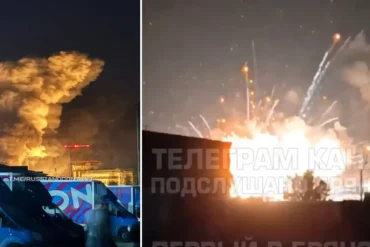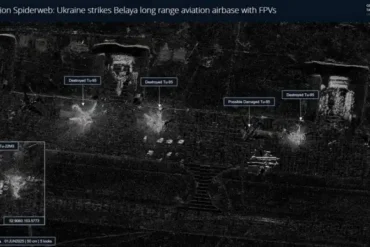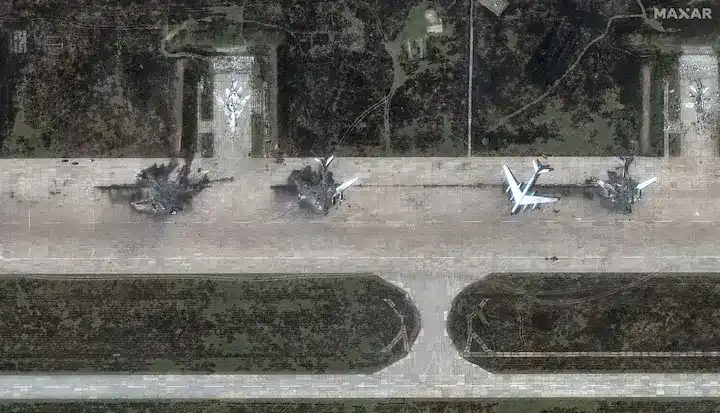
Ukrainian military innovation has once again disrupted Russia’s presumed air superiority, delivering a devastating drone attack that, according to Germany’s military intelligence, likely disabled 10% of Russia’s long-range strategic bomber fleet. This unprecedented strike, coordinated with precision and artificial intelligence, reportedly damaged over a dozen high-value aircraft including Tupolev Tu-95 and Tu-22M bombers, as well as A-50 airborne early warning and control (AEW&C) planes.
Strategic Bombers Damaged During Strike Preparation
The assault occurred over the weekend, targeting multiple airfields across Russia. Speaking on a soon-to-be-published YouTube podcast, German Major General Christian Freuding, Berlin’s top coordinator for military aid to Ukraine, confirmed that some of the targeted aircraft were in the process of being armed for new strikes against Ukraine. The implication is clear: Kyiv’s intelligence and drone capabilities have now matured to the point where they can disrupt Russian sorties at the most vulnerable juncture — pre-launch preparation.
Germany’s assessment is backed by U.S. intelligence, which estimates that up to 20 Russian aircraft were hit, with approximately 10 of them completely destroyed. These figures suggest a major degradation of Russia’s bomber fleet capabilities, especially considering the strategic nature of the affected platforms.
A-50 Surveillance Planes Irretrievably Lost
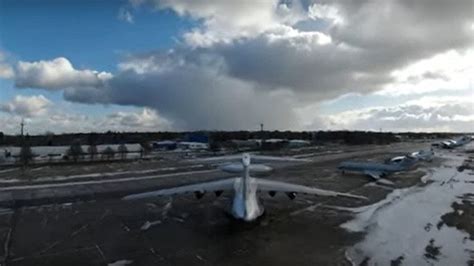
Among the aircraft damaged were A-50 AEW&C planes, the Russian equivalent to NATO’s AWACS. These airborne surveillance behemoths play a central role in coordinating battlefield awareness, detecting incoming threats, and guiding intercept missions. According to Freuding, the specific A-50s that were hit were likely inoperable but still used for salvaging spare parts, a crucial function given the limited number of such aircraft in Russia’s inventory.
“They can no longer be used even for spare parts,” Freuding said. “This is a significant loss, as only a handful of these aircraft exist.”
Scope and Reach: Multiple Airbases Targeted
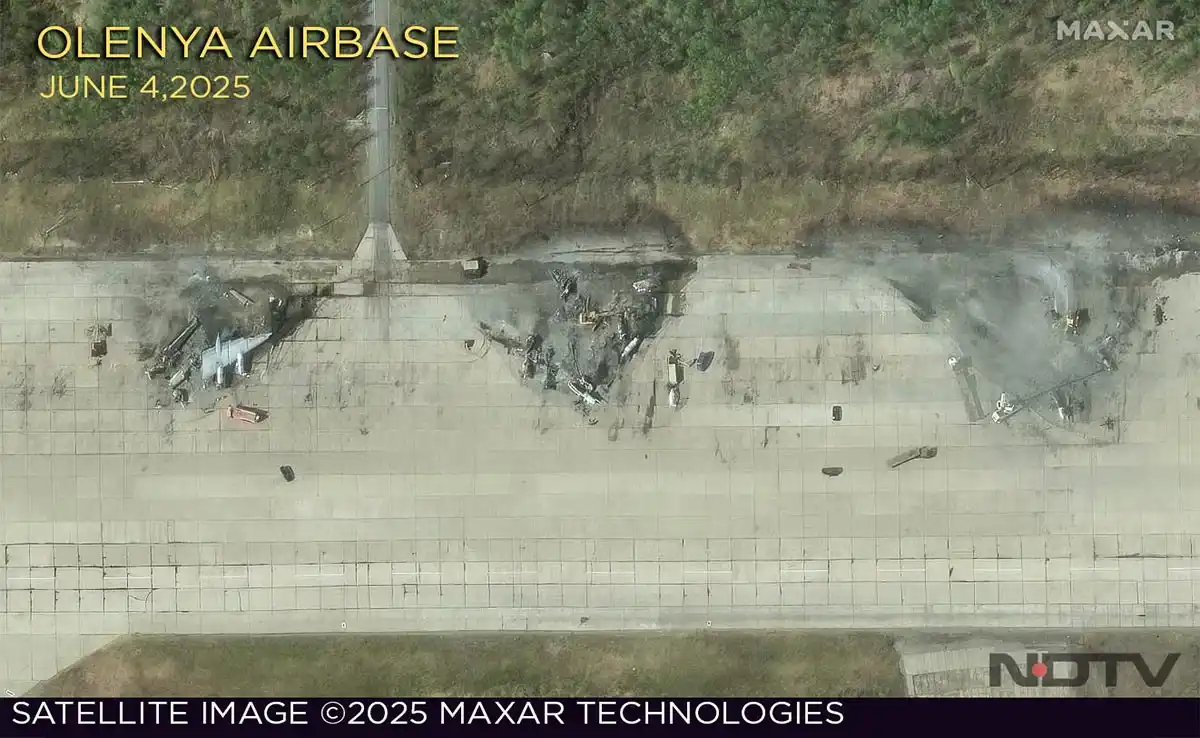
This drone assault was not a singular strike but rather a coordinated, multi-target campaign. Ukrainian drones reportedly struck airfields around 100 kilometers from Moscow, as well as those located in the Murmansk and Irkutsk regions — areas previously believed to be out of reach for Ukrainian munitions. Confirmed targets include:
- Olenya Air Base in Murmansk Oblast
- Belaya Air Base in Irkutsk Oblast
- Two unnamed bases within 100 km of Moscow
- A failed attempt at Ukrainka Air Base near the Chinese border
This pattern of strikes indicates a strategic expansion of Ukraine’s deep-strike doctrine, leveraging AI-assisted targeting algorithms to extend drone range, maximize impact, and pierce Russia’s conventional air defense envelope.
Nuclear-Capable Assets at Risk
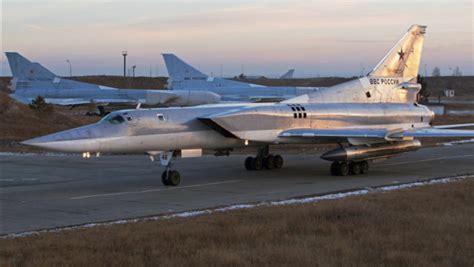
The long-range bombers struck are not ordinary military platforms; they form a critical part of Russia’s nuclear triad — its three-pronged capability to deliver nuclear weapons via air, sea, and ground. The Tu-95 and Tu-22M aircraft serve both strategic bombing and nuclear payload deployment roles, making this damage particularly alarming to the Kremlin.
According to analysts, these bombers are not only expensive but difficult to replace quickly due to Russia’s limited aerospace manufacturing capacity and international sanctions that restrict access to high-tech components. Replacing even a portion of the destroyed fleet will take years, during which time the overall readiness of Russia’s nuclear air deterrent could be compromised.
Psychological and Operational Consequences
Despite the tangible hardware losses, Freuding emphasized that Russia still retains 90% of its strategic bomber fleet, and for now, there is no immediate decline in missile and bomb attacks on Ukraine. However, the indirect effects are strategically disruptive:
- Remaining bombers will need to conduct more frequent sorties, accelerating wear and maintenance cycles.
- Operational readiness is compromised due to aircrew fatigue and logistics stress.
- Most critically, the psychological dimension of the strike has shaken Russian assumptions of homeland security.
Freuding remarked, “Russia had felt safe in its vast territory. This no longer holds true.” The strike has shown that distance from the frontline no longer guarantees immunity, compelling Moscow to rethink its base security architecture and divert resources to harden its air infrastructure.
The Rise of AI-Assisted Ukrainian Drones
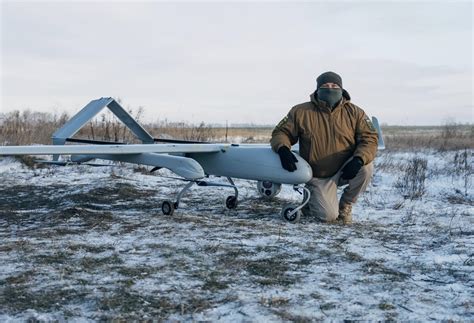
One of the most striking revelations is the use of artificial intelligence to guide the drone strikes. Ukrainian engineers, working with international partners and open-source intelligence, have allegedly trained algorithms to optimize drone flight paths, maximize stealth, and select high-value targets. This represents a technological leap in asymmetric warfare, where precision replaces scale.
AI-enhanced drones allow Ukraine to exploit Russia’s weak points — vast, poorly defended airfields stretched across a continent-sized territory. Analysts say that such technologies allow Ukraine to punch far above its weight, making low-cost platforms strategically disruptive.
Moscow’s Strategic Air Command Under Pressure
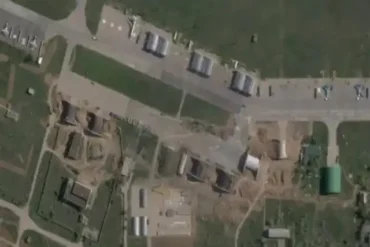
While Kremlin officials have been mostly silent on the specific damage incurred, satellite imagery and independent military observers have corroborated the extensive destruction of air assets. Burn marks, scorched hangars, and tarped-over fuselages speak volumes. The Russian Air Force’s 37th Air Army, which oversees strategic aviation, is under visible stress. Losses of platforms like the Tu-95MS, often tasked with launching Kh-101 cruise missiles, directly impacts Russia’s strike logistics and deterrence posture.
Additionally, Moscow’s dependency on a limited fleet of legacy aircraft—some of which date back to the Soviet era—has created a vulnerability that Ukraine is now exploiting with growing frequency and success.
Shifting the Balance in Long-Range Warfare
This attack is not just a tactical victory; it is a strategic message. Ukraine’s ability to strike deep within Russian territory signals a paradigm shift in modern warfare, where borders are blurred, and the front line can reach into the heart of an adversary’s command and control systems. This also forces Western defense planners to recalibrate their understanding of security distance, particularly in regions like the Baltics and Eastern Europe.
From a military aid standpoint, this may catalyze new waves of funding and weapon system transfers to Ukraine, especially long-range drones, advanced satellite intelligence, and AI-powered targeting systems.
Conclusion: The Beginning of a New Offensive Doctrine
What Ukraine achieved over this single weekend signals the dawn of a new operational doctrine: high-impact, AI-assisted deep strikes on strategic infrastructure. While the damage to Russia’s bomber fleet will not immediately halt missile strikes on Ukrainian cities, it sets into motion a series of operational, logistical, and psychological constraints that could reshape the tempo and scope of Russia’s air war.
As Freuding aptly concluded, “Russia will now need to ramp up its security measures, and that alone is a form of strategic degradation.”
In this conflict, where every aircraft matters, 10% is not just a statistic — it’s a turning point.