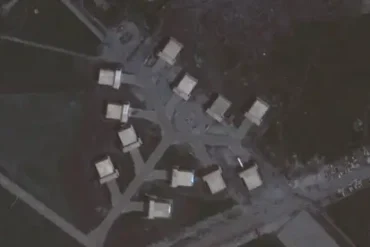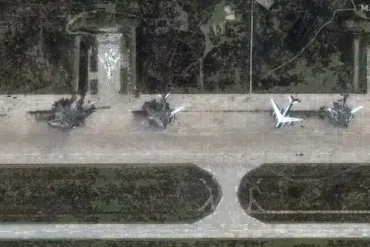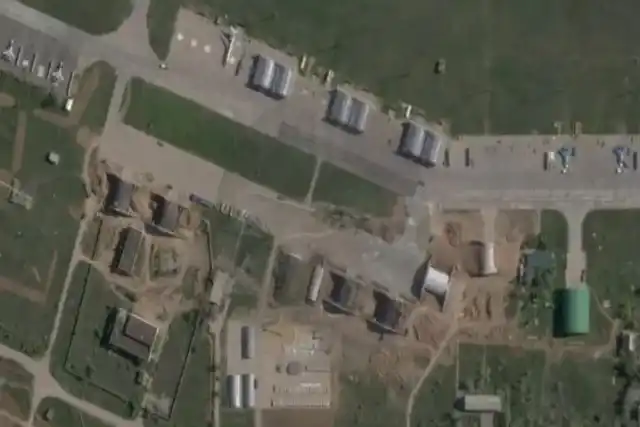
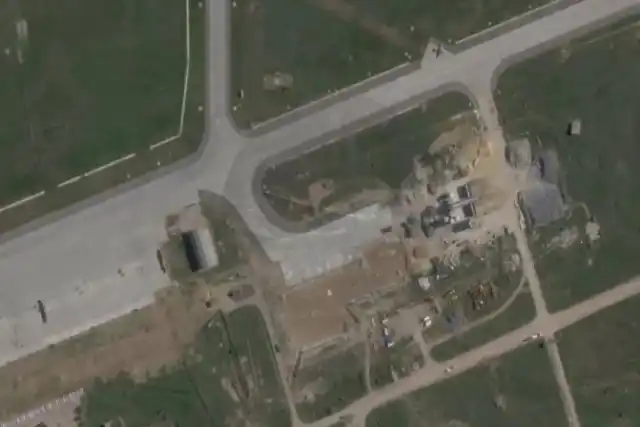
Russia is rapidly constructing protective hangars at the strategic Akhtubinsk airfield in the Astrakhan region, following a high-profile Ukrainian drone strike that exposed the vulnerabilities of its advanced Su-57 stealth fighters. Newly released satellite imagery shows extensive and accelerated construction activity at the airbase, underscoring a critical shift in how Moscow is attempting to safeguard its fifth-generation combat aircraft from evolving aerial threats.
Strategic Importance of Akhtubinsk Airfield
Located in southern Russia, the Akhtubinsk State Flight Test Center is not just another military facility—it serves as a central testing ground for the latest in Russian aerospace technology, including the Su-57 Felon, Russia’s most advanced fighter jet. The facility plays a pivotal role in both the research and operational readiness of next-generation platforms. This makes it an attractive target for Ukrainian forces aiming to degrade Russia’s strategic edge in the air domain.
The airbase houses some of the few operational Su-57 units—Russia’s flagship answer to Western stealth aircraft such as the U.S. F-22 Raptor and F-35 Lightning II. Unlike older airbases, which primarily accommodate legacy platforms, Akhtubinsk is deeply interwoven with the future of Russia’s airpower doctrine. Thus, any damage or disruption here has outsized implications for Moscow’s military ambitions.
The Catalyst: Ukrainian Drone Attack
The urgency behind these new shelters stems from a Ukrainian drone strike in 2023, during which at least one Su-57 was reportedly damaged. The incident, although not officially detailed by Russian authorities, was widely covered through open-source intelligence and satellite surveillance. It marked the first known combat damage to the stealth fighter and raised alarms over the inadequacy of protective infrastructure for critical air assets.
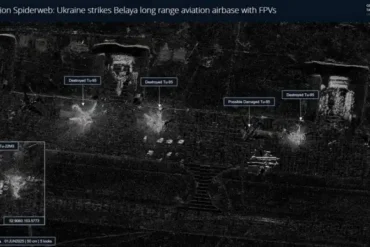
Ukraine’s Security Service (SBU) has increasingly relied on long-range drone strikes to penetrate deep into Russian territory. Operations such as “Web”, a codename for a coordinated strike on multiple Russian airbases, have demonstrated Kyiv’s ability to project force far beyond front-line areas. These operations have not only destroyed multiple long-range bombers but also served as a psychological tool to undermine Russia’s perceived air superiority.
Protective Measures and Military Adaptation
The protective hangars under construction are not mere tents or temporary covers. Early analysis of satellite imagery indicates reinforced concrete structures, suggesting Russia is finally investing in hardened shelters that can resist blasts, shrapnel, and potentially even direct hits from explosive-laden UAVs. The layout of the construction site also implies a design meant to minimize secondary damage—aircraft are being housed with sufficient spacing to prevent a chain-reaction in case of an attack.
Such shelters are standard in many NATO countries but have been notably absent or underused across most Russian installations. This lapse is especially significant given the value and limited availability of the Su-57 fleet. With only around 20 operational Su-57s as of mid-2025, the loss of even a single aircraft is a strategic setback. Russia’s newfound urgency in constructing these facilities may indicate a belated but serious recognition of the modern aerial threat landscape.
Broader Implications for Russian Defense Strategy
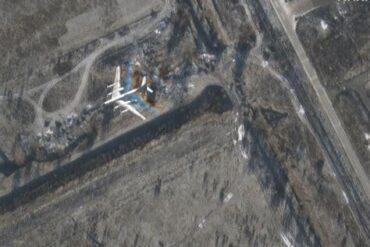
The Akhtubinsk development stands in contrast to the situation at Engels air base, where strategic bombers such as the Tu-95MS remain exposed. There, crews have been seen using car tires and other makeshift materials to protect aircraft from shrapnel—a tactic widely mocked and indicative of broader resource allocation issues within Russia’s defense infrastructure. Satellite images of Engels released in recent weeks show no significant progress in building shelters, highlighting a dichotomy between prioritized and neglected assets.
This duality suggests that Russia may be prioritizing technologically advanced, limited-production platforms like the Su-57 over its aging bomber fleet. It also reflects a shift in doctrinal emphasis—focusing on force preservation through passive defense rather than relying solely on interception or deterrence.
The Rise of Drone Warfare and Base Defense Gaps
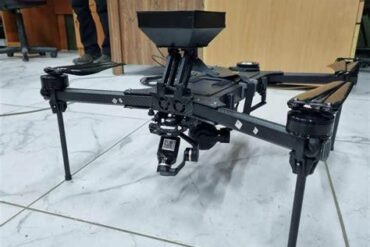
The evolution of drone warfare has fundamentally changed the calculus for base defense. Ukraine’s use of relatively inexpensive, GPS-guided UAVs to strike strategic targets has exposed Russia’s vulnerability to asymmetrical attacks. Unlike ballistic or cruise missiles, drones are more difficult to detect and intercept, especially when launched in swarm formations or when flying at low altitudes. The 2023 drone strike on Akhtubinsk was just one of several operations that proved the ineffectiveness of Russia’s air defense umbrellas when dealing with modern drone tactics.
Until recently, Russian defense doctrine focused heavily on offensive capability and traditional deterrence—air superiority, missile systems, and armored units. The conflict in Ukraine, however, has forced the Russian military to recalibrate toward defense-in-depth, starting with the reinforcement of vulnerable infrastructure.
Symbolism of the Su-57’s Vulnerability
The damage to a Su-57 in the Akhtubinsk strike carries more than just tactical significance. It punctures a hole in the aura of invincibility Russia has attempted to build around its stealth fighter. Meant to symbolize Russia’s return to aerospace parity with the West, the Su-57 has had a troubled development history marred by delays, limited production, and questions over its true stealth capabilities.
Seeing this aircraft susceptible to attack from a relatively low-cost drone system is emblematic of the broader struggle Moscow faces in maintaining strategic prestige amid a technologically adaptive enemy. It also reinforces Ukraine’s message that no asset in Russia is beyond their reach.
The Role of Open-Source Intelligence and Public Scrutiny
The increasing role of open-source intelligence (OSINT) has magnified the consequences of such incidents. Satellite imagery from commercial providers, often disseminated by independent analysts on platforms like Twitter/X, Telegram, and various defense forums, ensures that even modest damage cannot be concealed. Within hours of the Akhtubinsk strike, imagery of scorched tarmac and visibly damaged infrastructure made the rounds, bypassing state media control and forcing Russian defense commentators to confront the event publicly.
This visibility adds an additional layer of political pressure on Russian authorities. The urgency seen in shelter construction is likely driven not only by operational concerns but also by the need to project an image of responsiveness and resilience.
Future Prospects and Security Challenges
Whether the construction of shelters at Akhtubinsk represents a one-off reaction or the beginning of a systematic overhaul across all high-value Russian airbases remains to be seen. However, military analysts suggest this could be the first phase in a broader campaign to fortify air infrastructure.
Still, serious obstacles remain. Russia’s defense budget has been increasingly strained due to prolonged warfare, economic sanctions, and the costs of fielding advanced weapons systems. Additionally, with many of its best engineering and contracting units already deployed or operating under battlefield constraints, the scalability of such construction projects is in question.
If Moscow intends to apply similar protective measures to other bases, it will require significant investment, prioritization, and perhaps most critically, doctrinal transformation to align with 21st-century security needs.
Conclusion: A Turning Point in Russian Base Defense?
The rapid construction of hardened shelters for Su-57 jets at Akhtubinsk could mark a paradigm shift in how the Russian military approaches base defense. Prompted by the successful penetration of airspace by Ukrainian drones, this move signals a grudging but growing recognition of modern threat vectors.
For now, the Su-57s at Akhtubinsk may soon rest under thick concrete vaults rather than exposed aprons. But the true test of Russia’s defensive transformation will come not only in reinforced structures, but in whether this shift is systematic, sustainable, and scalable across its vast military infrastructure. As drones continue to rewrite the rules of war, the shelters at Akhtubinsk may become a symbol of lessons learned the hard way.