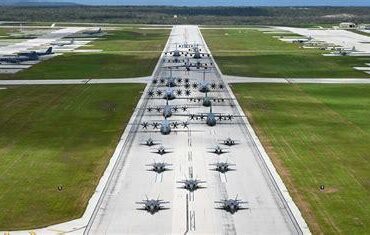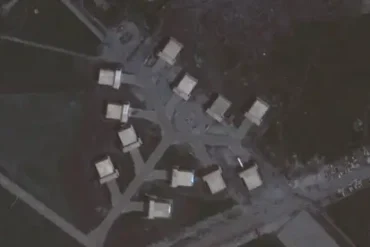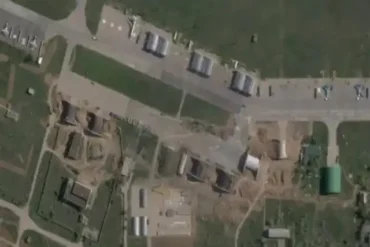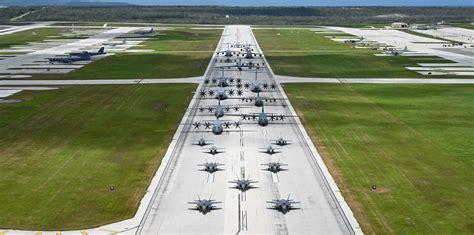
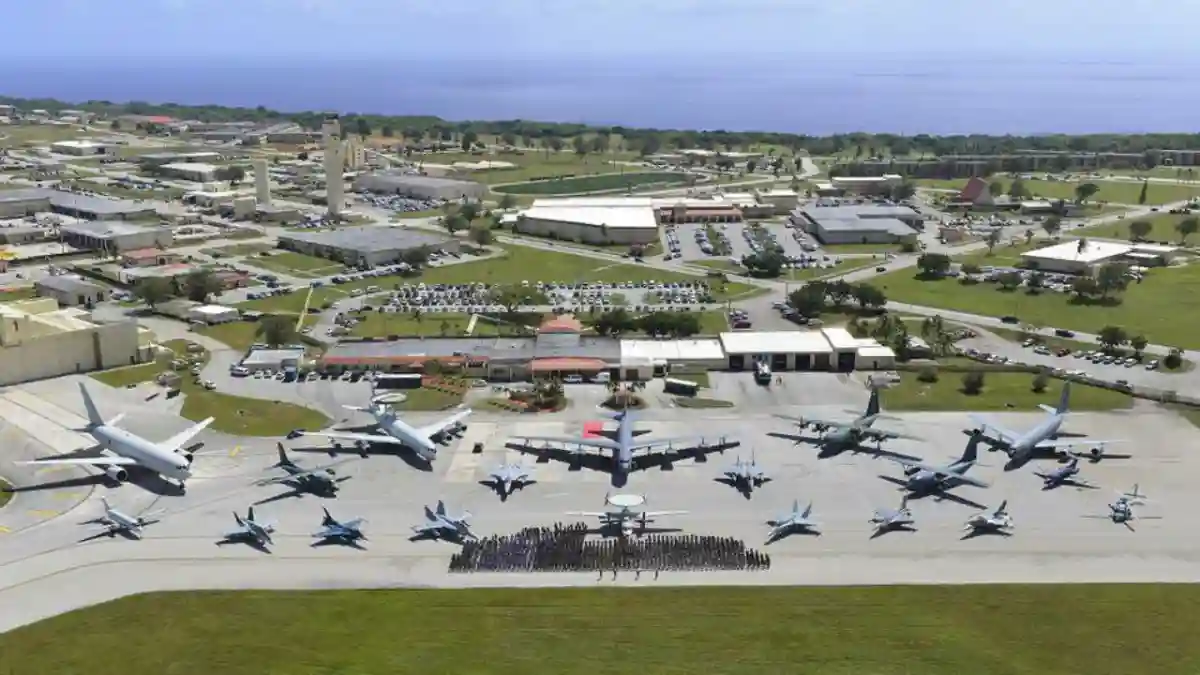
The US Air Force is transforming Andersen Air Force Base (Andersen AFB) in Guam into a larger and more flexible hub for Indo-Pacific operations, but one construction decision has attracted attention: instead of building rows of hardened aircraft shelters, the service is pouring roughly 20 acres of new concrete apron space to park and operate more aircraft.
At first glance, the decision appears unusual. Aircraft shelters have traditionally been viewed as essential protection for high-value military aircraft, especially at forward bases located within range of potential enemy missiles. However, the Air Force’s choice reflects a major change in modern warfare thinking. Rather than relying on permanent structures designed to absorb attacks, the Pentagon is increasingly prioritizing mobility, dispersion, and unpredictable operations through its Agile Combat Employment (ACE) strategy.
Andersen AFB has become one of the most important American military locations in the Pacific. Located on Guam, an island territory roughly 2,100 miles from mainland Asia, the base sits in a critical position between the United States and potential conflict zones in the western Pacific. Its location makes it a key staging point for long-range bombers, surveillance aircraft, tankers, and support assets operating across the Indo-Pacific region.
Why Andersen AFB Is Expanding With Concrete Instead of Shelters
The massive concrete expansion at Andersen AFB is not simply a construction project. It represents a broader transformation in how the US military expects to fight a future high-end conflict.
The traditional Cold War approach emphasized protecting aircraft inside hardened shelters. These structures were designed to shield valuable aircraft from bombs, rockets, and fragments. However, modern precision weapons have changed the equation. Long-range ballistic missiles, cruise missiles, and satellite-guided targeting systems can locate fixed facilities more accurately than ever before.
A large permanent shelter may protect an aircraft from some threats, but it also creates a predictable target. Once an adversary knows where aircraft are stored, the location itself becomes vulnerable.
The Air Force’s current approach is different. Instead of concentrating aircraft in a small number of protected locations, the service wants the ability to rapidly move aircraft between different parking areas, bases, and temporary operating locations.
This philosophy is at the heart of Agile Combat Employment, a strategy built around flexibility. Aircraft must be able to land, refuel, receive maintenance, reload weapons, and quickly move again before an enemy can respond.
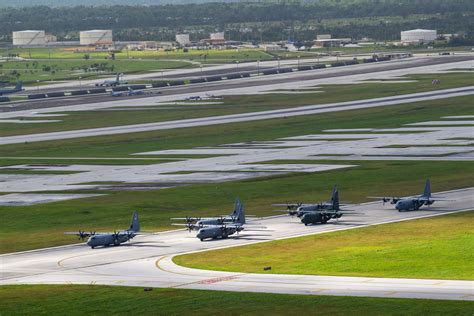
The new concrete apron at Andersen AFB supports that concept by creating more available aircraft parking space. More parking positions allow commanders to spread aircraft across a wider area, reduce congestion, and increase the number of aircraft that can operate from the base simultaneously.
The Pacific Battlefield Is Driving a New Air Force Strategy
The Indo-Pacific region presents unique challenges for American military planners. Unlike conflicts in smaller geographic areas, a potential Pacific conflict would involve enormous distances, limited bases, and sophisticated missile threats.
Guam is strategically valuable because it provides a major American foothold closer to Asia while remaining outside the immediate range of many shorter-range weapons. However, its importance also makes it a potential target.
The Pentagon understands that adversaries will likely attempt to neutralize major air bases during the opening stages of a conflict. A concentrated force of aircraft sitting in predictable locations could become vulnerable.
This is why the Air Force is investing heavily in infrastructure that supports rapid movement rather than static protection.
The expanded apron will allow Andersen to handle a wider variety of aircraft, including bombers, tankers, maritime patrol aircraft, and transport aircraft. Instead of designing the base around one specific aircraft type, planners are creating a more adaptable platform for future operations.
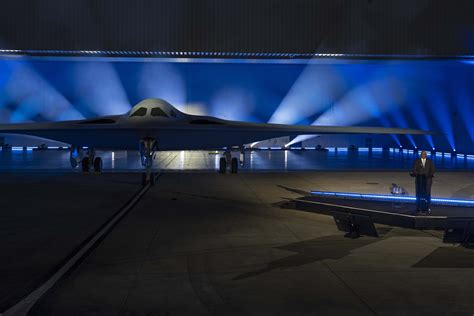
This flexibility is especially important as the Air Force introduces new aircraft such as the Northrop Grumman B-21 Raider stealth bomber.
The Arrival of the B-21 Raider Changes Bomber Operations
The B-21 Raider is expected to become the centerpiece of America’s future stealth bomber fleet. Unlike the enormous B-2 Spirit, the Raider is designed with greater operational flexibility in mind.
The B-2 was one of the most advanced aircraft ever built, but its size and maintenance requirements limited where it could operate. The aircraft required specialized facilities and careful environmental protection.
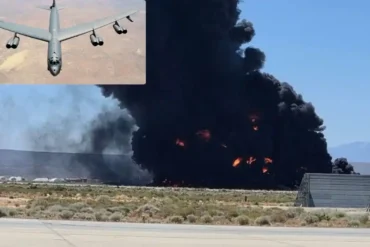
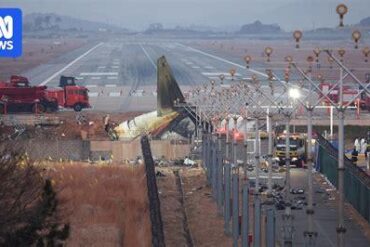
Andersen AFB experienced this challenge firsthand in 2008 when a B-2 bomber crashed shortly after takeoff following a maintenance-related malfunction. The aircraft, known as the “Spirit of Kansas,” had been parked outside overnight during heavy rainfall on Guam. The incident became the only operational loss of a B-2 aircraft.
The B-21 was designed with lessons from previous aircraft in mind. Its smaller size, improved materials, and more advanced design allow it to operate from a broader range of locations.
This means the Air Force does not necessarily need every B-21 operating location to have massive specialized shelters. Instead, the aircraft can benefit from a larger network of airfields and flexible deployment options.
By increasing open apron capacity at Andersen, the Air Force can support not only the B-21 but also other aircraft that will contribute to future strike operations.
Andersen AFB Will Support a Mix of Future Combat Aircraft
The future of American air power will not depend on a single aircraft. Instead, the Air Force is building a network of platforms that work together.
Stealth aircraft such as the F-35 Lightning II and F-22 Raptor are designed to penetrate heavily defended airspace, gather intelligence, and identify enemy threats. Their ability to operate in contested environments makes them essential first-wave assets.
However, stealth fighters have limited internal weapons capacity because their weapons must be carried inside the aircraft to maintain low observability. This creates the need for other aircraft to provide additional firepower.
That is where aircraft like the Boeing F-15EX Eagle II become important. Although the F-15EX does not have stealth capabilities, it can carry a massive weapons load. It can operate as a missile platform, launching long-range weapons based on targeting information provided by stealth aircraft.
The expanded Andersen infrastructure will also support large aircraft such as bombers and maritime patrol aircraft.
The Boeing B-52 Stratofortress, which has served the United States for decades, will continue playing a major role after extensive upgrades. The future B-52J variant will receive improved engines, communications systems, and networking capabilities, allowing it to operate as a long-range missile carrier connected to modern battlefield networks.
The Navy’s P-8A Poseidon maritime patrol aircraft is another important aircraft expected to benefit from Pacific infrastructure improvements. Based on the Boeing 737 platform, the P-8 provides submarine detection, maritime surveillance, and intelligence capabilities across vast ocean areas.
More Parking Space Means Higher Operational Tempo
The decision to expand apron space instead of building shelters is also connected to a simple operational reality: aircraft need room to move.
Large shelters can create limitations. They determine where aircraft are parked, how they are positioned, and how quickly they can be prepared for missions.
Open apron space provides commanders with more options. Aircraft can be parked in different configurations depending on mission requirements. Maintenance teams can access aircraft more easily, and ground crews can support larger numbers of aircraft at once.
For a base like Andersen, which may support aircraft arriving from different parts of the world during a crisis, flexibility is extremely valuable.
The project is also being combined with other infrastructure improvements. These include expanded fuel storage, upgraded refueling capabilities, improved stormwater systems, communications upgrades, and personnel facilities.
Guam’s tropical climate creates additional challenges. Heavy rainfall and severe weather require infrastructure that can maintain operations even during difficult conditions.
Guam’s New Defense Network Will Protect the Base
While the Air Force is choosing not to build extensive aircraft shelters, it is not ignoring the threat environment.
Instead, the Pentagon is investing in layered defenses designed to protect the entire installation.
Guam is expected to receive a major integrated air and missile defense system capable of responding to different types of threats. The defensive network is designed to counter everything from ballistic missiles to cruise missiles and unmanned systems.
This approach follows the same logic as Agile Combat Employment. Rather than relying on one protective measure, the military combines multiple systems to increase survivability.
Aircraft can move. Defenses can intercept incoming threats. Communications systems can maintain coordination. Together, these capabilities create a more resilient military presence.
The Future of Andersen AFB Is About Flexibility, Not Fortification
The decision to pour 20 acres of concrete at Andersen AFB instead of constructing traditional shelters may appear counterintuitive, but it reflects how warfare has changed.
In previous decades, the strongest air base was often the one with the thickest walls. Today, the strongest air base may be the one that can adapt the fastest.
The US Air Force is preparing for a future where aircraft may need to operate from multiple locations, rapidly relocate, and avoid becoming predictable targets.
Andersen AFB’s expansion demonstrates this new philosophy. The base is becoming less like a traditional bomber fortress and more like a flexible military hub capable of supporting a wide range of aircraft and missions.
As the United States increases its focus on the Indo-Pacific, Guam will remain a critical link in the American defense network. The new concrete aprons, expanded fuel capacity, improved defenses, and support infrastructure are all designed around one objective: ensuring that American air power remains operational even in the most challenging environment.
The future battlefield will reward forces that can move faster, adapt quicker, and remain unpredictable. At Andersen AFB, the US Air Force is building exactly that kind of capability.