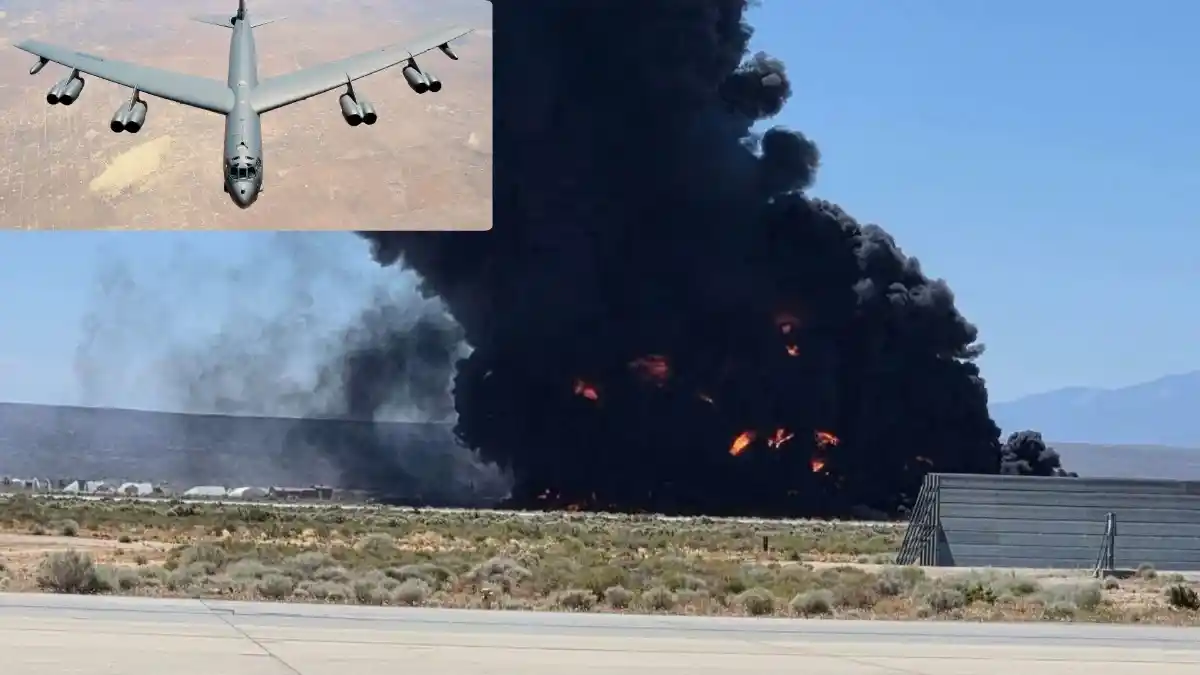
A US Air Force B-52 Stratofortress crashed shortly after takeoff from Edwards Air Force Base, California, on June 15, 2026, in a devastating accident that has left eight people presumed dead. The strategic bomber went down at approximately 11:20 a.m. Pacific Daylight Time during what officials described as a routine test mission. The incident triggered a large-scale emergency response at one of the most important flight testing and evaluation facilities in the United States.
Military officials initially released limited information as rescue and recovery operations unfolded. However, later statements from the Air Force indicated that the circumstances surrounding the crash appeared to be “not survivable.” Emergency personnel were dispatched immediately to the crash site, where smoke and fire were visible across a significant section of the airfield.
The loss of a B-52 Stratofortress is a rare event and immediately drew national attention due to the aircraft’s importance to America’s long-range strike capability. The bomber remains one of the most recognizable and strategically significant military aircraft in operation today, despite tracing its origins back to the Cold War era.
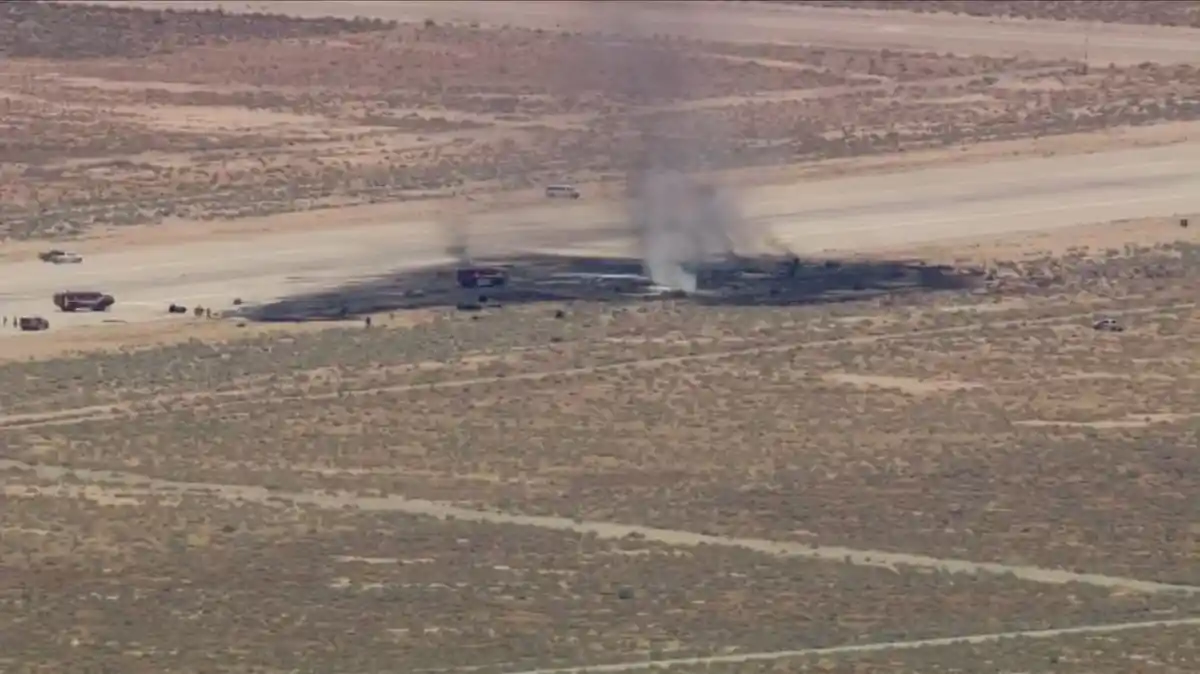
B-52 Crashes Moments After Departure
According to information released by Edwards Air Force Base, the aircraft crashed only moments after becoming airborne. The bomber was carrying eight personnel during the mission. While officials initially stopped short of confirming fatalities, subsequent statements indicated that early assessments suggested there were no survivors.
The accident occurred within the boundaries of Edwards Air Force Base, a facility renowned for supporting advanced flight testing, aerospace research, and military aircraft development. Located in California’s Mojave Desert approximately 100 miles northeast of Los Angeles, the base has long served as a center for some of the most significant aviation programs in American history.
Images emerging from the area showed extensive burn damage and thick smoke rising from the impact location. Emergency vehicles and specialized response teams quickly converged on the site as authorities secured the area and began preliminary assessments.
Airfield operations were halted immediately following the crash. Incoming aircraft were diverted, and access restrictions were implemented across portions of the installation. Officials also suspended non-commercial visitor access to ensure emergency crews could operate without interference.
Air Force Declares Initial Conditions “Not Survivable”
In a statement released several hours after the accident, the Air Force acknowledged the severity of the situation.
Officials confirmed that the B-52 was conducting a routine test mission when the crash occurred. While recovery efforts continued throughout the day, military authorities stated that initial indications suggested the crash was not survivable, leading investigators to presume all eight individuals aboard had perished.
The identities of the crew members were not immediately released, pending notification of family members and completion of official procedures. Military casualty notification processes require extensive verification before names can be publicly disclosed.
The announcement transformed what initially appeared to be an ongoing emergency response into one of the deadliest Air Force aviation incidents involving a strategic bomber in recent years.
Edwards Air Force Base Plays Critical Role In Aircraft Testing
The location of the accident adds another layer of significance to the event. Edwards Air Force Base serves as one of the Air Force’s premier testing centers and has been involved in evaluating countless military aircraft, weapons systems, and modernization programs.
The installation has historically supported testing for aircraft ranging from the X-planes and Space Shuttle landing operations to modern fighters and strategic bombers. It also plays a key role in assessing upgrades to existing military fleets.
Because the crashed aircraft was reportedly participating in a test-related mission, investigators will likely examine whether any specialized equipment, modifications, or testing objectives were involved. Officials have not indicated that such factors contributed to the accident, but these elements are commonly reviewed during military aviation investigations.
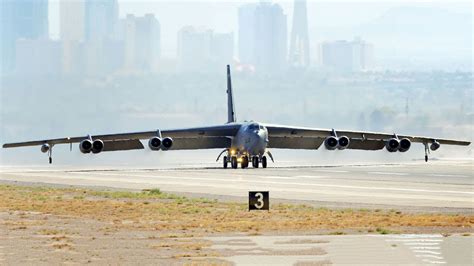
The B-52 Stratofortress Remains A Pillar Of US Strategic Power
The Boeing B-52 Stratofortress remains one of the longest-serving combat aircraft in military history. Entering service during the 1950s, the bomber was originally designed to deliver nuclear weapons during the Cold War. Over the decades, it evolved into a versatile platform capable of carrying a wide variety of conventional and strategic weapons.
Despite its age, the aircraft continues to form a crucial part of America’s long-range strike capability. The Air Force has repeatedly modernized the fleet, extending its service life through upgrades involving avionics, communications systems, radar technology, and weapons integration.
The current operational fleet consists of the B-52H variant, which remains active across multiple strategic missions. These aircraft routinely participate in global deployments, deterrence operations, training exercises, and combat support missions.
Military planners expect the B-52 fleet to remain operational for decades to come, making ongoing modernization efforts among the most important long-term aviation programs within the Department of Defense.
Investigators Face A Complex Task
Determining the exact cause of the crash is expected to require an extensive and methodical investigation. Military aviation accident inquiries often involve multidisciplinary teams examining every aspect of the aircraft’s operation before the accident.
Investigators will likely analyze maintenance histories, inspection records, flight profiles, mission objectives, weather conditions, crew procedures, and available flight data. Because the crash occurred shortly after takeoff, special attention will likely be directed toward aircraft performance during the critical initial climb phase.
Military investigators commonly reconstruct events second by second using physical evidence, witness accounts, maintenance documentation, and technical analysis. Such investigations frequently take months before final conclusions are released.
At this stage, authorities have not identified any specific cause. No official statements have suggested mechanical failure, pilot error, environmental factors, or system malfunctions as contributing elements.
Rare Accident Raises Questions Across The Aviation Community
The accident marks one of the most significant incidents involving the B-52 fleet in recent years. The aircraft has generally maintained a strong operational record despite its advanced age and demanding mission profile.
The last widely reported B-52 crash occurred in Guam in 2016, when a bomber was destroyed during takeoff. In that incident, all crew members successfully escaped and survived. The apparent loss of all eight personnel in the Edwards accident therefore represents a particularly tragic development.
Beyond the immediate human impact, the crash is expected to draw attention from military leaders, aviation experts, defense analysts, and lawmakers. Questions regarding fleet readiness, maintenance practices, testing procedures, and modernization programs may receive increased scrutiny as investigators continue their work.
For now, however, the focus remains on recovery operations, support for affected families, and establishing the facts surrounding the accident.
As investigators begin examining the wreckage and collecting evidence, the Air Force faces the difficult task of determining what caused one of its most iconic aircraft to fall from the sky moments after takeoff. Until official findings are released, many of the key questions surrounding the tragedy at Edwards Air Force Base will remain unanswered.