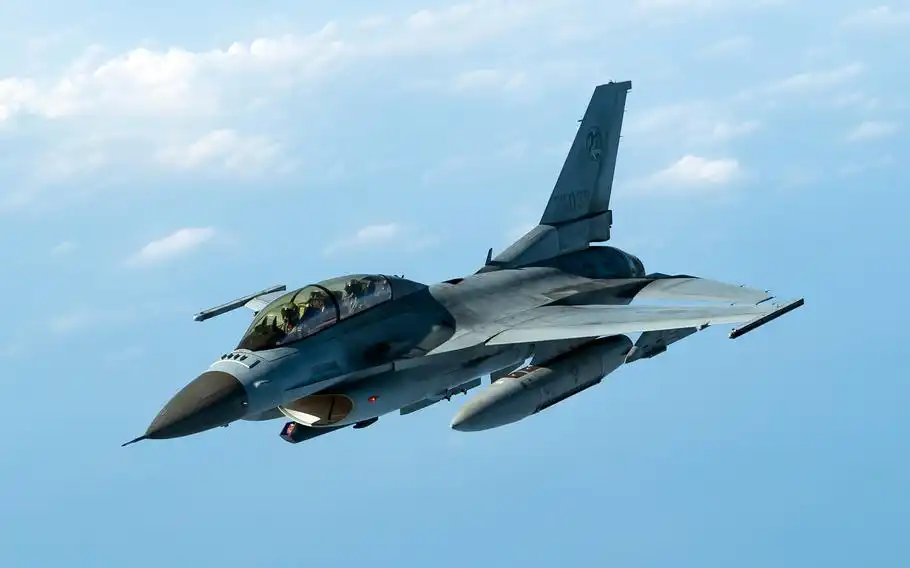
A South Korean F-16D Fighting Falcon carrying two aircrew members skidded off the runway at Eielson Air Force Base in Alaska during a routine takeoff operation on Tuesday afternoon, prompting a swift ejection by both pilots. The aircraft, operated under the Republic of Korea Air Force (ROKAF), lost control shortly after initiating its takeoff sequence around 4:00 p.m. local time, according to a formal statement from the Eielson AFB Public Affairs Office.
Eyewitnesses and base officials confirmed that the jet veered from the designated airstrip and came to a halt in the grassy infield inside the secured perimeter of the base. Emergency crews from the 354th Fighter Wing were immediately dispatched to the site, and both aircrew members were transported to Bassett Army Community Hospital for evaluation. Their condition remains stable, and there have been no reports of critical injuries.
Immediate Aftermath and Eyewitness Account
The crash, although non-lethal, caused significant commotion both on base and along the Richardson Highway, which runs adjacent to Eielson AFB. One witness, Sarah Sioka, recounted the moment she saw the crippled jet while traveling southbound with her husband. “The nose was down on the runway, kind of looked smushed a little bit, and then the back end was … up on its wheels,” she told Alaska’s News Source. Her account, alongside emergency vehicle activity she estimated to number between eight and ten, confirmed the seriousness of the response effort.
Notably, Sioka observed that there were no visible flames or smoke at the site, suggesting that the incident did not involve post-crash combustion. This detail may become crucial in the ongoing investigation, potentially narrowing down the cause of the runway excursion to mechanical failure or pilot error during takeoff roll.
Base officials have also asked members of the public not to stop along the highway or attempt to photograph the incident, citing both federal law and the need for an uninterrupted recovery process.
Background of the F-16D and Republic of Korea Air Force’s U.S. Operations
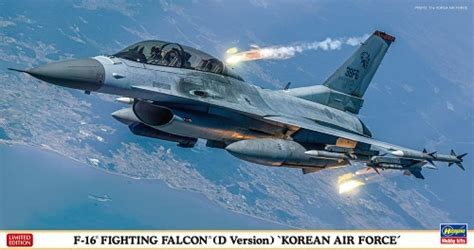
The F-16D Fighting Falcon involved in the crash is a two-seat variant of the iconic multirole jet fighter, extensively used by South Korea as part of its defense cooperation with the United States. Under joint exercises and readiness programs, it is common for ROKAF aircraft to operate from American bases, including Eielson Air Force Base, located near Fairbanks, Alaska.
These collaborative deployments are part of the larger U.S.-South Korea defense alliance, and jets like the F-16D play pivotal roles in simulated combat training in the Arctic and Pacific regions. The aircraft itself, a modified version of the General Dynamics F-16, is known for its versatility, agility, and reliability — although this incident casts a brief shadow over its otherwise strong operational history.
Pattern of Recent F-16 Incidents Raises Concerns
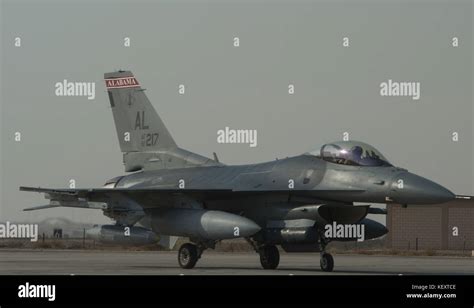
The crash at Eielson AFB adds to a growing list of recent incidents involving F-16s, both domestic and international. Just weeks prior, two American F-16s were forced to make an emergency landing in St. Paul, Alaska, due to an engine malfunction during a transit flight. That emergency also involved aircraft en route to Eielson AFB, further amplifying scrutiny over operations involving the platform in Alaska’s unique and often unpredictable environment.
The remoteness and volatile weather conditions in this region — from runway icing to powerful crosswinds — create additional challenges for even the most experienced aviators. While no official link has been drawn between the two incidents, the proximity in time and location will likely be a focal point in the comprehensive inquiry now underway.
The Role of Eielson Air Force Base in Joint Defense Efforts
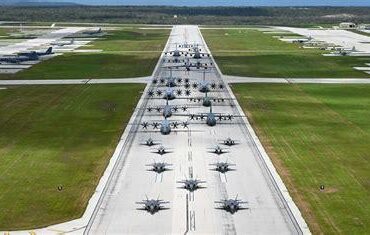
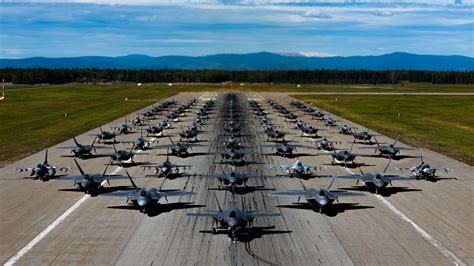
Eielson AFB serves as a strategic forward operating location for both U.S. and allied aircraft, situated approximately 26 miles southeast of Fairbanks. It is home to the 354th Fighter Wing, and regularly supports rotational deployments and joint military exercises with partner nations such as South Korea, Japan, and NATO allies.
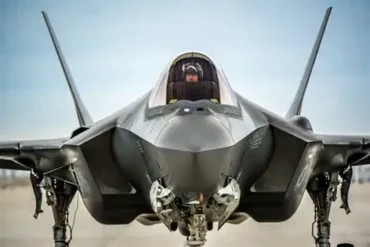
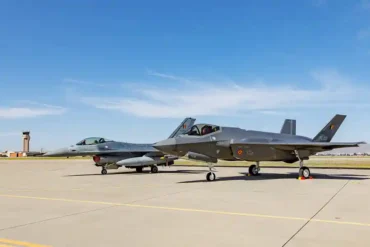
The base’s infrastructure is designed to handle a wide range of aircraft, from the stealthy F-35A Lightning II to older platforms like the F-16, making it a critical node in Arctic airpower projection. The presence of ROKAF personnel and aircraft in the region underscores the deepening military coordination between the United States and South Korea, especially as both nations face evolving security dynamics in the Indo-Pacific and Northeast Asian theaters.
Investigative and Recovery Operations in Progress
As of Wednesday morning, base officials confirmed that a formal investigation is underway to determine the cause of the mishap. These inquiries, typically led by a Safety Investigation Board (SIB) under the U.S. Air Force or jointly with ROKAF, examine various aspects ranging from mechanical integrity and environmental factors to flight crew performance and procedural compliance.
Eielson’s public affairs office reiterated that the jet skidded into the infield within the base fence line, thereby avoiding any civilian casualties or property damage. However, the incident did trigger a full-scale emergency response, including fire suppression units, medical evacuation teams, and runway closure protocols.
The affected aircraft has since been stabilized and removed from immediate danger. Preliminary assessments suggest substantial damage to the nose gear and fuselage, although a full appraisal will require further analysis once recovery teams complete their initial on-site survey.
Aircraft Damage and Pilot Ejection System Performance
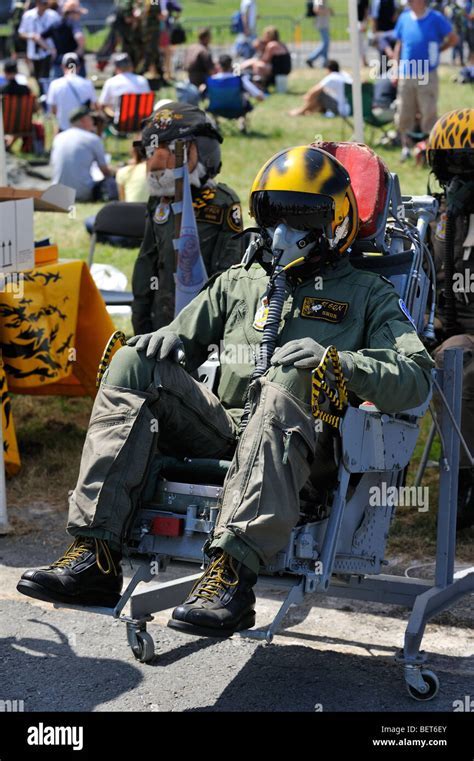
The successful ejection of both aircrew members from the stricken F-16D highlights the critical reliability of the ACES II ejection seat system, a standard fixture in many modern fighter jets. Designed for rapid deployment in emergency scenarios, the system is engineered to safely extract pilots even under high-stress conditions such as takeoff failure.
While no visual confirmation has been released regarding parachute deployment or descent trajectory, the lack of fatality or serious injury strongly implies that the ejection sequence performed within operational parameters. Such outcomes are rare during takeoff mishaps, as low altitude and limited reaction time significantly increase risk.
Implications for U.S.–ROK Military Readiness
Though no lives were lost and physical injuries were minimal, this incident could temporarily impact joint training timelines and air readiness operations between the U.S. and South Korea. Depending on the investigation’s findings, it may prompt revisions in pre-flight protocols, runway condition monitoring, or even aircraft deployment decisions.
Military analysts suggest that the mishap is unlikely to derail long-term strategic plans. However, both air forces will be under pressure to reaffirm aircraft safety and pilot readiness, particularly in view of the increased tempo of joint drills in the Asia-Pacific. The Korean Peninsula remains a hotspot for geopolitical tensions, making mission-capable air fleets vital to maintaining credible deterrence.
Community Response and Future Transparency
Local residents around Eielson AFB, many of whom are familiar with military flight operations, expressed concern but also gratitude for the prompt emergency response. Online forums and community posts reflected both shock at the rare incident and relief that no fatalities occurred.
Base leadership has committed to maintaining transparency as more details become available, although no estimated timeline for public release of the final investigation has been provided. In the interim, additional safety measures and operational reviews are likely to be implemented, ensuring that training can resume without undue risk.
The U.S. Air Force and ROKAF continue to monitor the situation closely, while maintaining a posture of readiness that underscores the resilience of their long-standing military partnership.