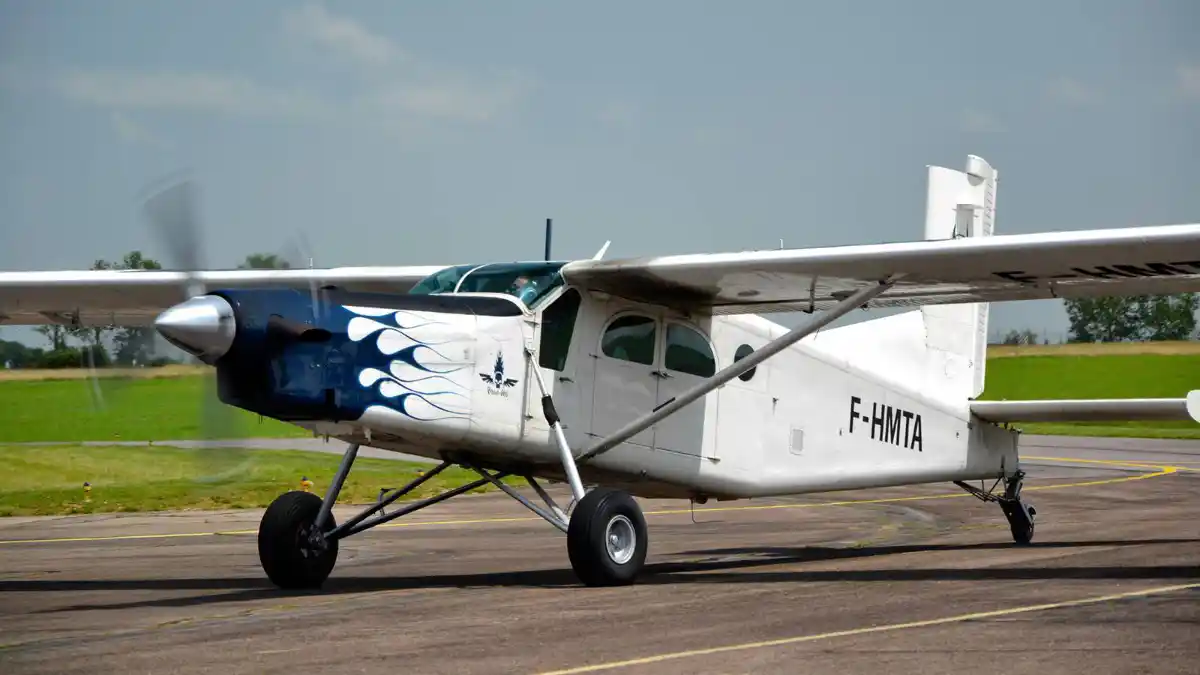
A Pilatus PC-6 Porter operating a routine skydiving flight crashed moments after takeoff from Nancy-Essey Airport in northeastern France, killing all 11 people aboard in one of the country’s deadliest general aviation accidents in recent years. The aircraft came down just minutes after departure at approximately 11:00 a.m. local time, prompting an extensive emergency response and the immediate launch of a formal investigation by French aviation authorities.
Officials confirmed that the German-registered Pilatus PC-6, registration D-FIPS, was carrying one pilot, five skydiving instructors, and five tandem students. None of the occupants survived. Although the aircraft crashed close to residential and commercial buildings, no one on the ground was injured, narrowly avoiding an even greater tragedy.
Fatal Skydiving Flight Ends Moments After Departure
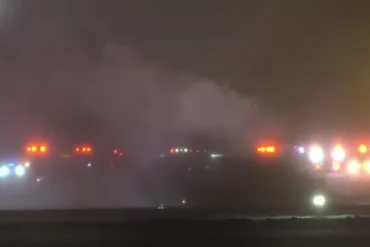
According to local authorities, the aircraft had only just become airborne from Nancy-Essey Airport when witnesses observed it making a sudden and unusually steep bank before descending almost vertically toward the ground. The wreckage came to rest roughly 250 meters beyond the runway threshold on a bicycle path near two roads and a supermarket.
Emergency crews quickly secured the crash site, while investigators began documenting evidence before removing the wreckage. Regional officials noted that the aircraft narrowly missed nearby homes and businesses. Had the impact occurred only a short distance away, significant casualties on the ground could have resulted.
The victims included a group of five nurses participating in what was reported to be an introductory tandem skydive organized as a team-building or initiation experience. Because tandem skydives require experienced instructors, each student was paired with a professional instructor, accounting for the unusually high number of qualified skydivers aboard.
Investigation Focuses on Aircraft’s Initial Climb
French investigators have not identified the cause of the accident, although authorities confirmed that the aircraft experienced an unspecified problem shortly after takeoff. The Bureau of Enquiry and Analysis for Civil Aviation Safety (BEA) has opened a formal investigation, which will examine the aircraft, maintenance history, flight path, weather conditions, and any available technical evidence.
Eyewitnesses consistently described the aircraft banking sharply before losing altitude. Flight tracking information also suggests the airplane drifted slightly left during its takeoff roll before making a more pronounced left turn immediately after becoming airborne.
Investigators will now determine whether the aircraft suffered a mechanical malfunction, aerodynamic issue, engine problem, or another factor that prevented the crew from maintaining controlled flight during the critical initial climb.
History of the Pilatus PC-6 Porter
The accident aircraft was a 35-year-old Pilatus PC-6 Porter manufactured in 1991 under manufacturer serial number 874. Despite its age, the aircraft had remained active in commercial skydiving operations and had reportedly completed several successful flights earlier that same morning.
Flight records indicate the aircraft landed from its previous mission at 10:53 a.m., taxied back to the apron, boarded another group of passengers, and departed again approximately five minutes later.
The Pilatus PC-6 has earned an international reputation as one of the world’s most capable short takeoff and landing (STOL) aircraft. Its ability to operate safely from short runways and carry multiple skydivers has made it one of the most widely used aircraft in parachuting operations for decades.
The aircraft had reportedly been owned by Classic Wings GmbH for the past nineteen years and previously flew under the registrations HB-FKO and V5-ODH before operating in France for Tandemotion Parachutisme, a skydiving school based at Nancy-Essey Airport.

Second Major Skydiving Aircraft Accident Within Weeks
The French tragedy follows another fatal skydiving aircraft accident earlier this month in Missouri, United States, where a Pacific Aerospace 750XL crashed shortly after takeoff from Butler Memorial Airport, killing twelve people. Preliminary reports from that accident also indicated the aircraft turned left shortly after departure, with investigators considering the possibility of a loss of engine power during the initial climb.
Although similarities between the two crashes have drawn attention, investigators have emphasized that no connection has been established. Each accident will be examined independently based on its own evidence and operational circumstances.
The Pilatus PC-6 has also experienced previous high-profile accidents, including the 2013 Belgium skydiving disaster near Namur, where an aircraft broke apart shortly after takeoff, killing ten skydivers and the pilot.
Skydiving Safety Record Remains Strong Despite Rare Accidents
While accidents involving skydiving aircraft receive widespread attention because of their high casualty counts, they remain exceptionally rare compared with the overall volume of parachuting operations conducted each year.
Industry statistics show that millions of skydives are completed annually with a very low fatality rate, and most incidents involve parachuting errors rather than aircraft failures. Fatal accidents involving skydiving aircraft themselves account for only a small percentage of overall aviation accidents.
The investigation into the Nancy-Essey crash is expected to continue for several months as specialists examine the aircraft’s engine, flight controls, structural components, maintenance records, and operational procedures. Until investigators publish their findings, the exact sequence of events that transformed a routine skydiving departure into a devastating tragedy remains unknown.