Major international carriers abruptly canceled flights to key Mexican destinations after reports surfaced that Nemesio Oseguera Cervantes, widely known as “El Mencho,” had been killed during a military operation. The news triggered immediate unrest across the state of Jalisco, prompting the U.S. State Department to issue a travel warning for multiple cities, including the resort hub of Puerto Vallarta and the metropolitan center of Guadalajara. Within hours, airports that typically hum with vacation-bound energy were marked instead by uncertainty, grounded aircraft, and rapidly changing departure boards.
Cervantes, the alleged leader of the Jalisco New Generation Cartel (CJNG), had long been one of the most wanted figures in both Mexico and the United States. U.S. authorities had placed a $15 million bounty on his capture. The reported military action that ended his life sent shockwaves through organized crime networks and set off a chain reaction of retaliatory violence. Vehicles were set ablaze, highways were blocked, and armed confrontations were reported in Jalisco before unrest spread to neighboring states including Michoacán and Guanajuato.
The speed of the aviation response underscored how closely global airlines monitor regional security developments. By Sunday afternoon, carriers including Delta Air Lines, American Airlines, United Airlines, Southwest Airlines, and Alaska Airlines had suspended operations to and from Puerto Vallarta International Airport (PVR) and Guadalajara International Airport (GDL). For thousands of American and Canadian travelers, planned beach getaways and business trips dissolved into rebooking notifications and airport alerts.
Flight Cancellations Ripple Across Popular Tourist Hubs
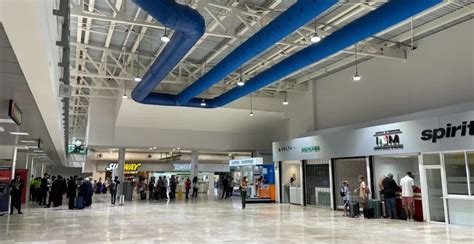
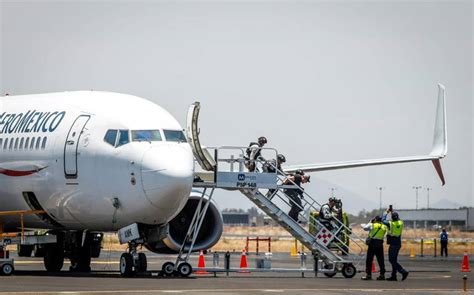
Puerto Vallarta, a Pacific coast destination known for its beaches and luxury resorts, experienced an abrupt operational halt. Airport authorities announced a temporary closure, citing security conditions linked to regional unrest. Travelers were advised to verify flight status before heading to the airport. Images circulating on social media showed groups of passengers being escorted across the tarmac by uniformed staff, while other videos captured crowds scrambling inside terminals as rumors spread.
Despite widespread online claims that violence had breached airport perimeters, official statements clarified that internal airport security remained intact. The National Guard and the Ministry of National Defence maintained a protective presence. Four hours after its initial closure announcement, Puerto Vallarta International Airport emphasized that no violent incident had occurred within airport facilities themselves, though most domestic and all international flights remained canceled.
In Guadalajara, Mexico’s second-largest metropolitan area and a crucial aviation gateway, authorities also moved swiftly to dispel misinformation. Viral footage suggesting clashes at the airport was publicly rejected by security officials, who stated that the scenes depicted passenger panic rather than organized violence. National Guard representatives reinforced that airport operations were disrupted as a precautionary measure, not as a result of direct attack.
U.S. State Department Issues Shelter Advisory
As military operations continued, the U.S. State Department urged American citizens in affected regions to shelter in place. The advisory cited potential criminal activity and emphasized caution amid fluid security conditions. Such warnings often serve as a trigger point for airlines’ risk management protocols. Carriers operating cross-border routes rely heavily on government security assessments when determining whether to suspend service.
Delta Air Lines implemented a travel advisory covering bookings between February 22 and February 26, allowing rebooking through March 7 without penalty. American Airlines canceled all flights to Puerto Vallarta and Guadalajara during the closure period and waived change fees for affected passengers. United Airlines issued a similar policy for travel between February 22 and February 25, granting flexibility through early March. Southwest Airlines canceled multiple services to Puerto Vallarta and offered rebooking options to impacted travelers.
Canadian carriers mirrored the response. WestJet diverted seven inbound flights to Puerto Vallarta before temporarily suspending service, while Air Canada implemented a flexible rebooking window covering late February departures. The coordinated decisions highlight the interconnected nature of North American aviation networks, where security events in one region can ripple across airline schedules continent-wide.
Economic and Operational Impact on Aviation
The temporary suspension of flights affects more than vacation itineraries. Passenger, cargo, and general aviation operations were disrupted, creating downstream consequences for supply chains and tourism-dependent businesses. Puerto Vallarta’s economy relies heavily on international tourism, particularly from the United States and Canada. Even short-term cancellations can produce measurable financial losses for hotels, tour operators, and local vendors.
Airlines must balance safety considerations with operational costs. Aircraft rotations, crew scheduling, and international slot allocations are tightly choreographed systems. When a destination closes unexpectedly, carriers often reposition aircraft, absorb hotel and crew accommodation expenses, and manage complex passenger reaccommodation logistics. The financial calculus extends beyond immediate ticket refunds; it includes reputational risk and regulatory compliance.
Security-related disruptions in Mexico have precedent. Previous cartel-linked incidents have led to highway blockades and localized airport restrictions. However, the reported killing of a high-profile cartel leader introduces a uniquely volatile variable. Power vacuums within organized crime groups can intensify short-term instability as rival factions attempt to assert control. Airlines typically wait for confirmed stabilization before restoring normal operations.
Restoring Confidence in Cross-Border Travel
By late Sunday, authorities stressed that airport facilities themselves remained secure, even as most flights stayed grounded. The distinction is critical for long-term travel confidence. Modern airports are fortified infrastructures with layered security protocols, surveillance systems, and coordinated law enforcement presence. While unrest may occur in surrounding urban areas, airside zones often maintain controlled operational integrity.
For travelers, the episode serves as a reminder of how rapidly geopolitical and security developments can alter global mobility. Flexible booking policies and real-time alerts have become standard industry tools, enabling airlines to respond swiftly without compounding passenger stress. As military operations conclude and authorities reestablish control, carriers are expected to resume service in phased increments, guided by updated security assessments.
The unfolding situation illustrates the fragile intersection between organized crime dynamics and international aviation. In a globally connected era, events in one region reverberate instantly across departure boards thousands of miles away. As airlines monitor developments in Jalisco and neighboring states, the restoration of regular flight schedules will signal not only operational recovery but also a broader return of confidence in travel to one of Mexico’s most visited regions.