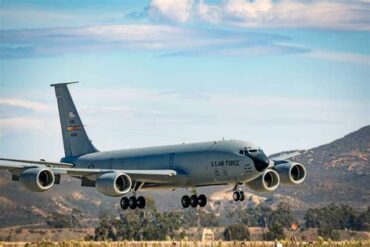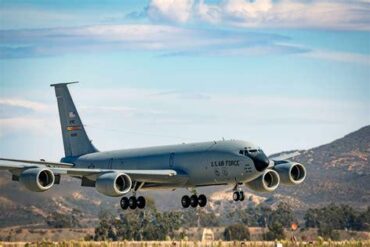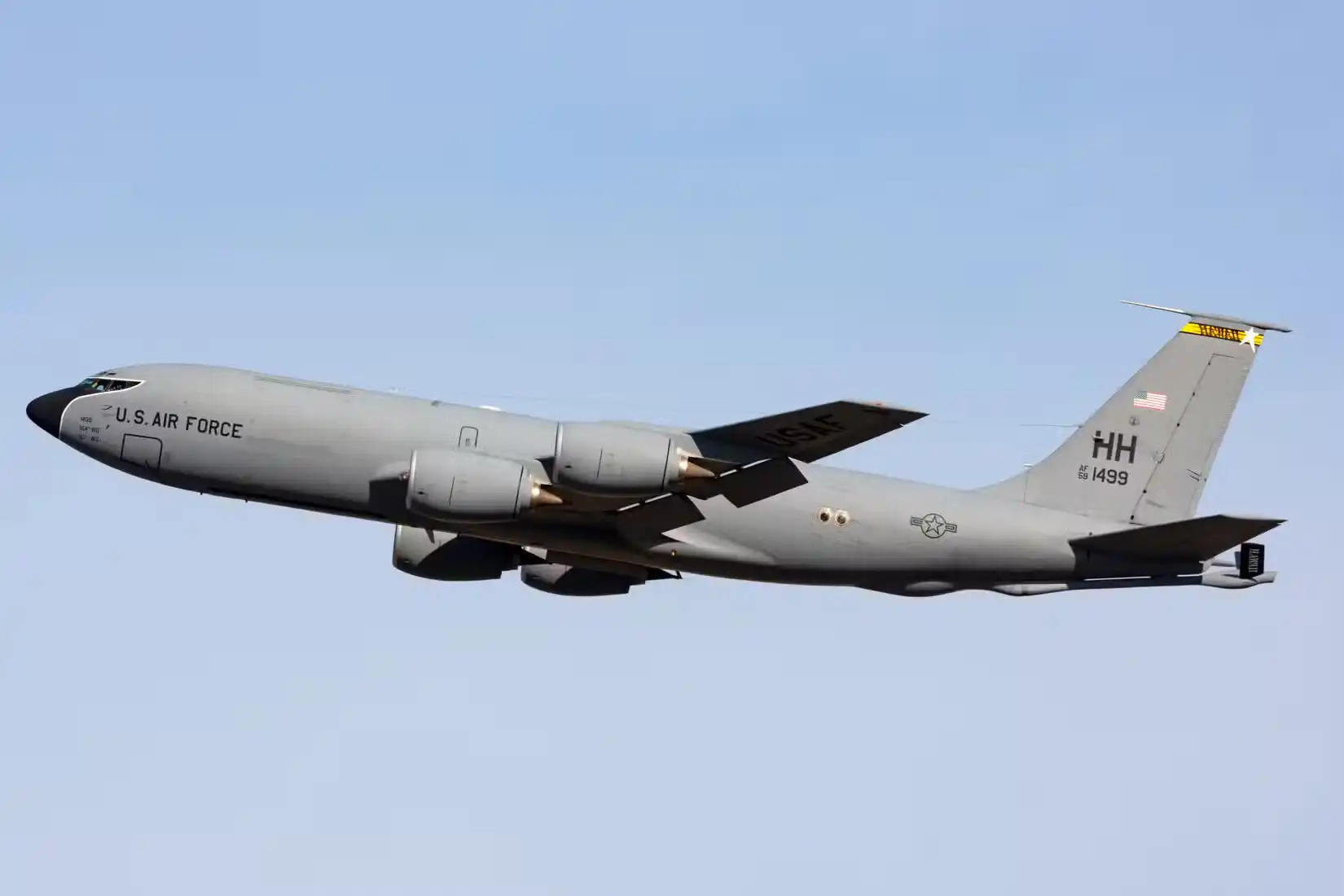
The United States Air Force has confirmed the loss of a Boeing KC-135 Stratotanker aerial refueling aircraft over western Iraq during the ongoing Operation Epic Fury, marking one of the most serious aviation incidents involving U.S. forces in the region in recent years. Officials from U.S. Central Command (CENTCOM) reported that the crash occurred on March 12, 2026, while the aircraft was operating in friendly airspace, emphasizing that the incident was not the result of hostile action or friendly fire.
The KC-135 was conducting operational activities as part of the broader air campaign associated with Operation Epic Fury, a joint United States–Israel military operation targeting Iranian military infrastructure and strategic capabilities across the Middle East. The aircraft was flying alongside another tanker when the accident occurred, leading to the destruction of one aircraft and significant damage to the other.
As rescue and recovery operations continue on the ground in Iraq, military authorities have begun a formal investigation into the incident, seeking to determine how the accident unfolded during what should have been a routine support mission.
Four Crew Members Confirmed Dead Following Crash
CENTCOM confirmed early on March 13 that four of the six crew members aboard the destroyed KC-135 Stratotanker were killed in the crash. The status of the remaining two crew members has not been publicly detailed beyond ongoing recovery operations.
Military officials have stated that the aircraft was operating as part of the aerial refueling network supporting coalition combat aircraft engaged in Operation Epic Fury. These tanker missions are essential to sustaining long-range strike operations and surveillance flights over the region.
The KC-135’s role in such missions is critical. Tankers often operate in coordinated formations with other aircraft, carefully managing altitude, speed, and positioning to ensure safe refueling operations. Even small miscalculations in proximity between large aircraft can create dangerous conditions, especially during complex operational environments.
The confirmation of fatalities makes the accident one of the deadliest aviation losses for U.S. forces during the current campaign, prompting condolences from military leadership and renewed scrutiny over operational safety procedures during high-tempo deployments.
Four Confirmed Deceased in Loss of U.S. KC-135 Over Iraq
TAMPA, Fla. – At approximately 2 pm ET on March 12, a U.S. KC-135 refueling aircraft went down in western Iraq. Four of six crew members on board the aircraft have been confirmed deceased as rescue efforts continue.
The…
— U.S. Central Command (@CENTCOM) March 13, 2026
Evidence Points Toward Possible Midair Collision
Initial information released by CENTCOM indicates that two KC-135 Stratotankers were involved in the incident, strongly suggesting a midair collision as the most likely cause of the crash.
The second aircraft, identified by registration 63-8017, managed to remain airborne despite sustaining substantial damage. The aircraft subsequently declared an emergency by squawking 7700, the universal aviation distress code used to signal a critical situation to air traffic control.
Despite the severity of the damage, the tanker successfully diverted and landed at Tel Aviv Ben Gurion Airport in Israel, where images later surfaced showing major structural damage to the aircraft’s vertical stabilizer.
Reported image showing one of the USAF KC-135s involved in the mid-air collision over Iraq today, back on the ground in Tel Aviv.
The tanker can be seen missing nearly half of its vertical stabilizer. pic.twitter.com/d1UHNWZnGq
— OSINTtechnical (@Osinttechnical) March 13, 2026
The visible damage strongly indicates that the aircraft made physical contact with the destroyed tanker during flight. Investigators will now analyze flight data, communication records, and aircraft structural evidence to determine whether the collision occurred during formation flight, refueling preparation, or another operational maneuver.
Midair collisions involving military aircraft are rare but not unprecedented. Such events typically involve a combination of factors including tight formation spacing, limited visibility, communication errors, or mechanical complications.
Operation Epic Fury and Rising Operational Risks
The crash occurred amid the escalating Operation Epic Fury, launched on February 28, 2026, as a joint U.S. and Israeli military campaign targeting Iranian military assets and strategic facilities.
The operation has primarily relied on airpower, combining manned aircraft, drones, and long-range missile strikes. More than 150 U.S. military aircraft have been deployed across the region, including fighter jets, surveillance aircraft, electronic warfare platforms, and aerial refueling tankers such as the KC-135.
This accident marks the fourth loss of a manned American military aircraft during the operation.
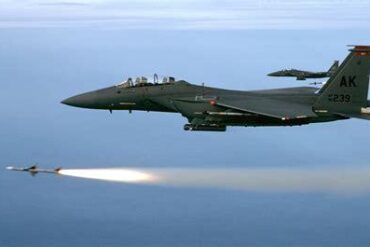
Earlier in the campaign, on March 2, three Boeing F-15E Strike Eagle fighters were mistakenly shot down by allied Kuwaiti air defenses in a friendly-fire incident. All six crew members aboard those aircraft managed to eject safely and survived.
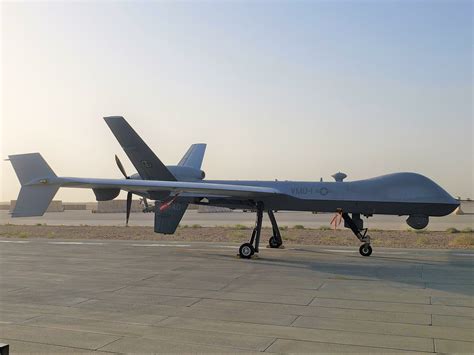
Beyond these aircraft losses, the United States has also seen significant unmanned losses during the campaign. Iranian forces have shot down at least 11 MQ-9 Reaper drones, representing a financial loss estimated at over $300 million.
The human cost has also grown. At least seven U.S. service members have died on the ground, while approximately 140 additional personnel have been wounded, including several with serious injuries.
The KC-135 Stratotanker: A Backbone of U.S. Air Power
The Boeing KC-135 Stratotanker is one of the most enduring and strategically important aircraft in the history of the United States Air Force. First entering service in the late 1950s, the aircraft was derived from Boeing’s revolutionary 367-80 prototype, the same design lineage that ultimately produced the commercial Boeing 707 airliner.
For nearly seven decades, the KC-135 has served as the backbone of America’s aerial refueling fleet, allowing fighter jets, bombers, reconnaissance aircraft, and transport planes to remain airborne far longer than their onboard fuel supplies would otherwise permit.
Today, the Air Force continues to operate more than 150 KC-135 aircraft, including 123 KC-135R models and 28 KC-135T variants, most of which have been modernized with CFM56 turbofan engines to improve efficiency and reliability.
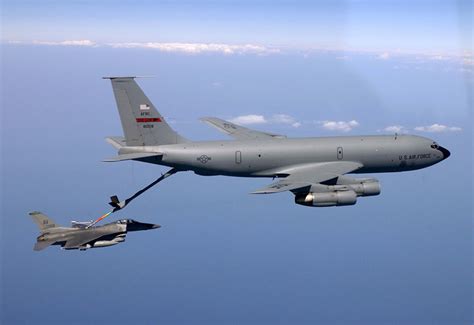
Despite its age, the aircraft remains highly capable and widely used. The tanker’s long operational history includes thousands of missions across conflicts ranging from the Cold War nuclear deterrence patrols to modern operations in Iraq, Afghanistan, and Syria.
A Rare Modern Loss for a Veteran Aircraft
The crash in Iraq represents a rare modern accident involving the KC-135 fleet. Across its nearly 70 years of service, approximately 52 KC-135 aircraft have been lost in accidents, though most of those incidents occurred during the aircraft’s early operational decades.
Notably, this crash is only the third KC-135 accident in the 21st century.
The most recent previous loss occurred in 2013, when a KC-135R crashed shortly after takeoff in Kyrgyzstan, killing all three crew members aboard. Investigators later determined that the crash resulted from a Dutch roll oscillation triggered by an autopilot malfunction, which ultimately caused the aircraft to break apart in flight.
Because the KC-135 fleet now operates with extensive modernization and maintenance oversight, accidents have become exceedingly uncommon. That rarity makes the Iraq incident particularly significant for aviation safety investigators.
Investigation Underway as Recovery Efforts Continue
The United States Air Force has launched a formal accident investigation board to determine the precise sequence of events that led to the crash. Investigators will examine multiple factors, including flight coordination procedures, aircraft systems performance, crew communication, and environmental conditions at the time of the incident.
Military officials have also asked for patience as the investigation unfolds, emphasizing that identifying the cause of such accidents requires careful analysis of evidence gathered from both aircraft and operational records.
Meanwhile, recovery teams in western Iraq continue working to locate debris and recover remains from the crash site, an effort complicated by terrain and ongoing military operations in the region.
The tragedy serves as a stark reminder that even outside direct combat, military aviation remains an inherently high-risk endeavor, particularly during large-scale operations involving dozens of aircraft working simultaneously across contested airspace.
As Operation Epic Fury continues, the loss of the KC-135—and the lives of four aircrew members—adds a solemn chapter to an already complex and evolving military campaign.