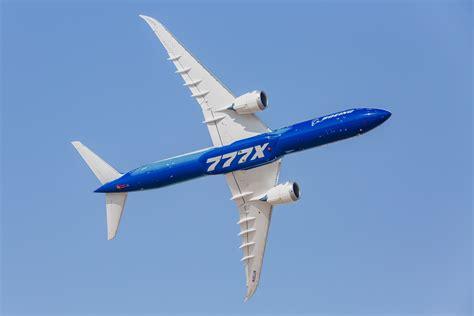
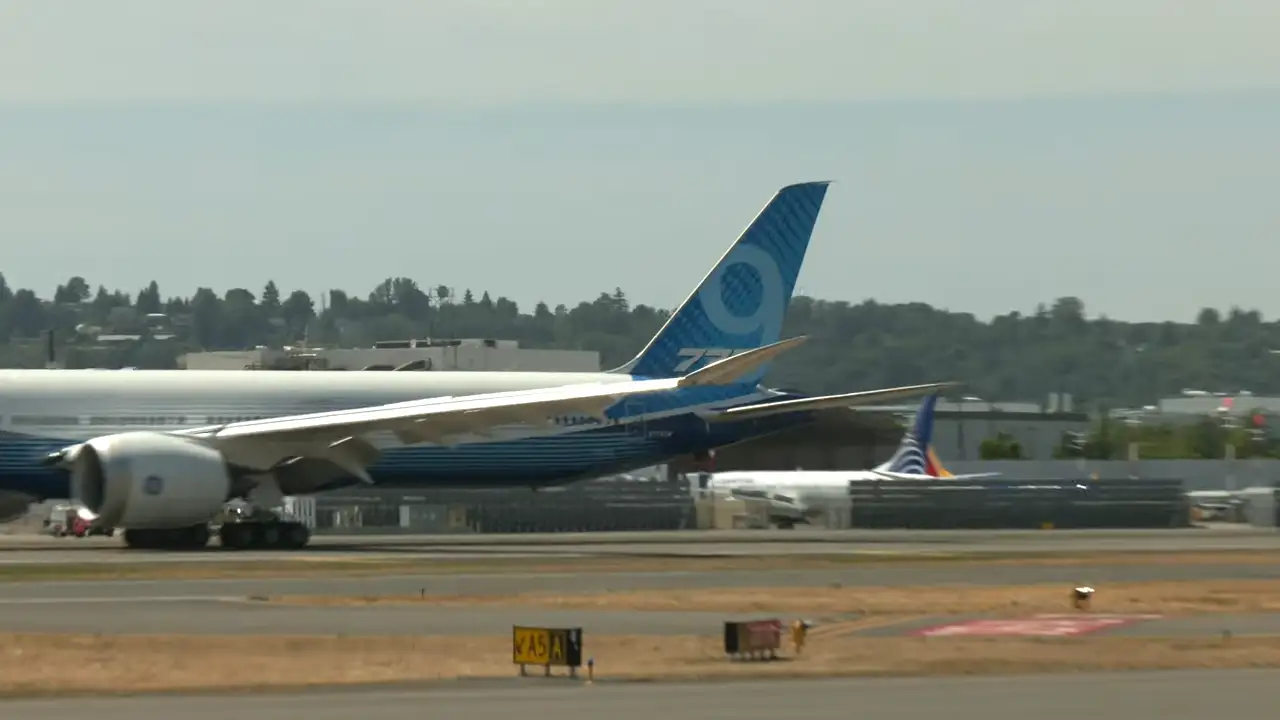
The Boeing 777-9 was designed to become the next generation of ultra-large long-haul aircraft, replacing the iconic 777-300ER and offering airlines unmatched capacity, efficiency, and premium-cabin potential. Yet despite Boeing’s efforts to attract more customers, including reportedly offering discounts on early production aircraft, the aircraft has remained absent from the fleets of major US airlines.
At first glance, this seems surprising. American Airlines and United Airlines are among the world’s largest Boeing 777 operators, with decades of experience flying the aircraft family. Both carriers operate extensive international networks, maintain strong relationships with Boeing, and have large widebody fleets. They appear to be natural candidates for the 777-9.
However, the problem is not simply aircraft pricing. The deeper issue is that the 777-9 does not match the structure of most US airline networks. Its enormous size, high operating costs, and specialized mission profile make it ideal for airlines with concentrated global hubs, but less attractive for American and United, whose networks distribute demand across multiple gateways.
The Boeing 777-9 Market: A Flagship Aircraft Without US Buyers
Since the launch of the 777X program in 2013, Boeing has accumulated more than 600 orders across passenger and freighter variants. The passenger-focused 777-9 accounts for the majority of attention, with hundreds of commitments from major international airlines.
The aircraft has attracted strong interest from carriers such as Emirates, Qatar Airways, Singapore Airlines, Cathay Pacific, Lufthansa, and British Airways. These airlines share a common characteristic: they operate networks where very large aircraft can be efficiently concentrated on a limited number of high-demand routes.
Emirates, for example, has built its entire business model around the concept of connecting global passengers through a single massive hub at Dubai International Airport. A very large aircraft like the 777-9 fits naturally into this strategy because demand from multiple regions flows through one central location.
The same logic applies to airlines such as Cathay Pacific in Hong Kong or Qatar Airways in Doha. Their hub structures allow them to combine passengers from many origins onto a relatively small number of long-haul routes.
The US airline model is fundamentally different.
American Airlines operates a large domestic network with multiple international gateways, including Dallas/Fort Worth, Miami, Charlotte, Chicago, Philadelphia, and Los Angeles. United Airlines similarly spreads international operations across hubs such as Chicago, Denver, Houston, Newark, San Francisco, and Washington Dulles.
For these carriers, the challenge is not finding one route where a massive aircraft could work. The challenge is finding enough routes where such an aircraft is consistently needed.
The Boeing 777-9 Is Too Large To Replace Most US Boeing 777s
One of the biggest obstacles for US airlines is fleet size. The aircraft most commonly operated by American and United are not the large 777-300ER models that the 777-9 directly replaces. Instead, their fleets are dominated by the smaller 777-200ER.
American Airlines operates dozens of 777-200ER aircraft, while United has an even larger fleet of 777-200 and 777-200ER models. These aircraft have become important tools for international operations because they provide long-range capability without excessive capacity.
The 777-9 is significantly larger than the 777-200ER. It offers more seats, more cabin space, and greater cargo capacity, but that additional size becomes a disadvantage when replacing aircraft on routes that do not generate enough demand.
For many replacement decisions, US airlines are looking at aircraft such as the Boeing 787 Dreamliner, Airbus A350-900, or Airbus A330-900neo. These aircraft are closer in size to the existing 777-200ER fleet while offering better efficiency and greater flexibility.
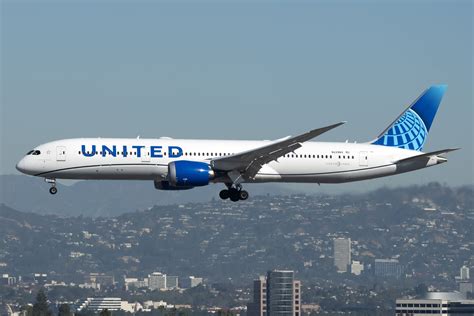
United Airlines has already been moving toward the 787 family as its primary long-haul growth aircraft. The 787-10 Dreamliner, although shorter-ranged than the 777-200ER, provides significant passenger capacity and fits well into United’s hub-based network.
American Airlines is also believed to be considering smaller widebody options for future fleet renewal rather than moving directly to the much larger 777-9.
The Boeing 777-300ER Replacement Argument Does Not Work Yet
The strongest argument for US airlines buying the 777-9 would be replacing their existing 777-300ER fleets. After all, the 777-9 was specifically developed as the successor to the 777-300ER.
American Airlines operates around 20 777-300ER aircraft, while United operates a similar number. However, these aircraft are still relatively young compared with the rest of their widebody fleets.
American received its 777-300ER aircraft between 2012 and 2016, giving the fleet an average age of roughly 12 years. United’s aircraft are even newer, with deliveries continuing until 2020.
These aircraft are expected to remain in service well into the 2040s. Replacing them today would create a difficult financial decision because airlines would be purchasing a very expensive new aircraft while retiring perfectly capable existing jets.
The 777-9 may eventually become a logical successor to the 777-300ER, but timing matters. Airlines typically avoid replacing aircraft long before they reach the end of their economic life unless there is a major operational advantage.
Currently, the 777-9 does not provide enough benefits to justify early replacement.
Why US Hub Networks Create A Boeing 777-9 Problem
The biggest challenge for the 777-9 is not technology. It is network design.
Large international airlines often rely on a concentrated hub strategy. If passenger demand grows between Hong Kong and New York, for example, Cathay Pacific can increase capacity on that single route. A larger aircraft directly solves the problem.
US airlines operate differently. Their demand is spread across many hubs and connecting opportunities.
If United sees increasing demand between the United States and Asia, it does not necessarily need a larger aircraft on one specific route. It can increase capacity by adding more flights from San Francisco, Los Angeles, Chicago, or Newark.
This gives US airlines more flexibility.
A larger aircraft creates risk because it ties capacity to a specific route. A smaller aircraft operated more frequently allows airlines to adjust schedules as demand changes.
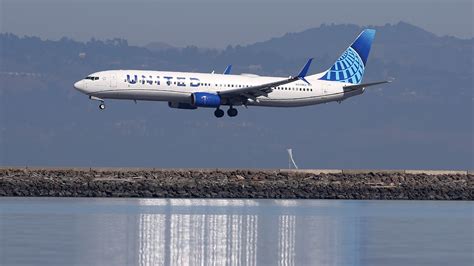
For example, a 777-9 might work extremely well on a San Francisco-Tokyo route during a period of strong business and tourism demand. But if economic conditions weaken or passenger preferences change, the airline may struggle to deploy hundreds of additional seats elsewhere.
The aircraft becomes a highly specialized asset rather than a flexible fleet tool.
The Boeing 777-9 Creates Financial And Operational Challenges
Even if Boeing offered significant discounts, the purchase price would only represent one part of the total cost equation.
The 777-9 would require airlines to consider training, maintenance, airport infrastructure, and operational integration.
Although it shares heritage with the existing 777 family, the aircraft introduces major differences. Pilots transitioning from older 777 models would require additional training, while airlines would need to establish new maintenance procedures and spare-parts systems.
These costs are manageable for airlines that already have a strong reason to operate the aircraft. Emirates, for example, has a clear operational strategy built around very large aircraft.
For US carriers, the question is different: why introduce another large widebody type when existing aircraft already cover most missions?
United already operates multiple variants of the 787 Dreamliner, while American has a long-established 787 fleet. Adding the 777-9 would increase fleet complexity without solving a major problem.
Could United Or American Still Buy The Boeing 777-9?
The possibility cannot be completely eliminated. Aviation markets change, and airlines sometimes make unexpected fleet decisions.
United could theoretically use the 777-9 on premium-heavy routes from San Francisco, especially across the Pacific. American could also find opportunities on major international routes from Dallas/Fort Worth or Miami.
However, both airlines have alternatives.
A combination of 787-9, 787-10, and possibly A350 aircraft provides enough flexibility for most future growth scenarios. These aircraft can serve long-range missions while allowing airlines to adjust capacity more easily.
The 777-9 is not a poor aircraft. In many ways, it represents the peak of modern large twin-engine aircraft design. Its folding wingtips, advanced composite structures, improved engines, and enormous cabin make it one of the most capable commercial jets ever developed.
The issue is that capability does not always equal suitability.
Why Discounts Cannot Fix The Boeing 777-9 Problem
Boeing can reduce the purchase price, offer favorable financing, and make the aircraft more attractive financially. But discounts cannot change the fundamental mismatch between the aircraft and US airline network strategies.
The Boeing 777-9 is optimized for airlines that need maximum capacity between major global hubs. It is a flagship aircraft designed to replace giants like the Airbus A380 and dominate high-demand international routes.
US airlines generally prefer flexibility over maximum size. Their multi-hub networks allow them to grow through additional frequencies, different aircraft types, and distributed capacity.
For airlines such as Emirates, Qatar Airways, and Singapore Airlines, the 777-9 fills an obvious role. For American Airlines and United Airlines, it creates more questions than answers.
The aircraft may eventually find a place in a US fleet, but only if network strategies change significantly. Until then, no discount can solve the simple reality: the Boeing 777-9 is an impressive aircraft searching for a mission that US airlines do not urgently need.