
Alaska Airlines is preparing to take its Seattle global expansion to another level, with eight additional long-haul destinations still to be revealed as the carrier works toward a 15-city international network from Seattle-Tacoma International Airport by 2030. The target represents a significant increase from the airline’s previous goal of at least 12 international widebody destinations and signals how quickly its ambitions have expanded since the Hawaiian Airlines combination.
The strategy is centered on Seattle, where Alaska is building a long-haul operation around the Boeing 787 Dreamliner and using its extensive domestic network to feed international flights. Seven destinations are already operating or announced, covering major markets in Asia and Europe. That leaves eight destinations to be selected, creating one of the most interesting unanswered questions in Alaska Airlines’ network strategy.
Alaska’s expansion is particularly notable because the airline historically operated primarily as a strong West Coast carrier rather than a major long-haul competitor. The combination with Hawaiian Airlines changed that equation by giving Alaska access to widebody aircraft, experienced long-haul crews and an existing international fleet structure. Instead of building a global operation entirely from scratch, Alaska can now redirect those resources toward Seattle while continuing to maintain Hawaiian’s important international network.
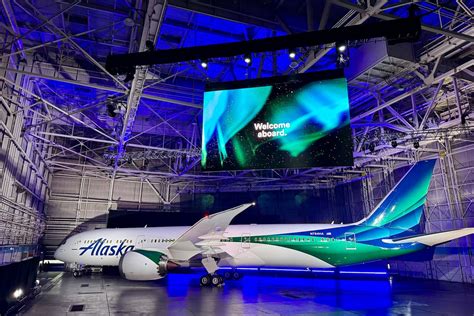
Alaska Airlines Raises Its Seattle Long-Haul Target to 15 Destinations
Alaska’s original Alaska Accelerate strategy, unveiled in December 2024, called for at least 12 international destinations operated with long-haul aircraft from Seattle by 2030. Tokyo Narita and Seoul were selected as the foundation for the new global gateway, with both routes designed to demonstrate whether Alaska could successfully generate enough demand outside its traditional West Coast markets.
The results have encouraged the airline to increase its ambitions. The new target of 15 long-haul international destinations from Seattle by 2030 means the carrier now needs eight additional destinations beyond the seven that have already been launched or announced. That is a substantial number considering that the remaining routes have not yet been officially identified.
The fleet is being expanded to support that ambition. Alaska currently operates Boeing 787-9 aircraft and has firmed up additional Dreamliners, with its planned fleet eventually reaching 17 Boeing 787s, consisting of 12 787-9s and five larger 787-10s. The larger aircraft should give Alaska additional flexibility when deciding how much capacity to place on established markets versus newer long-haul routes.
Seattle is also particularly well suited to the strategy geographically. Alaska has highlighted the airport’s location relative to both Europe and Asia, arguing that Seattle can offer competitive flying times to major international markets compared with West Coast alternatives farther south. Just as important, Alaska has a huge domestic network feeding SEA. When Tokyo launched, the airline said that more than half of its U.S.-sold tickets came from customers originating in more than 80 cities outside Seattle.
That connecting network could become one of the most important pieces of the long-haul strategy. Alaska does not need every international route to depend entirely on Seattle-area residents. Instead, it can combine local demand with passengers connecting from throughout the western United States, creating a broader customer base for each 787 flight.
Seven Alaska Airlines Long-Haul Routes Are Already Known
The first phase of Alaska’s international expansion began with Tokyo Narita in May 2025, followed by Seoul in September. These two routes established the carrier’s transpacific presence and provided an early test of the demand for Alaska-branded long-haul flying.
Tokyo was particularly important because it was already one of Seattle’s largest international markets. Seoul provided another major Asian business and leisure destination, while also giving Alaska an important connection point for traffic moving beyond South Korea.
The airline then accelerated its European expansion. Rome, London Heathrow and Reykjavík followed, dramatically changing the character of Alaska’s Seattle network within a relatively short period. Rome and London provide access to two of Europe’s most recognizable markets, while Reykjavík offers a different proposition with a strong leisure component.
Two additional destinations are scheduled to join the network in 2027. Athens is scheduled to begin three-times-weekly service on May 12, while Paris is scheduled to follow on May 25 with five weekly flights. Once those services are operating, Alaska’s seven-city long-haul network will offer 43 weekly departures.
The current and announced network consists of:
- Tokyo Narita — daily Boeing 787-9 service
- Seoul — daily Boeing 787-9 service
- Rome — daily Boeing 787-9 service
- London Heathrow — daily service
- Reykjavík — daily Boeing 737 MAX 8 service
- Athens — three weekly Boeing 787-9 flights from May 2027
- Paris — five weekly Boeing 787-9 flights from May 2027
This lineup also reveals something about Alaska’s strategy. London, Paris, Tokyo and Seoul are large established international markets where Alaska can pursue business and premium travelers alongside existing competitors. Rome, Athens and Reykjavík have stronger leisure characteristics and allow the airline to target destinations where nonstop demand can be an important selling point.
Ho Chi Minh City and Bangkok Stand Out Among Possible Next Routes
The eight remaining destinations have not been officially announced, so any list of potential additions remains speculative. However, Alaska’s previous investor materials provide some useful clues about the markets the airline has considered.
Ho Chi Minh City is one of the most obvious possibilities. The Vietnamese city appeared on Alaska’s 2024 planning map, and there is no current nonstop service between Seattle and Ho Chi Minh City. A new route would therefore give Alaska an opportunity to capture traffic that currently requires a connection elsewhere in Asia.
There is also a logical geographic argument. Alaska previously calculated that Seattle enjoys a distance advantage over Los Angeles and San Francisco for certain Southeast Asian markets. That could help make a nonstop Seattle-Ho Chi Minh City service operationally attractive compared with departures from competing West Coast gateways.
There is, however, an important complication. Alaska already has access to Ho Chi Minh City through its partnership network, including Korean Air service via Seoul. That means the airline can currently offer customers an itinerary without committing one of its own scarce long-haul aircraft to the market. Alaska will therefore have to determine whether the benefits of operating the route itself outweigh the value of relying on a partner.
Bangkok is another strong possibility. Thailand’s capital also appeared on Alaska’s earlier planning map, and Seattle currently lacks a nonstop connection to the city. Bangkok combines a huge leisure market with substantial regional connectivity, giving Alaska the possibility of serving both local demand and connecting passengers.
The challenge is that leisure-heavy markets can be more price-sensitive than major corporate destinations. A daily 787 route requires sufficient premium and economy demand throughout the year, so Alaska would need to balance the attraction of a popular destination against the economics of deploying widebody capacity.
Could Alaska Airlines Add Sydney to Its Seattle Network?
Among the potential destinations, Sydney would arguably represent the biggest geographic expansion. Alaska and Hawaiian already have considerable experience with Australia through the broader Hawaiian network, while Seattle passengers can currently reach Sydney through connecting itineraries.
The underlying market is significant. Thousands of passengers travel between Seattle and Australia despite the absence of a nonstop route, demonstrating that demand already exists. Eliminating the connection could make the journey considerably more convenient while also allowing Alaska to position Seattle as a gateway between the Pacific Northwest and Australia.
Sydney would also fit the broader logic of the Hawaiian acquisition. Hawaiian’s long-haul experience in Australia gives Alaska Group knowledge of the market, operational expertise and established relationships that could help reduce some of the complexity associated with launching a completely new international region.
A Seattle-Sydney route would also extend Alaska’s global footprint beyond the traditional Europe-Asia focus. It would give the carrier a major Southern Hemisphere destination and potentially create additional opportunities for connections throughout Australia and the Pacific.
Madrid Could Become Alaska’s Next European Strategy
Madrid presents a different opportunity because its value would not depend solely on local Seattle demand. Madrid is the major hub of Iberia, a fellow oneworld member, and Alaska already has a relationship with the Spanish carrier.
That could make Seattle-Madrid an alliance-driven route. Alaska could provide passengers from its extensive domestic network while Iberia could offer onward connections across Spain, Europe and other international markets. The model would therefore differ from Rome or Athens, where the destination itself is a major part of the appeal.
For Alaska, this type of route could be particularly valuable because a new international destination does not necessarily have to stand alone. The combination of domestic feed, local Seattle demand and alliance connectivity can effectively turn one long-haul flight into access to dozens of additional destinations.
Delhi, Manila and Taipei Offer Different Opportunities
Other cities previously identified by Alaska include Delhi, Manila and Taipei. Each presents a different business case.
Delhi could provide Alaska with access to an important technology, business and diaspora market. Seattle has strong links to the technology sector, making India particularly relevant. The challenge is operational: long routing distances and restrictions associated with Russian airspace can complicate flight planning and increase operating costs.
Manila has significant potential because of strong Filipino communities and travel demand between the Pacific Northwest and the Philippines. However, Alaska already has a partner in Philippine Airlines operating Seattle-Manila, reducing the immediate need for Alaska to dedicate one of its own 787s to the route.
Taipei is another intriguing option because of its strong technology and business connections with the Pacific Northwest. Yet Alaska would face established competition and already has access to Taipei through its relationship with STARLUX Airlines. That makes the decision more complicated than simply identifying a market with high passenger demand.
Other possibilities could include Helsinki, Singapore, Auckland, Dublin or Barcelona. Each would provide a different combination of local demand, connecting opportunities and alliance benefits, but none has been confirmed as one of the eight remaining destinations.
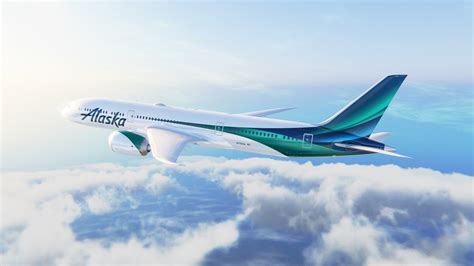
Alaska’s Eight New Routes Will Shape Its Global Identity
The most important point is that Alaska Airlines has not publicly committed to any particular eight destinations beyond the routes already announced. The carrier’s 15-destination target is confirmed, but the final eight-city lineup remains open.
That uncertainty is significant because Alaska’s existing network already demonstrates that it is not following a single formula. Tokyo and Seoul address major Asian markets, London and Paris target major European gateways, while Rome, Athens and Reykjavík emphasize leisure demand and distinctive destinations.
The next phase could therefore mix several strategies. Alaska may choose additional large international cities, pursue underserved leisure markets, strengthen oneworld connectivity, or use its growing domestic network to support destinations that cannot rely exclusively on Seattle-area passengers.
The Boeing 787 fleet will be central to those decisions. With 17 Dreamliners planned, Alaska will have substantially more long-haul capacity than it had before the Hawaiian combination. The arrival of the 787-10 could also allow the airline to match aircraft size more precisely to demand, while the 787-9 remains useful for longer or developing routes.
Seattle itself is becoming increasingly important to the group’s identity. Alaska is no longer simply adding an occasional international destination from its hometown hub. It is building a deliberate global gateway supported by widebody aircraft, domestic connections, alliance partnerships and premium-cabin investment.
The eight destinations still waiting to be announced will ultimately determine how far that transformation goes. Alaska Airlines now has four years to add eight more long-haul cities to reach its 2030 target, and the choices will reveal whether Seattle’s emerging global network is designed primarily around Asia, Europe, the Pacific, alliance connectivity, leisure travel or a combination of all five.
For travelers, the significance is straightforward: the map of nonstop international travel from Seattle is still changing rapidly. Tokyo, Seoul, Rome, London and Reykjavík have already established the foundation, while Athens and Paris are next. The remaining eight destinations are the missing pieces, and Alaska’s growing Dreamliner fleet gives the airline considerably more room to decide where those pieces should go.