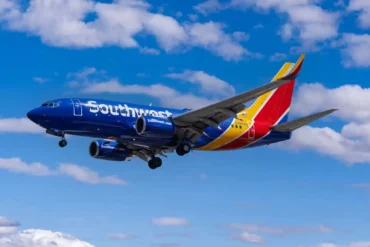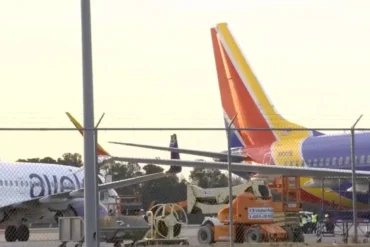
Southwest Airlines has spent more than five decades building one of the most recognizable single-type fleets in commercial aviation. The Boeing 737 is deeply woven into the carrier’s operating model, from pilot training and maintenance to airport procedures, scheduling, and fleet economics. Yet that long-standing strategy is facing a new test as Southwest retires older 737 Next Generation aircraft while delays surrounding the 737 MAX 7 have complicated the timing of its fleet renewal.
The Airbus A220 therefore presents an unusual question. It is not simply another narrowbody aircraft competing for Southwest’s attention. Bringing the A220 into the fleet would challenge one of the airline’s most established assumptions: that keeping a single aircraft family is worth almost any operational sacrifice required to maintain it. The A220’s size, efficiency, range, and modern design make it increasingly relevant to the gap left by retiring 737-700s, even though the costs of changing manufacturers remain substantial.
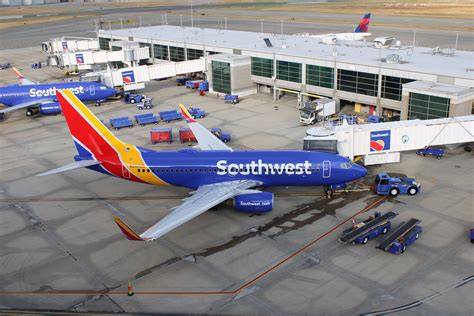
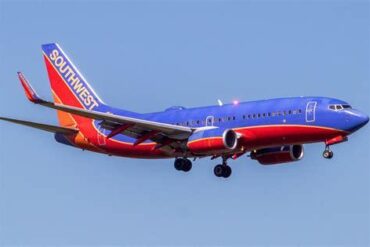
Southwest’s relationship with Boeing is unusually deep. The airline’s first 737 entered service in June 1971, and more than 1,000 Boeing 737s have been operated by Southwest over the decades. The carrier’s fleet strategy has benefited from this consistency because pilots, mechanics, cabin crews, dispatchers, and other employees can develop expertise around a common aircraft family. That simplicity supports the airline’s famous quick-turnaround model and helps reduce the complexity that comes with operating several unrelated aircraft types.
According to the reference fleet data, Southwest has operated hundreds of 737-700s, 737-800s, and 737 MAX 8s, while also maintaining substantial commitments for additional MAX aircraft. The sheer scale of those commitments illustrates why an Airbus order would be difficult to treat as a minor experiment. A fleet transition would require new training programs, spare parts, maintenance capabilities, technical documentation, simulator capacity, and airport support arrangements. The A220 could solve some fleet problems, but it would create an entirely different layer of complexity.
Why the Airbus A220 Fits the 737-700 Replacement Problem
The strongest argument for the A220 begins with aircraft size. Southwest’s 737-700s occupy an important position in its network because they are smaller than the 737-800 and MAX 8. That capacity allows the airline to serve markets where a larger aircraft may not produce the same economic results. As those aircraft age, Southwest needs a replacement that can preserve that flexibility without simply adding too many seats.
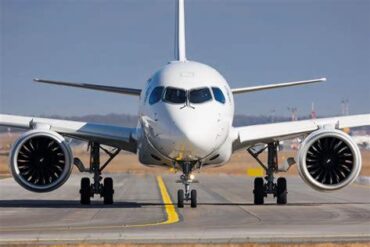
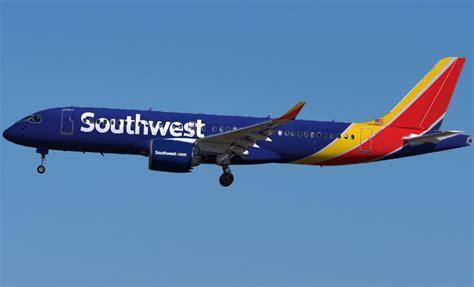
The Airbus A220-300 is particularly interesting in this role. Airbus lists a maximum seating capacity of up to 160 passengers, with typical two-class configurations around 120 to 150 seats, depending on airline configuration. Its published range reaches approximately 3,400 nautical miles, while the aircraft measures about 127 feet long with a wingspan of roughly 115 feet. Two Pratt & Whitney PW1500G engines provide the thrust.
Those characteristics place the A220 in a segment that overlaps with some of the missions Southwest performs using smaller 737 variants. The aircraft’s modern aerodynamic design, advanced materials, and geared turbofan engines were developed around the economics of a newer-generation narrowbody. For an airline trying to replace aging aircraft while maintaining network flexibility, that combination is naturally worth examining.
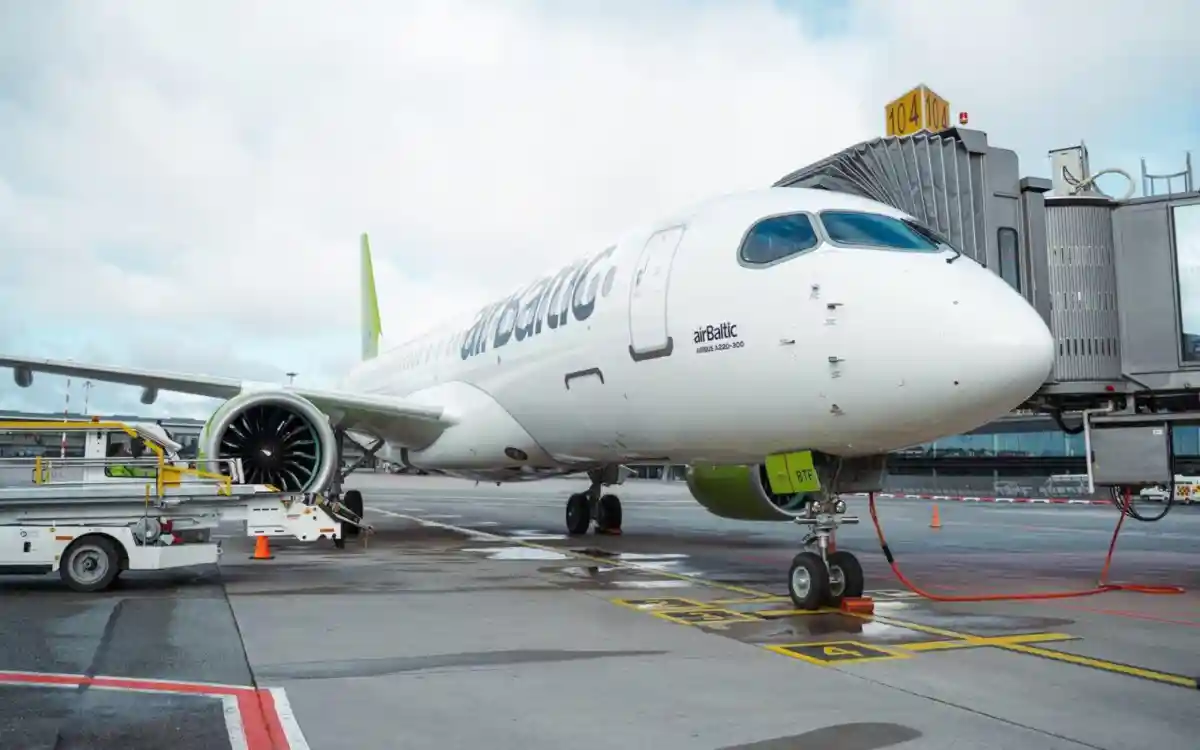
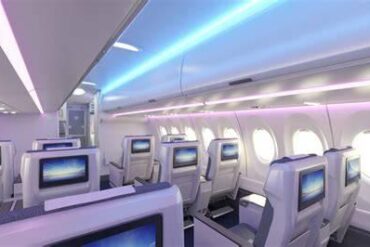
The A220 also offers a different cabin proposition. Its fuselage is narrower than that of a 737, but the cabin is designed around relatively wide seats and a 2-3 seating arrangement, giving passengers a window or aisle seat in most rows. Southwest’s historically simple cabin philosophy would not automatically translate to the A220, but the aircraft could offer useful passenger benefits while maintaining a relatively compact capacity footprint.
Boeing 737 MAX 7 Delays Changed the Fleet Equation
The most important reason the A220 conversation has resurfaced is not that Southwest suddenly abandoned its Boeing strategy. Rather, the assumptions supporting that strategy have become less straightforward.
Southwest has relied on the 737 MAX 7 as a future replacement for its 737-700s. That makes logical sense because the MAX 7 would preserve commonality with the rest of the fleet. Pilots already familiar with the 737 family could transition within the Boeing ecosystem, while maintenance facilities and spare-parts systems would remain centered on one manufacturer.
The problem has been timing. Certification of the MAX 7 encountered delays associated with the aircraft’s engine anti-ice system. The issue involved the CFM LEAP-1B, with regulatory requirements addressing concerns over potential inlet overheating under certain dry-air conditions. Such delays matter more to an airline than they might appear on an aircraft program timeline because fleet planning involves retirements, deliveries, crew assignments, maintenance cycles, and network growth years in advance.
Southwest therefore faces a strategic timing question. If 737-700s are leaving the fleet faster than replacement aircraft arrive, the airline needs to manage the resulting capacity gap. It can adjust retirements, acquire additional aircraft, modify schedules, or accelerate alternative fleet plans. None of these options is completely frictionless.
Southwest Has Already Considered the Airbus A220
This is not the first time Southwest has examined the possibility of operating the A220. During the COVID-19 period, when aviation demand was dramatically reduced, the airline reportedly assessed whether introducing the aircraft could help address its future fleet requirements and the uncertainty surrounding the MAX program.
At the time, the idea made sense as a form of due diligence. Southwest did not necessarily need to commit to Airbus merely because it studied the aircraft. Evaluating an alternative could establish whether the benefits of diversification outweighed the costs of abandoning a long-established operating model.
Ultimately, Southwest decided not to procure the A220. The additional infrastructure, training requirements, maintenance complexity, and disruption to its standardized fleet were difficult to justify. The airline already had a huge Boeing ecosystem in place, while its existing and planned MAX aircraft provided a relatively straightforward path forward.
The circumstances, however, have continued to evolve. That does not mean an A220 order is imminent, but it does explain why the aircraft remains part of the wider discussion surrounding Southwest’s fleet future.
The 737-700 Retirement Creates a Genuine Gap
Southwest’s need for replacement aircraft is becoming harder to ignore because the 737-700 fleet is aging. The reference material places the average age of the -700 fleet at around 20 years, making it substantially older than the carrier’s newer-generation aircraft.
Age alone does not make an aircraft unsuitable for continued service. Commercial aircraft can operate safely for decades when properly maintained. However, older aircraft generally require increasingly careful maintenance planning, and structural inspections become more significant as airframes accumulate flight cycles. Southwest has also faced regulatory requirements involving inspections of 737 Next Generation fuselages for possible cracking.
At the same time, newer aircraft bring improvements in fuel efficiency and operating economics. That makes fleet replacement about more than simply finding another aircraft with a similar number of seats. Southwest wants aircraft that can generate competitive economics over many years while supporting the network it expects to operate.
The 737-800 could cover some capacity requirements, but it is larger than the -700. Using a larger aircraft everywhere could reduce flexibility on thinner routes. This is precisely where the A220’s capacity and range become interesting.
Could Breeze Airways Provide a Shortcut?
One particularly unconventional possibility is a transaction involving Breeze Airways. Breeze already operates Airbus A220-300 aircraft and has additional A220s on order, meaning an acquisition could theoretically give Southwest immediate access to an existing A220 operating environment rather than requiring the airline to build everything from zero.
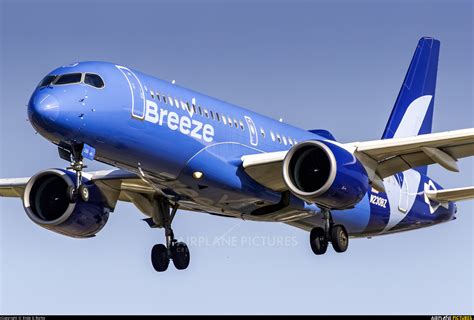
Breeze’s A220 operation also means there would already be personnel familiar with the aircraft, established maintenance relationships, operational knowledge, and an existing order pipeline. That could reduce some of the barriers associated with introducing an entirely unfamiliar fleet type.
Such a transaction would nevertheless be far more complicated than simply purchasing aircraft. Southwest would have to determine how Breeze’s operating model, workforce, network, aircraft commitments, and infrastructure could be integrated into its own system. The potential value of the aircraft and order book would also be only one component of a much larger transaction.
For that reason, the Breeze scenario is better understood as an illustration of how Southwest could potentially obtain A220 expertise and infrastructure, rather than as evidence that an acquisition is necessarily part of the airline’s immediate strategy.
Why Boeing Commonality Still Matters
The case against the A220 is just as important as the case for it. Southwest has created enormous value through fleet commonality, and replacing that simplicity would carry a significant cost.
A 737 pilot can move between several variants within the Boeing family under an established training structure. Mechanics can concentrate their knowledge on a common aircraft ecosystem. Parts inventories can be streamlined, maintenance procedures standardized, and operational teams can build experience around familiar systems.
Introducing the A220 would create a second narrowbody family. Even if the aircraft itself proved highly efficient, Southwest would have to account for additional training, maintenance tooling, spare engines, spare parts, technical support, simulators, and operational procedures.
That is why the A220 cannot be evaluated solely on fuel burn or seat economics. Southwest would need to calculate the aircraft’s total lifecycle value after including the enormous organizational cost of diversification.
The A220’s Attraction Is Growing, But the 737 Still Dominates
The Airbus A220 is becoming more relevant to Southwest because several forces are moving in the same direction. The 737-700 fleet is aging, Southwest needs replacements, and the MAX 7 program has experienced a lengthy certification process. Meanwhile, the A220 has matured into an established commercial aircraft with characteristics that fit the lower-capacity end of Southwest’s network.
Yet those factors do not erase the advantages of remaining with Boeing. Southwest’s enormous existing 737 fleet, outstanding familiarity with the aircraft family, infrastructure investment, and substantial MAX commitments all create powerful incentives to continue with the current strategy.
The central issue is therefore not whether the Airbus A220 is a capable aircraft. It clearly occupies an important position in the modern narrowbody market. The question is whether its operational and economic advantages would become large enough to compensate Southwest for breaking one of the most deeply embedded fleet strategies in commercial aviation.
For now, the 737 remains the foundation of Southwest’s fleet. But every retiring 737-700 and every delay affecting its replacement changes the calculation slightly. If those pressures continue, the A220 could become increasingly difficult to dismiss—not because Southwest’s relationship with Boeing has suddenly disappeared, but because the economics of maintaining a single-aircraft strategy may become more complicated as the airline enters its next phase of fleet renewal.