British Airways is taking a different approach to keeping its mature Airbus A320 fleet competitive. Rather than relying entirely on new aircraft to improve unit economics, the airline is extracting more value from the aircraft it already operates by combining denser seating, flexible premium-cabin space, and incremental interior modernization. The strategy reflects the difficult economics of European short-haul flying, where traditional flag carriers increasingly operate in the same competitive space as low-cost airlines such as Ryanair and Wizz Air.
On many European routes, the difference between a legacy carrier and a low-cost airline is no longer defined by dramatically different economy seats. British Airways still provides a premium proposition through Club Europe, lounge access on eligible journeys, and other network-carrier benefits, but its standard Euro Traveller cabin increasingly resembles the high-density environment found across Europe’s low-cost sector. The result is a cabin strategy in which every square inch of an Airbus A320 can have a commercial purpose.
The change is particularly significant because the A320 remains one of the most important aircraft families in European aviation. British Airways has operated the type for decades, with its first A320 delivered in April 1988. Although that original aircraft has long since left the airline, the longevity of the A320 program demonstrates why improving the economics of existing aircraft can matter almost as much as ordering new ones. British Airways’ current A320 fleet has an average age of around 14.7 years, making cabin modernization an important tool for extending the commercial usefulness of the aircraft.
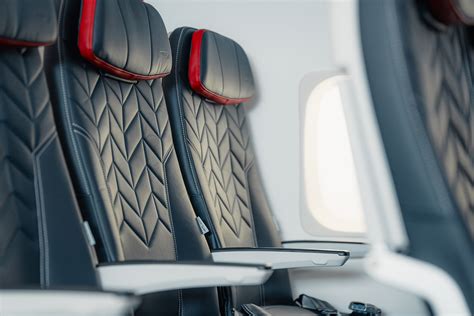
British Airways Airbus A320 Fleet Is Moving Toward Higher Density
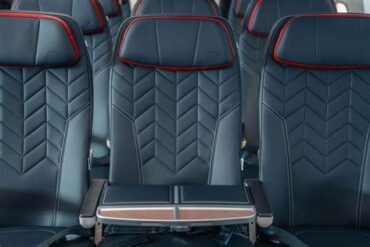
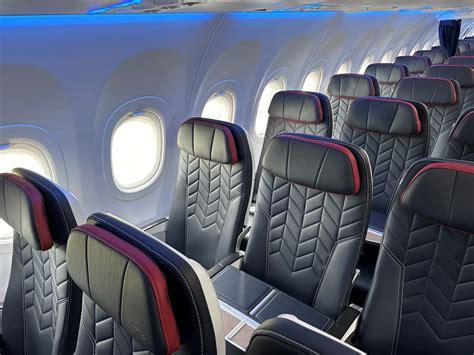
British Airways began retrofitting its A320 and A321 family aircraft in 2024 as part of a broader fleet and cabin modernization program. The work involves new seats and refreshed interiors, with suppliers from England, Scotland, and Northern Ireland participating in the project. One of the most important characteristics of the reconfiguration is the increase in seating capacity, with some aircraft receiving more than 180 seats.
That number puts the aircraft into territory familiar to passengers flying with European low-cost carriers. Wizz Air, for example, operates A320s with configurations of around 180 seats. For British Airways, however, adding seats is not simply an attempt to imitate an ultra-low-cost carrier. The airline is trying to increase the number of passengers it can carry while retaining the ability to generate higher yields from its Club Europe product.
The distinction is important because British Airways does not need every seat to produce the same amount of revenue. A dense economy cabin can improve the economics of shorter flights by spreading aircraft, crew, airport, and other operating costs across more passengers. At the same time, a flexible premium cabin allows the airline to allocate more seats to higher-value customers when demand justifies it.
This makes the A320 less of a static product and more of a revenue-management platform. Instead of deciding permanently how much space belongs to business class and how much belongs to economy, British Airways can adjust the balance according to demand. The aircraft therefore becomes commercially adaptable without requiring a completely different physical interior for every market.
Club Europe Gives British Airways a Flexible Premium Cabin
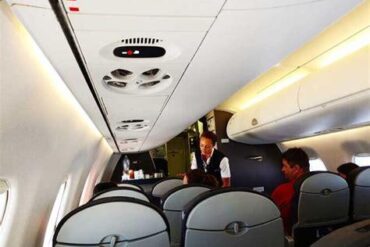
The defining feature of British Airways’ European narrow-body strategy is Club Europe. Unlike a conventional dedicated business-class cabin found on many North American narrow-body aircraft, Club Europe uses the same basic three-abreast seating arrangement found elsewhere in the aircraft. The middle seat is blocked, creating additional personal space without requiring a fundamentally different business-class seat.
The most unusual element is the movable cabin divider. British Airways can change the number of rows assigned to Club Europe depending on how many premium passengers are traveling. The system allows the airline to expand the business-class cabin when demand is strong and reduce it when more capacity is required for Euro Traveller.
For a network airline operating from a heavily constrained airport such as London Heathrow, that flexibility can be commercially valuable. A fixed eight-row business-class cabin would provide the same number of premium seats whether demand was weak or exceptionally strong. A flexible cabin instead allows British Airways to adjust its premium inventory much more closely to the demand on a particular flight.
The trade-off is that the passenger experience in the economy cabin can become less predictable. The best economy seats on the A320 are closely tied to the position of the divider, meaning that passengers can find themselves with different seat options even when flying the same route repeatedly.
Why Heathrow A320s Create an Economy Seat Problem
The issue becomes particularly visible on British Airways’ Heathrow-based A320 fleet. According to the reference analysis, the airline operates 48 Heathrow-based A320s in a configuration where rows 11 and 12 can offer approximately 34 inches of seat pitch when they remain in Euro Traveller. These rows sit within the area that can instead be absorbed into Club Europe when premium demand is sufficiently strong.
The result is a strange situation for passengers searching for extra-legroom economy seating. An A320 may technically contain seats with substantially more legroom than the standard economy rows, but those seats are not necessarily available for purchase as economy seats. If Club Europe expands, they become premium seats.
British Airways’ standard Euro Traveller cabin can therefore begin farther toward the rear than a passenger might expect. Standard economy seating can have a pitch of around 28 inches, while the most desirable rows can disappear behind the Club Europe curtain depending on the flight’s commercial requirements.
There is another small but frustrating detail. The first window seats in the relevant economy section, including 13A and 13F, can be misaligned with the actual aircraft windows. This is not necessarily a safety or operational issue, but it illustrates how dense cabin configurations can produce compromises that are easy to overlook when airlines focus primarily on maximizing usable capacity.
The situation is somewhat different at London Gatwick. British Airways’ Euroflyer A320 fleet has a fixed Club Europe cabin of eight rows, leaving exit rows 12 and 13 in economy. Rows nine through 11 can also provide around 30 inches of pitch, creating a more predictable block of relatively spacious economy seating.
How British Airways Adjusts the Cabin Before Departure
The flexibility of Club Europe is not simply a feature visible on the seat map. It is an operational process that can continue through the period leading up to departure. British Airways can sell Club Europe seats across a larger potential area and then determine the final cabin boundary according to the number of premium passengers booked.
Consider a hypothetical Heathrow flight with 36 Club Europe passengers. If the aircraft has sufficient premium capacity for those customers within the forward rows, the divider can remain behind that area. If another passenger books Club Europe and the available seats require the cabin to extend one row farther back, the divider can move accordingly. The airline can also use operational upgrades to fill available premium seats.
That flexibility creates a direct relationship between ticket demand and cabin geography. A passenger looking at the aircraft several days before departure may see one configuration, while the final configuration can change as bookings develop.
This is particularly relevant because British Airways continues selling tickets close to departure. Premium demand can therefore influence the final location of the divider relatively late in the process. From the airline’s perspective, that is an efficient use of inventory. From the economy passenger’s perspective, it can make the seat map feel less certain.
Denser Economy Seating Helps Protect A320 Economics
Higher density is becoming increasingly important across European short-haul aviation because airlines face intense pressure on costs while competing against carriers built around highly efficient narrow-body operations. The Airbus A320 is already an efficient aircraft, but adding seats can improve the economics of every flight when demand is sufficient.
The fundamental calculation is straightforward. Many costs associated with operating an A320 do not increase proportionally with every additional passenger. The aircraft still requires a flight crew, cabin crew, fuel, maintenance, airport handling, and a scheduled operating slot whether it carries 150 passengers or a substantially larger number.
Adding seats therefore gives the airline another opportunity to spread those costs across additional revenue-producing passengers. The challenge is ensuring that the cabin remains commercially attractive enough to fill those seats.
British Airways addresses that challenge by maintaining a differentiated premium proposition rather than attempting to make every passenger experience luxurious. Club Europe provides the yield-enhancing layer, while Euro Traveller supplies the high-capacity foundation underneath it.
British Airways Still Differs From North American Narrow-Body Cabins
The British Airways approach also highlights a major difference between European and North American airline cabins. Airlines such as American Airlines, Delta Air Lines, United Airlines, and Air Canada generally use dedicated first-class or business-class seats on domestic narrow-body aircraft. Those seats are physically different from the economy product and create a clearly separated premium cabin.
European airlines generally use a different model on intra-European flights. British Airways, Lufthansa, and Air France can use essentially the same seat throughout the aircraft while differentiating business class through seat blocking, service, catering, and cabin separation.
The economics make some sense. European flights are generally shorter than many domestic flights in the United States, where a narrow-body journey can last several hours. The premium customer therefore may place greater value on flexibility, airport services, lounge access, food, and the empty middle seat than on a substantially larger seat.
British Airways’ movable divider takes that European model one step further. Instead of simply defining business class as a fixed number of rows, the airline can make the size of the premium cabin responsive to actual demand.
Flexible Cabin Space Turns Seat Pitch Into a Revenue Tool
The deeper significance of the A320 strategy is that British Airways is treating cabin space as a variable commercial asset. Seat pitch is no longer determined solely by the physical aircraft configuration. It can also depend on the revenue performance of the flight.
When premium demand is weak, more of the aircraft can remain available to Euro Traveller. When premium demand is strong, additional rows can be converted into Club Europe. This allows British Airways to pursue higher premium revenue without permanently sacrificing the capacity needed to compete in economy.
The downside is that passengers experience less consistency. A traveler who knows that a particular aircraft contains rows with 34 inches of pitch cannot necessarily count on being able to book those rows as economy seats. The physical aircraft may be identical, but its commercial configuration can differ from one day to another.
That is an increasingly important consideration as airlines sell more products based on specific seat characteristics. When passengers pay extra for preferred seating, the distinction between a physical feature and a reliably purchasable product becomes significant.
What British Airways’ A320 Strategy Means for European Aviation
British Airways’ approach is part of a wider transformation in European short-haul aviation. Legacy airlines are facing low-cost carriers with extremely efficient cost structures while operating from congested airports where additional flights can be difficult or expensive to obtain. Increasing the productivity of existing aircraft is therefore one way to respond without relying exclusively on fleet growth.
The strategy also shows why a modern aircraft is not automatically more commercially valuable than an older one. A mature A320 can remain useful if its cabin is redesigned to carry more passengers, its seats are modernized, and its premium capacity can be adjusted according to demand. New-generation aircraft bring fuel-efficiency advantages, but cabin economics remain an important part of the equation.
Airlines across Europe are already taking delivery of dense A320neo-family and Airbus A220 configurations. Lufthansa, Air France-KLM, and IAG are all making substantial investments in next-generation narrow-body fleets. The question is not simply how many aircraft they order, but how effectively they configure those aircraft for different demand environments.
The Future of Flexible Short-Haul Cabins
British Airways’ Airbus A320 strategy suggests that flexibility could become increasingly important as European airlines attempt to balance premium demand against high-density economy capacity. Airports such as Heathrow, Frankfurt, and Paris Charles de Gaulle operate under significant capacity constraints, making every available aircraft movement particularly valuable.
A flexible cabin can help an airline extract more revenue from those scarce slots without changing the aircraft itself. On a business-heavy flight, additional Club Europe rows can capture premium demand. On a leisure-heavy service, more space can remain available for economy passengers. The aircraft can therefore respond to the market rather than forcing every flight into exactly the same commercial mold.
For passengers, however, the model creates a new kind of uncertainty. The number of seats on the aircraft may be fixed, but the boundaries between products are not always fixed. The most spacious economy seats can effectively become part of the premium inventory when demand rises.
That tension captures the broader challenge facing British Airways in short-haul Europe. The airline must remain competitive with low-cost carriers while preserving the premium characteristics expected of a national flag carrier. Its Airbus A320 solution is neither a simple move toward low-cost density nor a return to traditional premium cabin design. Instead, it is a hybrid strategy built around higher capacity, flexible Club Europe space, and selective modernization.
As European airlines continue facing pressure from costs, airport constraints, and aggressive low-cost competition, the ability to change the commercial use of cabin space could become just as important as the aircraft’s technical efficiency. British Airways is effectively demonstrating that keeping an older A320 competitive does not necessarily require replacing it. Sometimes, the more immediate opportunity is to make every row work harder.