Southwest Airlines has long enjoyed one of the most enviable competitive positions in the American aviation industry. While legacy carriers fought costly battles at congested hub airports and ultra-low-cost airlines competed aggressively on price, Southwest quietly built a network that allowed it to dominate hundreds of city pairs with little or no direct competition. That strategy helped transform the carrier from a small Texas airline into the largest domestic airline in the United States by passenger volume.
In 2026, however, the foundations of that advantage are beginning to shift. Although Southwest still operates approximately 60% of its routes without direct nonstop competition, the airline is simultaneously confronting a historic internal transformation and growing external pressure from both legacy carriers and emerging low-cost rivals. The combination of these forces is creating one of the most important strategic turning points in the airline’s 55-year history.
For decades, Southwest’s success was built on far more than low fares. Its network structure, customer-friendly policies, and carefully cultivated brand identity formed a powerful competitive moat that competitors struggled to replicate. Today, that moat remains substantial, but it is no longer as secure as it once appeared.
How Southwest Airlines Built A Route Network Few Competitors Could Challenge
The foundation of Southwest Airlines’ rise can be traced directly to a network strategy that differed dramatically from the rest of the US airline industry. Rather than concentrating operations around giant hub airports such as Dallas/Fort Worth, Atlanta, Chicago O’Hare, or Newark, Southwest focused on connecting secondary airports, midsized cities, and underserved markets.
This approach allowed the airline to avoid many of the industry’s fiercest competitive battlegrounds. While major carriers engaged in expensive fare wars and capacity battles at large hubs, Southwest quietly developed extensive point-to-point operations that connected communities often overlooked by larger airlines.
The result was remarkable. Industry estimates indicate that roughly 60% of Southwest’s route network faces no direct nonstop competition. In an industry where airlines typically compete aggressively for the same passengers, such a figure represents an extraordinary strategic advantage.
Passengers generally prefer nonstop flights whenever possible. When Southwest becomes the only carrier offering a nonstop connection between two cities, it gains significant leverage. Travelers may still choose alternative connecting itineraries, but convenience often outweighs small fare differences. This creates greater pricing flexibility while reducing the pressure to match competitors’ promotional fares.
Unlike traditional hub-and-spoke networks, Southwest’s point-to-point system also enabled more efficient aircraft utilization. Aircraft spent less time waiting for connecting banks of flights and more time generating revenue through continuous operations.
The strategy created a network filled with routes that were often too small, too specialized, or too geographically unique for competitors to prioritize.
After years of expansion, this structure evolved into one of the airline industry’s most powerful competitive assets.
The Hidden Value Of Operating Without Direct Competition
Having limited competition does far more than protect ticket prices. It fundamentally changes how an airline manages capacity, customer acquisition, and long-term growth.
When multiple airlines compete directly on the same route, pricing frequently becomes the primary weapon. Airlines discount aggressively to gain market share, often sacrificing profitability in the process. Revenue managers constantly adjust fares in response to competitors, creating a cycle that can significantly reduce margins.
Southwest largely avoided this dynamic across a large portion of its network.
Instead of fighting for existing demand, the airline often focused on stimulating entirely new demand. Lower fares, convenient schedules, and nonstop service encouraged travelers who previously drove, delayed trips, or simply chose not to travel.
This demand stimulation became one of Southwest’s defining strengths. New passengers entered the market, increasing overall traffic rather than merely shifting travelers from one airline to another.
The benefits extended beyond pricing. Limited competition allowed Southwest to establish strong local brand recognition within numerous communities. Frequent travelers became accustomed to choosing Southwest as their default carrier, reinforcing customer loyalty over time.
As the airline expanded, these individual route advantages accumulated into a network-wide competitive position that few rivals could match.
Why Southwest’s Brand Became Just As Important As Its Network
While route dominance created opportunities, Southwest’s brand identity transformed those opportunities into long-term customer loyalty.
The airline spent decades building a reputation around simplicity, transparency, and value. Unlike many competitors that increasingly relied on ancillary fees, Southwest maintained policies that passengers immediately understood.
The most famous example was its “Bags Fly Free” policy. At a time when checked baggage fees became a major source of revenue throughout the industry, Southwest continued allowing passengers to check bags without additional charges.
The financial value was obvious. Families, leisure travelers, and occasional flyers frequently saved significant amounts compared with competing airlines.
More importantly, the policy became symbolic of Southwest’s broader philosophy.
Customers viewed the airline as straightforward and consumer-friendly. Even when ticket prices were similar to competitors, travelers often perceived greater overall value because fewer surprise charges appeared during the booking process.
Open seating reinforced this perception. Although the boarding process occasionally generated criticism, many passengers appreciated its simplicity and flexibility. It differentiated Southwest from virtually every major airline operating in the United States.
The carrier’s fare structure further strengthened its position. Customers generally encountered fewer product tiers and less complexity than on competing airlines.
Together, these policies created a powerful brand identity that complemented Southwest’s network advantage.
Passengers were not simply purchasing transportation.
They were purchasing a travel experience that felt distinct from traditional airlines.
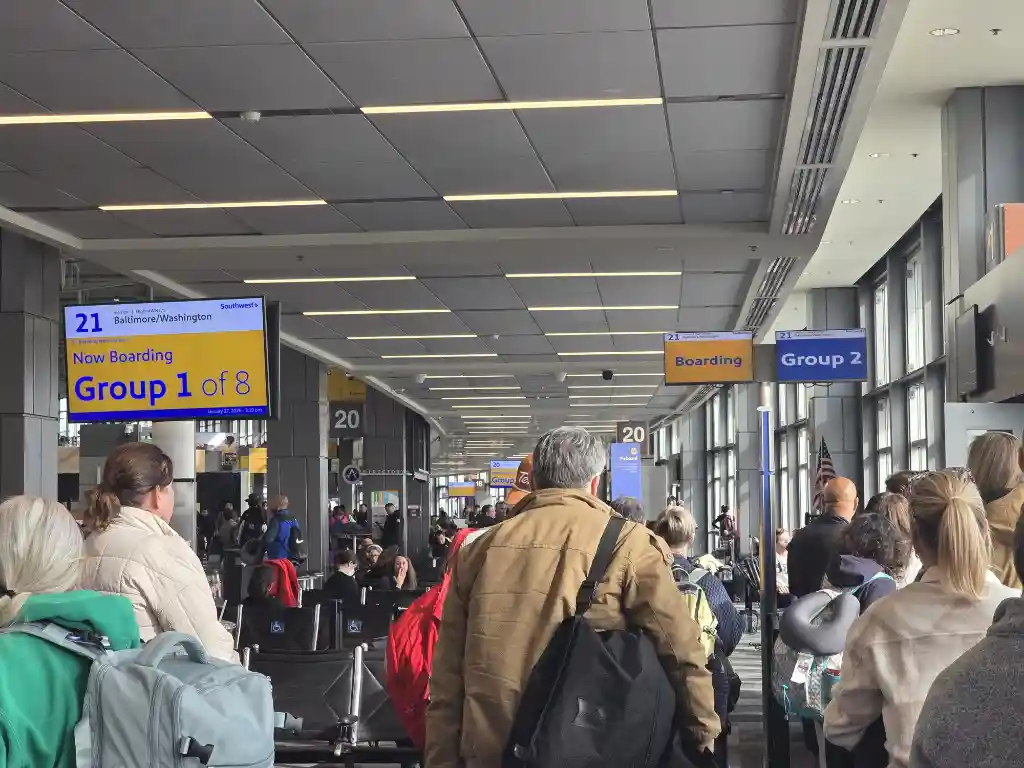
Elliott Investment Management Accelerates A Historic Transformation
By the mid-2020s, however, growing investor pressure began challenging many of Southwest’s long-standing traditions.
Although the airline remained profitable, some shareholders argued that management was leaving substantial revenue opportunities untapped. Competitors generated billions of dollars annually through premium seating, baggage fees, and increasingly sophisticated fare segmentation.
Southwest largely resisted those trends.
That resistance became a focal point after Elliott Investment Management acquired a significant stake in the company and pushed aggressively for change.
The activist investor argued that Southwest’s commitment to tradition was limiting shareholder returns. According to this view, customer preferences had evolved, industry economics had changed, and the airline needed to modernize its commercial strategy.
The resulting transformation became one of the most dramatic strategic shifts in Southwest’s history.
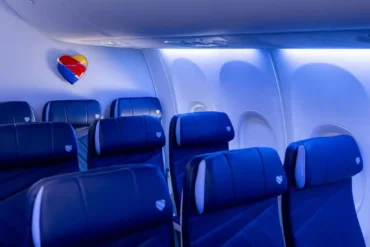
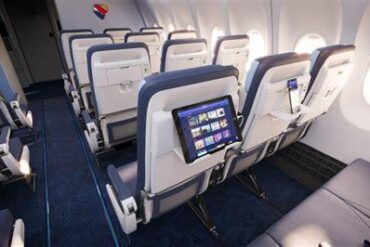
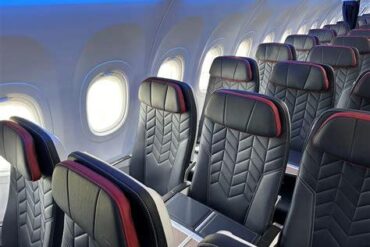
The airline announced plans to introduce assigned seating, premium seating products, checked baggage fees, and basic economy fares.
Each initiative represented a major departure from policies that had defined Southwest for decades.
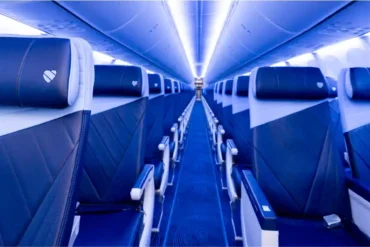
Assigned seating replaced one of the airline’s most recognizable operational characteristics.
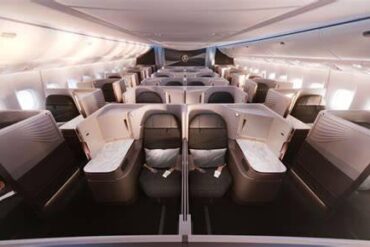
Premium seating introduced a new revenue stream aimed at travelers willing to pay more for comfort and convenience.
Basic economy products allowed Southwest to compete more directly against ultra-low-cost carriers on headline fares.
Checked baggage fees opened an ancillary revenue category that competitors had exploited successfully for years.
Collectively, these changes signaled the end of an era.
The Financial Logic Behind Southwest’s New Strategy
From a financial perspective, the rationale behind these changes is straightforward.
Premium seating products typically generate higher yields because passengers voluntarily pay extra for additional benefits. Airlines worldwide have increasingly expanded premium offerings because they represent one of the industry’s most reliable sources of incremental revenue.
Ancillary fees offer similar advantages.
Unlike ticket revenue, which fluctuates significantly based on market conditions and competition, fees often provide a more stable revenue stream. Baggage fees alone generate billions of dollars annually for major airlines.
Basic economy products create another valuable tool.
They allow airlines to advertise lower entry-level fares while encouraging customers to purchase higher-priced products with additional features.
For Southwest, these initiatives collectively represent an opportunity to increase revenue per passenger without necessarily increasing capacity.
Investors have responded positively.
Analysts have upgraded earnings expectations, and financial projections suggest significantly improved profitability compared with recent years.
Revenue initiatives, stronger upsell performance, and enhanced product segmentation are all contributing to optimism surrounding the airline’s financial outlook.
From a shareholder perspective, the transformation appears increasingly attractive.
From a competitive perspective, however, the picture is more complicated.
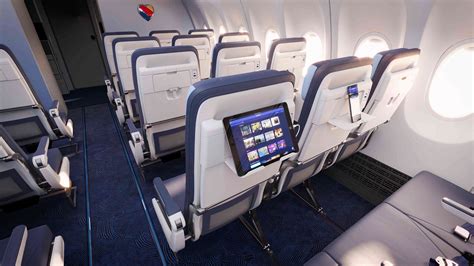
How Southwest May Be Losing Its Most Powerful Differentiator
The central challenge facing Southwest is that many of its new revenue-generating initiatives simultaneously reduce differentiation.
Historically, competitors found it difficult to match Southwest’s overall value proposition without sacrificing important revenue streams.
A customer comparing airlines often recognized that Southwest’s free checked bags could offset modest differences in base fares.
That advantage is now significantly reduced.
When passengers encounter baggage charges across multiple airlines, fare comparisons become more direct and straightforward.
Assigned seating creates a similar dynamic.
Although many travelers prefer selecting seats in advance, assigned seating also makes Southwest appear more similar to competitors.
Premium seating and basic economy products further narrow the distinctions.
As Southwest adopts features already common throughout the industry, consumers may increasingly evaluate airlines based on other factors such as schedules, loyalty programs, airport facilities, and network connectivity.
This shift could benefit larger legacy carriers.
Why Delta, United, And American See New Opportunities
Historically, Southwest successfully counterbalanced the strengths of major network airlines through simplicity and customer-friendly policies.
Legacy carriers offered extensive global networks, premium lounges, elite status benefits, and international connectivity. Southwest offered transparency, convenience, and fewer fees.
Each model appealed to different customer segments.
As Southwest’s differentiation decreases, however, some travelers may begin reassessing their options.
Legacy carriers possess significant competitive advantages in several areas.
Their loyalty ecosystems are larger and more sophisticated.
Their international route networks provide global connectivity.
Their premium products often target high-spending business travelers.
Their airport infrastructure investments enhance the travel experience for frequent flyers.
When Southwest maintained distinctly different policies, these advantages were often less relevant for many leisure travelers.
As product distinctions narrow, those factors become increasingly important.
Executives across the industry have already indicated that Southwest’s customer base may be more vulnerable to competitive targeting than in previous years.
That possibility represents a significant shift in industry dynamics.
Breeze Airways And New Low-Cost Rivals Are Challenging Southwest’s Territory
Pressure is not coming solely from above.
Emerging low-cost carriers are also targeting markets that closely resemble the routes Southwest historically dominated.
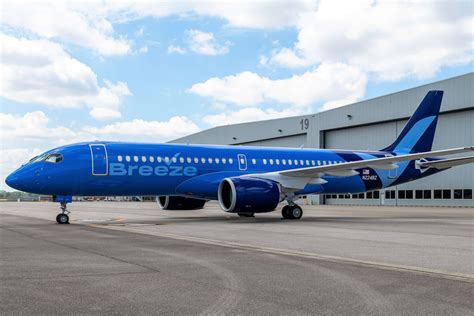
Among these competitors, Breeze Airways has attracted particular attention.
Like Southwest during its earlier expansion years, Breeze focuses on underserved city pairs and markets with limited competition. Rather than concentrating resources on major hubs, the airline seeks opportunities where demand exists but service remains inadequate.
This strategy places Breeze directly within Southwest’s traditional territory.
Recent network announcements suggest Southwest recognizes the threat.
Several newly launched routes overlap with markets where Breeze had established positions, indicating a growing willingness by Southwest to compete more directly rather than relying exclusively on historical network advantages.
The significance of this trend extends beyond individual routes.
For decades, Southwest frequently entered underserved markets before competitors recognized their potential.
Today, newer airlines are identifying similar opportunities, often using modern data analytics and lower-cost operating structures to expand rapidly.
This reduces the exclusivity that once characterized many Southwest markets.
Can Southwest Protect Its 60% Route Monopoly Advantage?
Despite growing competition, Southwest remains exceptionally well positioned.
Operating approximately 60% of routes without direct nonstop competition continues to provide enormous strategic benefits.
The airline also retains substantial advantages in scale, brand recognition, operational experience, and domestic network breadth.
Few competitors can replicate Southwest’s nationwide presence.
Its fleet, workforce, customer awareness, and market penetration remain formidable barriers to entry.
Moreover, many of the newly introduced initiatives may ultimately improve financial performance without causing significant customer attrition.
Passengers often adapt more quickly to industry changes than expected.
If assigned seating improves customer satisfaction and premium products generate stronger yields, Southwest could emerge more profitable while maintaining much of its existing customer base.
The critical challenge lies in balancing modernization with identity preservation.
For decades, Southwest’s moat consisted of both network advantages and brand differentiation.
If either component weakens substantially, competitive pressures become more difficult to manage.
If both weaken simultaneously, the airline could face challenges unlike any encountered during its modern growth era.
2026 Could Define The Next Era Of Southwest Airlines
Southwest Airlines stands at a strategic crossroads.
The airline still benefits from one of the strongest route positions in North American aviation, with roughly 60% of its network operating without direct nonstop competition. That advantage helped generate decades of growth, strong revenues, and a uniquely loyal customer base.
Yet the environment surrounding that success is changing rapidly.
Low-cost challengers are entering previously protected markets. Legacy carriers are targeting customers who once viewed Southwest as fundamentally different. At the same time, Southwest itself is redefining the policies that shaped its identity for generations.
Early financial results suggest the transformation may deliver meaningful shareholder value. Revenue trends are improving, earnings expectations are rising, and investors appear increasingly supportive of management’s new direction.
The larger question is whether Southwest can maintain its historic competitive dominance while becoming more similar to its rivals.
That challenge will likely determine not only the airline’s future profitability but also its long-term position within the increasingly competitive US aviation landscape.
For an airline built on doing things differently, 2026 may become the year that proves whether evolving without losing its identity is possible.