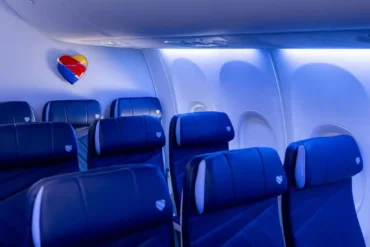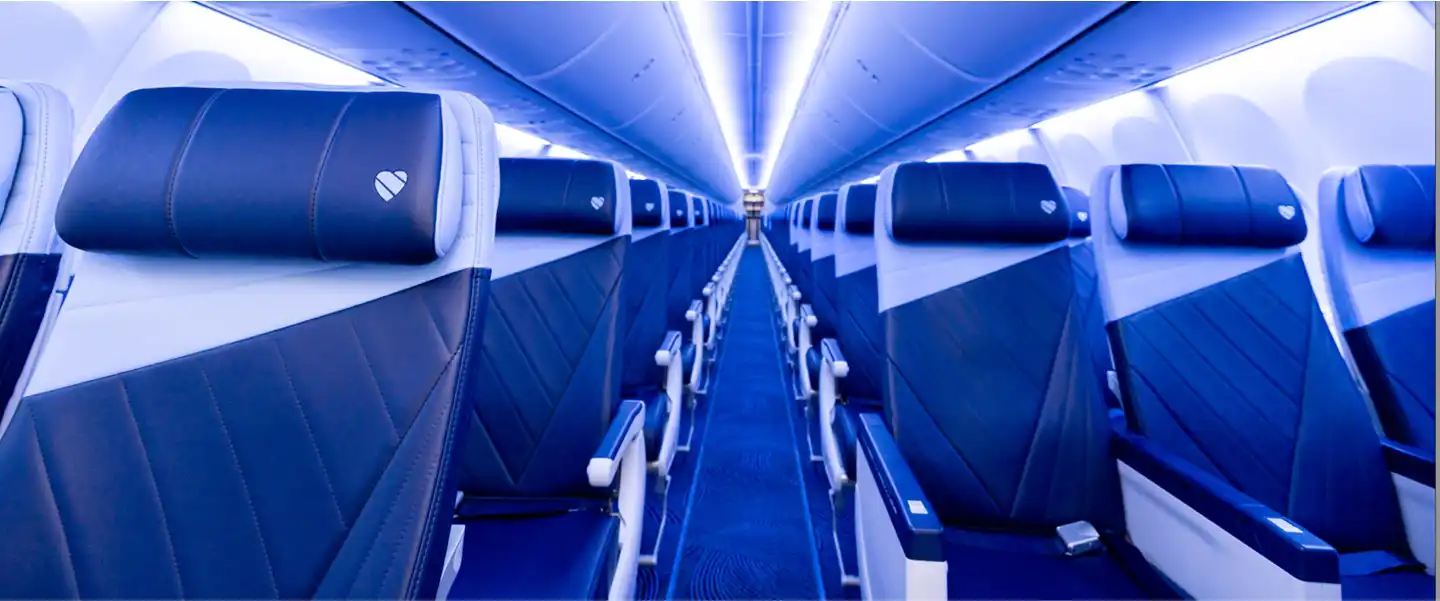
For more than half a century, Southwest Airlines built one of the most recognizable operating models in commercial aviation around a deceptively simple idea: get airplanes back into the air faster than competitors. While most major airlines focused heavily on premium cabins, global alliances, and increasingly segmented boarding hierarchies, Southwest concentrated on utilization. Its aircraft spent less time sitting at gates and more time generating revenue in the sky.
That philosophy shaped nearly every aspect of the airline’s identity. The all-Boeing 737 fleet simplified maintenance and training. Point-to-point scheduling reduced dependency on complex hub structures. Open seating accelerated boarding in ways many travelers underestimated. What often looked chaotic to outsiders was actually an extraordinarily refined operational machine designed around speed, repetition, and predictability.
When Southwest officially abandoned open seating in January 2026 and replaced it with assigned seating and eight structured boarding groups, public discussion largely centered on customer reaction. Some passengers celebrated the end of seat anxiety. Others mourned the loss of one of aviation’s last unconventional systems. Yet the most consequential issue was not emotional at all. It was mathematical.
Even minor boarding delays can become enormously expensive for a short-haul airline operating hundreds of aircraft across tightly compressed schedules. Southwest did not merely change where passengers sit. It altered the operational rhythm that powered the airline for 53 years.
The consequences emerged almost immediately.
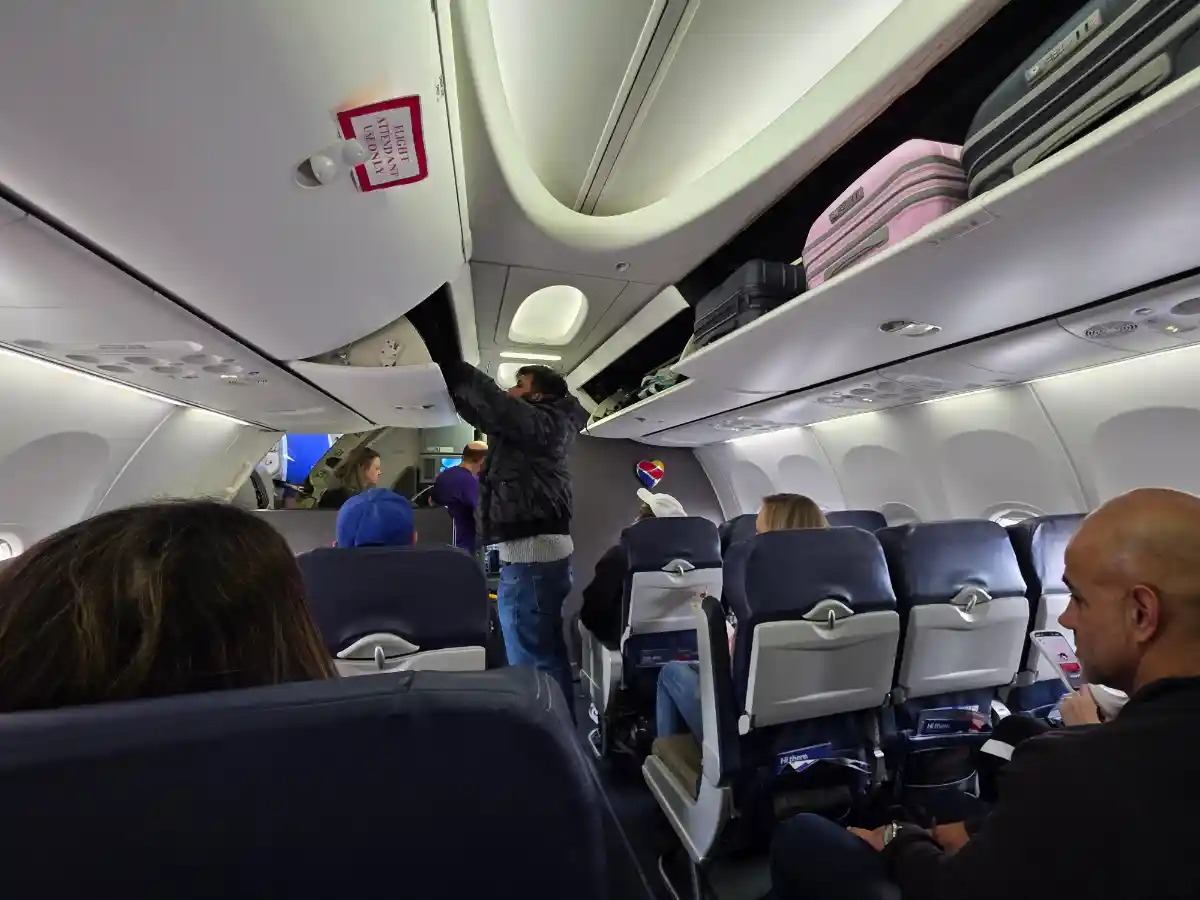
After the rollout, reports from travelers and crews described clogged aisles, passengers stopping repeatedly to locate overhead bin space near assigned rows, and congestion patterns that Southwest historically avoided under open seating. The airline soon found itself confronting a surprising reality: assigned seating solved some customer complaints while simultaneously creating operational problems embedded deep inside the company’s business model.
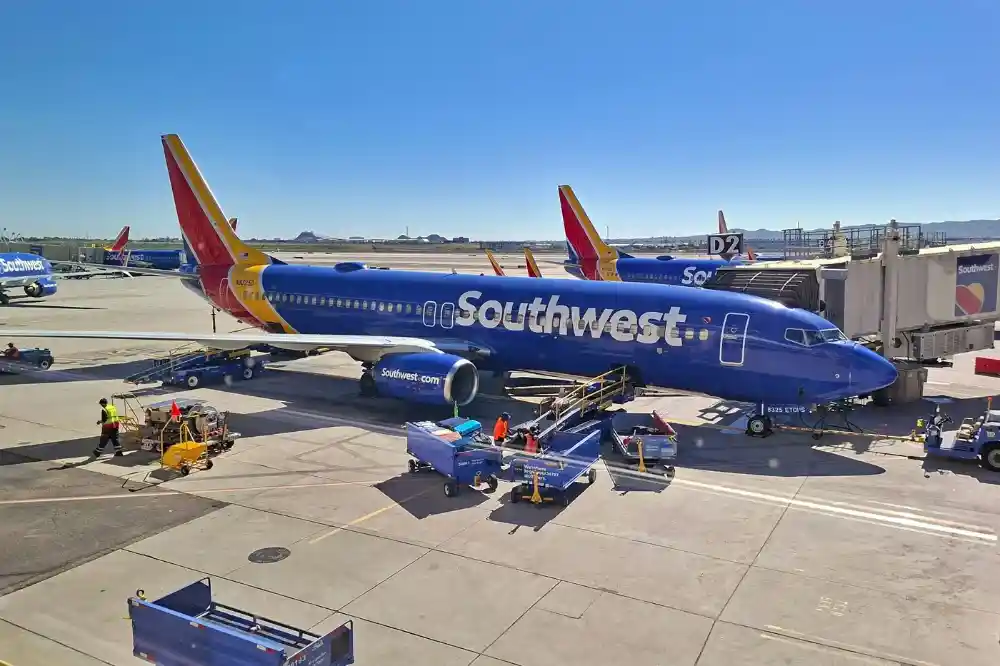
Southwest Airlines Built Its Empire Around Rapid Turnarounds
To understand why assigned seating created such significant disruption, it is necessary to understand what made Southwest operationally unique in the first place.
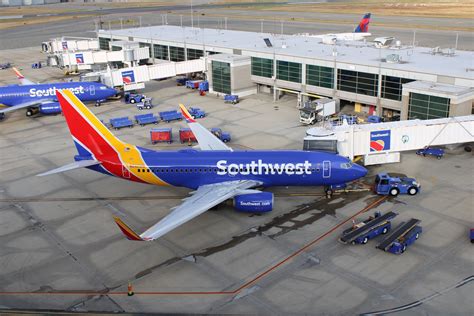
Unlike international airlines that rely heavily on long-haul flying, Southwest’s network revolves around short domestic segments. Many aircraft complete six or seven flights per day. In that environment, efficiency on the ground becomes just as important as efficiency in the air.
A five-minute delay may sound trivial on a transpacific route lasting 14 hours. On a network built around frequent one- and two-hour flights, however, those minutes accumulate rapidly. A delayed departure early in the morning can cascade across an aircraft’s entire schedule, disrupting crews, gate assignments, connections, and maintenance timing before lunchtime.
Southwest historically neutralized that risk through operational simplicity. The airline became famous for fast turnarounds that competitors struggled to replicate consistently. Aircraft could unload, clean, board, and depart again in remarkably short windows because the boarding process minimized friction.
Passengers entered the cabin and selected available seats dynamically. Travelers naturally dispersed throughout the aircraft instead of funneling toward specific rows. People often chose the first acceptable seat rather than blocking the aisle while searching for an exact location. The process reduced stoppages, improved movement flow, and minimized congestion around overhead bins.
That system was not preserved for decades because executives considered it quirky branding. It survived because it worked.
The assigned seating transition fundamentally disrupted those movement patterns.
Assigned Seating Changed Passenger Behavior Overnight
The most underestimated aspect of Southwest’s transition was psychological rather than technical.
Under open seating, passengers understood that speed mattered personally. Boarding quickly improved seating options. Delaying decisions carried consequences. Travelers therefore moved through the cabin with urgency, adapting dynamically to available space.
Assigned seating eliminates much of that behavioral incentive.
Passengers now board with guaranteed seats, meaning movement priorities shift dramatically. Travelers no longer search for “a good seat.” Instead, they focus on protecting territory associated with that seat, especially nearby overhead storage space.
That subtle psychological shift has major operational implications inside narrowbody aircraft like the Boeing 737.
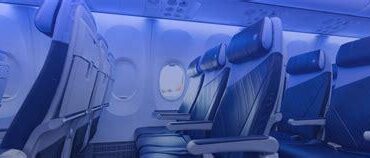
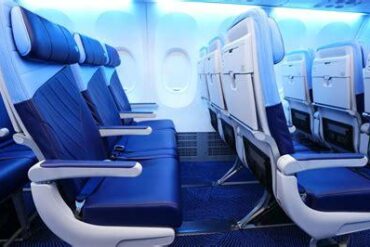
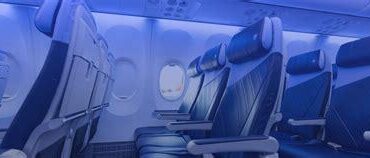
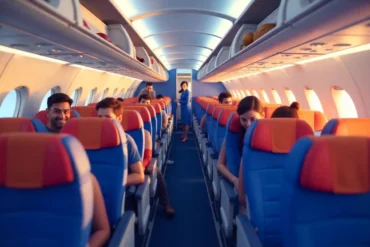
Only one passenger can move through the aisle at a time. Once someone stops to rearrange baggage, check row numbers, or search for nearby bin space, everyone behind them stops as well. The boarding chain becomes vulnerable to repeated micro-interruptions that compound rapidly.
Early boarding experiences after Southwest’s rollout revealed precisely that problem. Travelers frequently paused in aisles while verifying seat assignments, negotiating access with already seated passengers, or attempting to secure overhead locker space close to assigned rows.
Under the previous system, those disruptions occurred less frequently because passengers adjusted organically to cabin conditions in real time. If forward sections became crowded, travelers often selected seats farther back. Storage capacity distributed itself more evenly throughout the aircraft.
Assigned seating replaced that adaptive behavior with fixed destinations.
The result was predictable congestion concentrated around preferred cabin zones.
The Overhead Bin Crisis Became Worse Than Expected
Perhaps the clearest indication that Southwest underestimated the operational consequences of assigned seating came from the airline’s rapid response regarding overhead storage.
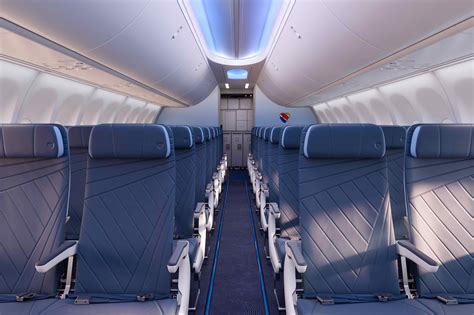
Soon after implementation, the company announced plans to retrofit roughly 70% of its fleet with larger overhead bins capable of accommodating 50% more carry-on baggage by the end of 2026.
That decision represents far more than a cosmetic cabin upgrade.
It is effectively an acknowledgment that assigned seating intensified bin competition enough to threaten boarding efficiency across the network.
Overhead storage has always been a source of tension on commercial flights, but Southwest’s open seating model previously diluted much of the problem. Because passengers spread naturally throughout the cabin, bag placement patterns were less concentrated near specific rows.
Assigned seating changes the economics of personal space perception. Travelers increasingly treat nearby overhead bins as extensions of their reserved seats. A passenger assigned to Row 10 may resist storing luggage in Row 20 because retrieving it during deplaning becomes inconvenient and stressful.
This creates powerful incentives for passengers to stop, wait, negotiate, or backtrack during boarding.
The bottleneck becomes especially severe in forward cabin sections where demand for storage is highest. Travelers boarding later often encounter filled bins near assigned seats, forcing them to search elsewhere while simultaneously blocking aisle traffic.
Southwest’s historic boarding efficiency relied heavily on uninterrupted passenger flow. The new system introduced repeated interruptions into an environment where seconds matter operationally.
Why Small Boarding Delays Become Massive Network Problems
The true danger for Southwest is not a single delayed flight. It is cumulative degradation across an entire system built around utilization.
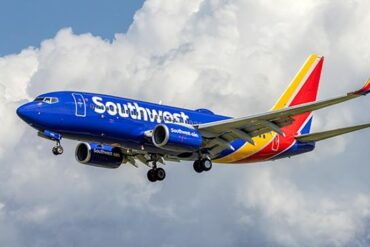
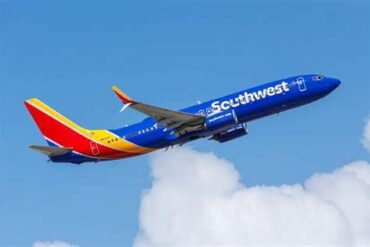
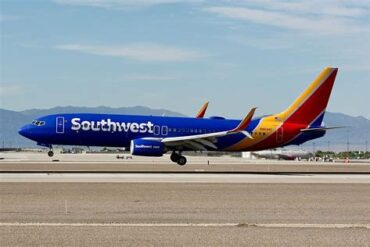
According to fleet data, Southwest currently operates approximately 800 aircraft, including large numbers of Boeing 737 MAX 8 jets alongside older 737-700 and 737-800 variants. Each aircraft typically performs multiple daily segments across dense domestic schedules.
When boarding takes five additional minutes per flight, the network-wide consequences become enormous.
Across thousands of daily departures, those minutes translate into reduced aircraft productivity, tighter recovery windows during disruptions, increased crew pressure, and more complicated gate scheduling. What begins as a boarding inconvenience can eventually influence labor costs, maintenance planning, fuel burn, and on-time performance metrics.
The challenge becomes particularly severe during irregular operations.
Southwest historically recovered from disruptions better than many competitors because simplified procedures enabled rapid aircraft movement. During weather events or air traffic delays, operational flexibility allowed schedules to stabilize relatively quickly.
Assigned seating introduces more procedural rigidity into that recovery system.
Passengers now expect precise boarding orders, designated seating arrangements, and structured cabin segmentation. Deviations become harder to manage efficiently during delays or aircraft swaps. Complexity increases precisely where Southwest historically derived competitive advantage from simplicity.
Investor Pressure Accelerated the Shift Away From Simplicity
Southwest’s decision did not emerge purely from customer demand.
Investor pressure played a major role.
Activist investor Elliott Management pushed aggressively for structural and financial changes designed to improve profitability and modernize Southwest’s revenue strategy. Assigned seating creates lucrative ancillary revenue opportunities already exploited successfully by competitors.
Traditional airlines generate billions annually from premium seat assignments, extra-legroom products, boarding prioritization, and cabin segmentation. Southwest historically avoided many of those monetization strategies because its operational philosophy prioritized simplicity over revenue layering.
Wall Street increasingly viewed that restraint as untapped potential.
From a financial perspective, assigned seating appears attractive. Airlines can charge extra for preferred rows, window seats, forward cabin placement, and expanded legroom sections. The model introduces new pricing flexibility without adding aircraft.
Yet Southwest’s historical system was interconnected in ways investors may have underestimated.
Open seating was not an isolated quirk. It complemented rapid boarding, simplified gate operations, faster turns, and higher aircraft utilization. Removing one component inevitably affects the others.
The airline is now discovering that operational systems developed over decades cannot be modified casually without producing secondary consequences.
Revenue gains from seat assignments may ultimately prove significant. The risk is that slower aircraft utilization gradually offsets portions of those gains through operational inefficiency.
Southwest Is Becoming More Like the Airlines It Once Avoided Resembling
One of the most fascinating aspects of Southwest’s transformation is philosophical.
For decades, the airline differentiated itself by rejecting complexity embraced elsewhere in the industry. Competitors layered on fare classes, boarding hierarchies, premium cabins, and increasingly fragmented passenger experiences. Southwest maintained relative simplicity.
That simplicity created brand distinction and operational consistency simultaneously.
Assigned seating signals movement toward a far more conventional airline structure.
The new eight-group boarding process introduces additional coordination demands for gate agents and flight attendants. Boarding logic becomes more segmented. Passenger expectations become more rigid. Cabin management becomes more procedural.
Every additional layer increases opportunities for confusion and inconsistency.
Ironically, Southwest adopted assigned seating partly because customers increasingly expected it. Families, infrequent travelers, and business passengers often prefer certainty before arriving at the airport. Open seating generated anxiety for some customers who disliked competitive boarding dynamics.
From a consumer preference standpoint, the change is understandable.
Operationally, however, Southwest may now inherit many inefficiencies legacy airlines have struggled with for years.
The company spent decades building systems specifically designed to avoid those friction points. Assigned seating reintroduces them into an airline architecture originally optimized against them.
Peak Travel Seasons Could Expose Even Bigger Weaknesses
The early months of Southwest’s assigned seating rollout occurred before the heaviest annual travel periods fully tested the system.
Summer operations may reveal much larger vulnerabilities.
Peak travel seasons amplify every operational weakness inside an airline network. Aircraft utilization intensifies, airports become more congested, passengers carry more luggage, and recovery windows shrink dramatically.
In those conditions, even minor boarding slowdowns can spread rapidly across the system.
An aircraft operating seven short-haul segments daily has limited ability to recover lost minutes naturally. Delays compound quickly, particularly at constrained airports where gate availability becomes tight.
The assigned seating model may also worsen deplaning inefficiencies. Passengers retrieving bags from distant overhead bins can create additional congestion after landing, further increasing turnaround pressure.
Southwest’s fleet retrofit program involving larger overhead bins should alleviate some tension eventually. More storage capacity will reduce forced bag displacement and decrease aisle searching behavior.
Still, infrastructure upgrades alone cannot fully solve the underlying behavioral changes assigned seating introduced.
Passengers simply move differently when defending reserved spaces compared with dynamically selecting available seats.
That psychological reality affects boarding speed regardless of cabin hardware.
The Airline’s Long-Term Identity Is Now in Transition
Southwest’s assigned seating experiment represents more than a procedural adjustment. It marks a profound identity shift for one of America’s most operationally distinctive airlines.
For decades, open seating symbolized Southwest’s unconventional philosophy. Critics considered it chaotic. Supporters viewed it as efficient, democratic, and refreshingly straightforward.
Both perspectives contained truth.
Assigned seating may ultimately attract new customer segments previously hesitant to fly Southwest. It may generate substantial ancillary revenue and align the airline more closely with broader market expectations.
Yet the transition also risks weakening the operational DNA that historically separated Southwest from competitors.
The airline’s success was never built solely on low fares. It was built on movement efficiency. Aircraft flew more frequently. Ground operations remained streamlined. Simplicity reduced friction across the network.
Assigned seating complicates that equation.
The central question is no longer whether passengers prefer reserved seats. Many clearly do. The deeper issue is whether a short-haul airline designed around rapid turns can preserve its historic productivity advantages after adopting a boarding structure that inherently slows cabin flow.
That answer will determine far more than customer satisfaction scores.
It may determine whether Southwest can remain operationally unique in an industry increasingly defined by sameness.