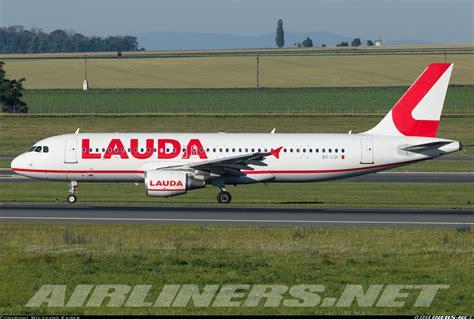
Ryanair’s Lauda Europe is steering towards an ambitious expansion, aiming to grow its Airbus A320 fleet to 50 aircraft, with longer-term aspirations to include the A320neo beyond 2030. The plan underscores Ryanair Holdings’ strategic diversification beyond its traditional Boeing-only operations, while simultaneously contending with serious bottlenecks in Airbus’s delivery schedule.
Lauda Europe’s Strategic Expansion
Lauda Europe currently operates a fleet of 26 Airbus A320-200s, servicing charter and scheduled routes across Europe. Since its acquisition by Ryanair in 2018 and 2019, the Austrian-based subsidiary has played a unique role in the group as the only Airbus operator in the broader Ryanair Holdings structure. This distinction not only broadens Ryanair’s operational capacity but also provides a strategic hedge against over-reliance on Boeing.
However, this expansion plan is not without complexity. Ryanair is making this bet amid record Airbus backlogs, with aircraft orders stretching well into the next decade. These delays present a significant challenge to Ryanair’s aspirations for Lauda Europe, especially given that fleet modernization is tied to both growth and environmental targets.
Airbus Backlog: A Critical Bottleneck
Airbus’s existing commitments—especially for the A320neo and A321neo lines—have been largely accounted for through 2030, straining the availability of new aircraft. This backlog directly threatens Lauda Europe’s growth timetable. Should deliveries of A320neos not begin on schedule, Ryanair may be forced to temporarily source older A320ceo models through short-term leases. This move, though suboptimal in terms of efficiency and environmental compliance, would allow Lauda Europe to maintain operational momentum.
In a worst-case scenario, Ryanair could revert Lauda Europe to a Boeing-only fleet, particularly the ubiquitous 737 model. Such a pivot would simplify training, maintenance, and procurement logistics, aligning Lauda more closely with the broader Ryanair fleet. But it would also diminish the strategic diversity Lauda brings to the group’s operations and limit flexibility.
Lauda’s Role Within Ryanair Holdings
As part of Ryanair Holdings, Lauda Europe occupies a critical position in the group’s overall growth matrix. Although it operates solely under Ryanair’s flight codes, Lauda maintains its own Air Operator Certificate (AOC) and fleet, enabling it to service niche markets and provide flexible capacity across Ryanair’s European network.
The average age of Lauda’s current fleet—17.8 years—underscores the urgency for modernization. These older aircraft consume more fuel and incur higher maintenance costs, weakening Ryanair’s cost leadership in the ultra-competitive low-cost carrier segment. Replacing them with new, fuel-efficient aircraft like the A320neo is essential not just for economics but also to meet Ryanair’s aggressive climate goals.
Environmental Goals and the A320neo Advantage
Ryanair has committed to cutting its net carbon emissions by 50% by 2030, a lofty target that demands both operational changes and fleet modernization. The A320neo, with its 20% reduction in fuel burn compared to previous generations, is central to achieving this. These aircraft also offer lower noise emissions, contributing to quieter airport operations and better community relations.
By adopting the A320neo, Lauda Europe will not only reduce its carbon footprint but also position itself as a progressive and environmentally conscious carrier within Ryanair Holdings. This move aligns with broader industry trends, where environmental compliance is becoming a regulatory and consumer-driven necessity.
A Tug-of-War Between Standardization and Diversification
Ryanair’s preference for fleet standardization, particularly its long-standing reliance on the Boeing 737, is well documented. This uniformity reduces costs across multiple vectors: pilot training, spare parts inventory, maintenance, and scheduling flexibility. Introducing Airbus aircraft into this tightly controlled model disrupts that harmony.
Yet, Lauda Europe presents a compelling counter-argument. Operating Airbus aircraft allows Ryanair to better navigate manufacturer supply chain risks and opens new opportunities in markets or contracts that may favor Airbus configurations. The fleet duality is a calculated risk: one that offers diversification at the price of operational complexity.
CEO Michael O’Leary has previously hinted that if Airbus cannot resolve its delivery challenges, Ryanair would streamline its operations back to a single aircraft type. This would spell the end of Lauda Europe’s Airbus fleet, folding it into the Boeing-centric structure of the parent company. But until such a decision is made, Ryanair appears committed to giving Lauda’s Airbus experiment room to grow.
Leasing Contingencies and Interim Strategies
As a contingency to bridge the gap before A320neo deliveries, Ryanair is actively exploring leasing additional A320ceos. While these aircraft lack the efficiency gains of their newer counterparts, they offer a practical solution for immediate capacity needs. This leasing strategy is critical to avoid growth stagnation and to maintain slot utilization at congested European airports.
In the background, Ryanair is also eyeing the broader aircraft leasing market, which has tightened due to high post-pandemic demand and airline recovery worldwide. Leasing rates have risen, but the company remains confident that short-term contracts can be negotiated to maintain operational flexibility.
The Airbus-Boeing Rivalry: A Strategic Underpinning
Ryanair’s evolving fleet strategy cannot be divorced from the broader Airbus vs. Boeing rivalry. Historically, Ryanair has leaned heavily on Boeing, placing massive orders and negotiating aggressively. Its move to integrate Airbus aircraft—via Lauda Europe—is both a hedge and a signal to Boeing that Ryanair has options beyond its long-time partner.
This maneuvering is set against the backdrop of CEO Michael O’Leary’s public battles with European regulators, especially concerning competition and aircraft procurement. By leveraging Lauda’s Airbus portfolio, Ryanair positions itself as a more flexible and adaptive player—capable of responding to both manufacturer politics and market dynamics.
A Fork in the Road: Future Prospects for Lauda Europe
The future of Lauda Europe hinges on two key factors: Airbus’s ability to meet its delivery commitments and Ryanair’s broader strategic calculus. If Airbus delivers, Lauda could become a 50-strong fleet of A320s with neo upgrades, playing a central role in Ryanair’s carbon and capacity targets. It would also position Ryanair Holdings as a more diversified, multi-manufacturer group—better suited to weather disruptions from any single OEM.
On the other hand, prolonged delivery delays or further escalation in lease costs could push Ryanair to recentralize on Boeing 737s, dissolving the operational uniqueness of Lauda. Such a move would streamline costs but sacrifice the very flexibility Ryanair sought by acquiring Lauda Europe in the first place.
Conclusion: A Tactical Gamble in a Competitive Arena
Ryanair’s decision to grow Lauda Europe’s Airbus A320 fleet to 50 aircraft is a tactical move grounded in both necessity and opportunity. It allows Ryanair to inject new capacity into its network, fulfill environmental mandates, and reduce overexposure to Boeing. However, the success of this plan depends on resolving Airbus’s delivery delays, managing interim leasing costs, and balancing the operational complications of a mixed fleet.
In the fiercely competitive world of European low-cost aviation, where margins are razor-thin and environmental pressure is mounting, Lauda Europe’s future could very well signal Ryanair’s next evolutionary leap—or a calculated retreat. Either way, the outcome of this strategy will be a defining moment in Ryanair Holdings’ pursuit of dominance in the skies over Europe.