The Embraer E-Jet E2 family was created to occupy a carefully defined space between smaller regional aircraft and conventional narrowbody jets. Yet the E195-E2, the largest member of the family, has steadily moved beyond the short-haul missions associated with that category. Airlines are now using the aircraft on sectors stretching well beyond 2,000 miles, including long flights to islands, resort cities, and secondary international airports that once seemed better suited to larger aircraft.
That development says as much about the economics of modern airline networks as it does about the aircraft itself. A 737 or A320 can carry considerably more passengers, but capacity is not always an advantage when demand is seasonal or spread across relatively small markets. The E195-E2 gives airlines a way to connect those cities with a jet that offers meaningful range while avoiding the financial commitment of operating a much larger aircraft.
The result is a growing collection of routes that challenge the traditional definition of a regional jet. From Canada’s eastern cities to Mexico and the Caribbean, from Mongolia to Southeast Asia, and from southern Africa to Mauritius, the E2 is proving that a relatively small aircraft can support surprisingly ambitious international networks. Its combination of range, efficiency, airport performance, and approximately 120 to 132 seats has made it particularly useful for leisure markets where demand can be strong without being large enough to justify a narrowbody.
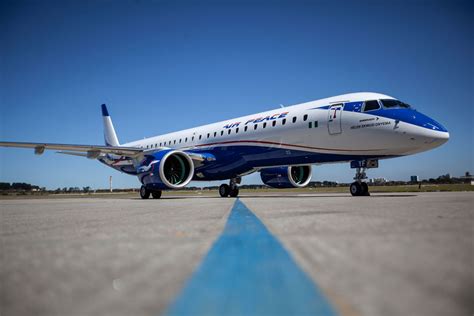
Embraer E195-E2 Range Makes 2,000-Mile Routes Possible
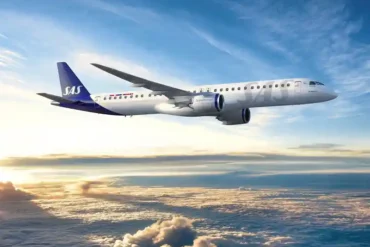
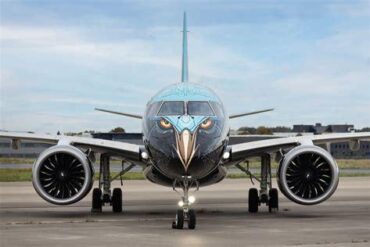
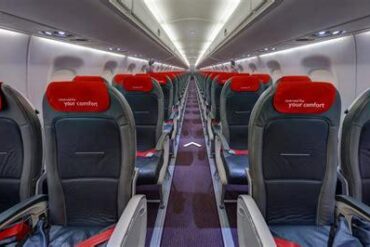
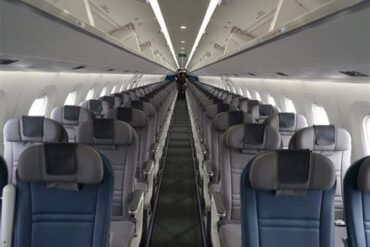
The E2 family includes the E175-E2, E190-E2, and E195-E2, although the E195-E2 has emerged as the most significant aircraft for airlines seeking to push the concept toward longer missions. In a typical single-class configuration, the aircraft can accommodate around 132 passengers, while a two-class layout can seat approximately 120. That places it neatly between an E175 and the roughly 160-seat capacity commonly associated with a standard A320 or 737.
Its published maximum range of up to 3,000 nautical miles, or about 5,550 kilometers, is the key to understanding these unusual routes. Real-world operations are affected by payload, weather, fuel reserves, airport conditions, and other operational constraints, so airlines do not routinely treat the published maximum as an everyday target. Nevertheless, a range figure of this magnitude gives the E195-E2 access to markets that would previously have required a larger narrowbody or a major hub connection.
The aircraft also cruises at up to Mach 0.82 and can operate at altitudes as high as 41,000 feet. The E2’s ability to combine jet speed with relatively modest capacity allows airlines to turn secondary-city markets into nonstop international services.
Embraer’s efficiency claims are equally important. The manufacturer says the E195-E2 can burn up to 29% less fuel than previous-generation E-Jets, helping reduce both operating costs and emissions. For airlines, that efficiency can make thinner routes economically viable because the aircraft does not require the same passenger volume as a 737 or A320 to provide a useful level of revenue.
Airlink Shows How Far the E195-E2 Can Stretch
Africa provides some of the clearest examples of the E2 being used at the edge of its intended role. Air Peace previously operated an E195-E2 between Lagos and Johannesburg, covering about 2,803 nautical miles. The route was notable not only for its distance but also because Johannesburg sits nearly 6,000 feet above sea level and can experience high temperatures, both of which can affect aircraft performance.
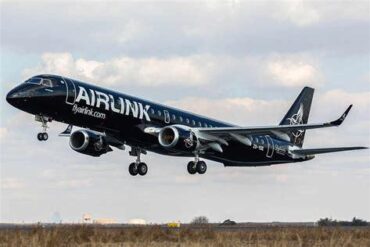
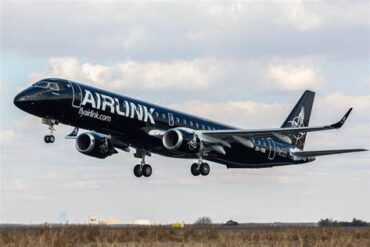
Airlink has also demonstrated the aircraft’s potential on leisure-focused international services. Its planned Cape Town-Mauritius operation covers about 2,226 nautical miles, with the return flight taking more than six hours. The route places the E195-E2 against Air Mauritius’ larger Airbus A330, but the smaller aircraft gives Airlink a different economic proposition.
The strategy is particularly relevant because Airlink does not need to deploy the E2 every day. The carrier can operate the E195-E2 twice weekly while using an A320 on other days, matching aircraft capacity more closely with demand. On the E2 flights, fewer seats can also make it easier to achieve strong load factors during periods when the destination is less busy.
That flexibility is one of the most important reasons why long E2 routes are appearing. The aircraft does not need to replace a widebody or narrowbody across an entire network. It simply needs to make a particular flight economically and operationally practical.
TUI Uses the E2 To Reach Airports Larger Jets Struggle With
The E2’s value is not limited to its range. TUI fly Belgium has demonstrated another advantage by operating E2 aircraft from Antwerp, an airport constrained by a runway of only about 4,950 feet. Such infrastructure can make operations with many larger narrowbody aircraft difficult or impractical, particularly when payload and performance requirements are considered.
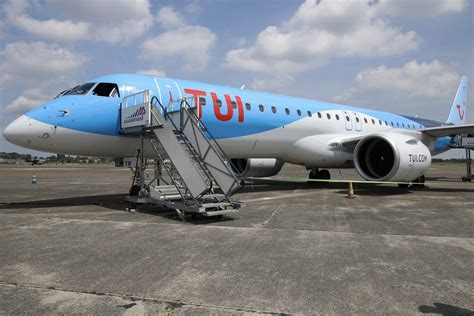
TUI’s 136-seat E2 configuration shows why the aircraft can be valuable in markets where airport infrastructure and passenger demand impose simultaneous limitations. A larger aircraft might offer more seats, but those seats are of little value if the airport cannot support the operation efficiently.
This is a recurring theme across the E2 network. Airlines are not necessarily choosing the aircraft because it is smaller. They are choosing it because its size is paired with long range and strong performance, creating combinations that are difficult to achieve with either traditional regional aircraft or much larger narrowbodies.
Porter Airlines Turns the E195-E2 Into a Leisure Network Workhorse
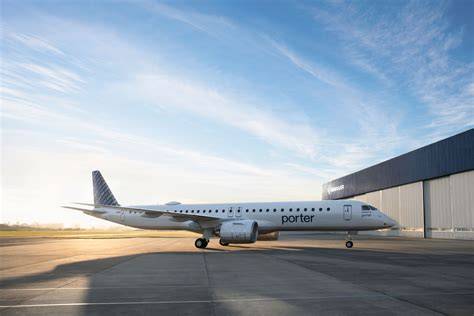
Porter Airlines provides perhaps the clearest North American demonstration of what the E195-E2 can do. The Canadian carrier has built a large E2 fleet and used the aircraft to expand far beyond its traditional domestic footprint. Its international network now reaches Mexico, the Caribbean, and Central America, with many destinations aimed squarely at leisure travelers.
Porter’s longest E195-E2 services include Ottawa to Puerto Vallarta and Cabo San Lucas, both covering about 2,126 nautical miles. These are not short regional flights by any conventional definition. They are substantial international sectors linking Canadian cities directly with popular vacation destinations.
Wideroe and Hunnu Air Push the E2 Into Unexpected Vacation Markets
The E2’s long-range potential is also visible in Europe and Asia. Wideroe, traditionally associated with short regional services in Norway, previously operated the E190-E2 between Bergen and Lanzarote in the Canary Islands. The route covered approximately 2,336 nautical miles and produced a flight time of around six hours.
That mission is remarkable because it connects two markets that do not naturally fit the traditional regional-jet template. Instead of using the E2 simply to feed a major hub, Wideroe used it to link a Norwegian city directly with a distant vacation destination. The aircraft allowed the airline to test a market without committing to a larger narrowbody.
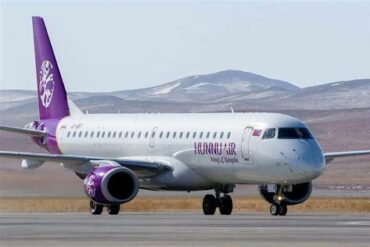
Hunnu Air offers an equally striking example from Mongolia. Its seasonal Ulaanbaatar-Phu Quoc service covers approximately 2,245 nautical miles, or around 4,157 kilometers. The flight can take roughly five and a half hours, placing it firmly into the category of long-distance international operations despite the aircraft’s regional-jet heritage.
These routes reveal an important shift in airline planning. A carrier no longer needs to choose only between a small regional aircraft with limited range and a large narrowbody with significantly greater capacity. The E2 creates an intermediate option that can connect secondary cities directly with destinations that once required a hub transfer.
The E2 Can Serve Markets Too Small for a 737 or A320
The strongest argument for the E195-E2 is therefore not that it can fly 2,000 miles. Larger aircraft can obviously travel much farther. The more significant point is that the E2 can fly that far with fewer seats, making long-distance service possible where a larger aircraft might face a difficult demand equation.
This matters particularly for leisure routes. Vacation traffic can be highly seasonal, and airlines need aircraft that can respond to changing demand without abandoning markets entirely. A 120- to 136-seat E2 gives carriers a way to maintain connectivity while reducing the number of seats they need to sell on every departure.
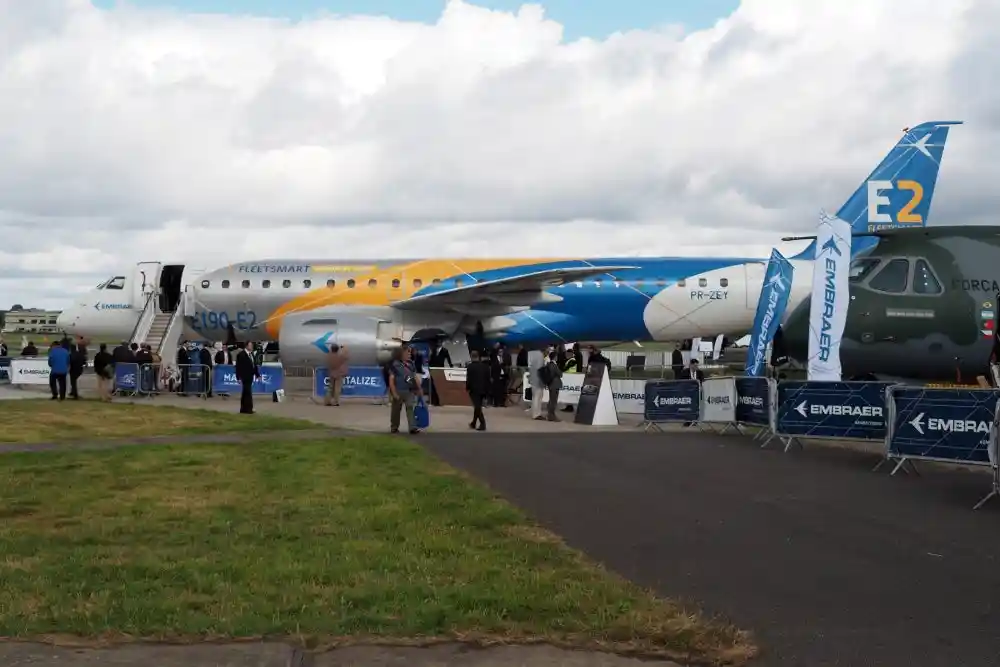
For airports, the impact can be equally significant. A city that cannot consistently attract a 180-seat narrowbody may still support a 132-seat aircraft. An airport with infrastructure constraints may be able to handle the E2 more easily. These advantages can combine to create routes that would otherwise remain outside an airline’s network.
Airlink Delivery Flight Shows the E195-E2 Has Even More Range
The E195-E2’s capabilities were highlighted dramatically in September 2025, when Airlink’s first aircraft flew from São José dos Campos in Brazil to Cape Town in South Africa. The delivery flight covered approximately 3,400 nautical miles, or about 6,297 kilometers, and took just under eight hours.
This was not a scheduled passenger service, so it should not be treated as evidence that airlines can routinely operate passenger routes at that distance. Delivery flights can use different payload and operational conditions. Nevertheless, the journey demonstrated that the aircraft’s physical range capability can extend beyond the published passenger mission under suitable circumstances.
The flight was roughly 400 nautical miles beyond the E195-E2’s published maximum passenger range. That distinction is important because the aircraft’s commercial range is governed by far more than the amount of fuel it can carry. Payload, reserves, weather, airport requirements, and operational planning all determine what a profitable scheduled service can actually achieve.
Why the Embraer E2 Could Keep Redefining Regional Flying
The E2 is not a replacement for the Boeing 737, Airbus A320, or larger aircraft. Its value comes from occupying the space between aircraft categories and making that space commercially useful. The E195-E2 combines a meaningful passenger capacity with long range, efficient engines, high-speed cruise, and access to airports where larger aircraft can face limitations.
That combination explains why its most surprising routes are often leisure services. Vacation destinations generate strong demand, but demand does not always justify a large aircraft every day of the week. The E2 lets airlines build international networks around those fluctuations rather than forcing every market into the same aircraft-size formula.
Its success also challenges the assumption that regional aircraft must remain close to the hub-and-spoke model. Porter can connect Canadian cities directly with Mexico and the Caribbean. Hunnu Air can connect Mongolia with Vietnam. Airlink can reach Mauritius from Cape Town. Wideroe has shown that a Scandinavian regional carrier can reach the Canary Islands.
The aircraft’s growing role suggests that 2,000-mile routes are no longer inherently too ambitious for an E2. What matters is whether the combination of demand, airport infrastructure, payload, range, and operating economics works for a particular market.
That is ultimately why the E195-E2 is appearing on routes that once seemed unlikely for a regional jet. It does not make long-haul narrowbody aircraft obsolete, nor does it turn every secondary airport into an international hub. Instead, it gives airlines another carefully sized tool, one capable of turning thin international markets and seasonal leisure demand into viable nonstop connections. As carriers continue searching for ways to serve smaller markets efficiently, the E2’s unusual 2,000-mile missions may become less surprising—and increasingly normal.