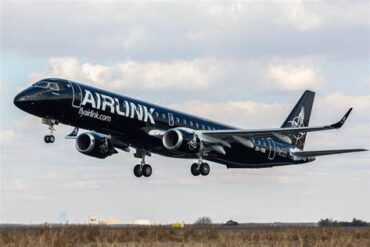
Scandinavian Airlines (SAS) is preparing for a transformative leap in its short-haul operations with an order of up to 55 Embraer E195-E2 aircraft, comprising 45 firm orders and 10 additional options. The first aircraft are expected to join the fleet by late 2027, marking the culmination of SAS’s mid-sized fleet renewal program initiated in 2018.
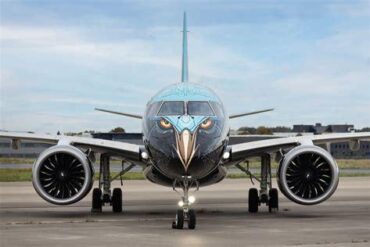
The Embraer E195-E2 represents the most advanced evolution of Embraer’s regional jet family, designed to offer enhanced economics, improved environmental performance, and extended range. SAS’s acquisition of the E2 aligns with broader industry trends, notably seen with LOT Polish Airlines transitioning to the Airbus A220, signaling a regional fleet shakeup across Europe.
SAS’s Fleet Evolution: Replacing the E1 and Beyond
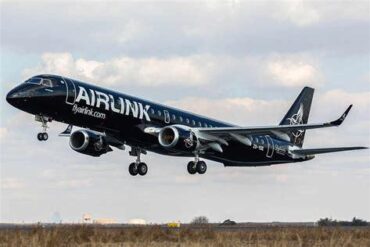
The logical first step for SAS is to deploy the E195-E2 as a replacement for its existing 13 Embraer E195-E1s, which are currently operated by SAS Link. The older E1 jets offer seating for 122 passengers, while the E195-E2 introduces approximately 136 seats, representing a nearly 11.5% increase in capacity.
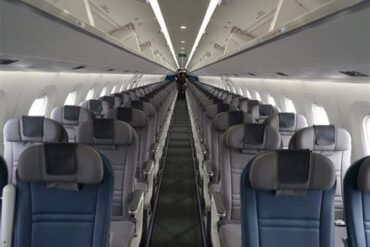
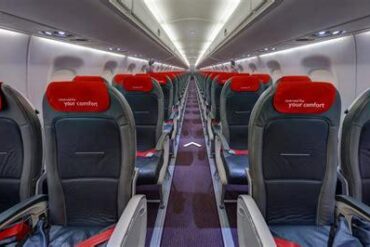
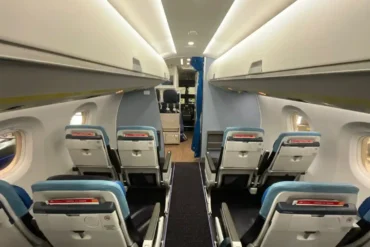
The enhanced seating capacity isn’t merely about squeezing in more passengers. The E2 series integrates new-generation engines, aerodynamic improvements, and advanced cabin features, resulting in significant fuel efficiency and lower operating costs. These characteristics will directly support SAS’s sustainability targets and profitability ambitions.
What remains uncertain is the fate of SAS’s smaller regional aircraft, including 14 Bombardier CRJ900s operated by CityJet and 14 ATR 72 turboprops operated by Braathens. These aircraft currently serve vital roles on thinner Scandinavian and Nordic routes where demand does not justify larger equipment. Whether the E195-E2 encroaches into these markets remains to be seen, but it opens intriguing possibilities.
E195-E2 Specifications: Range, Capacity, and Versatility
The Embraer E195-E2 is the largest and most capable aircraft in the Brazilian manufacturer’s E-Jet family. SAS’s configuration is expected to feature approximately 136 seats, with an economy-heavy layout tailored for short to medium-haul European services. Exact cabin segmentation between economy and premium classes has yet to be disclosed, but given SAS’s network strategy, efficiency will take precedence.
The aircraft’s theoretical maximum range is an impressive 2,600 nautical miles (4,815 km), though real-world operations typically see ranges closer to 2,000 nautical miles (2,301 km), depending on payload and operational factors.
For context, current operators of the E195-E2, such as Porter Airlines, utilize the jet on routes averaging 664 nautical miles (1,230 km), though Porter has stretched this with long-haul legs connecting Canada to the United States, Mexico, and Central America. SAS is unlikely to pursue ultra-long routes with the E2 but can leverage its range for significant regional expansion.
Copenhagen: The Hub for SAS’s E2 Ambitions
Copenhagen Airport (CPH) is rapidly emerging as SAS’s primary growth hub, strategically positioned to connect Scandinavia with Europe, the Middle East, and beyond. The E195-E2’s arrival will fuel SAS’s ambitions to strengthen Copenhagen’s role as a northern European gateway.
The size and efficiency of the E2 make it ideal for:
- Launching new routes to underserved or unserved European cities
- Expanding seasonal markets into year-round services
- Increasing frequencies on high-demand, mid-distance connections
Markets under consideration include key cities in the Levant, North Africa, and the Caucasus, many of which exhibit strong indirect traffic flows. Destinations such as Amman, Cairo, Casablanca, Sharm El Sheikh, Tbilisi, and Tunis stand out as likely candidates. These cities collectively generate up to 25,000 annual round-trip passengers from Copenhagen alone, suggesting latent demand ripe for direct service.
Additionally, the E2 will support SAS’s secondary hubs at Oslo Gardermoen and Stockholm Arlanda, reinforcing SAS’s Scandinavian network and improving connectivity across the broader region.
Scandinavian Expansion: Regional and Nordic Connectivity
SAS’s Scandinavian and Nordic network has undergone steady expansion from Copenhagen, complementing its broader European strategy. In recent years, SAS has launched services to:
- Bodø (May 2025)
- Harstad/Narvik (May 2025)
- Kiruna (December 2024)
- Torp/Sandefjord (April 2024)
- Rovaniemi, Finland (December 2024)
- Turku, Finland (April 2025)
While Finland is technically not part of Scandinavia, it represents a significant Nordic market for SAS, with growing tourism and business traffic to/from Copenhagen.
Other cities in Sweden and Finland with healthy indirect traffic include Luleå, Oulu, Umeå, and Vaasa. The E195-E2 could enable nonstop connectivity to these destinations, reducing travel times and enhancing regional cohesion.
Balancing Fleet Efficiency with Network Growth
SAS’s decision to invest heavily in the E195-E2 reflects a broader strategic pivot toward:
- Fleet modernization: Phasing out older, less efficient aircraft like the E195-E1s
- Route flexibility: Deploying right-sized aircraft for evolving market demands
- Sustainability: Lower emissions and improved fuel efficiency in line with environmental commitments
However, SAS faces delicate balancing acts. The smaller CRJ900s and ATR 72s still play essential roles on routes with lower demand or infrastructure limitations. Replacing these with the larger E195-E2 may not be immediately viable. Instead, the E2 offers a complementary tool, filling the gap between regional aircraft and larger Airbus A320neo-family jets.
Moreover, with 136 seats, the E195-E2 provides cost-effective unit economics for thin-to-medium density routes, unlocking new market opportunities while enhancing profitability on existing services.
Conclusion: E195-E2 as a Catalyst for SAS’s Next Chapter
The acquisition of up to 55 Embraer E195-E2s represents a pivotal moment for SAS as it seeks to reshape its European and regional network with greater efficiency, flexibility, and environmental responsibility.
By leveraging Copenhagen’s status as a connectivity hub, targeting high-potential markets in Europe, the Middle East, and North Africa, and improving regional Scandinavian access, SAS positions itself for sustained competitiveness in an evolving aviation landscape.
While uncertainties remain regarding fleet harmonization and the eventual roles of its smaller aircraft types, one fact is clear: the E195-E2 provides SAS with an agile, efficient platform to drive growth and meet the changing needs of its passengers across the Nordic region and beyond.
As the first deliveries approach in late 2027, all eyes will be on SAS to see how it strategically deploys these next-generation aircraft to maximize network potential, financial performance, and passenger experience.