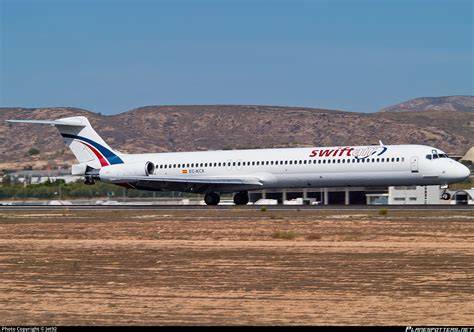
Twelve years after Air Algérie Flight AH5017 crashed in Mali, killing all 116 people aboard, a French court has found Spanish airline Swiftair guilty of corporate manslaughter. The Paris Criminal Court imposed the maximum available fine of €225,000 ($256,000) after a three-week trial that examined the airline’s pilot training, crew checks, and operational procedures surrounding one of the deadliest accidents involving a McDonnell Douglas MD-83.
Swiftair had operated the aircraft, registered EC-LTV, for Air Algérie under a wet-lease agreement. The flight departed Ouagadougou in Burkina Faso on July 24, 2014, bound for Algiers, but disappeared less than an hour later. The aircraft ultimately crashed in northern Mali, killing 110 passengers and six crew members. The long-running legal case has now produced a criminal conviction, although Swiftair still has a 10-day period in which to appeal the verdict.
The ruling brings a major development to a case that has remained in the courts for more than a decade. French prosecutors argued that shortcomings in Swiftair’s training and crew oversight contributed to the disaster, while the airline rejected criminal responsibility and maintained that its pilots had received appropriate training under the applicable regulations. The court did not accept every argument made by prosecutors, but it found specific failures involving the captain’s proficiency check and the crew’s refresher-flight requirements.
Air Algérie Flight AH5017 Crashed After Losing Airspeed at FL310
Flight AH5017 left Ouagadougou’s Thomas Sankara International Airport at approximately 01:15 local time, heading north toward Algiers’ Houari Boumediene Airport. The MD-83 climbed normally while the crew made several heading changes to avoid storm activity. About 20 minutes after departure, the aircraft reached 31,000 feet, or FL310, and leveled off with the autopilot controlling altitude and the autothrottle controlling speed.
The accident sequence developed shortly afterward. Investigators determined that ice crystals obstructed pressure sensors associated with the aircraft’s engines, causing erroneous engine pressure ratio indications. The engine anti-icing system had not been activated. Because the pressure information reaching the aircraft’s systems became unreliable, the autothrottle reduced engine thrust when more thrust was actually required.
The autopilot then attempted to maintain altitude as the aircraft’s speed continued to fall. Instead of descending to preserve airspeed, the aircraft gradually increased its nose-up attitude. This created a dangerous chain in which the MD-83 was maintaining altitude while progressively losing the speed required to remain airborne.
Around 01:45, the aircraft entered the stall sequence. The stick shaker and stall warning activated, indicating that the aircraft had reached an extremely low-speed condition. Investigators found no apparent crew control input between the activation of the stall warning and the autopilot disconnecting approximately 22 seconds later. The MD-83 then entered extreme pitch and bank attitudes before impacting terrain at high speed.
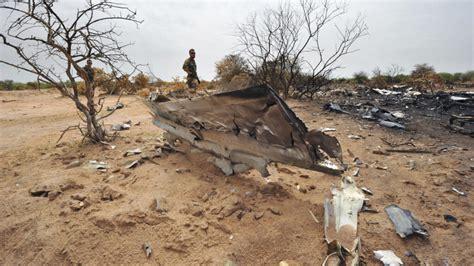
The wreckage was located approximately 50 miles (80 kilometers) southeast of Gossi, Mali. The aircraft had been destroyed and there were no survivors.
French Court Found Failures in Swiftair Crew Checks
The criminal case focused not simply on the technical chain that produced the stall, but on whether Swiftair had fulfilled its responsibilities as the operator responsible for the crew. Prosecutors alleged that the company had shortcomings in pilot training, particularly concerning the recognition and management of icing conditions and abnormal engine indications.
The court reached a more specific conclusion. It found that the captain had not completed an adequate proficiency check, while the flight crew had also failed to complete the required number of refresher flights after a period of inactivity. Those findings formed an important part of the court’s decision to hold Swiftair criminally responsible.
Swiftair had argued that its pilots were properly trained and that the company had complied with the relevant aviation regulations. Its defense also pointed toward weaknesses in regulations and operating manuals, suggesting that responsibility for the accident sequence could not simply be attributed to the airline.
The court ultimately rejected the company’s position on criminal liability. The resulting €225,000 fine represents the maximum penalty imposed in the case.
A Previous Swiftair MD-83 Incident Provided a Critical Warning
One of the most important details to emerge from the investigation was that Swiftair had experienced a remarkably similar event only weeks before the fatal crash.
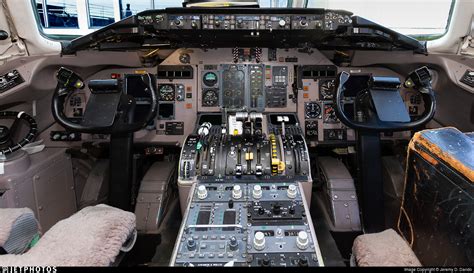
On June 8, 2014, another Swiftair MD-83, registered EC-JUG, was cruising at approximately FL330 with its autothrottle engaged when its airspeed began decreasing. In that case, the crew recognized the developing problem, descended, and activated the engine anti-icing systems before the aircraft reached a stall.
That earlier flight continued safely, but investigators subsequently examined the event alongside the AH5017 crash. The findings were communicated to the European Union Aviation Safety Agency (EASA) and, through EASA, to the Federal Aviation Administration (FAA). The information contributed to corrective measures intended to improve the ability of flight crews to recognize and respond to the unusual combination of icing, engine pressure indications, and decreasing airspeed.
The existence of that earlier incident adds an important dimension to the legal case. It demonstrated that the operator had already encountered a potentially similar phenomenon and that a crew response could prevent the aircraft from entering an unrecoverable stall. However, the criminal court’s judgment was based on its assessment of Swiftair’s legal responsibilities and specific crew-check deficiencies rather than simply treating the earlier incident as proof of criminal liability.
Families Waited More Than 12 Years for the Verdict
For the relatives of the 116 victims, the verdict closes an exceptionally long chapter of legal proceedings while leaving open the possibility of an appeal. The final safety investigation was published in April 2016, less than two years after the crash, but the judicial process continued for many more years.
Swiftair had previously sought to stop the French proceedings, pointing to the fact that a Spanish court had dropped its own case. The company continued to deny criminal responsibility throughout the French process.
Victims’ families welcomed the Paris ruling. Lawyer Sebastien Busy, representing a group of relatives, said the decision brought relief to families who had spent more than 12 years seeking justice and said they expected Swiftair to accept its responsibilities.
The ruling does not change the established technical cause of the crash. Ice crystals, incorrect engine pressure indications, insufficient thrust, declining airspeed, and the eventual stall remain central to the accident sequence. What the French proceedings have added is a judicial finding concerning the airline’s responsibilities for crew qualification and recurrent training.
Swiftair Can Still Appeal the Air Algérie Crash Conviction
Swiftair now has 10 days to appeal the Paris Criminal Court’s decision. The airline said it would study the judgment with its legal advisers before deciding what action to take.
Swiftair remains a significant charter, cargo, and wet-lease operator and has provided aircraft and crews for organizations including the United Nations. The company has also faced another fatal accident in recent years. In 2024, a Boeing 737-400 converted freighter operated for a DHL subsidiary crashed while approaching Vilnius International Airport in Lithuania. The investigation into that accident also examined pilot actions.
The AH5017 case, however, remains distinctive because of the combination of a complex icing-related flight-control failure, a previous similar Swiftair incident, and questions surrounding crew proficiency and recurrent training. More than a decade after the MD-83 disappeared from radar over West Africa, the French court has now established corporate criminal liability against Swiftair. The appeal process will determine whether that judgment becomes the final legal outcome of one of the most closely examined aviation accidents of 2014.