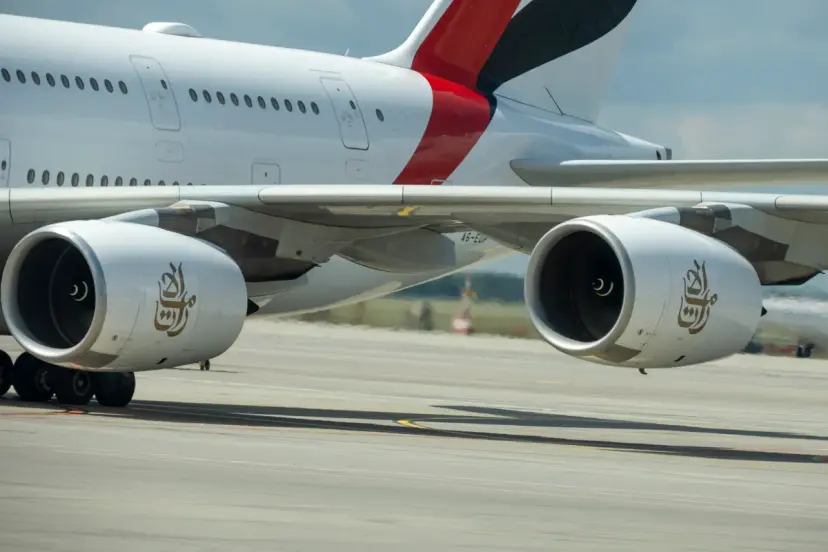
The Federal Aviation Administration (FAA) took an unusually direct approach in September 2026 when it responded to a newly identified safety risk affecting Rolls-Royce Trent 700 engines. Rather than following the normal notice-and-comment process before imposing a requirement, the agency issued an emergency airworthiness directive after investigators identified an oil-pump failure mode that could, under an extreme chain of events, contribute to a dual inflight engine shutdown on a twin-engine aircraft.
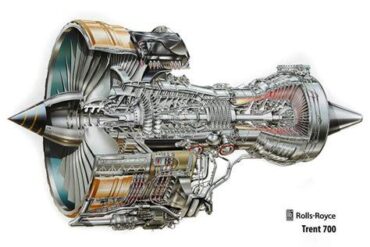
The action is significant because the Trent 700 is one of the major powerplants associated with the Airbus A330, a widebody aircraft used extensively on long-haul routes. However, the FAA’s action is more precise than the headline might suggest. It does not order every Trent 700-powered A330 around the world to land for a physical inspection. Instead, it addresses specific Trent 700 engine variants and their oil-pump configurations within the FAA’s jurisdiction.
The emergency directive was issued on September 5, 2026, while the FAA subsequently adopted the requirements as a final rule effective September 21. The immediate measure requires operators to ensure that a twin-engine aircraft does not have more than one engine fitted with the affected oil-pump configuration. In practical terms, the agency is attempting to prevent a common component vulnerability from existing simultaneously on both engines.
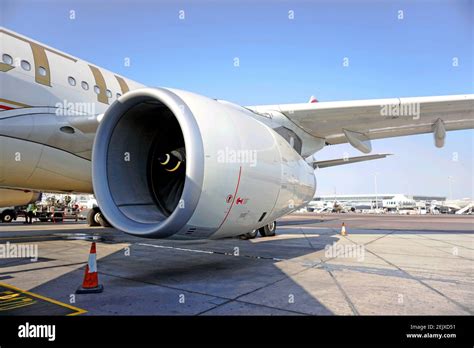
Why The FAA Bypassed Normal Notice Requirements
Airworthiness directives normally involve a formal regulatory process that gives affected operators, manufacturers, and other parties an opportunity to review proposed requirements and submit comments. That process is important because maintenance directives can have substantial operational and financial consequences, particularly when they affect engines installed across large commercial fleets.
The FAA’s September emergency action followed a different path. The agency determined that waiting for the ordinary process would leave an identified unsafe condition insufficiently addressed, allowing it to invoke the statutory “good cause” exception for immediate regulatory action. The emergency directive was sent directly to known US owners and operators of affected engines on September 5, providing those parties with actual notice.
The FAA’s later final rule, published September 18, retained the same core requirements. For operators that had already received the emergency directive directly, the requirements became effective upon receipt. The published final rule became effective September 21 for parties that had not received that earlier direct notification.
This distinction matters because an emergency airworthiness directive is not simply a faster version of a routine inspection notice. It reflects the regulator’s determination that the identified safety condition requires action before the usual consultation process can be completed. In this case, the FAA’s concern centered on the possible consequences of an oil-pump failure rather than evidence that every affected Trent 700 engine was immediately unsafe to operate.
The Trent 700 Oil-Pump Failure Behind The Emergency AD
The technical issue involves the engine oil system, identified by the FAA under Joint Aircraft System Component Code 7261, covering the turbine engine oil system. Reports involving low oil pressure on low-life oil pumps prompted further investigation into the source of the problem.
Investigators ultimately identified a potential failure mode involving the oil-pump input coupling shear neck, while the FAA’s final rule also describes premature oil-pump failure associated with cracking of the internal rotor. The sequence is important because the regulator’s concern does not begin with an engine simply “breaking.” Instead, a component failure can interfere with the oil pump’s ability to maintain the required oil pressure, potentially leading to an engine shutdown.
An individual engine experiencing such a problem is serious, but the larger regulatory concern arises when the same vulnerable configuration is installed on both engines of a twin-engine aircraft. If both engines were affected by the same failure mechanism during flight, the result could be a dual inflight shutdown and a corresponding reduction in aircraft control capability.
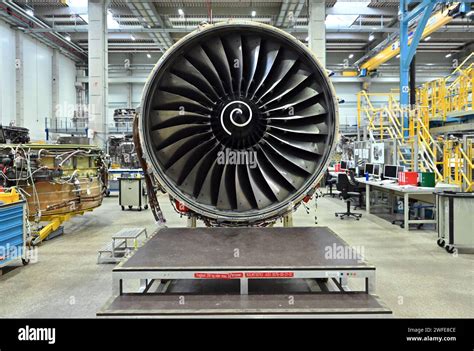
The FAA directive therefore does not assume that every affected oil pump will fail. Nor does it state that every Trent 700 engine containing the configuration has already suffered an operational malfunction. Instead, the regulation addresses the risk created when two engines carrying the identified vulnerability are installed together on the same aircraft.
That distinction explains why the immediate remedy is engine de-pairing rather than a universal grounding.
What Airbus A330 Operators Actually Have To Do
The central requirement is straightforward in principle. A twin-engine aircraft must not have more than one affected oil pump installed across its two engines. Operators therefore need to identify which engines contain the relevant oil-pump configuration and then manage engine installations accordingly.
That can involve reviewing engine records, component histories, installation data, and maintenance documentation. An airline may have an affected engine in its fleet without necessarily needing to remove that engine from service. Instead, the operator can potentially place it on an aircraft whose other engine does not contain the affected configuration.
The FAA estimated that the directive affects 132 engines installed on aircraft of US registry. That figure is important because it demonstrates the limited scope of the US action compared with the much broader idea of grounding every Trent 700-powered A330.
The FAA also incorporated EASA Emergency AD 2026-0172-E by reference, making the European regulator’s procedures part of the US compliance framework, subject to the FAA’s specified exceptions. EASA had issued its emergency directive on September 4, one day before the FAA’s action.
The European directive covers Trent 700 variants 768-60, 772-60, 772B-60, and 772C-60. The FAA’s US directive covers the first three. The Trent 772C-60 is not FAA-certified and does not appear on the relevant US type certificate data sheet, which explains the difference in applicability.
This Is An Engine Problem, Not A Universal Airbus A330 Grounding
Although the Airbus A330 is closely associated with the Trent 700 family, the September regulatory action is fundamentally an engine-level issue. The FAA names the affected Trent 768-60, 772-60, and 772B-60 engines rather than declaring every A330 variant subject to the same aircraft-level inspection.
That distinction is particularly important for passengers and airline customers. An A330 powered by another engine type does not automatically become subject to this Trent 700 requirement. Likewise, an A330 equipped with a Trent 700 does not automatically have to be grounded simply because it contains an affected engine.
The configuration-based approach allows regulators and airlines to identify the actual risk more precisely. Engine histories can differ even within the same aircraft fleet, while individual components can have different production, installation, and maintenance histories.
For large airlines, however, precision does not necessarily mean simplicity. An operator may have to move engines between aircraft, arrange maintenance visits, check spare-engine availability, and adjust aircraft schedules to maintain compliance. Even when no major physical inspection is required immediately, the administrative and logistical work can be substantial.
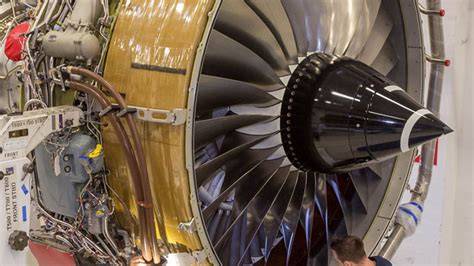
Why A Twin-Engine Aircraft Changes The Risk
The FAA’s decision is closely tied to the fundamental safety architecture of modern twin-engine commercial aircraft. A twin is certified to continue flight after the loss of one engine. That makes a failure capable of affecting both engines simultaneously considerably more consequential than an isolated single-engine problem.
The Trent 700 issue illustrates the importance of common-mode failures. If two independent engines contain the same vulnerable component configuration, an event that initially appears to concern one engine can potentially become an aircraft-level emergency.
This is particularly relevant to A330 operations because many Trent 700-powered aircraft operate long-distance services, including flights over large bodies of water. Long-haul operations place additional emphasis on propulsion reliability, engine monitoring, maintenance planning, and compliance with extended-range operational requirements.
The September directive does not prohibit every affected aircraft from flying simply because an affected oil pump exists. Instead, it seeks to break the common vulnerability by preventing both engines on the same aircraft from carrying the identified configuration.
That approach allows an aircraft to continue operating with one affected component while ensuring that the same potential failure mechanism is not duplicated across both engines.
Why The September Action May Not Be The Final Solution
Emergency airworthiness directives often represent an interim safety measure rather than the conclusion of a technical investigation. Regulators can require an immediate operational or configuration change while manufacturers and investigators continue determining the most effective permanent corrective action.
That appears to be the case with the Trent 700 oil-pump issue. The FAA’s action reduces the immediate risk by separating affected configurations, but it does not necessarily eliminate the underlying component vulnerability. A future corrective program could involve replacement parts, a redesigned component, revised inspection procedures, a modified replacement interval, or improved manufacturing controls.
The FAA explicitly leaves room for additional rulemaking if subsequent investigation identifies a more definitive corrective measure. Operators therefore need to monitor further regulatory and technical instructions even after satisfying the September requirements.
For Rolls-Royce and affected airlines, the next phase is likely to focus on establishing why the oil-pump components developed the identified failure mode and determining how reliably the risk can be removed from the fleet.
Detailed Engine Records Become Critical For Fleet Compliance
One of the most important lessons from the September Trent 700 directive is that engine configuration tracking can be just as important as aircraft-level maintenance planning. A commercial aircraft may remain mechanically serviceable while its legal ability to operate depends on precisely which components are installed in its engines.
This becomes increasingly important as mature widebody fleets accumulate thousands of flight cycles and engine components move through different maintenance and overhaul environments. Operators must know not only which engines are installed, but also which specific components and configurations those engines contain.
For airlines with multiple A330s, compliance can therefore become a fleet-management exercise. One aircraft might have two unaffected configurations, another could have one affected and one unaffected engine, while a third might require an engine swap before returning to service.
The FAA’s approach demonstrates how modern aviation regulators can target a specific technical vulnerability without automatically grounding an entire aircraft family. That precision can reduce unnecessary disruption while still addressing a potentially serious safety pathway.
FAA And EASA Coordinate On A Potential Dual-Engine Risk
The timing of the two regulatory actions also highlights the close relationship between the FAA and EASA when safety issues involve internationally operated aircraft and engines designed outside the United States.
EASA acted first on September 4 after occurrences involving low oil pressure led investigators toward the oil-pump input coupling failure mode. The FAA followed on September 5 with its own emergency directive for the affected engine variants within its certification jurisdiction.
Such coordination allows regulators to respond to technical evidence without waiting for every national authority to conduct an entirely separate investigation. At the same time, differences in certification status can produce differences in regulatory scope, as demonstrated by the FAA’s exclusion of the Trent 772C-60.
The result is not a worldwide grounding order for Trent 700-powered A330s. It is a coordinated but jurisdiction-specific response aimed at controlling a particular engine configuration.
The Immediate Goal Is To Prevent A Dual Shutdown
The September 2026 Trent 700 directive ultimately illustrates how aviation regulators manage a potentially severe failure mode before a permanent engineering solution is available. The FAA did not determine that every affected engine was about to fail. Instead, it identified a pathway through which one component problem could potentially become a dual-engine event.
By requiring affected engines to be separated across twin-engine aircraft, the agency has targeted the most serious consequence of the identified oil-pump vulnerability while avoiding a blanket grounding of the A330 fleet.
For airlines, the immediate challenge is accurate configuration identification and careful engine allocation. For Rolls-Royce and regulators, the longer-term objective will be understanding the component failure mechanism and establishing a permanent corrective measure.
The September emergency action is therefore best understood as the first stage of a continuing Trent 700 airworthiness response. The affected A330s are not all being treated as inherently unsafe aircraft, and the directive does not amount to a universal physical inspection order. Instead, the FAA has used emergency regulatory authority to prevent a vulnerable oil-pump configuration from being installed simultaneously on both engines of a twin.
That targeted approach reflects a central principle of modern commercial aviation safety: when the risk is specific, the corrective action can also be specific. In this case, separating the affected Trent 700 configurations gives operators an immediate way to reduce the possibility of a dual inflight engine shutdown while the industry works toward a more permanent solution.