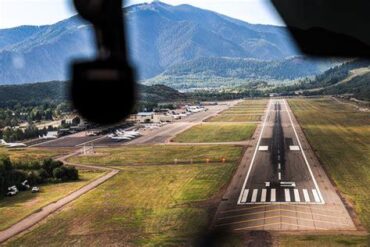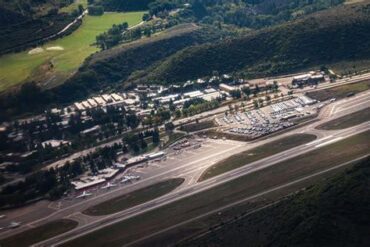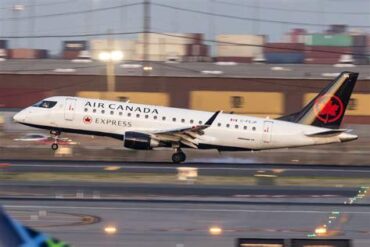
Aspen has always been a difficult destination for regional jets, but the problem was never simply the size of the aircraft. At Aspen/Pitkin County Airport (ASE), the combination of a 7,820-foot elevation, an 8,006-foot runway, warm-weather density altitude, and steep terrain turns a seemingly small performance shortfall into a serious operational constraint. For years, that reality helped keep the Embraer E175 away from one of the most lucrative regional markets in the United States.
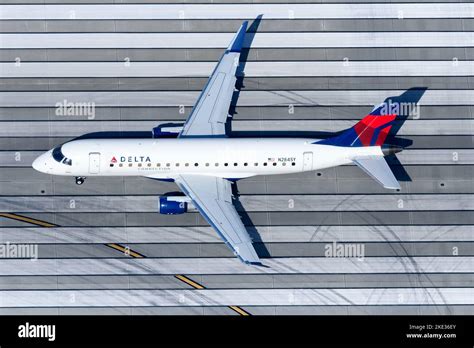
That is now changing. Delta Air Lines and SkyWest Airlines have introduced software-enhanced Embraer E175s capable of operating Aspen missions that were difficult for the standard version of the aircraft. The key modification is surprisingly small in physical terms: engineers did not install a new engine, enlarge the wings, or redesign the airframe. Instead, Embraer, GE Aerospace, and SkyWest worked on the digital controls governing the E175’s GE CF34-8E engines, creating a Full Authority Digital Engine Control, or FADEC, modification that can provide roughly 1% to 3% additional takeoff thrust when maximum thrust is required.
That modest percentage matters because Aspen is an airport where every pound of available takeoff performance can influence whether an aircraft can legally and safely depart with a commercially useful payload. The modified E175 also uses recalibrated takeoff and landing speed schedules and optimized flight-control settings. Together, those changes give the aircraft additional margin for the demanding climb performance required when terrain surrounds the airport.
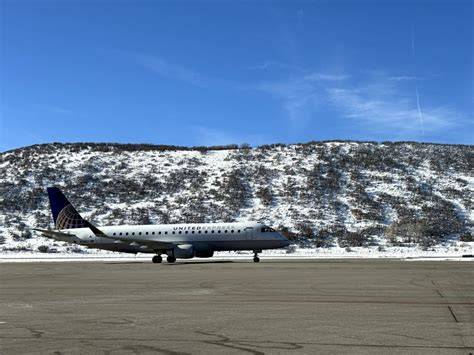
That distinction is especially important during the summer months, when temperature can turn a routine departure into a carefully constrained performance calculation. Dispatchers have to balance passenger demand against runway requirements, obstacle clearance, fuel needs, and the possibility of changing conditions before departure. The software does not remove those calculations; it gives planners another few percentage points of performance with which to work. In a market where premium passengers value a nonstop flight, that additional margin can have an outsized commercial effect during the busiest resort periods.
Why Aspen Is So Difficult for the Embraer E175
The challenge begins with altitude. At 7,820 feet above sea level, Aspen sits far higher than most major airports served by regional jets. As temperatures rise, density altitude can become even greater, reducing the amount of air entering the engines and lowering aerodynamic performance.
Terrain adds another layer of difficulty. Aircraft departing Aspen must satisfy stringent climb-gradient requirements, including performance considerations associated with an engine failure after takeoff. It is not enough for an aircraft to accelerate and leave the runway. It must also demonstrate that it can climb away from the airport and surrounding mountains under prescribed conditions. When performance calculations show insufficient margin, the most straightforward solution is to reduce takeoff weight.
Reducing weight usually means removing passengers, bags, or fuel. During restrictive summer conditions, the standard E175 could require approximately 10 to 15 seats to remain empty on some Aspen departures. That undermined one of the aircraft’s principal advantages: its ability to carry more passengers than the smaller Bombardier CRJ700. The older CRJ700 had lower weight and different aerodynamic characteristics, making it easier to operate under the airport’s limiting conditions.
The physical airport environment also places a hard boundary on aircraft size. Aspen has a 95-foot wingspan limit across its taxiways and ramp areas. That means the E175 fits within the infrastructure envelope, but its performance still has to satisfy the mountain airport’s much more demanding operational requirements. A larger aircraft would not necessarily solve the problem; it could make the infrastructure constraint even more restrictive.
How the E175 Engine Software Creates More Takeoff Performance
The engineering solution is interesting because it demonstrates how much capability can be influenced by software in a modern turbofan. The E175’s GE CF34-8E engines already contain mechanical and thermal margins designed around long-term durability and normal operating requirements. The FADEC determines how the engine responds to throttle commands and manages parameters such as fuel flow and variable-geometry components.
Rather than changing the hardware, engineers revised the control logic. The updated FADEC schedules allow the engine to produce additional thrust during the specific operating condition where Aspen performance is most critical: high-power takeoff. The increase is approximately 1% to 3%, with the higher output associated with the maximum-rating thrust setting.
At a normal airport near sea level, a small thrust increase may have little practical effect on an airline’s daily operation. At Aspen, however, a few percentage points can help determine whether the aircraft meets the required climb gradient while carrying the desired payload. The software effectively turns some of the engine’s existing performance margin into usable takeoff capability without requiring a new powerplant.
Just as importantly, the modification is targeted. The higher-thrust schedule applies during demanding maximum-power conditions rather than transforming the engine’s behavior throughout the entire flight. Normal cruise and descent operations therefore remain broadly consistent with the aircraft’s established operating characteristics.
The engine change is only part of the package. Recalibrated takeoff and landing speed schedules, along with optimized flap and flight-control settings, help the E175 use its available performance more effectively. The objective is not simply to make the engine stronger. It is to make the entire aircraft perform more efficiently within the specific constraints imposed by Aspen’s runway, terrain, and operating rules.
Why Delta Is Replacing the CRJ700 at Aspen
The change arrives at a useful moment in the evolution of Delta’s regional fleet. SkyWest-operated Delta Connection services historically relied on the CRJ700 for Aspen, an aircraft whose lower weight made it well suited to the airport. But the CRJ700 is an older design, and maintaining it for demanding mountain routes becomes increasingly difficult as airlines seek more capacity and better passenger products.
The E175 offers a larger cabin and more room to create a premium-heavy configuration. Under the new Aspen operating conditions, Delta can carry six more passengers per flight than the outgoing aircraft in limiting conditions. More importantly for a destination such as Aspen, the E175 can provide 12 First Class seats, compared with six on the CRJ700. That is a significant difference on a route serving a high-value leisure market where passengers may pay substantially more for nonstop access and premium seating.
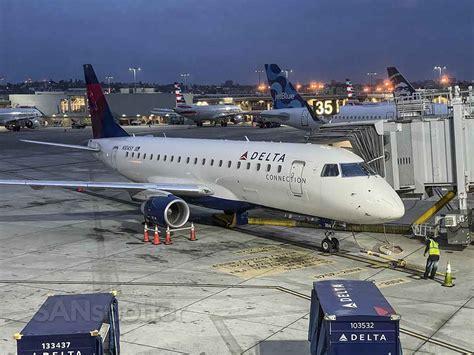
Delta’s Aspen transition became visible in November 2025, when the CRJ700 was retired from its Atlanta and Los Angeles services to the resort destination. SkyWest operates the flights under the Delta Connection brand, while the specialized E175 subfleet can move between mountain routes and conventional regional operations.
Instead, the software-enhanced E175 can be scheduled dynamically. An aircraft can operate a demanding Aspen sector when the required performance configuration is needed and then fly ordinary regional routes where the specialized capability is less important. That makes the engineering investment more useful across the fleet and reduces the risk of creating an overly specialized aircraft type.
The Curved Aspen Approach Is Just as Important
Takeoff performance is only half of the Aspen problem. Getting an aircraft safely into the valley requires pilots and avionics to negotiate terrain, weather, and constrained approach paths. The E175’s Honeywell Primus Epic avionics suite supports Required Navigation Performance Authorization Required, or RNP AR, procedures that are particularly valuable at mountain airports.
One of the notable procedures is the RNAV M Runway 15 approach, which follows a curved path rather than a simple straight-in trajectory. The aircraft’s navigation systems continuously combine sensor information and flight-management calculations to maintain the required lateral and vertical path.
The ability to fly these procedures can also improve operational reliability. Aspen is vulnerable to winter weather, low clouds, and rapidly changing mountain conditions. When an aircraft cannot complete an approach, passengers may be diverted to airports such as Grand Junction or Denver, followed by a lengthy ground transfer. For an airline serving a premium resort destination, those diversions can undermine the value of the nonstop schedule.
The combination of RNP AR capability and enhanced takeoff performance therefore addresses both ends of the operation. The E175 has more useful performance when leaving Aspen and sophisticated navigation capability when approaching it. Neither feature eliminates the weather and terrain challenges, but together they expand the range of conditions in which the aircraft can operate reliably.
SkyWest Is Building a Dedicated Aspen-Capable E175 Fleet
SkyWest is not treating Aspen capability as a one-off modification. The regional carrier has been developing a dedicated group of Aspen-capable E175s using both newly delivered aircraft and retrofitted older examples. The planned fleet is expected to reach 25 specialized E175s by the end of 2026.
It also demonstrates why a software solution can be attractive to regional operators. Instead of designing an entirely new airplane around a narrow mission, manufacturers and airlines can adapt an existing platform that already has a mature maintenance system, established pilot training, and extensive operational experience.
The concept could have implications beyond Aspen. Other airports in the American West impose demanding combinations of altitude, temperature, runway length, and terrain. If a modest FADEC modification can produce commercially meaningful benefits at one of the country’s most challenging airports, similar digital optimization could become useful for other specialized missions.
What the E175 Means for American Airlines and the CRJ700
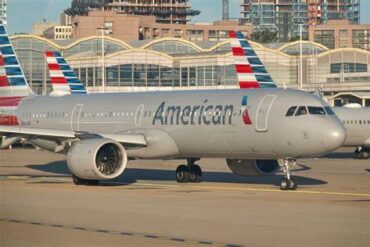
The fleet transition also changes the competitive landscape among the major U.S. network airlines. Delta and United have moved toward software-enhanced E175 operations at Aspen, while American has continued using CRJ700 aircraft on services from Dallas/Fort Worth and Phoenix. American’s regional configuration provides fewer premium seats, with nine compared with the E175’s 12-seat First Class arrangement described for these Aspen operations.
The difference is not merely about cabin size. The older CRJ700 remains exposed to the same basic hot-and-high performance challenge that made Aspen difficult in the first place. When conditions are restrictive, payload reductions can still mean empty seats. An airline may preserve the necessary performance margin, but it gives up revenue at exactly the time when demand for Aspen travel can be strong.
The emergence of the Aspen-capable E175 therefore illustrates how regional aircraft economics, engine software, airport infrastructure, and premium travel demand are becoming increasingly interconnected. The relevant question for airlines is which aircraft can reliably carry those seats through the operational conditions that define a particular market.
A Small Software Change With Wider Implications
The Aspen E175 story is ultimately less about adding a few percentage points of thrust than about changing how airlines think about aircraft capability. Modern aircraft are increasingly software-defined machines, and digital control laws can sometimes unlock operational improvements that would once have required mechanical redesigns.
There are still trade-offs. Higher thrust during demanding takeoff conditions places greater thermal and mechanical demands on the engine, so operators and manufacturers must monitor component wear and maintenance requirements carefully. A performance improvement is useful only if it remains compatible with the engine’s long-term reliability and maintenance program.
For Delta, however, the immediate benefit is clear in operational terms: the E175 provides a larger regional cabin, a stronger premium offering, and the performance capability needed for Aspen’s restrictive environment. For SkyWest, the specialized fleet creates a flexible tool that can serve multiple network partners. And for passengers, the change means that a more capable regional jet can replace an aging aircraft on one of America’s most technically demanding resort routes.
The most striking part is that the breakthrough did not require a new airplane. A carefully engineered FADEC software tweak, combined with revised aircraft performance schedules and advanced navigation, was enough to change the E175’s role at Aspen. In an industry where new aircraft programs can take years and billions of dollars, extracting more capability from an existing platform can be an unusually powerful strategy.
As the CRJ700 era gradually fades, Aspen offers a useful preview of what may come next. Airlines will continue searching for ways to make existing aircraft perform better in specialized environments, while manufacturers refine the software that controls increasingly sophisticated engines and flight systems. At 7,820 feet above sea level, Aspen has once again demonstrated that sometimes the difference between an aircraft being marginal and commercially viable can be measured not in feet of wingspan or pounds of hardware, but in a few lines of carefully engineered software.