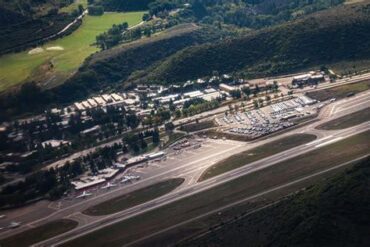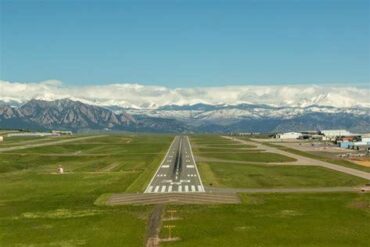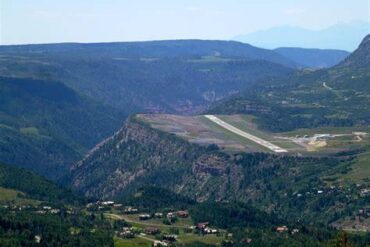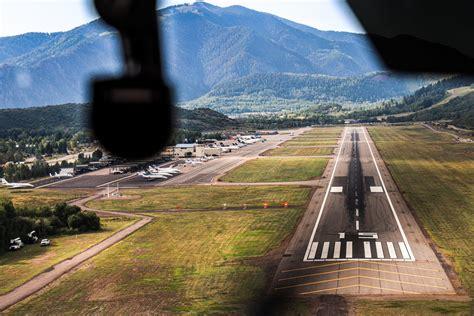
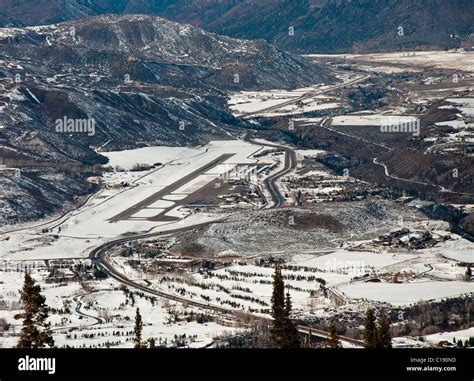
Nestled in the heart of the Colorado Rockies, Aspen/Pitkin County Airport (ASE)—also known as Sardy Field—is a crucial air gateway to one of the most prestigious mountain destinations in the United States. Owned and operated by Pitkin County, this public-use, county-run airport stands at an impressive elevation of 7,820 feet above sea level and spans 573 acres.
Classified by the Federal Aviation Administration (FAA) as a non-hub primary commercial service facility for the 2023–2027 cycle, Aspen Airport handled 48,502 aircraft operations and nearly 698,000 passengers in 2024 alone. Its single asphalt runway, 15/33, measures 8,006 by 100 feet, reflecting continual expansion to accommodate the growing volume and type of air traffic.
Historic Foundations Rooted in Ranching
The airport’s roots date back to 1881, when the area was first settled by the Stapleton family, who cultivated potatoes and raised livestock on a 320-acre ranch. In 1946, visionaries Walter Paepcke and John Spachner transformed a part of this land into a gravel airstrip, primarily used by the Aspen Institute’s aviation department.
In the 1950s, Pitkin County assumed ownership, with County Commissioner Tom Sardy leading the effort to pave the runway. To honor his leadership, the airport was renamed Sardy Field in 1958. The original paved strip measured 5,000 by 50 feet. Over the decades, the runway saw four expansions, reaching its current length in 2011.
Terminal Features and Passenger Amenities
The airport terminal, first constructed in 1976, now boasts a 44,000-square-foot, single-floor layout. It includes:
- Six rental car counters
- Year-round guest services
- Jeddadiahs restaurant and gift shop
- A cellphone waiting lot
Travelers benefit from a convenient 40-space parking loop that allows quick access to and from Colorado State Highway 82 without backtracking. Multiple renovations have ensured the terminal meets modern expectations while retaining its mountain-town charm.

Flight Operations and Commercial Reach
Aspen/Pitkin County Airport enjoys one of the most robust flight schedules of any North American ski-town airport. In the 12-month period ending November 2020, the airport averaged 106 daily operations, divided as follows:
- 52% General aviation
- 29% Air taxi
- 18% Scheduled commercial
- 1% Military
A total of 95 aircraft were based at the airport in 2020, including:
- 66 single-engine
- 10 multi-engine
- 13 jets
- 5 helicopters
- 1 glider
In peak winter season, over 170 scheduled flights operate weekly, excluding additional services during high-demand holidays. The airport receives direct flights not just from Denver, but also from major hubs like Chicago, Los Angeles, and Dallas/Fort Worth.
Runway Redevelopment and Infrastructure Enhancements
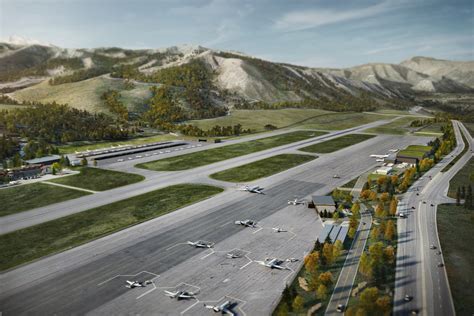
The current Runway 15/33 was last fully resurfaced in 2007 with grooved asphalt. The airport also includes a partial-length parallel taxiway (Taxiway A) located 320 feet east of the runway centerline. This facilitates traffic flow between general aviation facilities on the north end and commercial terminals on the south.
A major runway extension project in 2011 added 1,000 feet, bringing the length to its current 8,006 feet. However, by March 2025, the pavement was deemed beyond its useful lifespan. The FAA discontinued piecemeal repair funding in 2024, instead requiring a complete runway reconstruction to meet Category III standards. This mandates:
- 80-foot westward relocation of the runway
- 400-foot taxiway separation
- Widening from 100 to 150 feet
Despite vocal local opposition concerned about attracting larger aircraft and altering the town’s character, voters approved the changes in November 2024. The airport will undergo a one-month closure in May 2025, followed by full-scale construction from March to October 2027.
Safety, Emergency Response, and Compliance
Aspen Airport operates under FAR Part 139 as a Class I, ARFF Index B commercial service facility. Since 2019, the airport has maintained its own dedicated fire department, providing:
- Aircraft Rescue and Firefighting (ARFF)
- Structural firefighting
- Emergency medical services (EMS)
Law enforcement is handled by the Pitkin County Sheriff’s Office, which collaborates on emergency response. The Operations Center, built in 2006, houses:
- Operations and maintenance staff
- A fleet of ARFF trucks
- Snow removal equipment
In 2017, a state-of-the-art Oshkosh Striker 3000 ARFF truck was added to the fleet, enhancing incident readiness.
Aviation Services and Weather Monitoring
General aviation at ASE is exclusively served by Atlantic Aviation, the sole Fixed-Base Operator (FBO). For real-time pilot support, the airport is equipped with:
- FAA Weather Camera
- Automated Surface Observing System (ASOS)
These systems provide essential data for pilots navigating the challenging mountain terrain and variable weather conditions.
Operational Limitations and Environmental Constraints
Operating at high elevation and in a narrow mountain valley, Aspen Airport faces unique constraints:
- Wingspan limit: 95 feet
- Max weight: 100,000 pounds
- Curfew: No operations from 11 PM to 7 AM; no departures after 10:30 PM
- Stage II jets may depart only within 30 minutes of sunset
Due to these constraints, mainline aircraft like the Boeing 737 are largely prohibited. The terrain also enforces a one-way flow for commercial flights:
- Land southbound on Runway 15
- Depart northbound on Runway 33
This configuration often forces aircraft to land and take off in opposite directions, occasionally causing delays, cancellations, or weight restrictions depending on wind conditions.
Airline Services and Destinations
As of early 2025, the following carriers and destinations are served:
Aero Charter
- Los Angeles–Van Nuys
American Eagle
- Dallas/Fort Worth (year-round)
- Seasonal: Austin, Charlotte (starting Dec 19, 2025), Chicago–O’Hare, Los Angeles, Phoenix–Sky Harbor
Delta Connection
- Atlanta, Los Angeles
United Express
- Denver, Houston–Intercontinental, Los Angeles
- Seasonal: Chicago–O’Hare, San Francisco
Passenger Traffic and Popular Routes
Between February 2024 and January 2025, the airport’s top destinations by passenger volume were:
- Denver, CO – 137,120 passengers (United)
- Dallas/Fort Worth, TX – 52,650 (American)
- Los Angeles, CA – 45,060 (American, Delta, United)
- Chicago–O’Hare, IL – 44,280 (American, United)
- Houston, TX – 28,860 (United)
- Atlanta, GA – 19,350 (Delta)
- San Francisco, CA – 13,910 (United)
- Austin, TX – 6,570 (American)
- Phoenix–Sky Harbor, AZ – 4,200 (American)
Accidents and Safety Record
While generally safe, Aspen Airport has experienced several notable incidents:
- Jan 14, 1970: Convair CV-240 landed gear-up; pilot oversight
- Jan 5, 1989: FedEx Cessna 208B hit trees after missed approach; pilot uninjured
- Feb 13, 1991: Learjet 35A crash; 3 fatalities due to stall on approach
- Jan 6, 1996: Learjet 60 veered off course due to snow and sun glare
- Mar 29, 2001: Gulfstream III crash; 18 fatalities; descent below MDA, NOTAM confusion
- Jun 7, 2009: Learjet 60 gear collapse on landing; no injuries
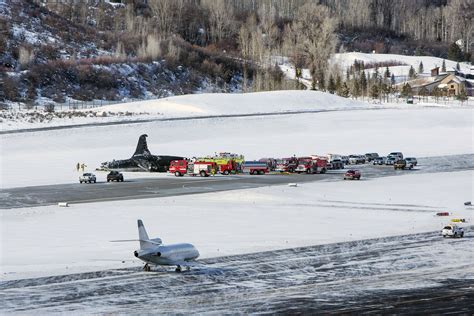
- Jan 5, 2014: Challenger 600 crash; 1 death, 2 serious injuries; pilot inexperience
These incidents underscore the complexity of high-altitude aviation, especially under challenging winter conditions and strict operational parameters.
Conclusion
Aspen/Pitkin County Airport is a uniquely positioned, high-elevation airport that continues to evolve with the demands of modern aviation while preserving the character and environmental integrity of Aspen. With major infrastructure improvements on the horizon and its essential role in supporting tourism, commerce, and local connectivity, ASE remains a cornerstone of mountain-region air travel.
Its resilience, operational precision, and commitment to safety and service make it a critical hub in Colorado’s air transport network—and a model for other regional airports navigating the balance between growth and sustainability.