A Runway That Defies Expectations in the Heart of the Karakoram
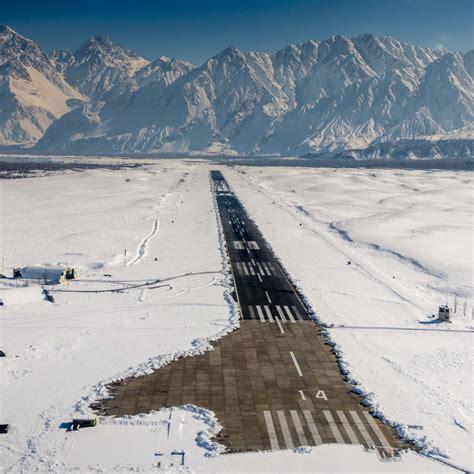
At first glance, Skardu Airport (KDU) appears to contradict everything travelers expect from a remote mountain airstrip. Hidden deep within Pakistan’s Gilgit-Baltistan region, the airport sits at a striking elevation of 7,316 feet (2,230 meters), surrounded by some of the most formidable terrain on Earth. Towering peaks dominate the horizon, including those within the Karakoram Range, home to K2, the world’s second-highest mountain. Yet, despite this intimidating setting, Skardu boasts a runway that rivals — and in many cases exceeds — those of major international hubs.
The primary runway stretches an impressive 11,944 feet (3,641 meters), a length that comfortably accommodates narrow-body jets like the Airbus A320 and Boeing 737. A secondary runway, measuring 8,740 feet (2,664 meters), adds further flexibility. On paper, this is infrastructure designed for efficiency and scale, not isolation. But that illusion fades quickly once the surrounding geography comes into focus.
Unlike sprawling urban airports built across flat plains, Skardu exists inside a tight, unforgiving valley system, where the runway itself is the least of a pilot’s concerns. The real challenge begins long before the wheels touch asphalt.
Why Runway Length Means Almost Nothing Here
In most aviation contexts, a long runway signals safety, flexibility, and operational ease. At Skardu, that assumption collapses under the weight of geography. Aircraft cannot simply line up and descend in a straight, stabilized approach. Instead, they must navigate a maze of valleys carved between mountains that rise to nearly 19,000 feet.
Pilots approaching Skardu are effectively threading a needle through terrain that leaves little margin for deviation. There is no wide-open airspace for gradual descent. Instead, aircraft remain confined within narrow corridors, often with mountains looming on both sides for extended periods. Every turn, every descent rate adjustment, and every speed correction carries amplified consequences.
The airport’s high elevation compounds the difficulty. Thin air reduces engine thrust and aerodynamic lift, forcing aircraft to operate under what pilots call “hot and high” conditions — especially during warmer months. Even with a runway long enough for large jets, performance margins shrink significantly. Takeoff requires longer ground rolls, and climb performance is noticeably degraded.
This creates a paradox rarely seen in commercial aviation: an airport that is physically capable of handling large aircraft, yet operationally restrictive due to its environment.
The Legendary “Zulu Bend” Approach
Among aviation professionals and enthusiasts, one phrase defines Skardu more than any other: the “Zulu bend.” This maneuver has become synonymous with the airport’s reputation, transforming routine landings into displays of precision flying.
As aircraft approach from the direction of Gilgit, pilots must execute a carefully timed turn within a confined valley, aligning the aircraft with the runway only at the last possible moment. The maneuver demands exact coordination of speed, altitude, and bank angle, all while maintaining constant awareness of surrounding terrain.
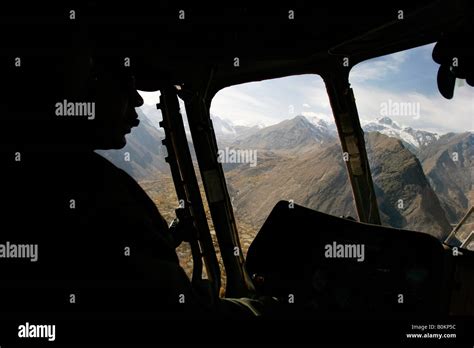
What makes the Zulu bend particularly demanding is its reliance on visual judgment rather than automated systems. Pilots cannot depend on standard instrument guidance to carry them safely to touchdown. Instead, they must interpret the terrain in real time, adjusting their approach dynamically as conditions evolve.
Entering the turn too fast risks overshooting alignment. Descending too steeply destabilizes the approach. And any hesitation can compress already limited reaction time. The result is a maneuver that feels closer to tactical mountain flying than commercial airline operations.
For passengers, the experience can be both mesmerizing and unnerving — a sweeping turn between towering rock faces followed by a sudden, almost cinematic emergence onto final approach.
Flying by Eye in the Age of Automation
Modern aviation is built on precision systems. Airports around the world rely on Instrument Landing Systems (ILS), satellite-based guidance, and advanced autopilot capabilities that allow aircraft to land safely in near-zero visibility. Skardu stands apart as a place where those technological advantages are significantly constrained.
Due to the surrounding terrain, implementing conventional precision approaches is extremely difficult. Mountains interfere with signal paths and limit the space required for stable instrument procedures. As a result, Skardu operations depend heavily on Visual Flight Rules (VFR).
This means one critical requirement must always be met: pilots need to see where they are going.
When visibility drops — whether due to cloud cover, haze, or snow — flights are often delayed or canceled outright. There is little room for compromise. Unlike flatland airports where missed approaches are routine and safe, Skardu offers limited escape routes once an approach is initiated.
The burden this places on pilots is substantial. They must maintain continuous situational awareness, manually managing the aircraft’s trajectory while interpreting terrain cues that shift with light, weather, and perspective. It’s a level of engagement rarely required in today’s highly automated cockpit environment.
Mountain Weather: The Unpredictable Gatekeeper
If terrain defines the structure of a Skardu approach, weather defines its risk. The Karakoram Range is notorious for generating rapidly changing atmospheric conditions that can turn a routine flight into a high-stakes operation within minutes.

Wind patterns in mountainous regions behave differently from those over flat terrain. Air flowing over peaks creates downdrafts, updrafts, and rotor turbulence, often without warning. These forces can disrupt an aircraft’s stability during critical phases of flight, particularly during approach and landing.
Wind shear is a constant concern. A sudden downdraft can push an aircraft lower than intended, forcing immediate corrective action. At the same time, crosswinds funneled through valleys can complicate alignment with the runway.
Visibility presents another layer of unpredictability. Valleys that appear clear from a distance may conceal localized cloud formations or mist, obscuring visual references just as they become most critical. Since Skardu relies on visual approaches, losing sight of terrain is not a minor inconvenience — it’s a decisive factor that can abort a landing entirely.
Winter introduces additional challenges. Snowfall, icing, and reduced daylight hours further limit operational windows. Even in favorable seasons, the margin between safe and unsafe conditions remains narrow.
How Skardu Compares to the World’s Most Extreme Airports
Skardu is often mentioned alongside aviation icons like Tenzing-Hillary Airport (Lukla) in Nepal and Innsbruck Airport in Austria. Yet its challenges are fundamentally different — and arguably more complex in subtle ways.
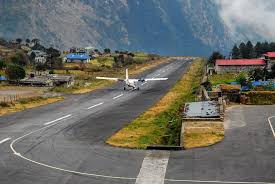
Lukla is famous for its extremely short runway, measuring just 1,729 feet (527 meters), with a steep gradient and no possibility of a go-around. The danger there is immediate and obvious: land precisely, or face catastrophic consequences. Aircraft are small, operations are limited, and margins are razor-thin.
Skardu, by contrast, offers ample runway length, removing the pressure of stopping distance. The aircraft can land safely — if it gets there correctly. The difficulty lies not in the touchdown, but in the journey through the mountains to reach that point.
Innsbruck shares similarities with Skardu in terms of terrain-constrained approaches and turbulent conditions. However, it benefits from advanced navigation infrastructure and extensive monitoring systems. Pilots there operate with technological support that significantly reduces uncertainty.
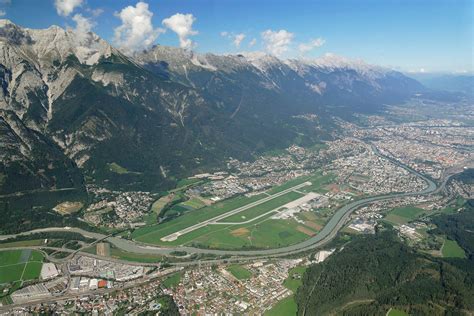
Skardu operates closer to the edge. It combines commercial jet operations with conditions that demand old-school piloting skill, creating a hybrid challenge rarely seen elsewhere.
The Allure of a Runway Few Truly Master
Despite — or perhaps because of — its challenges, Skardu has become a magnet for aviation enthusiasts. Cockpit videos capturing approaches into the valley routinely go viral, showcasing aircraft weaving through mountains before aligning with the runway in dramatic fashion.
These visuals offer something increasingly rare in aviation: a glimpse of human skill at the forefront of flight. In an era where automation dominates, Skardu reminds observers that there are still places where experience, judgment, and precision define success.
For pilots, flying into Skardu is often considered a mark of distinction. It requires specialized training, deep familiarity with terrain, and the ability to make rapid, high-stakes decisions. For passengers, it’s an unforgettable journey — equal parts scenic flight and technical feat.
Beyond its reputation, the airport serves a vital role. It connects remote northern Pakistan to the rest of the country, supporting tourism, trade, and access to some of the world’s most iconic mountaineering destinations. Without it, the region would be far more isolated.
In the end, Skardu Airport represents a rare contradiction: a modern aviation facility defined not by its infrastructure, but by the environment that surrounds it. Its long runways promise capability, but only those who can master the mountains are able to use them.